Showing posts with label Inspiration. Show all posts

Thursday, September 07, 2023

Poem for Today


 "The Makers"

By Howard Nemerov


 I frequently draw inspiration from writers of different genres, especially those who write outstanding books. However, in order to convey a message that has significance for readers who value the written word's creators, poetry may occasionally be necessary. The poem, "The Makers" by Howard Nemerov, makes a stronger argument for this.

We can never locate that initial item that got us going, that initial spark that spans generations. In his poem "The Makers," Howard Nemerov strives to trace the history of poetry and comes to the realization that what counts most is that all of those concrete, physical feelings are transmitted throughout time through poetic tropes and pictures. It makes no difference who the first poets were or the specific tree, rock, or star that was first mentioned. What matters most is that we can relate to each other through these descriptions. The repetition of these sensory cues reveals a fundamental truth about the human condition.


                "The Makers"

Who can remember back to the first poets,

The greatest ones, greater even than Orpheus?

No one has remembered that far back

Or now considers, among the artifacts,

And bones and cantilevered inference

The past is made of, those first and greatest poets,

So lofty and disdainful of renown

They left us not a name to know them by.


They were the ones that in whatever tongue

Worded the world, that were the first to say

Star, water, stone, that said the visible

And made it bring invisibles to view

In wind and time and change, and in the mind

Itself that minded the hitherto idiot world

And spoke the speechless world and sang the towers

Of the city into the astonished sky.


They were the first great listeners, attuned

To interval, relationship, and scale,

The first to say above, beneath, beyond,

Conjurors with love, death, sleep, with bread and wine,

Who having uttered vanished from the world

Leaving no memory but the marvelous

Magical elements, the breathing shapes

And stops of breath we build our Babels of.


Tuesday, February 18, 2020

Insight and Inspiration


Here are five of my favorite non-fiction books, all of them short but overflowing with quality.  They have provided continual insight, ideas, and inspiration for my life. I present them in approximately the order in which they entered my reading life.


The True Believer: 
Thoughts on the Nature of Mass Movements

by Eric Hoffer


I have read this book several times over the years, starting the summer before I entered college when it was assigned reading for the incoming Freshman class. It is a classic in the sense that it both retains a freshness upon rereading and succeeds in challenging the reader with the thoughts that it presents. Insightful regarding the nature of those who join mass movements, Hoffer's observations are timeless.


The Immense Journey

by Loren Eiseley


While studying the History of Science as an undergraduate I was introduced to the writings of Loren Eiseley.  In this small but profound book he shares personal notes and we slowly come to realize that Eiseley is not just talking about his own life’s journey. Eiseley’s narrator creates a metaphor for the journey of all humankind through the vast dimension of time and space—a journey filled with perplexity, delight, and impermanence. 


Man's Unconquerable Mind

by Gilbert Highet


I also discovered the thoughts of Highet while in College. He explores the power, capabilities, and limitations of the human mind throughout the ages, highlighting the wonders created by the great thinkers of the ages, all the while keeping in mind the tortures that Prometheus endured for giving Man the gift of fire.


In Bluebeard's Castle:
 Some Notes Towards the Redefinition of Culture

by George Steiner


George Steiner was (he died this month) a protean thinker writing about tragedy, the classics and more over his career.  This short book is an intellectual tour de force, that  generates both a profound excitement and promotes a profound unease…like the great culturalists of the past.  Steiner uses a dense and plural learning to assess his topic: his book has the outstanding quality of being not simply a reflection on culture, but an embodiment of certain contemporary resources within it.


Sailing Alone around the World

by Joshua Slocum


More than one hundred years ago at the end of the century prior to the last a fifty-one year old man set sail for a trip around the world. Joshua Slocum capped his sea-going career with this trip in a sail boat, named "The Spray", that he built himself and, upon his return, he memorialized his trip by writing this narrative. His career had waned with the gradual demise of large sail-going ships and he put all of his years of experience on them, plus some help from friends and strangers along the way, into this voyage. The story he told about it still has power to grip the reader's imagination yet today. The result is one of the most inspirational books I've ever read.


Saturday, June 18, 2016

Two Boys Discover Life

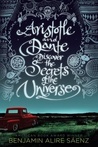
Aristotle and Dante Discover the Secrets of the UniverseAristotle and Dante Discover 
the Secrets of the Universe 
by Benjamin Alire Sáenz


“i have this idea that the reason we have dreams is that we're thinking about things that we don't know we're thinking about-and those things,well,they sneak out of us in our dreams.Maybe we're like tires with too much air in them.The air has to leak out.That's what dreams are.”   ― Benjamin Alire Sáenz, Aristotle and Dante Discover the Secrets of the Universe


"Through all of youth I was looking for you 
without knowing what I was looking for."
-- W. S. Merwin


Friendship and family devotion are two of the themes of this wonderful book. But beyond those themes are the wonder and mystery of desire while developing an understanding about the relations between oneself and the object of desire.

Two boys, Ari and Dante, are as different as any two boys can be. Yet they become friends and their friendship becomes a bond that transcends their differences.  Ari narrates the story and tells how he and Dante learn and grow  as they share books and thoughts, feelings and dreams. The experience of growing and becoming is demonstrated by the life changes precipitated by the calendar:

"Summer was here again. Summer, Summer, Summer.  I loved and hated summers.  Summers had a logic all there own and they always brought something out in me.  Summer was supposed to be about freedom and youth and no school and possibilities and adventure and exploration.  Summer was a book of hope.  That's why I loved and hated summers.  Because they made me want to believe." (p 235)

Their shared lives and experiences help them grow and deal with the difficulties inherent in that process. The journey of Ari and Dante became one of discovery of what was hidden inside each of them from the beginning.  For this reader it was enjoyable and ultimately inspirational.  A reading adventure that I would recommend to all.


View all my reviews

Tuesday, June 14, 2016

Illuminating and Inspirational Memoir: an introduction

The Periodic TableThe Periodic Table 
by Primo Levi


“Alongside the liberating relief of the veteran who tells us his story, I now felt in the writing a complex, intense, and new pleasure, similar to that I felt as a student when penetrating the solemn order of differentials calculus. It was exalting to search and find, or create, the right word, that is, commensurate, concise, and strong; to dredge up events from my memory and describe them with the greatest rigor and the least clutter.”   ― Primo Levi, The Periodic Table


Thomas Mann began his tetralogy, Joseph and His Brothers, with this sentence: "Very deep is the well of the past." Primo Levi's memoir, The Periodic Table, demonstrates this metaphor in a much smaller, compact space. The lives of Levi and his Piedmont ancestors are explored through stories that illuminate the nature of the past and the source of those people's and our own humanity. This is done through vignettes that demonstrate Levi's love of chemistry and literature, his relations and relationships, while exploring his own attitude and thoughts.

Some of his thoughts are about reading and its meaning for his life. This is a topic that I especially love to explore and learn about;  I will take it up in this introductory commentary on his memoir. His reading is based on his love for great literature particularly his appreciation for the writings of Thomas Mann, whom he holds in the highest esteem. 
Early in the narrative during his sojourn as a chemistry student he meets Rita, a fellow student, and is attracted to her although, due to his shyness, he does not know how to approach her. He reaches a point where "I thought myself condemned to a perpetual masculine solitude, denied a woman's smile forever". Yet one day he found beside her, peeking out of her bag, a book. It was The Magic Mountain. He relates, "it was my sustenance during those months, the timeless story of Hans Castorp in enchanted exile on the magic mountain. I asked Rita about it, on tenterhooks to hear her opinion, as if I had written the book: and soon enough I had to realize that she was reading the novel in an entirely different way. As a novel, in fact: she was very interested in finding out exactly how far Hans would go with Madame Chauchat, and mercilessly skipped the fascinating (for me) political, theological, and metaphysical discussions between the humanist Settembrini and the Jewish Jesuit Naphtha." (p 38)
We all may have had a similar experience more than once: finding someone (whether drawn to them by Eros or not) reading a book we love, but not reading the same book.

Levi's love for Mann's writing also provided him solace while working on a demanding project during the war. He was sequestered in a laboratory next to a nickel mine and forced to work long hours. He dared not venture far from the mine, so "Sometimes I stayed in the lab past quitting time or went back there after dinner to study, or to meditate on the problem of nickel. At other times I shut myself in to read Mann's Joseph stories in my monastic cell in the submarine. On nights when the moon was up I often took long solitary walks through the wild countryside around the mine". (p 79)
One can picture Levi pondering while walking by the light of the Tuscan moon finding comfort as did Jacob in Mann's novel when he walked in the moonlight. It is the moonlight with its "magically ambiguous precision" that mirrored for Jacob the way the traditions of the children and grandchildren of Abraham are "spun out over generations and solidified as a chronicle only much later--". ("The Tales of Jacob")

Throughout his memoir Primo Levi shares other literature and experiences as he narrates the lives of his friends, family, and ancestors. Just as he is inspired by reading Thomas Mann and the moonlight that inspired Jacob so many centuries ago he is imbued with the life of the people around him. Yes, The Periodic Table is deep, and one wonders at the lives narrated by this brilliant Jewish Italian chemist and humanist.  


View all my reviews

Friday, January 02, 2015

Music for the New Year


As I carry with my on my search through life it is music that lifts me and helps me along the way.  As I walk toward the exercise arena each morning the tunes flow from and through my mind, following the constant motion and beat of my footsteps.  Music is consolation - yes, and inspiration that moves me forward.


The Kingdom is one of Music,
Meaning for minds melded with those
Able to share the sphere of nature
And being. I live in a world
Real with reason as the fuel
For the spirit of man.

(James Henderson, from The Kingdom of Music, 1992)

Saturday, August 10, 2013

The Quest to Understand

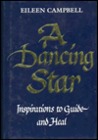
A Dancing Star: Inspirations to Guide & HealA Dancing Star: 
Inspirations to Guide and Heal
by Eileen Campbell

"The real voyage of discovery consists not in seeking new landscapes but in having new eyes." - Marcel Proust


In Also Sprach Zarathustra Nietzsche said: "I say to you: 'One must have chaos in oneself in order to give birth to a dancing star.'" In this collection Eileen Campbell has gathered quotations from both East and West to speak to people whose lives are constantly subject to change, and frequently chaotic as a result. She relies on the premise that our problems are not unique; likely to be part of the human condition. The result is that there are times we need inspiration. For most readers there are old favorites, but also different quotes not found in traditional sources. The result is an anthology that bears fruit from repeated visits and meditation on the direction that is suggested by study of each quote. This small book has room for an informative list of recommended reading which makes it even more valuable.


Here are some of my favorites:
"Do not weep; do not wax indignant. Understand." -Baruch Spinoza
"The greatest human quest is to know what one must do in order to become a human being." -Immanuel Kant
"Knowing other is intelligence; knowing yourself is true wisdom. Mastering others is strength; mastering yourself is true power." - Lao-Tzu

View all my reviews

Tuesday, April 30, 2013

The Mind of a Man


John Steinbeck answers this question and more about the nature of man in East of Eden.


"Sometimes a kind of glory lights up the mind of a man.

It happens to nearly everyone. You can feel it growing or preparing like a fuse burning toward dynamite. It is a feeling in the stomach, a delight of the nerves, of the forearms. The skin tastes the air, and every deep-drawn breath is sweet. Its beginning has the pleasure of a great stretching yawn; it flashes in the brain and the whole world glows outside your eyes. A man may have lived all of his life in the gray, and the land and trees of him dark and somber. The events, even the important ones, may have trooped by faceless and pale. And then -the glory- so that a cricket song sweetens his ears, the smell of the earth rises chanting to his nose, and dappling light under a tree blesses his eyes. Then a man pours outward, a torrent of him, and yet he is not diminished. And I guess a man's importance in the world can be measured by the quality and number of his glories. It is a lonely thing but it relates us to the world. It is the mother of all creativeness, and it sets each man separate from all other men.

I don't know how it will be in the years to come. There are monstrous changes taking place in the world, forces shaping a future whose face we do not know. Some of these forces seem evil to us, perhaps not in themselves but because their tendency is to eliminate other things we hold good. It is true that two men can lift a bigger stone than one man. A group can build automobiles quicker and better than one man, and bread from a huge factory is cheaper and more uniform. When our food and clothing and housing all are born in the complication of mass production, mass method is bound to get into our thinking and to eliminate all other thinking. In our time mass or collective production has entered our economics, our politics, and even our religion, so that some nations have substituted the idea collective for the idea God. This in my time is the danger. There is great tension in the world, tension toward a breaking point, and men are unhappy and confused.

At such a time it seems natural and good to me to ask myself these questions. What do I believe in? What must I fight for and what must I fight against?

Our species is the only creative species, and it has only one creative instrument, the individual mind and spirit of man. Nothing was ever created by two men. There are no good collaborations, whether in music, in art, in poetry, in mathematics, in philosophy. Once the miracle of creation has taken place, the group can build and extend it, but the group never invents anything. The preciousness lies in the lonely mind of a man.

And now the forces marshaled around the concept of the group have declared a war of extermination on that preciousness, the mind of man. By disparagement, by starvation, by repressions, forced direction, and the stunning hammerblows of conditioning, the free, roving mind is being pursued, roped, blunted, drugged. It is a sad suicidal course our species seems to have taken.

And this I believe: that the free, exploring mind of the individual human is the most valuable thing in the world. And this I would fight for: the freedom of the mind to take any direction it wishes, undirected. And this I must fight against: any idea, religion, or government which limits or destroys the individual. This is what I am and what I am about. I can understand why a system built on a pattern must try to destroy the free mind, for this is one thing which can by inspection destroy such a system. Surely I can understand this, and I hate it and I will fight against it to preserve the one thing that separates us from the uncreative beasts. If the glory can be killed, we are lost."

East of Eden by John Steinbeck. Chapter 13, pp 130-1.  Viking Penguin, 2003 (1952).

Sunday, July 04, 2010

Reading and Life


A Lesson Before Dying


Reading A Lesson Before Dying by Ernest J. Gaines was an inspirational experience. The lesson of the title is both demonstrated by the story and felt by the reader. This is a book that I would recommend to anyone who loves reading and life. Here are some moving quotations from the book:


A hero is someone who does something for other people. He does something that other men don't and can't do. He is different from other men. He is above other men. No matter who those other men are, the hero, no matter who he is, is above them.

"Do you know what a myth is, Jefferson?" I asked him. "A myth is an old lie that people believe in. White people believe that they're better then anyone else on earth -and that's a myth. The last thing they ever want is to see a black man stand, and think, and show that common humanity that is in us all. It would destroy their myth. They would no longer gave justification for having made us slaves and keeping us in the condition we are in. As long as none of stand, they're safe.

Please listen to me, because I would not lie to you now. I speak from my heart. You have the chance of being bigger then anyone who has ever lived on that plantation or come from this little town. You can do it if you try. You have seen how Mr. Farrell makes a slingshot handle. He starts with just a little piece of rough wood- any little piece of scrap wood- then he starts cutting. Cutting and cutting and cutting, then shaving. Shaves it down clean and smooth till it's not what it was before, but something new and pretty. You know what I'm talking about, because you have seen him do it. You had one that he made from a piece of scrap wood. Yes, yes - I saw you with it. And it came from a piece of old wood that he found in the yard somewhere. And that's all we are Jefferson, all of us on this earth, a piece of drifting wood. until we - each of us, individually- decide to become something else. I am still that piece of drifting wood, and those out there are no better. But you can be better.


A Lesson Before Dying by Ernest J. Gaines. Vintage Books, New York. 1997 (1993)

Saturday, September 05, 2009


Running and Postcards


Yesterday I went downtown and met with three of my former co-workers for lunch at Ceres Cafe. It was good to see Marty, Randy and Kyle (the only fellow retiree) and we had a splendid get together over lunch. Kyle is a marathoner and has encouraged my running from the beginning with mixed results. I've developed consistency in running regularly but have yet to expand into the nether regions of marathon distances (or even half-marathons). He mentioned that he enjoyed my irregular commentaries on running and then noted that his wife Kathy had received a postcard with the results of her performance in the Proud to Run 10k/5k held earlier in the summer. I had participated with them in that run so it was with some anticipation that I looked for my postcard in the mail. It was therefore no surprise when I found it in the afternoon mail along with the current issue of Runners' Magazine and the other typical junk mail.

In addition to sharing congratulations with me "on a great race" the card informed me that I finished fourth in my age division (60-64) and I was not the last runner among the either the male runners or all of the finishers (somewhere in the middle of the back of the pack!). This was encouraging news and with the official time for my run gave me a bar to set as a goal for next year - something for which to look forward. Sending the postcard may seem like a small thing, but it is a nice touch to bring closure to the race and it is more than any other organized run in which I've participated has provided. While some have sent email reminders that information is available on-line that is not quite as personal. Thus this simple postcard helped me recall the good time I had running in the sun and sharing time with my friends on that pleasant summer day. A small moment in time, but memorable nonetheless.

Sunday, February 22, 2009


A Protean Artist


Living a life that was completely immersed in his music, Sviatislov Richter truly was a "protean" artist. He was born on March 7, 1915 in the Ukrainian town of Zhitomir and a year later moved to Odessa with his family. Richter began his career rather late in life, beginning serious study at the Moscow Conservatory in the late thirties after an eclectic musical upbringing. He relates his personal story in the magnificent, Sviatoslav Richter: Notebooks and Conversations by Bruno Monsaingeon.

The personal voice of Richter conveyed in this amazing volume is as magnetic as his playing (I regret I only know his music through recordings). He was friends with Emil Gilels, Rostropovich and Prokofiev, and many other notable twentieth century artists. His nomadic existence mirrors the breadth of the music he surveyed and performed over his lifetime. In this book we find intimate and interesting portraits of composers and artists, friends of the man who shares the spirit of music. Inspirational on almost every page Richter's life, at least for this music-lover, comes alive with every detail. The book is divided into two sections: "Richter in his own words", and "Notebooks: On Music". I will keep them both near my music collection for future reference.

Richter's own words may convey some of the excitement I experienced reading this volume. On Performing:

I had to give recital at the Soviet Embassy in Paris. The piano tuner took one look at their Steinway and told me that in his opinion it was unplayable. I immediately cancelled the concert. The ambassador ignored my cancellation. At five o'clock in the afternoon of the day of the concert, he rang me: "The audience is coming in. What shall I do? Shoot myself?" His words moved me to pity and so I decided to go there in spite of everything, convinced that the concert would be a disaster. I went out on to the platform, thinking, "To hell with the piano and the rest of them", and launched into Brahm's Sonata in F sharp minor. It was probably my best concert of the season.

The book is full of similar stories and inspirational thoughts from this great pianist and musician. I will keep both his recordings and this volume at my side for future excursions into the world of music.


Sviatoslav Richter: Notebooks and Conversations by Bruno Monsaingeon. Stewart Spencer, trans. Princeton University Press. 2001.

Saturday, September 27, 2008

Running and Being


Starry, Starry Sky


This is not about Vincent Van Gogh or Impressionist painting; nor is it about Don McLean or Impressionist music; nor is it about astronomy or astrology. Taking my cue from Charles Dickens, whose novel Our Mutual Friend demonstrated the technique of defining something by what it is not, I have begun this commentary using just that approach.

For my day began, as it often does on the weekends, with an early morning run under the starry skies with the moon choosing to absent herself, no doubt to return as she is wont to do as she goes about her regular monthly journey.
My journey over the last few years, since about this time in 2001 has included running as part of my regular exercise regimen. I enjoy running and enjoy reading about the joys of running. The best of the writers about running that I have encountered is one Dr. George Sheehan, whose book Running And Being, is as much about philosophy and a way of life as it is about running - whatever else it is inspirational. This week I have encountered another book that also inspires and may join Sheehan's in my bibliography of support. That book is Younger Next Year by Chris Crowley & Henry S. Lodge, M.D. I will return to this work in the future if its promise bears fruit in my life, but I already have found in the first few sections that it is a very good book to read and consider. For this opportunity I once again find that I have my former colleague and current running friend, Kyle Tschaen, to thank both for recommending this book and continuing to be an inspiration for me in his dedication to running and life.


Running and Being by Dr. George Sheehan. Simon & Schuster, New York. 1978.
Younger Next Year by Chris Crowley & Henry S. Lodge, M.D. Workman Publishing, New York. 2007.

Tuesday, July 10, 2007

Seven Pillars of Wisdom
by T. E. Lawrence


T. E. Lawrence (Lawrence of Arabia) acted upon his dream 'with open eyes' and made it happen. In a book filled with deception he gives us a view into the world before the end of World War I changed everything. We see the various Arab factions and the deals made with the British. More importantly we are given insight into the men through Lawrence's eyes, his acute judgement, and his poetic narrative. He notes the keys to the Arab Revolt in the common language they shared and their heritage of the greatness that existed under the Caliphs going back to the six centuries following the death of Muhammad. We share in his pangs of conscience and his judgments of others and his own life and actions. He notes that "feeling and illusion were at war within me" and it reminds me of the birth of modernity with Faustian man. Also important are his comments on the British in the Middle East and the nature of the soldier in war. Ultimately I was moved and found support for my own subjunctive mood in this inspirational book.


The Seven Pillars of Wisdom: A Triumph, T. E. Lawrence, Penguin Books, London. 1926.

Thursday, May 31, 2007

Running and Inspiration

As I was running in Lincoln Park this morning I was thinking, a common occurrence and side benefit from this activity, about many different things; but thinking in part about inspiration. The running I do for exercise and good feelings, in spite of the occasional pain, I find to be an inspiration for thought and life. While running this morning I meditated on another source of inspiration: a friend whom I had the occasion to see yesterday. He is an inspiration to me in his own dedication to running (marathons, half-marathons and more), and it is this in part that encourages me to run myself and continue to be a runner. Is it this 'inspiration' that is the source of energy for living a life? Perhaps so, along with other sources it seems that it is a bit easier, after a morning on the running trail, to go about the regularities of another day of living this human life.

Tuesday, January 16, 2007

Books in my life

I was reminded while reading the blog at Cafe Hayek of the importance of your parents in shaping your life. Certainly they make a significant contribution which in my case includes my love of books. I remember books in our living room, not only on the shelves but being read by my parents. From the earliest that I can remember I had my own personal books along with a book shelf and my own desk. My books included some, like Alice in Wonderland and Through the Lookingglass, that I still have and cherish and reread. This love of books included regular visits to the library as well, imbedding the images of its rooms in my mind almost as clearly as those of my own home. If asked why do you read I must answer: I read to live.

Monday, January 01, 2007

Running & Being

I started the new year with a run in the park. For the several years now I have made the challenge and solace of running part of my life. Each time I start the day with a good run, either long or short, I feel better and sense an invigoration of my being. But it is basically to better my life that I run. Dr. George Sheehan said it best:

Run for my life. You had better believe it. (Running & Being, p.70)