Showing posts with label Best Books of the Year. Show all posts

Tuesday, July 11, 2017

Top Ten Tuesday


Best Books I have read so far in 2017.


Responsibility and Judgment  by Hannah Arendt

This collection gathers together unpublished writings from the last decade of Arendt’s life, where she addresses fundamental questions and concerns about the nature of evil and the making of moral choices. At the heart of the book is a profound ethical investigation, “Some Questions of Moral Philosophy,” in which Arendt confronts the inadequacy of traditional moral “truths” as standards to judge what we are capable of doing and examines anew our ability to distinguish good from evil and right from wrong. We also see how Arendt comes to understand that alongside the radical evil she had addressed in earlier analyses of totalitarianism, there exists a more pernicious evil, independent of political ideology, whose execution is limitless when the perpetrator feels no remorse and can forget his acts as soon as they are committed.


The Underground Railroad  by Colson Whitehead

Cora is a slave on a cotton plantation in Georgia. Life is hellish for all the slaves but especially bad for Cora; an outcast even among her fellow Africans, she is coming into womanhood - where even greater pain awaits. When Caesar, a recent arrival from Virginia, tells her about the Underground Railroad, they decide to take a terrifying risk and escape. 


Survival in Auschwitz  by Primo Levi

In 1943, Primo Levi, a twenty-five-year-old chemist and "Italian citizen of Jewish race," was arrested by Italian fascists and deported from his native Turin to Auschwitz. Survival in Auschwitz is Levi's classic account of his ten months in the German death camp, a harrowing story of systematic cruelty and miraculous endurance. Remarkable for its simplicity, restraint, compassion, and even wit, Survival in Auschwitz remains a lasting testament to the indestructibility of the human spirit. 


Other Minds: The Octopus, the Sea, and the Deep Origins of Consciousness  
by Peter Godfrey-Smith

A philosopher dons a wet suit and journeys into the depths of consciousness.  Peter Godfrey-Smith is a leading philosopher of science. He is also a scuba diver whose underwater videos of warring octopuses have attracted wide notice. In this book, he brings his parallel careers together to tell a bold new story of how nature became aware of itself.


Notes From Underground  by Fyodor Dostoyevsky

"I am a sick man . . . I am a spiteful man," the irascible voice of a nameless narrator cries out. And so, from underground, emerge the passionate confessions of a suffering man; the brutal self-examination of a tormented soul; the bristling scorn and iconoclasm of alienated individual who has become one of the greatest antiheroes in all literature. 


The Sympathizer  by Viet Thanh Nguyen

The winner of the 2016 Pulitzer Prize for Fiction, as well as five other awards, this had the pace and suspense of a thriller and prose that has been compared to Graham Greene and Saul Bellow, The Sympathizer is a sweeping epic of love and betrayal. The narrator, a communist double agent, is a “man of two minds


Gulliver's Travels  by Jonathan Swift

The classic tale from Lilliput to the land of the Houyhnhms.


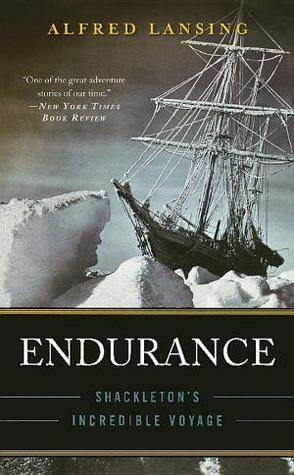
Endurance: Shackleton's Incredible Voyage  
by Alfred Lansing

In August 1914, explorer Ernest Shackleton and his crew set sail from England for Antarctica, where Shackleton hoped to be the first man to cross the uncharted continent on foot. Five months later, the Endurance - just a day's sail short of its destination - became locked in an island of ice, and its destiny and men became locked in history.

Thursday, November 28, 2013

Annual Favorite Books

Top Ten Reads of 2013

“It’s not the word made flesh we want in writing, in poetry and fiction, but the flesh made word”  ― William H. Gass


My list of favorite books read in 2013 includes many more than these books. But I thought I would try to limit the list to the top twelve (I couldn't stop at ten) that I read last year. So here they are in no particular order:

Auto da Fe by Elias Canetti
This is a stunning modern novel about obsession and the madness of the twentieth century.  The nightmares of Peter Kien, the "Book Man", are those of the world he lives in and by which he is blinded.

Rules of Civility  by Amor Towles
A young woman on the way up meets a man who seems to be near the pinnacle for it's his birthright and only her aspiration. Amor Towles scintillating first novel encompasses this simple story arc and much more as it reveals the penultimate year of the thirties as it was for the young and restless in Manhattan.

East of Eden  by John Steinbeck 
This sprawling and often brutal novel follows the intertwined destinies of two families—the Trasks and the Hamiltons—whose generations helplessly reenact the fall of Adam and Eve and the poisonous rivalry of Cain and Abel.  A philosophical allegory of good and evil.

The Coast of Utopia by Tom Stoppard
A trilogy of plays about the birth of the Russian Intelligentsia in the nineteenth century.  The story spans from Moscow to Paris to England with characters as diverse as Alexander Herzen, Michael Bakunin, Vissarion Belinsky, and Ivan Turgenev.

Nathaniel Hawthorne's Tales by Nathaniel Hawthorne
His amazing stories only hint at some of the myriad emotions and strange occurrences of men and women in settings as disparate as Salem Massachusetts and Padua Italy.

The Woman in White by Wilkie Collins
With "The Woman in White" Wilkie Collins added the element of sensationalism to the mystery.  He develops the story through multiple layers from a variety of narrators. Each tells a story filled with both appealing characters and equalling unappealing villains.

A Sport and a Pastime by James Salter
This is a novel redolent of expressive moments. From the French countryside which one meets on the first page to the game of love played by the young duo - Philip Dean, the American, and Anne Marie, the French girl: 'la belle elle' - the reader is presented a world of existential transport. 

An Equal Music  by Vikram Seth
This is a beautiful love story and it is a musical tale.  Both fascinating and a deeply moving narrative that this reader found difficult to set aside.

Bartleby, the Scrivener by Herman Melville
In 1853 Melville submits his first story that can be considered not only great but even amazing; this is Bartleby, the Scrivener: A Story of Wall Street. The story amazes in many ways and on many levels, as do his other stories.

The Tin Drum by Gunter Grass
The Tin Drum uses savage comedy and a stiff dose of magical realism to capture not only the madness of war, but also the black cancer at the heart of humanity that allows such degradations to occur.

The Cancer Chronicles: Unlocking Medicine's Deepest Mystery by George Johnson

The author is eloquent both in his telling analysis of the disease and in his personal memoir; he demonstrates an ability to convey scientific concepts lucidly enough for the layman to understand. These characteristics and the fascination that the author shares for scientific discovery make this a great book full of insights into the deep mysteries of some of the most complex areas of modern medicine. 

Sartoris (Flags in the Dust) by William Faulkner
Sartoris is the first novel Faulkner located in Yoknapatawpha County where he would go on to set fourteen more novels. In it he introduces the Sartoris family but the Snopes are also present in this early novel. He began to find his own voice in this novel.

Monday, December 24, 2012

Annual Favorite Books


Top Ten Reads of 2012


“It’s not the word made flesh we want in writing, in poetry and fiction, but the flesh made word”  ― William H. Gass

My list of favorite books read in 2012 includes many more than these books. But I thought I would try to limit the list to the top twelve (I could not stop at ten)  that I read last year. So here they are in no particular order:


1. Cloud Atlas by David Mitchell
I saved this novel for the last big read of the year and I was impressed from the start.  It embodies the idea, espoused by Samuel R. Delany, that good fiction should marry style and content.  Never was that truer than in this amazing book whose title refers to the metaphor that is the secret to the structure of the book.

2. Hunter: a Thriller by Robert Bidinotto
This is the first novel by this author, but its confident and clear style delivers a suspenseful narrative of a revenge thriller.  It is a great addition to a genre that seldom sees such literary elegance.

3. Walden and the Journals of Henry David Thoreau
This is two books that both thrilled me with their beauty and the insights of the author.  A true individualist, Thoreau's thoughts and observations are worthy of all readers' meditation.

4. Oryx and Crake by Margaret Atwood
Oryx and Crake is at once an unforgettable love story and a compelling vision of the future..

5. The Eclogues by Virgil
The Eclogues of Virgil gave definitive form to the pastoral mode, and these magically beautiful poems, which were influential in so much subsequent literature, perhaps best exemplify what pastoral can do.  I also read and enjoyed his bucolic Georgics.

6. Mr. Bridge by Evan S. Connell
Walter Bridge's conservatism is not his primary defining characteristic. In a certain sense he appears to be a stoic. But he is neither a seriously thoughtful nor a happy stoic in the mold of men like Marcus Aurelius and Henry David Thoreau. They exemplify the thoughtful and contemplative life of the stoic who accepts this world but yearns to understand it. Sadly, Walter Bridge's thoughtfulness falls short of understanding just as he falls short of any true sort of stoicism. His true character, rather, can be defined in two words: He is a "consummate Puritan". (p 249) That outlook determines Walter's world both for better and for worse. 

7. The Tree of Man by Patrick White
A poetic tribute to man and nature. The Tree of Man succeeds in capturing the opening of the frontier in Australia. It is reminiscent of O. E. Rolvaag or Conrad Richter who did the same for the American frontier. The story is a universal one.

8. Benjamin Franklin: An American Life by Walter Isaacson
The Benjamin Franklin described in Walter Isaacson's magisterial survey of his life was truly an American philosphe and a friend of liberty. The image of Franklin that I took away from this biography was all of that, but even more one of a practical man whose never-ending search for knowledge and wisdom was always used to further the ends of practical applications both in his own life and for his country. 

9. A Guide of the Perplexed, Vols. 1 & 2 by Moses Maimonides
This monument of rabbinical exegesis written at the end of the twelfth century has exerted an immense and continuing influence upon Jewish thought.  It is a serious work of philosophy that inter alia attempts to reconcile the old testament prophets with ancient Greek philosophy.

10. The Story of Lucy Gault by William Trevor
This is a book of stories within stories. The title character, Lucy Gault, is at the center of these stories, but the genesis of the novel goes back in history for centuries. It is that long that the Gault family has been in Ireland, yet their British origins haunt them

11. Olive Kitteridge by Elizabeth Strout
This is a novel of contrasts: contrasting characters and contrasting stories. But the stories are linked thematically and by the character of Olive Kitteridge.


12. Paris Was Yesterday, 1925-1939 by Janet Flanner
Reading Janet Flanner's unique journal is addictive. The material in Paris Was Yesterday includes selections from Janet Flanner's fortnightly "Letter from Paris" in The New Yorker, which she started transmitting in 1925, signed . . . with her nom de correspondance, Genet. This is a book you must read if you have any interest in art, literature, music, French culture, European history of the late nineteen-twenties and thirties.


I am reluctant to stop at twelve books since I enjoyed many other books during the year, including some great Science Fiction (Ringworld, The Stars My Destination, et. al.) and others including classics and mysteries.  But this is enough of a retrospective for one cold December day. After some wassail and caroling let's all move on to the great reads of the new year!

Sunday, December 11, 2011

Read in order to Live


Top Twelve Reads of 2011

"Do not read, as children do, to amuse yourself, or like the ambitious, for the purpose of instruction. No, read in order to live."  - — Gustave Flaubert

My list of favorite books read in 2011 includes many more than these books. But I thought I would try to limit the list to the top twelve (I could not stop at ten)  that I read last year. So here they are in no particular order:

1. A Suitable Boy by Vikram Seth
A modern Victorian romance set in early 1950s India that provides a window into the culture and history of India at that juncture in its history through a romance about a young girl, Lata, whose mother, Mrs. Rupa Mehra, is searching for a "suitable boy" for her to marry.  The novel covers two years of the lives of four Indian families in an all too short 1488 pages.

2. Call Me By Your Name by Andre Aciman
This is a Proust-like meditation on time and desire, a love letter, an invocation in words that one must call simply "beautiful". The book resonated in my memory long after I finished it.

3. The Double Helix by James Watson
This is a memoir of a Nobel prize-winning Scientist that reads like a cross between a personal autobiography and a detective story. Add the insights into the imagination of one of the greatest scientists of the twentieth century and you have a unique book. 

4. The Power of One by Bryce Courtenay
I found this novel a spellbinding bildungsroman. Set in South Africa during the 1930s and 1940s, it tells the story of young boy who, through the course of the story, acquires the nickname of Peekay, becomes a champion boxer, and learns how to compete in the world of life.

5. Malgudi Days by R. K. Narayan
The stories in this collection, which share the lives of everyone from entrepreneurs to beggars, all take place in and near the Indian village of Malgudi. The heart and the soul of the village is on display and we find it is a place where most people are haunted by illiteracy and unemployment. In spite of the ubiquity of the poor,  most of the stories demonstrate humorous good-natured episodes of their lives.

6. Brooklyn by Colm Toibin
Doors opened and closed, sunlight and shade, yesterdays and tomorrows; these are all motifs that come to mind as I remember the beauty of Colm Toibin's poignant novel. Brooklyn is the tomorrow when the novel begins and almost becomes the yesterday that is forgotten as Toibin shares the story of Eilis Lacey in his own unsensational way. 

7. The Border Trilogy by Cormac McCarthy
Cormac McCarthy's trilogy (three novels that I'm counting as one) about the west includes:  All the Pretty Horses which combines intensely lyrical prose with the laconic wit of its cowboy protagonists; its sequel, The Crossing, sent two young brothers on a quest that plunged them into the bloody maelstrom of Mexican politics; and concludes with a book that is spare and almost allegorical in its storytelling, Cities of the Plain, a book that is bleaker in the telling even as the romanticism of John Grady Cole sparks continuing interest.

8. Fatelessness by Imre Kertesz
Nominally this is a story about a young boy who is sent to the Nazi concentration camps from his home in Budapest in the last year of World War II. Narrated in the first person by young Gyorgy Koves, the novel is the story of an outsider -- one who does not belong to any group or anyone even as he is brutally incarcerated and his life is severely restricted almost to the point of death. 

9. Hotel de Dream by Edmund White
The story of Hotel de Dream: A New York Novel is one of two pairs of lovers, Stephen Crane and his wife Cora and the young prostitute Elliott and his lover Theodore the Banker, who are products of Stephen Crane's literary imagination. Rereading the novel this year I found it better than I remembered.

10. Red Lights by Georges Simenon
What do you do when you are rushing toward the unknown, possibly a dangerous situation, and you are unable to stop? Georges Simenon takes us through just such an experience in this novel and it is a delightfully exciting read.  Simenon, the epitome of a European novelist, has written one of the best American existentialist novels.

11. Tom Jones by Henry Fielding
The abundance of characters, stories, places, and all that goes with each of these can best be considered a literary cornucopia. This cornucopia melded with Fielding's continual insertions through essays and commentaries begins to suggest to me why this novel is considered great - one of the first of its kind in modern literature. 

12. The Secret Agent by Joseph Conrad
The Secret Agent is considered to be one of Conrad's finest novels. I enjoyed it in part as a novel about the city of London. Yet Conrad wrote this novel more than a century ago and the story, set in London of 1886, it is still timely given the predominance of terrorism in the news today.

I am reluctant to stop at twelve books since I enjoyed many other books during the year, including some great Science Fiction (Dune, Daemon, et. al.) and others including classics and mysteries.  But this is enough of a retrospective for one cold December day. After some wassail and caroling let's all move on to the great reads of the new year!

Friday, January 14, 2011

Favorite of the Imagination


Lewis Carroll


Alice was beginning to get very tired of sitting by her sister on the bank and of having nothing to do: once or twoice she had peeped into the book her sister was reading, but it had no pictures or conversations in it, "and what is the use of a book," thought Alice, "without pictures or conversations?" (Opening lines of Alice's Adventures in Wonderland)


Lewis Carroll died on this day in 1898, aged sixty-five. He has been a favorite author of mine since I first read Alice's Adventures in Wonderland while I was still in grade school.  Fortunately the edition I had included the beautiful illustrations by Tenniel unlike the books poor Alice found her sister reading.  No one made me read Carroll and I grew to enjoy both Wonderland and its sequel Through the Looking Glass.  There was much poetry interlaced among the prose of these stories but Carroll also published several collections of poetry — parodies, occasional poems, and the sort of playful, oddball verse that abounds in his more famous books. Many of the collected poems reflect Carroll’s love of words and word games; some of them seem written as if in hope of getting boxed in by a rhyme scheme, in order to find a way to wriggle out. In “Melancholetta,” the speaker laments that his sister — Carroll had several — is forever weeping and woe-ing. In a brotherly attempt to end her sniffling, he sets up an evening out — dinner and a play, all in cheery company:


I asked three gay young dogs from town
To join us in our folly,
Whose mirth, I thought, might serve to drown
My sister's melancholy:
The lively Jones, the sportive Brown,
And Robinson the jolly.


As the appetizers are trotted in, the lively Jones does his conversational best, the brother throws up his hands, and the tap of despair drips on:


Vainly he strove, with ready wit,
To joke about the weather -
To ventilate the last 'ON DIT' -
To quote the price of leather -
She groaned "Here I and Sorrow sit:
Let us lament together!"
I urged "You're wasting time, you know:
Delay will spoil the venison."
"My heart is wasted with my woe!
There is no rest--in Venice, on
The Bridge of Sighs!" she quoted low
From Byron and from Tennyson.


A good place to find these and other of Carroll's writings is in the Modern Library edition of The Complete Works of Lewis Carroll.


Top Ten Reads of 2010


My list of favorite books read in 2010 (updated from earlier in the year) includes more than three dozen books (and not everything I read made that list).  But I thought I would try to whittle the list down to the top ten that I read last year.  So here it is in no particular order:


1. The Road by Cormac McCarthy
The best dystopian novel I have read in a long time and a reminder of the power of this author to impress this reader.
2. Summer in Baden-Baden by Leonard Tsypkin. 
Tsypkin's novel mesmerizes with two stories that enthrall with emotion and truth. A taut gem of historical fiction and a doppelganger of style.
3. The Knife Man by Wendy Moore.
Wendy Moore's biography of Dr. John Hunter, The Knife Man, captures one man's contribution to the Enlightenment and modern surgical medicine.
4. Time Regained by Marcel Proust
The final volume of In Search of Lost Time chronicles the years of World War I, when, as M. de Charlus reflects on a moonlit walk, Paris threatens to become another Pompeii. Years later, after the war's end, Proust's narrator returns to Paris, where Mme. Verdurin has become the Princesse de Guermantes. He reflects on time, reality, jealousy, artistic creation, and the raw material for literature-his past life.
5. Istanbul: Memories and the City by Orhan Pamuk.
Capturing a sense of the Istanbul of memory and tradition, Pamuk  juxtaposes it with the Istanbul as seen by outsiders, especially the literary lights that visited Istanbul over the years, Pamuk creates a rich texture for his story of the memories and city. This is a unique look at one of the great centers of civilization. 
6. Meditations of Marcus Aurelius.
Aurelius presents the tenets that underlie the stoic philosophy he learned from his teachers including a discussion of the importance of your duty both to your own nature and that of the whole universe..
7. The Solitude of Prime Numbers by Paolo Giordano. 
While all fiction emanates from the imagination and this novel is rare that a work successfully mimics the language of dreams..
8. Sailing Alone Around the World by Joshua Slocum. 
The story of a man of more than fifty years old who caps his career with a world-spanning sailing trip that still has power to grip the reader's imagination today. .
9. Call Me by Your name by Andre Aciman. 
With emphasis on the erotic, he has created an almost Proustian meditation on time and desire, a love letter, an invocation in words that one must call simply "beautiful". 
10. Parade's End by Ford Madox Ford.
In a narrative beginning before the war and ending after the armistice, Ford's project is to situate an unimaginable cataclysm within a social, moral and psychological complexity. The result is a modern literary project that rivals those of Anthony Powell's A Dance to the Music of Time or, more aptly, Evelyn Waugh's Sword of Honour trilogy.


I am reluctant to stop at ten best since I enjoyed many other books during the year, but this is enough of a retrospective for one cold January day.  Let's all move on to the great reads of the new year!

Monday, January 04, 2010

Top Ten 2009


Top Ten Reads of 2009


My list of favorite books read in 2009 (now revised to include the beginning of 2010) includes more than three dozen books (and not everything I read made that list). But I thought I would try to whittle the list down to the top ten that I read last year. So here it is in no particular order:

1.
Hunger by Knut Hamsun.

This was a reread and one of the most unique imaginative fictional lives that I have encountered (better for me than his Mysteries).
2. The Man Without Qualities by Robert Musil.
Also a rereading which reinforced the importance of this novel in my personal pantheon and ensured that I will return to Musil.
3. The History Boys by Alan Bennett.
This was my summer of experiencing this play in performance at The Timeline Theatre Company production (which ran for almost six months) and reading the play again was sheer delight!
4. The Colossus of Maroussi by Henry Miller.
Miller loves Greece and this is brought home by his incomparable prose in this book which I was encouraged to read by a friend at a local used bookstore: thanks to Peter.
5. Stoner by John Williams.
This book should be better known as it is an almost perfect novel. Thanks to New York Book Review Classics it may receive the acclaim that it deserves.
6. Wilhelm Tell by Friedrich Schiller.
Another play, this one a classic of the Romantic era that includes the famous apple scene, but so much more.
7. Sodom & Gomorrah by Marcel Proust.
The fourth volume of his immensely readable In Search of Lost Time. I enjoyed this more as I savored the humor of Proust's human comedy.
8. The Origin of Species by Charles Darwin.
Darwin is also very readable and his arguments stand the test of time. One of the most lucid scientific treatises that I have encountered.
9. A Single Man by Christopher Isherwood.
A short novel that is, like Stoner, almost perfect. Better than the movie, but both are very good.
10. The Man in the High Castle by Philip K. Dick.
I no longer read much science fiction, but this tale of alternate history is written for readers of all ages and transcends the genre.


I am reluctant to stop at ten best since I enjoyed many other books during the year, but this is enough of a retrospective for one cold January day. Let's all move on to the great reads of the new year!