Showing posts with label Hermann Hesse. Show all posts

Sunday, August 09, 2026

The Constructed Self

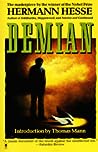
Demian: The Story of Emil Sinclair's Youth

Demian: The Story of Emil Sinclair's Youth 


In the Prolog to Demian, Herman Hesse states that "each man's life represents a road toward himself, an attempt at such a road, the intimation of a path." (p. 2) Does reality exist outside of our "constructed self"? Is every man on the road instead? Hesse attempts to tell the tale of one young man's journey toward self-discovery thru Emil Sinclair and his relationship with Max Demian.
Demian gives a first-person narrative of Sinclair's life that was written shortly after World War I and focuses on significant moments from his early years, between the ages of ten and twenty. His friendship with Max Demian, an older boy who saves him from a bully and pushes him to think for himself in order to break free from his parents' pietistic lifestyle, dominates his childhood memories. Emil adopts Pistorius, a renegade theologian, as his new mentor after leaving for boarding school. He also develops platonic feelings for a young girl he sees in a park. He meets Demian again at the university where he enrolls and continues to grow spiritually until Demian departs for battle. Emil's realization that he doesn't require outside guardians like Demian leads to his eventual spiritual independence.

Hesse draws upon Nietzsche, Jung, and others for his ideas, but the story is almost an archetypal example of the search for both meaning and identity. The forming of an identity involves discovering values, forming beliefs, and learning how to deal with reality. It involves reconciling the two worlds of his life, the world of light represented by a home filled with order and Christian goodness, and the world of dark that exists in the streets of the town with the temptations of sex, violence, and lust. It is only through his relationship with Demian that Emil is able to escape from the temptations of this life, at least for a time.

Emil is not satisfied with a life of quiet piety. Life for Emil includes his dream life. He tells a friend, "I live in my dreams—that's what you sense. Other people live in dreams, but not in their own. That's the difference." (p. 118) The experiences of Emil are dramatic and result in a rejection of the conventional life for one of a seeker. In his search Emil confronts his beliefs, dreams, and more. An epiphany occurs on one spring day when he is attracted by a young woman in the park. He names her Beatrice and is soon transformed "into a worshiper in a temple." (p. 81) He says,
"I had an ideal again; life was rich with intimations of mystery and a feeling of dawn that made me immune to all taunts. I had come home again to myself, even if only as the slave and servant of a cherished image." (p. 81)
Thus the narrator describes what in Jungian terms is his "anima." This inspires him to create and to read as his journey takes him in a new direction. For Hesse and for the reader, it is always a path on "a road toward himself."

View all my reviews

Wednesday, March 31, 2021

Notes from Hermann Hesse


Books on Trial

 Recently I had to sort out my books again, because circumstances forced me to give away part of my library. . . 

Days later, when I was finished with the job, I realized for the first time how much my relationship to books had altered during these years, along with other things. There are whole categories of literature that I now cheerfully give away. There are authors whom it is no longer possible to take seriously. But what a comfort the Knut Hamsun is still alive! How fortunate there is Jammes*! And how nice it is to have cleared all the thick biographies of poets, with their boredom and their meager psychology. The rooms look brighter. Treasures remain behind and now they gleam far more brightly. Goethe stands there, Holderlin stands there, all of Dostoevsky stands there, Morike smiles, Arnim flashes audaciously, the Icelandic sagas outlast all troubles. Marchen and folk tales remain indestructible. And the old books, the books in pigskin with a theological look, which for the most part are so much dearer than all the new books, they too are still there. They are something that for once one doesn't mind being outlived by."

My Belief: Essays on Life and Art by Hermann Hesse. Denver Lindley, trans. Farrar, Straus and Giroux, New York. 1975, pp 93-95.

*Francis Jammes, French Poet (1868-1938)


Sunday, June 12, 2016

Essays for Humanity

My Belief: Essays on Life and ArtMy Belief: Essays on Life and Art 
by Hermann Hesse


“Without words, without writing and without books there would be no history, there could be no concept of humanity.”   ― Hermann Hesse


There are those writers who spin tales and tell imaginary stories and there are those who document their lives. These essays fall into the latter category within the oeuvre of Hermann Hesse. Each is a delight whether of personal detail, literary criticism, philosophy, or meditation on the meaning of life. Hesse had to write and most often he had to write about himself. There is little that he wrote that is not confessional in aspect and therapeutic in function. These essays provide milestones and assessments of his life and reading. They are a joy to read and consider alongside his fiction and other writings.

Here is an especially moving excerpt from his essay "The Magic of the Book":

For every thinking person each verse of each poet will show a new and different face to the reader every few years, will awaken a different resonance in him.  When as a youth I read for the first time, only partially understanding it, Goethe's Elective Affinities, that was a completely different book from the Elective Affinities that I have now read perhaps for the fifth time!  The great and mysterious thing about this reading experience is this:  the more discriminatingly, the more sensitively, and the more associatively we learn to read, the more clearly we see every thought and every poem in its uniqueness, its individuality, in its precise limitations and see that all beauty, all charm depend on this individuality and uniqueness--at the same time we come to realize ever more clearly how all these hundred thousand voices of nations strive toward the same goals, call upon the same gods by different names, dream the same wishes, suffer the same sorrows.  Out of the thousandfold fabric of countless languages and books of several thousand years, in ecstatic instants there stares at the reader a marvelously noble and transcendent chimera:  the countenance of humanity, charmed into unity from a thousand contradictory features." (pp 161-62)

View all my reviews

Thursday, April 16, 2015

Spiritual Journey

Peter CamenzindPeter Camenzind 
by Hermann Hesse


"That dream of mine which had shown me the splendor of life and intellect came true each day and warmed my heart with ambition, joy, and youthful vanity."(p 58)


Peter Camenzind is usually classified as a novel of education or bildungsroman. However I see two different fictional strands woven into this narrative: the story of a spiritual journey and a picaresque nature. Thus a simple and even mythic poetical story is filled with complexity that welcomes the reader willing and interested in exploring the meaning of Camenzind's education. Beginning with the myths of his childhood and continuing for about two hundred pages over eight chapters Peter narrates his experiences. It is a narrative style that is familiar to any who have read Demian or Steppenwolf.

The novel opens with the phrase, "In the beginning was the myth. God, in his search for self-expression, invested the souls of Hindus, Greeks, and Germans with poetic shapes and continues to invest each child's soul with poetry every day."(p 1) The novel is purely poetical, and its protagonist in time aspires to become a poet who invests the lives of men with reality in its most beautiful of forms. I found the story reminiscent of those of Siddhartha, Goldmund, and Harry Haller. Like them, Peter suffers deeply and undergoes many intellectual, physical, and spiritual journeys. Through these journeys he experiences the diverse landscapes of Germany, Italy, France, and Switzerland, as well as the breadth of emotions that humans experience during their lives. In a later stage of his life, he even embodies the ideal of St. Francis as he cares for a cripple.

Peter Camenzind, as a youth, leaves his mountain village with a great ambition to experience the world. I was reminded of Stephen Dedalus setting out for life at the end of The Portrait on an Artist as a Young Man. He heads to the university to escape his earlier life and eventually meets and falls in love with the painter, Erminia Aglietti and becomes a close friend to a young pianist named Richard. Greatly saddened because of the latter's death, he takes up wandering to soak up the diverse experiences of life.

Ever faced with the vicissitudes of life, Peer continually takes up alcohol as a means to confront the harshness and inexplicable strangeness that he encounters. He also meets and falls in love with another woman, Elizabeth, even though she will later marry someone else. Nevertheless his continuing journey through Italy changes him in many respects and changes his ability to love life and see beauty within all things. It is a new friendship with Boppi, an invalid, that helps him truly experience what it means to love other human beings. It seems that he comes to see a wonderful reflection of humanity in its best and noblest forms in Boppi, and the two forge an unbreakable friendship.
This is a novel that begins to explore some of the great themes of Hermann Hesse's later work. It is interesting to see these early stirrings and look forward to reading and rereading his later work with a deeper perspective.

View all my reviews

Wednesday, July 02, 2014

Man and Art


Hermann Hesse


Today is the birthday of Herman Hesse who was born on this day in 1877 in the German Black Forest town of Calw. Beyond the evidence found in his novels, Hesse’s correspondence and biographical details reflect a chronic disquietude, punctuated by more acute troubles — for example, a suicide attempt while still a teenager.  As relief from writing and society, he took up painting; the following notes comment on two of his novels from the twenties when he was still developing his world view of man and art.


My two favorite of Hesse's novels remain Steppenwolf and Demian.  In some respects they are related, for example by the influence of Nietzsche and Jung.  It was in Demian that a "comparatively mild-mannered traditionalist at odds with the world became a thoroughly Nietzschean individualist, iconoclast, and moralist. . . This Nietzschean sentiment found its immediate expression in Demian: a novelesque depiction of Hesse's own emancipation from traditional belief and thought, and of the crystallization of his own ethos.  In his Sinclair, Hesse himself emerged the man of tomorrow. " (Mileck, Herman Hesse, p 92-3)  In his novel that followed, Steppenwolf, the story of Harry Haller is that of a man and art, and is told in the transcendent manner of symbol and concept.  What follows are some notes that I wrote about Steppenwolf four years ago.

What does it mean to be Human?
notes on Der Steppenwolf


Our task as human beings is this:
Within our own unique personal lives
To move one step further along the path
From animal to human being.
- Hermann Hesse, in “Thou Shalt Not Kill”


A work like Steppenwolf is iconic in its artistic significance. Being so makes it more difficult to discuss the book as I would other "good" reads. A novel of ideas, one that challenges my own conception of the world, it raises more questions than it answers. It draws upon the ideas of other thinkers, notable Goethe and Nietzsche and Jung, and presents those ideas in new ways - challenging even those with which the author may agree. This is what Hermann Hesse set out to do in writing Der Steppenwolf in 1927.

The novel presents a complex narrative that combines three different styles within its structure; a straightforward preface introducing the protagonist, Harry Haller, a "Treatise on the Steppenwolf" in the form of a pamphlet that Harry accepts and interprets as a study of his own life, and Harry's own narrative which moves into a dream sequence when Harry enters the "Magic Theater". We meet characters, both women and men, at least one of whom may be Harry's alter ego or "anima" in Jungian terms. We see a man who would separate himself from the Nietzschean herd and values individuality. Most of all we encounter a man facing not the "two souls" that dwell within his breast, as Goethe described Faust, but one who faces innumerable souls in a personality that seems to be breaking up into different persons. Through it all Harry looks up to artistic "Immortals" as representative of an ideal in the form of idealized visions of Goethe and Mozart. Especially Mozart who plays a critical role in Harry's dreams.

What can I take away from this work? As I said it raises questions and the thoughts and process of reviewing the way I approach the world is one thing that this novel provides. With all great - read transcendent - works of art I continue to find new layers of meaning as I read and reread their pages. One fundamental question, and I think this is central to all of Hesse's writings, is what does it mean to be human? The philosophers from Plato and Aristotle have tried to define this, but Hesse's Steppenwolf continues to present the question and explore original ways to find the answer.


Hermann Hesse: Life and Art by Joseph Mileck.  U of California Press, 1980 (1978).
Steppenwolf by Hermann Hesse. Henry Holt & Company, New York. 1990 (1927).

Thursday, December 26, 2013

Journey of a Seeker

Demian 
by Hermann Hesse


“I have no right to call myself one who knows. I was one who seeks, and I still am, but I no longer seek in the stars or in books; I'm beginning to hear the teachings of my blood pulsing within me. My story isn't pleasant, it's not sweet and harmonious like the invented stories; it tastes of folly and bewilderment, of madness and dream, like the life of all people who no longer want to lie to themselves.”   ― Hermann Hesse, Demian


Herman Hesse writes in the Prologue to Demian, "Each man's life represents a road toward himself, an attempt at such a road, the intimation of a path."(p 2) Is there a reality apart from our "constructed self"? Rather is each man on the road? The story of Emil Sinclair and his relationship with Max Demian is Hesse's attempt to narrate one young man's journey on the road toward himself.

Demian presents a first person account of Sinclair's life recorded not long after World War I and centered on crucial episodes earlier in his life between the ages of ten and twenty. His memories of boyhood are dominated by his friendship with Max Demian, an older boy who rescues him from a bully and challenges him to exercise his own independent thought to liberate himself from his parents life of pietism. Upon going off to boarding school Emil adopts another mentor, a renegade theologian named Pistorius, and experiences platonic love for a young girl whom he glimpses in a park. At the university to which he matriculates he once again encounters Demian and continues his spiritual growth until Demian goes off to war. Emil's eventual spiritual independence occurs with his realization that he no longer needs external protectors like Demian.

Hesse draws upon Nietzsche, Jung and others for his ideas, but the story is almost an archetypal example of the search both for meaning and identity. The forming of an identity involves discovering values, forming beliefs, and learning how to deal with reality. It involves reconciling the two worlds of his life, the world of light represented by a home filled with order and Christian goodness, and the world of dark that exists in the streets of the town with the temptations of sex, violence and lust. It is only through his relationship with Demian that Emil is able to escape from the temptations of this life, at least for a time.
Emil is not satisfied with a life of quiet piety. Life for Emil thus includes his dream life. He tells a friend, "I live in my dreams--that's what you sense. Other people live in dreams, but not in their own. That's the difference." (p 118) 

The experiences of Emil are dramatic and result in a rejection of the convention life for one of a seeker. In his search Emil confronts his beliefs, dreams, and more. An epiphany occurs on one Spring day when he is attracted by a young woman in the park. He names her Beatrice and is soon transformed "into a worshiper in a temple." (p 81) He says,
"I had an ideal again, life was rich with intimations of mystery and a feeling of dawn that made me immune to all taunts. I had come home again to myself, even if only as the slave and servant of a cherished image."(p 81)
Thus the narrator describes what in Jungian terms is his "anima". This inspires him to create and to read as his journey takes him in a new direction. For Hesse and for the reader it is always a path on "a road toward himself".

View all my reviews

Sunday, October 30, 2011

Musings on Literature

Anomie


      “One cannot long remain so absorbed in contemplation of emptiness without being increasingly attracted to it. In vain one bestows on it the name of infinity; this does not change its nature. When one feels such pleasure in non-existence, one's inclination can be completely satisfied only by completely ceasing to exist.” - Emile Durkheim

Anomie is a term meaning "without Law" to describe a lack of social norms; normlessness". It describes a personal state of isolation and anxiety resulting from a lack of social control and regulation possibly resulting from the breakdown of social bonds between an individual and their community ties, with fragmentation of social identity and rejection of self-regulatory values. It was popularized by French sociologist Émile Durkheim in his influential book Suicide (1897). Durkheim borrowed the word from French philosopher Jean-Marie Guyau. It should be noted, however, that Durkheim never uses the term normlessness; rather, he describes anomie as "a rule that is a lack of rule," "derangement," and "an insatiable will." (Mestrovic, Stjepan. Emile Durkheim and The Reformation of Sociology) For Durkheim, anomie arises more generally from a mismatch between personal or group standards and wider social standards, or from the lack of a social ethic, which produces moral deregulation and an absence of legitimate aspirations. This is a nurtured condition: Anomie in common parlance is thought to mean something like "at loose ends". The Oxford English Dictionary lists a range of definitions, beginning with a disregard of divine law, through the 19th and 20th century sociological terms meaning an absence of accepted social standards or values. Most sociologists associate the term with Durkheim, who used the concept to speak of the ways in which the actions of an individual are matched, or integrated, with a system of social norms and practices ... Durkheim also formally posited anomie as a mismatch, not simply as the absence of norms. Thus, a society with too much rigidity and little individual discretion could also produce a kind of anomie, a mismatch between individual circumstances and larger social mores. Thus, fatalistic suicide arises when a person is too rule-governed, when there is ... no free horizon of expectation. 

 In Albert Camus's existentialist novel, The Stranger, the bored, alienated protagonist Meursault struggles to construct an individual system of values as he responds to the disappearance of the old. He exists partly in a state of anomie, as seen from the apathy evinced in the opening lines: "Aujourd’hui, maman est morte. Ou peut-être hier, je ne sais pas" ("Today mother died. Or maybe yesterday, I don't know"). When Mersault is prosecuted for shooting an Arab man during a fight, the prosecuting attorneys seem more interested in the inability or unwillingness of Meursault to cry at his mother's funeral than the murder of the Arab, because they find his lack of remorse offensive. The novel ends with Meursault recognizing the universe's indifference toward humankind. In the first half of the novel Meursault is clearly an unreflected, unapologetic individual. Ultimately, Camus presents the world as essentially meaningless and therefore, the only way to arrive at any meaning or purpose is to make it oneself. 

Fyodor Dostoyevsky, whose work can be viewed as a philosophical precursor to existentialism, expressed a similar concern in his novels. In The Brothers Karamazov it is expressed by Ivan that in the absence of God and immortal life, everything would be lawful. That one can do as one likes, but this one cannot. The novel, in part, explores the existence of God, the nature of truth, and the importance of forgiveness through the actions of its characters. Raskolnikov, the anti-hero of Crime and Punishment, puts this philosophy into action when he kills an elderly pawnbroker and her sister, later rationalizing this act to himself with the words, "...it wasn’t a human being I killed, it was a principle!" Raskolnikov's inner conflict in the opening section of the novel results in a utilitarian-altruistic justification for the proposed crime: why not kill a wretched and "useless" old moneylender to alleviate the human misery? His nihilism can be seen as a variation on anomie.

Hermann Hesse's Der Steppenwolf can also be seen as a demonstration of anomie.The novel tells the story of a middle-aged man named Harry Haller who is beset with reflections on his being ill-suited for the world of "everybody", the regular people. In his aimless wanderings about the city he is given a book which describes the "Faustian duality" expressed by two natures of man: one "high", spiritual and "human"; while the other is "low" and animal-like. Thus, man is entangled in an irresolvable struggle, never content with either nature. While Haller longs to live free from social convention, he continually lives as a bourgeois bachelor. Haller argues that the men of the Dark Ages did not suffer more than those of Classical Antiquity.   It is rather those who live between two times, those who do not know what to follow, that suffer the most.

 The characters Vladimir and Estragon in Samuel Beckett's absurdist play Waiting For Godot also express a sense of anomie. The play follows two consecutive days in the lives of a pair of men who divert themselves while they wait expectantly and unsuccessfully for someone named Godot to arrive. Frustrated at the long wait, they think of what to do to pass the time. Estragon suggests that they hang themselves, but since they are concerned that they might not both die, they decide to do nothing: "It's safer", explains Estragon. Another character, Lucky, describes an impersonal and callous God. Lucky next asserts that man 'wastes and pines', mourns an inhospitable earth, and claims that he [man] diminishes in a world that does not nurture him". The play illustrates an attitude toward man's experience on earth: the poignancy, oppression, camaraderie, hope, corruption, and bewilderment of human experience that can only be reconciled in the mind and art of the absurdist. 

 Is anomie a symptom of the decline of man or merely a growing pain on the way to a new and better or different culture? My reading of literature raises the question but the search for an answer continues.

"Years have passed, I suppose.  I'm not really counting them anymore.  But I think of this thing often: Perhaps there is a Golden Age someplace, a Renaissance for me sometime, a special time somewhere, somewhere but a ticket, a visa, a diary-page away.  I don't know where or when.  Who does?  Where are all the rains of yesterday?"  
 - Roger Zelazny, "This Moment of the Storm"

Wednesday, September 22, 2010


Poem For Autumn


Hermann Hesse is known primarily for his novels but he was also a poet and the following poem captures both the beauty of autumn and the poignance of the passing of summer with inspiring verse.


September

The garden is mourning,
The chilli rain is sinking into the flowers.
The summer is shivering
Towards his end.

Golden leave by leave is dropping
Down from the high acacia.
Summer’s smiling astonished and droopy
In the dying dream of the garden.

For a long while
He is standing, beside the roses, longing for a rest
Slowly he closes his wide eyes
Which became tired.

Tuesday, January 05, 2010


What does it mean to be Human?

notes on Der Steppenwolf


Our task as human beings is this:
Within our own unique personal lives
To move one step further along the path
From animal to human being.
- Hermann Hesse, in “Thou Shalt Not Kill”


A work like Steppenwolf is iconic in its artistic significance. Being so makes it more difficult to discuss the book as I would other "good" reads. A novel of ideas, one that challenges my own conception of the world, it raises more questions than it answers. It draws upon the ideas of other thinkers, notable Goethe and Nietzsche and Jung, and presents those ideas in new ways - challenging even those with which the author may agree. This is what Hermann Hesse set out to do in writing Der Steppenwolf in 1927.

The novel presents a complex narrative that combines three different styles within its structure; a straightforward preface introducing the protagonist, Harry Haller, a "Treatise on the Steppenwolf" in the form of a pamphlet that Harry accepts and interprets as a study of his own life, and Harry's own narrative which moves into a dream sequence when Harry enters the "Magic Theater". We meet characters, both women and men, at least one of whom may be Harry's alter ego or "anima" in Jungian terms. We see a man who would separate himself from the Nietzschean herd and values individuality. Most of all we encounter a man facing not the "two souls" that dwell within his breast, as Goethe described Faust, but one who faces innumerable souls in a personality that seems to be breaking up into different persons. Through it all Harry looks up to artistic "Immortals" as representative of an ideal in the form of idealized visions of Goethe and Mozart. Especially Mozart who plays a critical role in Harry's dreams.

What can I take away from this work? As I said it raises questions and the thoughts and process of reviewing the way I approach the world is one thing that this novel provides. With all great - read transcendent - works of art I continue to find new layers of meaning as I read and reread their pages. One fundamental question, and I think this is central to all of Hesse's writings, is what does it mean to be human? The philosophers from Plato and Aristotle have tried to define this, but Hesse's Steppenwolf continues to present the question and explore original ways to find the answer.


Steppenwolf by Hermann Hesse. Henry Holt & Company, New York. 1990 (1927)