Wednesday, October 21, 2026

Meditation on Life

Stone Yard Devotional

Stone Yard Devotional 


“Our Simone once took me to task over my ‘sneering’ about prayer. My notion of prayer was juvenile: forget this telephone line to God bullshit, she snapped, hot with impatience. It wasn’t even about God, she said, which I thought must surely be blasphemous."


The story follows an unnamed narrator in her late 50s or 60s who abruptly abandons her marriage, her social circles, and her decades-long career as a wildlife conservationist in Sydney. Burned out by the "inescapable imperative to generate garbage" and paralyzed by climate despair—the agonizing realization that her lifelong efforts to protect the planet have failed to halt its destruction—she flees.
She takes refuge in a small, cloistered Catholic convent hidden away on the stark, dry plains of the Monaro region in rural New South Wales, near her childhood home. Crucially, the narrator is a staunch atheist. She has no desire for religious conversion, nor does she know how to pray. Yet, she finds a profound, radical comfort in the passivity, absolute silence, and strict liturgical labor of the nuns. What the sisters call prayer, she simply calls thinking.

I appreciated the author's ability to maintain tension in a book where "not all that much happens, yet worlds are revealed." From the first page, I wondered what kind of book this was. Wood explicitly explores "action as the antidote to despair," contrasting the unusual activism of Helen Parry with the quiet, structural, day-to-day "habitual kindness" practiced by the cloistered nuns. By the end of the book I just wanted to return to the beginning and reread it. It was that good.


View all my reviews

Friday, October 16, 2026

Clerical Corruption

The Crime of Father Amaro

The Crime of Father Amaro 


"Ah, farewell, farewell!"


The story concerns the arrival of Father Amaro Vieira, a handsome, virile young priest with no real calling for the ministry, in his new parish. He stays at the house of a certain São Joaneira, who is also the mistress of Amaro's superior, Canon Dias. Soon Amaro is overwhelmed by the physical desire for the pious and impressionable daughter of São Joaneira, Amélia.
They soon develop a mutual infatuation that becomes a manipulative and destructive affair. Amaro and his fellow clergymen systematically break up Amélia’s engagement to a local freethinker to gain access to her. When Amélia inevitably gets pregnant, the “crime” of the title moves from a metaphorical breaking of vows to a real-life, terrifying conspiracy to protect Amaro’s reputation and career.  

This novel, first published in 1875, stands as a foundational masterpiece of Portuguese realism and naturalist literature. Set in the provincial cathedral town of Leiria, the novel is a scathing, darkly comedic, and tragic indictment of clerical corruption, religious hypocrisy, and the stagnant bourgeois society of 19th-century Portugal.

View all my reviews

Sunday, October 11, 2026

Books on List


Reading Lists


Another Reading List


I found this list here and since I have read more than I have not read - the books I have not read so far are in bold (I will try to work them into my backlist):

Don Quixote - Miguel de Cervantes
Things Fall Apart - Chinua Achebe
Fairy Tales - Hans Christian Andersen
Pride and Prejudice - Jane Austen
Old Goriot - Honore de Balzac
Trilogy: Molloy, Malone Dies, The Unnameable - Samuel Beckett
Decameron - Giovanni Boccaccio
Collected Fictions - Jorge Luis Borges
Wuthering Heights - Emily Bronte
The Stranger - Albert Camus
Poems - Paul Celan
Journey to the End of the Night - Louis-Ferdinand Celine
Canterbury Tales - Geoffrey Chaucer
Nostromo - Joseph Conrad
The Divine Comedy - Dante Alighieri
Great Expectations - Charles Dickens*
Jacques the Fatalist and His Master - Denis Diderot
Berlin Alexanderplatz - Alfred Doblin
Crime and Punishment - Fyodor Dostoyevsky*
The Idiot - Fyodor Dostoyevsky
The Possessed - Fyodor Dostoyevsky
The Brothers Karamazov - Fyodor Dostoyevsky*
Middlemarch - George Eliot*
Invisible Man - Ralph Ellison
Medea - Euripides
Absalom, Absalom - William Faulkner
The Sound and the Fury - William Faulkner*
Madame Bovary - Gustave Flaubert
A Sentimental Education - Gustave Flaubert
Gypsy Ballads - Federico Garcia Lorca
One Hundred Years of Solitude - Gabriel Garcia Marquez
Love in the Time of Cholera - Gabriel Garcia Marquez
The Epic of Gilgamesh
Faust - Johann Wolfgang von Goethe*
Dead Souls - Nikolai Gogol
The Tin Drum - Günter Grass
The Devil to Pay in the Backlands - Joao Guimaraes Rosa
Hunger - Knut Hamsun
The Old Man and the Sea - Ernest Hemingway
The Odyssey - Homer*
The Iliad - Homer
A Doll's House - Henrik Ibsen
The Book of Job
Ulysses - James Joyce
The Complete Stories - Franz Kafka
The Trial - Franz Kafka
The Castle - Franz Kafka
The Recognition of Sakuntala - Kalidasa
The Sound of the Mountain - Yasunari Kawabata
Zorba the Greek - Nikos Kazantzakis*
Sons and Lovers - D H Lawrence
Independent People - Halldor K Laxness
Complete Poems - Giacomo Leopardi
The Golden Notebook - Doris Lessing
Pippi Longstocking - Astrid Lindgren
Diary of a Madman and Other Stories - Lu Xun
Mahabharata
Children of Gebelawi - Naguib Mahfouz
Buddenbrooks - Thomas Mann
The Magic Mountain - Thomas Mann*
Moby Dick - Herman Melville
Essays - Michel de Montaigne
History - Elsa Morante
Beloved - Toni Morrison
The Tale of Genji - Murasaki Shikibu
The Man without Qualities - Robert Musil*
Lolita - Vladimir Nabokov
Najl's Saga
1984 - George Orwell*
Metamorphoses - Ovid
The Book of Disquiet - Fernando Pessoa
The Complete Tales - Edgar Allan Poe
Remembrance of Things Past - Marcel Proust
Gargantua and Pantagruel - Francois Rabelais
Pedro Paramo - Juan Rulfo
The Mathnawi - Jalalu'l-Din Rumi
Midnight's Children - Salman Rushdie
The Bostan of Saadi - Sheikh Saadi of Shiraz
A Season of Migration to the North - Tayeb Salih
Blindness - Jose Saramago
Hamlet - William Shakespeare*
King Lear - William Shakespeare
Othello - William Shakespeare
Oedipus the King - Sophocles
The Red and the Black - Stendhal
The Life and Opinions of Tristam Shandy - Laurence Sterne
Confessions of Zeno - Italo Svevo
Gulliver's Travels - Jonathan Swift
War and Peace - Leo Tolstoy*
Anna Karenina - Leo Tolstoy
The Death of Ivan Ilyich and Other Stories - Leo Tolstoy
Selected Stories - Anton Chekhov
Thousand and One Nights
The Adventures of Huckleberry Finn - Mark Twain
Ramayana - Valmiki
The Aeneid - Virgil
Leaves of Grass - Walt Whitman
Mrs. Dalloway - Virginia Woolf*
To the Lighthouse - Virginia Woolf
Memoirs of Hadrian - Marguerite Yourcenar*

Books with an * are particular favorites.

Tuesday, October 06, 2026

University

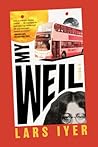
My Weil

My Weil 


"Police helicopters overhead." 
- Lars Iyer, My Weil


My Weil by Lars Iyer is a razor sharp, darkly hilarious satire of contemporary academia, intellectual alienation and the desperate search for meaning in a bleak world.
The novel is set at a decaying post-1992 university in Manchester, and follows a group of disillusioned PhD students studying “Disaster Studies.” They drink themselves silly, wander the rain-drenched ruins of industry, and churn out impenetrable theory, all the while knowing their academic prospects are pretty much nil. Their cynical, stagnant world is shattered by the arrival of Mariska, a brilliant, austere student obsessed with the French philosopher and mystic Simone Weil. Mariska’s sincere embrace of Weil’s ideas about suffering, grace, and self-neglect is set against the ironic indifference of the group, creating a sense of intrigue and existential unease.


View all my reviews