Sunday, August 23, 2026

Northern Woods

History of Wolves


History of Wolves 

by Emily Fridlund


History of Wolves, Emily Fridlund's first book and a finalist for the 2017 Man Booker Prize, is an eerie, atmospheric coming-of-age tale that examines the perilous limits of social isolation, belief, and complicity. The novel, which is set in the frigid, sparse woods of northern Minnesota, substitutes a slow-burning psychological tension for conventional suspense. 
The story, which is told from the viewpoint of Madeline "Linda" Furston, 37, recalls the crucial summer she turned fourteen. Linda is an outsider at home and at school because she was raised by distant, careless parents in almost complete seclusion on the dilapidated grounds of a former hippie commune. When the Gardners, a young family of four-year-old Paul, father Leo, and mother Patra, move into a cabin across the lake, her lonely routine changes. After being hired to watch Paul, Linda quickly becomes desperate to fit in with their seemingly cozy circle. However, Linda encounters the family's extreme Christian Science beliefs, which oppose medical intervention, as Paul's health clearly declines. 
The narrative's emotional core is formed by her passive observation of Paul's deteriorating condition and her reluctance to step in.

View all my reviews

Saturday, August 22, 2026

Morse and Lewis

Last Bus to Woodstock (Inspector Morse, #1)

Last Bus to Woodstock 


“He'd no time for reports. He suspected that about 95% of the written word was never read by anyone anyway.”  ― Colin Dexter, Last Bus to Woodstock


Inspector Endeavor Morse and Sergeant Lewis made their iconic debuts in Colin Dexter's Last Bus to Woodstock (1975), which established the cerebral, convoluted model that characterized contemporary British police procedures.

Two young ladies are waiting at a bus stop in Oxford on a wet nite at the beginning of the story. One of them, Sylvia Kaye, decides to hitchhike to Woodstock and is later brutally murdered and found dead behind a pub. The case is given to Inspector Morse and his meticulous partner, Sergeant Lewis. Morse must use deduction, crosswords, and astute psychological insight to navigate a convoluted web of deceit, covert affairs, and contradicting testimony from the bus's driver and passengers in the absence of much tangible evidence.

View all my reviews

Friday, August 21, 2026

Defending Freedom

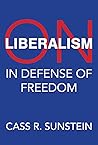
On Liberalism: In Defense of Freedom

On Liberalism: In Defense of Freedom 


“If government is to respect people's autonomy, or to treat them with dignity, it should not deprive them of freedom. It should treat them as adults, rather than children or infants.”
― Cass R. Sunstein


Legal scholar Cass R. Sunstein provides a constructive, "big-tent" defense of the liberal tradition against growing nationalist and populist criticisms in On Liberalism: In Defense of Freedom. Building on his training in behavioral economics and his essay "Why I Am a Liberal" from 2023, Sunstein presents liberalism as a dynamic framework intended to maximize human freedom and individual flourish.

Sunstein begins by listing dozens of essential tenets that characterize a liberal commitment, including institutional pluralism, social protections, and negative rights. Sunstein contends that allowing people to experiment with different lifestyles is the ultimate goal of liberalism, drawing heavily from John Stuart Mill. He asserts that in order for people to truly exercise their right to choose, the state must support certain conditions (such as nudge theory, social safety nets, and regulation).

The book's central theoretical argument pits Friedrich Hayek's market-based, spontaneous order against John Stuart Mill's progressive, experimental vision. Regretfully, Sunstein favors active institutional mechanisms over state models that are strictly non-interventional.

Sunstein presents a proactive, upbeat vision for contemporary governance rather than just responding to illiberalism. He makes a convincing case for practical reform by fusing political philosophy, constitutional law, and behavioral insights.

Unfortunately, Sunstein's definition of liberalism is too broad to produce a clear political program due to his attempt to accommodate positive rights and extensive regulatory interventions. As a classical liberal, I thought Sunstein's criticism of Hayek was a little unresolved because he underestimated how government interventions and special-interest capture can skew free choices.Despite his shortcomings, Sunstein offers readers who want to comprehend how progressive liberalism tries to balance individual liberty with governmental action an interesting and relevant manifesto.

View all my reviews

Thursday, August 20, 2026

The Aim of Eloquence

On Eloquence

On Eloquence 


"Eloquence . . . is a play of words."


This poignant book masterfully illustrates the nature of eloquence and the necessity of it in our literature. Eloquence is defined by Donoghue as "those deep skills of imagination by which we get into words, what, when it is there makes them memorable, and what, when it is gone, makes them empty" by R. P. Blackmur. This is but one illustration of the eloquence examined in this intriguing journey into the essence of literary language.
Donoghue defends esthetic language, challenging the contemporary inclination to view words only as instruments for debate, politics, or practical communication. Donoghue's main goal is to distinguish between eloquence and rhetoric. Rhetoric is persuasive and transactional language that is used to accomplish a particular objective, sway opinions, or further an agenda. Eloquence is "gratuitous" and self-sufficient; it is a burst of artistic energy and beauty for its own sake, functioning without regard to purpose or utility. "Saying the right, beautiful thing, regardless of consequences" is his definition of eloquence. Donoghue contends that eloquence functions as an indispensable act of individual freedom and artistic joy (sprezzatura) in a world where "sedated language" and predictable political posturing predominate. The book, which consists of seven linked essays, reads less like a strict academic treatise and more like a contemplative meditation:

View all my reviews

Wednesday, August 19, 2026

A Memoir

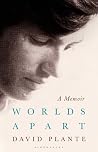
Worlds Apart: A Memoir

Worlds Apart: A Memoir 


This is the second volume taken from David Plante's lengthy fifty-year diary, Worlds Apart: A Memoir (2015), is a companion to his first volume, Becoming a Londoner. The memoir, which mostly focuses on the 1980s, depicts Plante's life with his longtime partner, poet and art publisher Nikos Stangos, as they move through high-society literary and artistic circles in London, Italy, New York, and Oklahoma.

The memoir offers frank, unvarnished insights into well-known cultural personalities. Highlights include visiting Israel with Philip Roth (who might have taken inspiration from Plante for a character in The Counterlife), living in a Tulsa home with feminist critic Germaine Greer, and hanging out with poet Stephen Spender and artist David Hockney.

Plante considers his forty-year collaboration with Stangos in great detail. He examines the conflicts of faithfulness, jealousy between partners, self-doubt, and how long-term love changes. Set in the 1980s, the story documents the start of the HIV/AIDS epidemic among his friends, juxtaposing moments of grief and mortality with high-society rumors. It is a fascinating exploration of the life of one of my favorite authors.

View all my reviews

Revolution

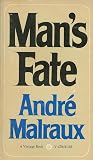
Man's Fate

Man's Fate

 by 


“It was Ferral's experience that governments are indulgent task-masters, that they treat their favorite children, the big financial groups, with commendable leniency. But while governments are accustomed to seeing the treasury robbed, they do not like to see it robbed of all hope.”
― André Malraux, Man's Fate


Man's Fate (La Condition humaine) by André Malraux is a towering masterpiece of 20th-century existentialist philosophy and political literature. It was published in 1933 and won the coveted Prix Goncourt. The novel explores deep, timeless issues of human loneliness, dignity, and purpose against the turbulent backdrop of the 1927 Communist uprising in Shanghai.

Over the course of several days, the novel follows a varied group of revolutionaries, conspirators, and opportunists as the Shanghai uprising takes place, only to be brutally betrayed and put down by Chiang Kai-shek's Nationalist forces.

Instead of focusing only on political strategy, Malraux examines the psychological motivations of those enmeshed in historical turmoil. High-stakes killings, street battles, ideological differences with Moscow, and the catastrophic fallout from defeat are all woven throughout the story.


View all my reviews

Saturday, August 15, 2026

Hughes' Poetic Translations

Selected Translations: Poems

Selected Translations: Poems 


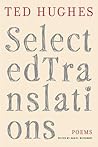
Ted Hughes' Selected Translations, edited by Daniel Weissbort, provides a thorough understanding of Hughes as a limitless interpreter of world literature as well as an English poet. The volume, which collects his work from several decades, covers modernist poetry, classical drama, ancient mythology, and experimental theater.

The book contains passages from religious writings like Sir Gawain and the Green Knight and The Tibetan Book of the Dead, as well as classical Greek dramatists like Euripides' Alcestis and Aeschylus' Oresteia.

It also includes pieces by contemporaries from the 20th century, such as Paul Éluard, Yehuda Amichai, Jürgen Pilinszky, Vasko Popa, and Yves Bonnefoy. Additionally, it contains passages from Hughes's essays, letters, and unpublished manuscripts, as well as passages from Orghast, a dramatic work written in an invented language derived from Greek and Farsi.

Hughes was a well-known proponent of literal rendering as opposed to poetic embellishment. He maintained that adding superfluous devices to convey the "spirit" of a poem weakens the piece. His translations translate ancient violence and metamorphosis into straightforward, muscular English while maintaining the elemental, mythic, and brutal intensity found in his own poetry (such as Crow or Gaudete). Hughes believed that translated poetry was a universal language that could transcend ideological differences, and he co-founded the Modern Poetry in Translation journal in 1965.

View all my reviews

Sunday, August 09, 2026

Romantic Adventure

Ninety-Three

Ninety-Three 


Ninety-Three by Victor Hugo is a glorious romantic imagining of an episode from the year 1793, during the French Revolution and the year of the Great Terror. 
The scene is in Brittany, where the leaders of the Revolution are being opposed by counterrevolutionary forces. The elderly Marquise de Lantenac, the group's leader, is a romantic hero in the purest sense. After arriving on the western coast, this Breton noble assumes the identity of a peasant. His goal is to lead the rebels, use them for the royalist cause, and create a chance for an English military invasion. He pursues this goal with ruthless determination.

The Revolutionary forces under the command of Gauvain, his grand-nephew, appear to be in control of his destiny. Gauvain, the former Vicomte de Gauvain, is facing Lantenac after giving up his aristocratic background to support the republican cause. Gauvain is in charge of the republican forces that support Marat and are entrusted with finding and eliminating Lantenac.

Cimourdain, a former priest and Gauvain's tutor who is now an ardent revolutionary, is the third main character. The political principles that Gauvain has embraced were initially taught to him by Cimourdain. Cimourdain has a secret—the one weak point in his ideological armor—because he has loved Gauvain since he was a young child, treating him like the son he never had. Marat, the revolutionary leader, sends Cimourdain to the Vendée as a special agent to make sure Gauvain stays loyal. Marat has heard unsettling rumors that Gauvain might be able to show mercy, which the revolutionary leaders consider to be a cardinal sin.

In addition to the intensely thrilling action, the story's ideas also contribute to its tension. Gauvain tells Cimourdain at one point:
"Among the lions, Louis XVI was a sheep. He made an attempt to escape in order to protect himself.
 . . But not everyone can be a lion who wants to. His feeble attempt was regarded as a crime."
He asks Cimourdain, "Lions? What are they?"
"This made Cimourdain think. He raised his head and said, 'Those lions are consciences. Those lions are ideas. Those lions are principles.'" (pp. 197-98)

While Gauvain is a man of action, a revolutionary for the republic, he is also a thinker, and it is his thoughts about the humanity of men that lead him to his ultimate actions.
The grandeur of this novel is superb, while Hugo builds suspense in every section. Some scenes are so vivid that you are unlikely to forget them. One scene that is sometimes excerpted from the novel is the great cannon episode, depicting a loose cannon on a ship of anti-revolutionary French Royalists sailing towards Brittany to aid the anti-revolutionary Chouannerie rebellion.
The whole of the novel is like this, filled with one astonishing experience after another, keeping this reader spellbound.

View all my reviews

The Constructed Self

Demian: The Story of Emil Sinclair's Youth

Demian: The Story of Emil Sinclair's Youth 


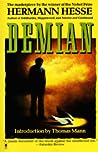
In the Prolog to Demian, Herman Hesse states that "each man's life represents a road toward himself, an attempt at such a road, the intimation of a path." (p. 2) Does reality exist outside of our "constructed self"? Is every man on the road instead? Hesse attempts to tell the tale of one young man's journey toward self-discovery thru Emil Sinclair and his relationship with Max Demian.
Demian gives a first-person narrative of Sinclair's life that was written shortly after World War I and focuses on significant moments from his early years, between the ages of ten and twenty. His friendship with Max Demian, an older boy who saves him from a bully and pushes him to think for himself in order to break free from his parents' pietistic lifestyle, dominates his childhood memories. Emil adopts Pistorius, a renegade theologian, as his new mentor after leaving for boarding school. He also develops platonic feelings for a young girl he sees in a park. He meets Demian again at the university where he enrolls and continues to grow spiritually until Demian departs for battle. Emil's realization that he doesn't require outside guardians like Demian leads to his eventual spiritual independence.

Hesse draws upon Nietzsche, Jung, and others for his ideas, but the story is almost an archetypal example of the search for both meaning and identity. The forming of an identity involves discovering values, forming beliefs, and learning how to deal with reality. It involves reconciling the two worlds of his life, the world of light represented by a home filled with order and Christian goodness, and the world of dark that exists in the streets of the town with the temptations of sex, violence, and lust. It is only through his relationship with Demian that Emil is able to escape from the temptations of this life, at least for a time.

Emil is not satisfied with a life of quiet piety. Life for Emil includes his dream life. He tells a friend, "I live in my dreams—that's what you sense. Other people live in dreams, but not in their own. That's the difference." (p. 118) The experiences of Emil are dramatic and result in a rejection of the conventional life for one of a seeker. In his search Emil confronts his beliefs, dreams, and more. An epiphany occurs on one spring day when he is attracted by a young woman in the park. He names her Beatrice and is soon transformed "into a worshiper in a temple." (p. 81) He says,
"I had an ideal again; life was rich with intimations of mystery and a feeling of dawn that made me immune to all taunts. I had come home again to myself, even if only as the slave and servant of a cherished image." (p. 81)
Thus the narrator describes what in Jungian terms is his "anima." This inspires him to create and to read as his journey takes him in a new direction. For Hesse and for the reader, it is always a path on "a road toward himself."

View all my reviews

Sunday, August 02, 2026

Tension and Murder

Literary Murder (Michael Ohayon, #2)

Literary Murder 

"The tension in the hall had slackened, as if the lights had gone out." - Batya Gur, a "Literary Murder"


Batya Gur's "Literary Murder: A Critical Case" is a cerebral, intensely atmospheric police procedural that strikes a balance between a sharp sociological critique of Israeli academia and a conventional whodunit framework. The story centers on Chief Superintendent Michael Ohayon of the Jerusalem Serious Crimes Unit, a moody and intelligent man. He is asked to look into a startling double murder that takes place at Hebrew University Secondary School over the course of a single weekend. During a scuba diving excursion in Eilat, Iddo Dudai, a bright young lecturer, is subtly poisoned. In his campus office, Shaul Tirosh, the head of the Hebrew Literature Department and a highly regarded poet and cultural icon, is brutally bludgeoned to death. As Ohayon delves deeper, he must negotiate a closed-off, fiercely protective ecosystem where intellectual hierarchy, tenure, and artistic jealousy foster a murderous environment.

Readers who anticipate a thriller with lots of action and adrenaline may be disappointed. In order to allow the psychological tension to develop gradually through dialogue and character analysis, Gur purposefully takes a slow, methodical pace. Gur has a master's degree in Hebrew literature, so her portrayals of university life are very real. The book includes in-depth discussions and lengthy lectures on literary hermeneutics. These scenes are a great way to ground the world, but some mystery fans might find them a little boring. Ohayon is a particularly interesting, complex protagonist. He reads suspects like texts using his knowledge of literature and history, revealing their closely guarded secrets and hidden weaknesses. Readers who are patient will find this murder mystery to be a very intricate, slow-burning procedural. Anyone who enjoys a cerebral, atmospheric mystery in which the psychological terrain is as perilous as the crime should definitely pick it.

View all my reviews