Showing posts with label Evelyn Waugh. Show all posts

Friday, March 01, 2024

Lost in Africa

Scoop
Scoop 


“News is what a chap who doesn't care much about anything wants to read.”   ― Evelyn Waugh, Scoop


Scoop (London, 1938) by Evelyn Waugh is a satire on journalism. It is based on Waugh's 1935 assignment to cover the conflict between Abyssinia and Italy while working as a war correspondent for the London Daily Mail in Abyssinia (now Ethiopia). Waugh acknowledged that he was not very good at covering wars, but he did keep a close eye on what his fellow reporters were doing. The outcome was a comedic and satirical novel that mocks the newspaper industry and the journalism profession with a playful yet decidedly deadly tone.

The story centers upon a few humorous turns of events. Lord Copper, the conceited and uneducated proprietor of the Daily Beast, inadvertently dispatches William Boot, a naive nature columnist, to cover the conflict in the made-up nation of Ishmaelia in East Africa. At least geographically speaking, Ishmaelia and Abyssinia are identical. William learns a few fast lessons on the crafty methods used by journalists, who are constantly attempting to outsmart their peers and break a story. William returns to London as a well-known reporter after receiving many significant scoops on his own thanks to a string of fortunate events. However, all of it is meaningless to him, and he is glad to be going back to his remote and run-down country house, Boot Magna Hall, where his numerous eccentric relatives reside. Overall this is still an entertaining comedic read.


Friday, March 14, 2014

Two Comedies by Two Waughs

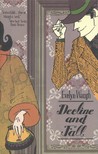
Decline and Fall Decline and Fall 
by Evelyn Waugh


“...any one who has been to an English public school will always feel comparatively at home in prison. It is the people brought up in the gay intimacy of the slums, Paul learned, who find prison so soul destroying.”  ― Evelyn Waugh, Decline and Fall 


Evelyn Waugh's first novel, Decline and Fall, is a delightful satiric comedy. It is based in part on Waugh's undergraduate years at Hertford College, Oxford, and his experience as a teacher in Wales. He is sent down from Oxford and as a result takes a position at the Llanabba school in Wales.  The school itself is dingy, depressing, and seems always on the verge of coming apart at the seams. The masters, Captain Grimes, Mr. Prendergast, and Paul, are all unqualified for their positions, the students are frightfully undisciplined, and little or no learning ever takes place within Llanabba Castle's walls.  In this episode and others I encountered the author's not so subtle satire and characteristic black humor in lampooning various features of British schools and society in the 1920s. 

The novel's title is a contraction of Edward Gibbon's The History of the Decline and Fall of the Roman Empire. But it also alludes to the German philosopher Oswald Spengler's The Decline of the West (1918–1922), which first appeared in an English translation in 1926 and which argued, among other things, that the rise of nations and cultures is inevitably followed by their eclipse. Waugh read both Gibbon and Spengler while writing his first novel.
I tremendously enjoyed the picaresque adventures of its hero, Paul Pennyfeather, as he encountered barely believable difficulties in "getting along". Waugh's characterization is superb while his satire is unambiguously hostile to much that was in vogue in the late 1920s, and themes of cultural change and confusion, moral disintegration and social decay all drive the novel forward and fuel its humor. This book was a joy to read even if you do not participate in all of Mr. Waugh's inside references. It is a worthy introduction to the novels of one of the finest authors of our century. 


 The Foxglove SagaThe Foxglove Saga 
by Auberon Waugh


“There is an old story about the boy at Eton who committed suicide. The other boys in his house were gathered together and asked if any of them could suggest a reason for the tragedy. After a long silence a small boy in the front put up his hand: 'Could it have been the food, sir?”  ― Auberon Waugh


Auberon Waugh's first novel, The Foxglove Saga, is a comic novel very much in the style of his father's earlier books and the result is very successful. Its hero, Martin Foxglove, is an abominably flawless paragon. While at school Martin chooses a set of friends considered inappropriate by his family and he abandons his Christian faith. His story and that of his friends, particularly the ugly, middle-class Kenneth Stoat and the unfortunate Martin O'Connor, makes for a slyly humorous and sometimes sadly funny novel. 
The plot is intentionally absurd, built around the central character's desire to implement the seven corporal Works of Mercy. The catholic Lady Foxglove parades them one by one, treating the list as if it provided some definitive road map to saintliness, while liberally reinterpreting her own self-interested actions as charitable ones, in order to cross another required work from the list. The irony here is that while the list provides some guidance as to how the merciful should act in advancing the welfare of others, Lady Foxglove's interventions always reduce the happiness of her intended beneficiaries.

I do not claim to have understood all of the sardonic details that Waugh includes but the story has plenty of references that are clear to anyone familiar with twentieth century British literature, especially if the name Waugh is below the title. The comic attitude of the book seems to be that any official machinery—the school, the hospital, the Army—can be made to go wrong by individual determination and lying. I would suggest that it is not Mr. Waugh who is amoral and cruel, but the machinery in which his characters are caught. Anarchism of this sort is viable, if not as a basis for life, at least for a comic novel and in his creation Auberon compares well with his more famous father as his first novel continues the family tradition of irreverent humor.

View all my reviews

Monday, October 28, 2013

Three by Waugh


Evelyn Waugh 

Today is the anniversary of the birth of Evelyn Waugh who was born in London on this day in 1903.  He is one of my favorite authors.  I have selected reviews of three of his novels including my favorite, Brideshead Revisited.  His humor is nothing less than delightful.


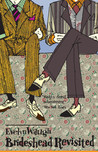
Brideshead RevisitedBrideshead Revisited


In his letter of 7 January 1945 Evelyn Waugh wrote to Nancy Mitford that (regarding Lady Marchmain) "no I am not on her side; but God is, who suffers fools gladly; and the book is about God." Nancy, in a subsequent letter (17 January 1945) commented that she was "immune from" the "subtle" Catholic propaganda supposedly in the novel. Well, I guess that I am in Nancy's camp, recognizing the excellence of this G.E.C. (Great English Classic) and in my own way fascinated by the role of God in it, I remain unmoved by any hidden proselytizing (perhaps too harsh a word). Brideshead Revisited is possibly Evelyn Waugh's greatest novel and certainly one of the best English novels of the twentieth century. The demonstration of the battle between the culture of a civilization dying in the aftermath of World War I and the modern "hollow" culture of the the twentieth century plays out in this drama of a family and their estate, Brideshead. The journey of Charles Ryder, who guides us through this story, from his first encounter with Sebastian Flyte and his first visit to Brideshead keeps the reader rapt until the final pages, when under the shadow of the Second World War Charles returns to Brideshead for a final visit. His growth through encounters with the Flyte children and their mother and father plays out against the background of the Brideshead and all that for which it stands. Waugh uses comic relief in a judicious manner to lighten the way for the reader in a way that keeps the serious themes of the novel from becoming overwhelming. This classic novel also provides a beautiful depiction of the experience of going up to Oxford during the 1920s.

Further thoughts: In his letters Waugh claims that the theme of the novel is death, but I am not sure we should trust the author to be completely accurate in that sweeping summary of what appears, upon reading, to be a complicated and thoroughly multi-layered meditation on, yes death, but also memory and loss and the source of spiritual nurturing for human beings. Charles finds his passion in art and is as successful in that endeavor as he is unsuccessful in love. The sadness that surrounds his relationships with the various members of the Marchmain clan mirrors the sadness of their decline. I am reminded of Mann's Buddenbrooks from the turn of the century which limned a not dissimilar family decline. In Brideshead a significant question is whether Charles can overcome his two lost loves--both of whom moved away from him more than he from them--with the love of life that he acquires through art. His journey involves a tumult of emotion and imagery told in such a compelling and magnificent way that it is easy to lose ones self in the prose. Rather than bias the reader I will not provide a conclusion or even hint where I come out with regard to Charles' life other than to suggest that, as T. S. Eliot once said with poetic grace, the end is there in the beginning.

If you like magnificent writing, biting wit, England (Oxford in particular) or Venice, or the serene beauty of traditional manners you will love this book.


 Decline and FallDecline and Fall 


Evelyn Waugh's first novel, Decline and Fall, is a delightful satiric comedy. It is based in part on Waugh's undergraduate years at Hertford College, Oxford, and his experience as a teacher in Wales. In it I encountered the author's not so subtle satire and characteristic black humor in lampooning various features of British society in the 1920s.
The novel's title is a contraction of Edward Gibbon's The History of the Decline and Fall of the Roman Empire. But it also alludes to the German philosopher Oswald Spengler's The Decline of the West (1918–1922), which first appeared in an English translation in 1926 and which argued, among other things, that the rise of nations and cultures is inevitably followed by their eclipse. Waugh read both Gibbon and Spengler while writing his first novel.
I tremendously enjoyed the picaresque adventures of its hero, Paul Pennyfeather, as he encountered barely believable difficulties in "getting along". Waugh's characterization is superb while his satire is unambiguously hostile to much that was in vogue in the late 1920s, and themes of cultural change and confusion, moral disintegration and social decay all drive the novel forward and fuel its humor. This book was a joy to read even if you do not participate in all of Mr. Waugh's inside references. It is a worthy introduction to the novels of one of the finest authors of our century.


A Handful of DustA Handful of Dust 


Evelyn Waugh’s A Handful of Dust, on several end-of-century Top 100 lists,was published on September 3, 1934. Waugh took the title for his novel from a line in T. S. Eliot’s The Waste Land — “I will show you fear in a handful of dust.” In Brideshead Revisited, Waugh returned to the same poem, sending Anthony Blanche out on an Oxford balcony to stutter a few lines from it. Waugh’s biographers have noted a particular connection to Eliot. Early in life, Waugh liked to associate himself with Eliot’s avant-garde style; in his late twenties, Waugh became a Catholic, as Eliot in his late twenties became Anglican; and later in life, both authors grew more conservative and wrote in support of preserving and improving the crumbling class system in Great Britain.
In this novel we have a comedy that contains tragic events, but still manages to entertain the reader with Waugh's brilliant satire and wit. The protagonist, Tony Last, is an ossified country squire. As one of that system’s most doomed representatives when we first meet him, Last is living in blinkered bliss at Hetton Abbey, a rambling Victorian mansion renovated in tasteless neo-Gothic style. He is blithely unaware of his wife's peccadilloes. When the battle over divorce heats up Tony goes on an expedition to South America with a con man. Whether the trip is made because he is merely fooled by the con man or as a reaction to the divorce proceedings it does not work out quite as he expects. Eventually he falls under the spell of a madman named Todd who has a beloved set of Dickens novels; it is his passion to hear them read aloud, and it is Tony's personal hell to be the one required to do this.
This is Waugh at his satirical best and I can forgive his use of Dickens as torture (even though reading him may be felt thusly to some people anyway). While I had trouble understanding the foibles of most of the characters I understood enough of the story to become mesmerized by his brilliant satire and witty prose.

View all my reviews

Saturday, July 27, 2013

A Shared Literary Vision

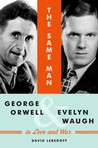
The Same Man: George Orwell and Evelyn Waugh in Love and WarThe Same Man: George Orwell and Evelyn Waugh in Love and War 
by David Lebedoff

"They would always lead completely different lives. But they both would devote those lives to writing. And though they wrote for different readers and in different voices, they left us a shared vision of their own time, and ours." (p xv)

Lebedoff takes the reader on a well researched, quick but sufficient journey through the lives and ideas of his two subjects, and in its biographical endeavors, the book succeeds admirably. However, Lebedoff's analysis lacks depth. The last chapter contains a list of comparisons between the two. The greatest enemy they saw was, as Waugh put it, "the Modern Age in arms." They hated totalitarianism with a passion but saw that even if totalitarianism was defeated, civilization as they knew it would remain in danger. Lebedoff writes: "What both believed—their core, who they were—was that individual freedom mattered more than anything else on earth and reliance on tradition was the best way to maintain it." But reliance on tradition and a belief in objective reality and objective truth was in decline. They also shared a trust in the common sense of the common man against the condescension of an upper-middle class. He ends his catalogue of ideological similarities: "It was in the freedom and courage to choose one's own life that Orwell and Waugh were most nearly the same". That their lives were deliberately chosen is the most valuable legacy that both offer to us now, in our own so-busy time."biographical endeavors, the book succeeds admirably.
Both writers saw the need for man to believe in a moral code, but Orwell thought he could have morality without religion . He wrote to Waugh that he liked Brideshead except for "hideous faults on the surface," one of these being the book's Catholic themes. But Waugh did not believe that morality would last without faith. For him, the days of spending Christianity's cultural and moral capital without embracing its creeds were coming to a swift end.
David Lebedoff's The Same Man is strongest when it tells the story of Waugh's and Orwell's lives, and useful when it shows the similarity of their critiques of modern society. Though exactly opposite in their beliefs about the root of the matter—Orwell chose this world, Waugh the next—the two men respected one another highly, perhaps in part because of their striking similarities. Both had willed themselves into being as writers and had consciously constructed personas. Orwell was the socialist proletarian whose Etonian accent and manner always gave him away, and Waugh was the country squire, whom few would ever mistake for a real aristocrat. Lebedoff’s project in his book is to explore this seeming paradox: Despite standing in the starkest opposition to each other in some respects, Evelyn Waugh and George Orwell were in other respects the same man.

View all my reviews

Saturday, May 04, 2013

Comic Novel with Tragic Moments

A Handful of DustA Handful of Dust 
by Evelyn Waugh

"Polly's party was exactly what she wished it to be, an accurate replica of all the best parties she had been to in the last year;  the same band, the same supper, and, above all, the same guests.  Hers was not the ambition to create a sensation, to have the party talked about in the months to come for any unusual feature, to hunt out shy celebrities or introduce exotic strangers.  She wanted a perfectly straight, smart party and she had got it." (p 55)

Evelyn Waugh’s A Handful of Dust, on several end-of-century Top 100 lists,was published on September 3, 1934. Waugh took the title for his novel from a line in T. S. Eliot’s The Waste Land — “I will show you fear in a handful of dust.” In Brideshead Revisited, Waugh returned to the same poem, sending Anthony Blanche out on an Oxford balcony to stutter a few lines from it. Waugh’s biographers have noted a particular connection to Eliot. Early in life, Waugh liked to associate himself with Eliot’s avant-garde style; in his late twenties, Waugh became a Catholic, as Eliot in his late twenties became Anglican; and later in life, both authors grew more conservative and wrote in support of preserving and improving the crumbling class system in Great Britain.
IN this novel we have a comedy that contains tragic events, but still manages to entertain the reader with Waugh's brilliant satire and wit. The protagonist, Tony Last, is an ossified country squire. As one of that system’s most doomed representatives when we first meet him, Last is living in blinkered bliss at Hetton Abbey, a rambling Victorian mansion renovated in tasteless neo-Gothic style. He is blithely unaware of his wife's peccadilloes. When the battle over divorce heats up Tony goes on an expedition to South America with a con man. Whether the trip is made because he is merely fooled by the con man or as a reaction to the divorce proceedings it does not work out quite as he expects. Eventually he falls under the spell of a madman named Todd who has a beloved set of Dickens novels; it is his passion to hear them read aloud, and it is Tony's personal hell to be the one required to do this.
This is Waugh at his satirical best and I can forgive his use of Dickens as torture (which reading him may be to some people anyway). While I had trouble understanding the foibles of most of the characters I understood enough of the story to become mesmerized by his brilliant satire and witty prose.

View all my reviews

Monday, September 03, 2012

Last, Ryder, and Evelyn Waugh

A Handful of Dust
A Handful of Dust 

“It would be a dull world if we all thought alike.”
 ― Evelyn Waugh, A Handful of Dust


Evelyn Waugh’s A Handful of Dust, on several end-of-century Top 100 lists,was published on September 3, 1934. Waugh took the title for his novel from a line in T. S. Eliot’s The Waste Land — “I will show you fear in a handful of dust.” In Brideshead Revisited, Waugh returned to the same poem, sending Anthony Blanche out on an Oxford balcony to stutter a few lines from it. Waugh’s biographers have noted a particular connection to Eliot. Early in life, Waugh liked to associate himself with Eliot’s avant-garde style; in his late twenties, Waugh became a Catholic, as Eliot in his late twenties became Anglican; and later in life, both authors grew more conservative and wrote in support of preserving and improving the crumbling class system in Great Britain.
Waugh's protagonist, Tony Last, is an ossified country squire. One of that system’s most doomed representatives. When we first meet him, Last is living in blinkered bliss at Hetton Abbey, a rambling Victorian mansion renovated in tasteless neo-Gothic style. He is blithely unaware of his wife's peccadilloes. Overall, it is a quirky tale that finds Tony in Africa under the spell of a madman named Todd. Mr. Todd has a beloved set of Dickens novels; it is his passion to hear them read aloud, and his decree that Last will do so until he is told to stop.
This is Waugh at his satirical best and I can forgive his use of Dickens as torture (which reading him may be to some people anyway) for I so enjoy his brilliant satire and witty prose.


_______________________________________


Mad World: Evelyn Waugh and the Secrets of Brideshead
Mad World: Evelyn Waugh
and the Secrets of Brideshead 


"'I am not I': yet Charles Ryder manifestly is Evelyn Waugh.  Brideshead Revisited contains as large a dose of autobiography as Charles Dicken's David Copperfield or Marcel Proust's A la recherch du temps perdue.  So who, then, was the 'thou' who was and was not 'he or she'?  The 'they' who were and were not 'they'?  What was the 'household of the faith' that was not Brideshead?  What were the events that inspired the novel?" (p 3)

I love the early novels of Evelyn Waugh simply because they are so funny, filled with epigrammatic sentences and a humor that verges on the fantastic and surreal. "Decline and Fall" is as sparkling as Voltaire's "Candide," and in some ways funnier for the twentieth-century reader, while "Vile Bodies" is a masterly period piece, the definitive satirical portrait of the 1920s "bright young things." Waugh can shock, too: Near the climax of "Black Mischief" (1932), the hero actually finds himself at a cannibal feast where he ends up eating his girlfriend.
In Mad World, Paula Byrne spends much of the book showing just how deeply the novelist drew on real people, places and events to produce his best known and most controversial novel, "Brideshead Revisited". Despite being exceptionally funny in places, "Brideshead Revisited" focuses, slowly but inexorably, on a religious theme: the working out of God's grace in human lives. In its pages Charles Ryder gradually progresses up a kind of ladder of love. Byrne pursues the autobiographical connections between Waugh, Tony Last of A Handful of Dust and Brideshead Revisited’s Charles Ryder. One link, says Byrne, is Madresfield Court, much of its architecture used as model for both Hetton Abbey and Brideshead Castle, many of its inhabitants used as model for his characters — notably, the gay Lord Beauchamp, squire of Madresfield, inspired Tony Last, and Beauchamp’s gay son Hugh Lygon, one of those with whom Waugh had an affair while at Oxford, inspired Brideshead’s Sebastian Flyte. Byrne’s title plays off Madresfield’s informal name of Mad Court or “Madders”; her title is also inspired by the nervous breakdown of Waugh’s later years:
He went mad, began hearing voices in his head. One of them kept telling him that he was homosexual. He wasn’t — he loved women too much for that — but there is no question that the creator of Sebastian Flyte and admirer of Lord Beauchamp had one of the great bisexual imaginations of the English literary tradition.
Byrne's biography is somewhat narrow in focus, concentrating on just the first 40 years of the writer's life, and with this focus she is able to maintain a fast pace and mirror the fun of his novels. Only in her last section does the story slow, becoming somewhat academic in needlessly highlighting all the correspondences between the world of Madresfield and the world of Brideshead. But she makes her case.
As she says in her prologue, "Mad World" illuminates the obsessions that shaped Waugh's life: "the search for an ideal family and the quest for a secure faith." Her book also reminds us just how much our lives are enriched and sustained by friendships.

Mad World by Paula Byrne. HarperCollins, 2010 (2009)
A Handful of Dust by Evelyn Waugh. Back Bay Books, 1977 (1934)

Saturday, October 02, 2010


Brideshead Revisited

by Evelyn Waugh


"My theme is memory, that winged host that soared about me one grey morning of war-time." (p 225)


This is one of my favorite books. The beauty and quality of the writing is breathtaking. Certainly it reminds me of Proust, and not because I am currently reading the final volume of his magnificent tome, but because, with the major theme of memory, it is exploring some of the same territory. Waugh, speaking as Charles Ryder, nostalgically remembers the best parts of his life when he stumbles upon Brideshead during military maneuvers in World War II.

Here my last love dies. There was nothing remarkable in the manner of its death. One day, not long before this last day in camp, as I lay awake before reveille, in the Nissen hut, gazing into the complete blackness, amid the deep breathing and muttering of the four other occupants, turning over in my mind what I had to do that day--had I put in the names of two corporals for the weapon-training course? Should I again have the largest number of men overstaying their leave in the batch due back that day? Could I trust Hooper to take the candidates class out map-reading?--as I lay in that dark hour, I was aghast to realize that something within me, long sickening, had quietly died, and felt as a husband might feel, who, in the fourth year of his marriage, suddenly knew that he had no longer any desire or tenderness, or esteem, for a once-beloved wife; no pleasure in her company, no wish to please, no curiosity about anything she might ever do or say or think; no hope of setting things right, no self-reproach for the disaster. . .(p 5)

In his letters Waugh claims that the theme of the novel is death, but I am not sure we should trust the author to be completely accurate in that sweeping summary of what appears, upon reading, to be a complicated and thoroughly multi-layered meditation on, yes death, but also memory and loss and the source of spiritual nurturing for human beings. Charles finds his passion in art and is as successful in that endeavor as he is unsuccessful in love. The sadness that surrounds his relationships with the various members of the Marchmain clan mirrors the sadness of their decline. I am reminded of Mann's Buddenbrooks from the turn of the century which limned a not dissimilar family decline. In Brideshead a significant question is whether Charles can overcome his two lost loves--both of whom moved away from him more than he from them--with the love of life that he acquires through art. His journey involves a tumult of emotion and imagery told in such a compelling and magnificent way that it is easy to lose ones self in the prose. Rather than bias the reader I will not provide a conclusion or even hint where I come out with regard to Charles life other than to suggest that, as Eliot once said with poetic grace, the end is there in the beginning.

If you like magnificent writing, biting wit, England (Oxford in particular) or Venice, or the serene beauty of traditional manners you will love this book.


Brideshead Revisited by Evelyn Waugh. Little, Brown & Co. Boston. 1945.

Saturday, July 26, 2008


Brideshead Revisited

Brideshead has never been so magnificent as it is portrayed in the new cinema version directed by Julian Jarrold. Emma Thompson is scintillating in her portrayal of Lady Marchmain in an Academy award worthy performance. Standing out among the major roles are Michael Gambon as Lord Marchmain and Matthew Goode as Charles Ryder; but the whole cast is excellent.
The film highlights the plot from the book with an ultimate focus on temptation; and the world between the wars, through eyes clouded by longing. The action of the book is compressed and intensified by the time limits of film, but with very few exceptions the story and character of the book are honored by this version. The adaptation is very creditable - it certainly shows the appeal of the story. Those who are really entranced by it ought to go and read Waugh's book and rent DVD's of the Granada miniseries--which was one of the best things ever produced for television. In Jarrold's film the youthful infatuation of Charles and Sebastian is portrayed somewhat more intensely and explicitly than the book, but not in any way other than what might be imagined by any truly empathetic reader. I am also willing to forgive the conflation of including Julia with Charles and Sebastian on the visit to Lord Marchmain and his mistress in Venice. The film is able to convey the overarching feel of decay and the themes of Catholicism and the oppressive relationship of Mother and children. While these themes are certainly important, I was more impressed by the beauty of the many scenes, especially Brideshead which was captured frozen in time as a sort of shrine, chapel and mausoleum for the family and their world. The overall vision of the director was stunning in every detail. As always, read the book, but in this case it is also worthwhile to see the film version.

Friday, February 09, 2007

Decline and Fall

Evelyn Waugh's first novel, Decline and Fall (1928), is a delightful satiric comedy. I tremendously enjoyed the picaresque adventures of its hero, Paul Pennyfeather, as he encountered barely believable difficulties in "getting along". This was a book that is a joy to read even if you do not participate in all of Mr. Waugh's inside references. It is a worthy introduction to the novels of one of the finest authors of our century.