Showing posts with label Robert Frost. Show all posts

Sunday, March 27, 2016

Transformations


Spring Pools
by  Robert Frost


These pools that, though in forests, still reflect
The total sky almost without defect,
And like the flowers beside them, chill and shiver,
Will like the flowers beside them soon be gone,
And yet not out by any brook or river,
But up by roots to bring dark foliage on.

The trees that have it in their pent-up buds
To darken nature and be summer woods –
Let them think twice before they use their powers
To blot out and drink up and sweep away
These flowery waters and these watery flowers
From snow that melted only yesterday. 


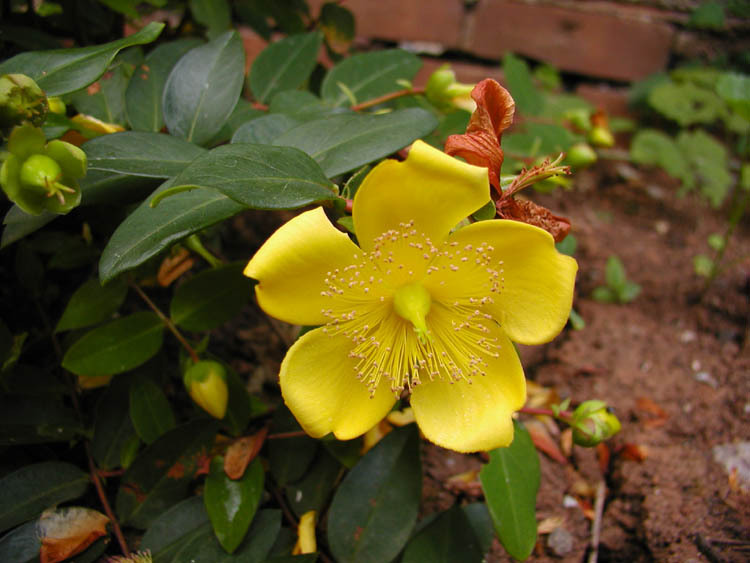
I will be studying some of Frost's poetry over the next month.  As prologue to that effort and in recognition of the beginning of Spring I have posted a poem that portrays the transformations from winter that had only just passed to spring, "flowers beside them chill and shiver".  The trees became bare over the winter and the water is filled with flower petals but now as it is spring the tree's are blossoming. Nonetheless there is a not too subtle hint of darkness in the nature that brings us the spring buds.  The poem exhibits some pleasant rhymes and ends with a particularly felicitous couplet. 
Harbinger of Spring!

Tuesday, October 27, 2015

Poetry as Winter Approaches


Robert Frost, who lived from 1874-1963 published “October” in 1915.  It was among the poems that he included in “A Boy’s Will”.


Outside there is an autumn mist upon my windowpane. Inside where I am warm I turn to the poem “October” in which Frost wishes that time be slowed, "Begin the hours of this day slow",  before the approaching winter.  He urges the reader to cherish each moment with "Hearts not averse to being beguiled".  Winter becomes a metaphor for death and finality, as he seeks enchantment.  Like many of Frost’s poems, “October” references nature to draw out meaning. This is done similarly in “Nothing Gold Can Stay” and “Stopping by Woods on a Snowy Evening”.

Marcel Proust's narrator for In Search of Lost Time said, "A change in the weather is sufficient to recreate the world and ourselves anew." I hope you will find similar thoughts expressed by Robert Frost in his poem simply titled "October".


October

O hushed October morning mild,
Thy leaves have ripened to the fall;
Tomorrow’s wind, if it be wild,
Should waste them all.
The crows above the forest call;
Tomorrow they may form and go.
O hushed October morning mild,
Begin the hours of this day slow.
Make the day seem to us less brief.
Hearts not averse to being beguiled,
Beguile us in the way you know.
Release one leaf at break of day;
At noon release another leaf;
One from our trees, one far away.
Retard the sun with gentle mist;
Enchant the land with amethyst.
Slow, slow!
For the grapes’ sake, if they were all,
Whose leaves already are burnt with frost,
Whose clustered fruit must else be lost—
For the grapes’ sake along the wall.

-  Robert Frost


A Boy's Will by Robert Frost.   1st World Library, 2006 (1915) 


Wednesday, April 30, 2014

Impromptu


A Weekend of Poetry

"Poetry is when an emotion has found its thought and the thought has found words. " 

-   Robert Frost

Listening to Schubert, while driving from Chicago to Lake Geneva in Wisconsin, last Friday afternoon put me in a good mood for a weekend trip.  One other moment on my journey seemed to be a sign.  That was a detour just before I turned off the north-bound highway to take the west-bound highway that would bring me to my destination.  For it was this detour that signalled the weekend, like many I had experienced before, would be one that would take me away from the regular routine of my life and into a wondrous other world for a couple of magical days. 

As I drove I listened to some solo piano music and the Schubert I listened to was the wonderful Impromptus for solo piano, Op. 90.  These are short pieces (for the piano in this case) that are reminiscent of an improvisation. Impromptu also carries the implication of the unexpected and that seemed a felicitous blending of some of my favorite music (I even have one of Schubert's Impromptus, Op. 142, in my personal repertoire) with the weekend of Poetry that would take me away from my ordinary routine.

The weekend was filled with both the  expected and the unexpected.  A dualistic trip in which the two melded into one joyous experience.  The surprising and gentle grace of the Wisconsin air became a foundation for our weekend retreat.  There were talks and discussions with speakers that I had planned to hear and discussion leaders that while unforeseen by me were welcomed as old friends.  The poetry of Robert Frost filled the air of the Lake Geneva Inn where we encountered both nature and nurture within an atmosphere that included moments of serenity and suspense.  In other words it was a welcome retreat in the springtime to nurture our minds and open ourselves to the music of the spheres.


Tuesday, April 29, 2014

Changing Times


Notes on the Poetry of Robert Frost


"They would not find me changed from him they knew—
Only more sure of all I thought was true.” 
― Robert Frost, A Boy's Will


I commented earlier this month on Robert Frost's poem "Mowing" that was included in his first published collection, A Boy's Will.  Another poem in  the same collection, "Pan With Us," acknowledges a changed, modern world with a little more nostalgia for the old mythological creatures of poetry.  Pan was the son of Hermes and Penelope (later married to Odysseus) in some myths and the son of Zeus and the nymph Callisto in others. He is the god of flocks and shepherds. He is mostly human in appearance but, with goat horns and goat feet. He is an excellent musician and plays the pipes. He is merry and playful frequently seen dancing with woodland nymphs. He is at home in any wild place but, is favorite is Arcadia, where he was born. He is always in pursuit of one of the nymphs but, always rejected because he is ugly.

In Frost's poem Pan is represented by grayness in the second line—almost a cinematic dissolve of the old pipe-playing, sexual, half-animal creature—justifies and animates the grammatical inversion of the following line: "The gray of the moss of walls were they,".  Note the other contrast as Pan comes "out of the woods" and stands "in the sun".  While looking over the valley and hill one may wonder that his eyes may be somewhat blinded by the sun.  A reference that conflates the early Greek myth of Pan with  Plato's later myth of the Cave.  This betrays Frost's own philosophical background as he was taught by Santayana at Harvard and read the classics.  Nonetheless there is also a sense that the poem is partly a lament for old ways and partly a parody of them.  In spite of his sense of peace, since "He saw no smoke and he saw no roof.", there was something new, "The times were changed from what they were."  Thus he found it too hard to teach his old pipes a new song.  The world "has found new terms of worth" and he laid down with his pipes in bemusement.


Pan With Us

Pan came out of the woods one day,—
His skin and his hair and his eyes were gray,
The gray of the moss of walls were they,—
…And stood in the sun and looked his fill
…At wooded valley and wooded hill.

He stood in the zephyr, pipes in hand,
On a height of naked pasture land;
In all the country he did command
…He saw no smoke and he saw no roof.
…That was well! and he stamped a hoof.

His heart knew peace, for none came here
To this lean feeding save once a year
Someone to salt the half-wild steer,
…Or homespun children with clicking pails
…Who see so little they tell no tales.

He tossed his pipes, too hard to teach
A new-world song, far out of reach,
For a sylvan sign that the blue jay's screech
…And the whimper of hawks beside the sun
…Were music enough for him, for one.

Times were changed from what they were:
Such pipes kept less of power to stir
The fruited bough of the juniper
…And the fragile bluets clustered there
…Than the merest aimless breath of air.

They were pipes of pagan mirth,
And the world had found new terms of worth.
He laid him down on the sun-burned earth
…And ravelled a flower and looked away—
…Play? Play?—What should he play?

Sunday, April 27, 2014

Trusting "Contraries"

Notes on the Poetry of Robert Frost


So must pure lovers’ souls descend
To affections, and to faculties,
Which sense may reach and apprehend,
Else a great prince in prison lies.

To our bodies turn we then, that so
Weak men on love revealed may look;
Love’s mysteries in souls do grow,
But yet the body is his book.

-  John Donne,  from "The Ecstasy"


Robert Frost's short poem "West-Running Brook" is a little drama about some very big ideas.  He began writing the poem in 1920 and decided to make it the the titular piece for a collection of poems he began compiling in the winter of 1927 and saw published the following year.  

One notices that, of the couple in the poem, we have only a name for the man.  His wife is either "my love" or "my dear".  
Neither referents are all that bad, but they are indefinite, and when the couple are joined with the brook (two become three) it is the wife that goes unnamed even as she is the one who names the brook.  It begins with a question, "Fred, where is north?", that folds into a discussion of the brook that runs west contrary to expectation and to "all the other country brooks" which flow east.  He then announces one theme of the poem, contraries, as according to him "It must be the brook / Can trust itself to go by contraries" which he immediately compares to their relationship.  This leads him to the conclusion that they are a "we", a couple who "must be something, but then adds the brook, saying:

"We'll both be married to the brook.  We'll build 
Our bridge across it, and the bridge shall be 
Our arm thrown over it asleep beside it."


Thus the brook becomes the third to their two and is suddenly anthropomorphized with a wave that lets them know it hears".   The lovely image of "our arm thrown over it" suggests a joining of the two together and with the brook as a third, perhaps a family.  This also can be inferred from the wife's response below.  The contraries of the poem are not violent, rather they are like some waves whose motions against the grain are like a resistance to going with the "drift of things".  However when Fred suggests the river "wasn't waved to us" his wife disagrees:
"It wasn't, yet it was.  If not to you / It was to me--in an annunciation."


Fred's response suggests that it is her fantasy and about such a brook "I have no more to say."  But with her contrary encouragement the big ideas soon appear as Fred responds with a rhapsody on the primitive "water we were from" with Darwinian connotations leading us from "long before we were any creature."  The metaphor of the stream of life also appears with hints of Lucretius including  "a swerving" that suggests indeterminacy in the direction of the stream of life.  In its flow we see,
"A universal cataract of death / That spends to nothingness".  It is a throwing back (another sort of contrary) that demonstrates to us our source, the "nature we are from."  His lengthy commentary on the source of life and the nature of its flow with currents "against the stream" seems an excess of eloquence.  All this may be most unsettling to his wife, but her comment is a more simple recognition of where they are that concludes with "Today will be the day of what we both said."  

I like the recognition that while she seems to say in effect we will agree to disagree, she is still referring to "we".  They are a couple whose love, like that of Donne's (see the epigraph above) and many others can withstand such disagreements.  But we should note that this poem demonstrates many of Frost's preoccupations with its eloquent use of the stream metaphor and his ability to merge the dramatic with the lyrical form.  The poem, at least if you side with Fred, seems to suggest that as humans we are ultimately redeemed by our natural resistance in the face of extinction.  But, as is usually the case with Frost, the meaning is not explicit, the difference between husband and wife is not resolved.  It is left on the table.  Yet, the poem ends with them still a "we".


West-Running Brook

'Fred, where is north?'

'North? North is there, my love.
The brook runs west.'

'West-running Brook then call it.'
(West-Running Brook men call it to this day.)
'What does it think it's doing running west
When all the other country brooks flow east
To reach the ocean? It must be the brook
Can trust itself to go by contraries
The way I can with you -- and you with me --
Because we're -- we're -- I don't know what we are.
What are we?'

'Young or new?'

'We must be something.
We've said we two. Let's change that to we three.
As you and I are married to each other,
We'll both be married to the brook. We'll build
Our bridge across it, and the bridge shall be
Our arm thrown over it asleep beside it.
Look, look, it's waving to us with a wave
To let us know it hears me.'

' 'Why, my dear,
That wave's been standing off this jut of shore --'
(The black stream, catching a sunken rock,
Flung backward on itself in one white wave,
And the white water rode the black forever,
Not gaining but not losing, like a bird
White feathers from the struggle of whose breast
Flecked the dark stream and flecked the darker pool
Below the point, and were at last driven wrinkled
In a white scarf against the far shore alders.)
'That wave's been standing off this jut of shore
Ever since rivers, I was going to say,'
Were made in heaven. It wasn't waved to us.'

'It wasn't, yet it was. If not to you
It was to me -- in an annunciation.'

'Oh, if you take it off to lady-land,
As't were the country of the Amazons
We men must see you to the confines of
And leave you there, ourselves forbid to enter,-
It is your brook! I have no more to say.'

'Yes, you have, too. Go on. You thought of something.'

'Speaking of contraries, see how the brook
In that white wave runs counter to itself.
It is from that in water we were from
Long, long before we were from any creature.
Here we, in our impatience of the steps,
Get back to the beginning of beginnings,
The stream of everything that runs away.
Some say existence like a Pirouot
And Pirouette, forever in one place,
Stands still and dances, but it runs away,
It seriously, sadly, runs away
To fill the abyss' void with emptiness.
It flows beside us in this water brook,
But it flows over us. It flows between us
To separate us for a panic moment.
It flows between us, over us, and with us.
And it is time, strength, tone, light, life and love-
And even substance lapsing unsubstantial;
The universal cataract of death
That spends to nothingness -- and unresisted,
Save by some strange resistance in itself,
Not just a swerving, but a throwing back,
As if regret were in it and were sacred.
It has this throwing backward on itself
So that the fall of most of it is always
Raising a little, sending up a little.
Our life runs down in sending up the clock.
The brook runs down in sending up our life.
The sun runs down in sending up the brook.
And there is something sending up the sun.
It is this backward motion toward the source,
Against the stream, that most we see ourselves in,
The tribute of the current to the source.
It is from this in nature we are from. It is most us.'

'To-day will be the day....You said so.'

'No, to-day will be the day
You said the brook was called West-running Brook.'

'To-day will be the day of what we both said.'


West-Running Brook by Robert Frost. Holt & Co., 1928.


Friday, April 18, 2014

An American Poet


The Poetry of Robert Frost
- an introductory note


My introduction to the poetry of Robert Frost came in  a class in American Literature which was the focus of my Junior year of high school English.  It is there that I began to truly enjoy poetry while reading the major American poets like Bryant, Emerson, Robinson, Masters, Lindsay and others.  My favorite was Emily Dickinson, but it was in that class that I also began to appreciate another truly American poet, Robert Frost.  Imagine my surprise upon reading his biography and learning that his first collection of poetry, A Boy's Will, was first published in England.  Ezra Pound (who I had not discovered yet) read a pre-release copy of the book and proclaimed (to Harriet Monroe); "Have just discovered another Amur'k'n.  VURRY Amur'k'n with, I think, the seeds of grace."

The seeds of grace--while I did not have that opinion I began to realize, at least in a superficial way, the importance of the best of the poetry of Robert Frost in that class almost fifty years ago.  Currently I have begun to reread both in depth and more broadly through his poetry in an attempt to add more understanding to my enjoyment of his verse.  I hope to share some of my thoughts in the near future.  In the meantime here is one of the poems that impressed Ezra Pound and others back in 1913.  The poem's persistent exhibition of onomatopoeia is almost mesmerizing. The internal rhymes and constant alliteration seems to bring out the very sounds of mowing.

Mowing

There was never a sound beside the wood but one,
And that was my long scythe whispering to the ground.
What was it it whispered? I knew not well myself;
Perhaps it was something about the heat of the sun,
Something, perhaps, about the lack of sound—
And that was why it whispered and did not speak.
It was no dream of the gift of idle hours,
Or easy gold at the hand of fay or elf:
Anything more than the truth would have seemed too weak
To the earnest love that laid the swale in rows,
Not without feeble-pointed spikes of flowers
(Pale orchises), and scared a bright green snake.
The fact is the sweetest dream that labor knows.
My long scythe whispered and left the hay to make.

-  Robert Frost  (from A Boy's Will, 1915)

Tuesday, March 18, 2014

Poems by Frost

New HampshireNew Hampshire 
by Robert Frost


"It should be of the pleasure of a poem itself to tell how it can.  The figure a poem makes.  It begins in delight and ends in wisdom."  -  Robert Frost, "The Figure a Poem Makes"


In 1923 Robert Frost published his Selected Poems in the spring followed by this collection in November. The following year he was awarded the Pulitzer Prize for it. In addition to the titular poem this collection includes the famous "Fire and Ice", a short poem with resonance from Dante and others. 
  One of my favorites is "The Onset" that seems an appropriate poem to meditate upon as spring approaches.  I think we can see a hint of Dante again in this poem with "the dark woods", and there is also the symbolism of winter coming, of snow falling, a beautiful imagery that a time will descend upon us where our lives are dull, tragic, painful or lonely.  Yet in the second stanza hope appears with the recognition that "winter death has never tried the earth but it has failed:".  By the end of the poem the transition from death to life is complete when one contrasts the white of "the gathered snow" at night to the living white of the birch tree and hope in family life symbolized by "a clump of houses" and the spiritual life of the church.


The Onset                                                                    

Always the same, when on a fated night
At last the gathered snow lets down as white
As may be in dark woods, and with a song
It shall not make again all winter long
Of hissing on the yet uncovered ground,
I almost stumble looking up and round,
As one who overtaken by the end
Gives up his errand, and lets death descend
Upon him where he is, with nothing done
To evil, no important triumph won,
More than if life had never been begun.

Yet all the precedent is on my side:
I know that winter death has never tried
The earth but it has failed: the snow may heap
In long storms an undrifted four feet deep
As measured again maple, birch, and oak,
It cannot check the peeper's silver croak;
And I shall see the snow all go down hill
In water of a slender April rill
That flashes tail through last year's withered brake
And dead weeds, like a disappearing snake.
Nothing will be left white but here a birch,
And there a clump of houses with a church.

View all my reviews

Tuesday, October 29, 2013

Flourishing Shepherd


Further Notes on
Joseph and His Brothers


"Jacob was truly in his element as a breeder of sheep, as a master of the sheepfold . . ." (p 223)


With this line Thomas Mann begins a paean to Jacob's fruitfulness as a shepherd.  His success and the bounteous beauty of his herds of sheep reminded me of my early years growing up in the farm country of southern Wisconsin.  I was not a shepherd or even a farmer or, at that early age, one in training.  I was a city boy but one experience with the fruits of the orchard gave me a chance to experience something like that of Jacob and it gave me a memory that I find echoed in these lines from a famous poem of Robert Frost:

"My long two-pointed ladder's sticking through a tree
Toward heaven still,
And there's a barrel that I didn't fill
Beside it, and there may be two or three
Apples I didn't pick upon some bough."

My experience was something memorable and fruitful in both the literal and metaphorical sense, but not nearly as meaningful and deep as that of Jacob or that of which Frost goes on to speak.  In Frost's poem apple-picking leads to dreams and the sleep that is brought with age; while Mann, too, will soon be narrating the aging of Jacob.  But as shepherd working for Laban and for himself he is a man in the strength of young adulthood with the blessing of god multiplying his flocks.

  "For it was not merely that Jacob improved the breed and produced splendid sheep valuable for both their meat and wool, but the sheer growth in numbers, the constant fecundity of his herd exceeded all common standards, became extraordinary in his hands." (p 224)

More than that we see Jacob's expectation, dreams, thoughts of the fruitfulness to come, for as an "expectant lover" waiting for union with his bride to be he found his energies directed toward great deeds that presaged a flourishing life with many children to come.

Joseph and His Brothers by Thomas Mann, John E. Woods, trans. Everyman's Library, 2005 (1933-43)

Monday, August 12, 2013

Poetic Reverie


The Road Not Taken
Two roads diverged in a yellow wood,
And sorry I could not travel both
And be one traveler, long I stood
And looked down one as far as I could
To where it bent in the undergrowth;

Then took the other, as just as fair,
And having perhaps the better claim
Because it was grassy and wanted wear,
Though as for that the passing there
Had worn them really about the same,

And both that morning equally lay
In leaves no step had trodden black.
Oh, I kept the first for another day!
Yet knowing how way leads on to way
I doubted if I should ever come back.

I shall be telling this with a sigh
Somewhere ages and ages hence:
Two roads diverged in a wood, and I,
I took the one less traveled by,
And that has made all the difference. 

Sunday, May 01, 2011

A Commonplace Entry


Poetry for the First Day of May


First, "Nothing Gold Can Stay", a poem written by Robert Frost in 1923.  This eight-line poem was published in the Yale Review in October of that year. It was later published in the collection New Hampshire (1923) that earned Frost the 1924 Pulitzer Prize for Poetry.


Nature's first green is gold,
Her hardest hue to hold.
Her early leaf's a flower;
But only so an hour.
Then leaf subsides to leaf.
So Eden sank to grief,
So dawn goes down to day.
Nothing gold can stay.


and, from the Lerner and Loewe musical, Camelot. . .

Tra la! It's May! The lusty month of May!
That lovely month when everyone goes blissfully astray
Tra la! It's here! That shocking time of year
When tons of wicked little thoughts merrily appear

It's May! It's May! That gorgeous holiday
When every maiden wishes her lad would be a cad

It's mad! It's gay! A libelous display
Those dreary vows that everyone takes, everyone breaks,
Everyone makes divine mistakes, the lusty month of May!

Whence this fragrance wafting through the air?
What sweet feelings does its scent transmute?
Whence this perfume floating everywhere?
Don't you know it's that dear forbidden fruit?
Tra la la la la! That dear forbidden fruit!

Tra la! It's May! The lusty month of May!
That darling month when everyone throws self-control away
It's time to do a wretched thing or two
And try to make each precious day one you'll always rue!

It's May! It's May! The month of "yes you may,"
The time for every frivolous whim, proper or im-

It's wild! It's gay! A blot in every way
The birds and bees with all of their vast
Amorous past* gaze at the human race aghast!
The lusty month of May!


--Music by Frederick Loewe, Lyrics by Alan Jay Lerner.  Their dynamic partnership is somewhat of a mystery as it is not clear as to why they would end their collaboration only to begin again (until The Little Prince, their last work together). After Brigadoon, their first major success, Loewe was heard telling his close friends that, as long as he lived, he would never work with Lerner again. But they did work together again, reaching the pinnacle of their partnership with My Fair Lady. Interestingly, they only got to work on the adaption of Pygmalion (play) (on which My Fair Lady is based) after Noel Coward and Rodgers and Hammerstein had passed it up. Again, for unknown reasons, their partnership grew frazzled as they were knee-deep in work with Camelot. After Camelot, Fritz Loewe retired and swore he would never write another note.

Tuesday, September 18, 2007

The Orchard of My Youth

After Apple Picking


Having spent a few Saturdays in my youth out in the orchard picking apples I feel a bit of nostalgia as I contemplate Robert Frost's take on this autumn activity. - JH


After Apple Picking

Poem lyrics of After Apple Picking by Robert Frost.

My long two-pointed ladder's sticking through a tree
Toward heaven still.
And there's a barrel that I didn't fill
Beside it, and there may be two or three
Apples I didn't pick upon some bough.
But I am done with apple-picking now.
Essence of winter sleep is on the night,
The scent of apples; I am drowsing off.
I cannot shake the shimmer from my sight
I got from looking through a pane of glass
I skimmed this morning from the water-trough,
And held against the world of hoary grass.
It melted, and I let it fall and break.
But I was well
Upon my way to sleep before it fell,
And I could tell What form my dreaming was about to take.
Magnified apples appear and reappear,
Stem end and blossom end,
And every fleck of russet showing clear.
My instep arch not only keeps the ache,
It keeps the pressure of a ladder-round.
And I keep hearing from the cellar-bin
That rumbling sound
Of load on load of apples coming in.
For I have had too much
Of apple-picking;
I am overtired
Of the great harvest I myself desired.
There were ten thousand thousand fruit to touch,
Cherish in hand, lift down, and not let fall,
For all That struck the earth,
No matter if not bruised, or spiked with stubble,
Went surely to the cider-apple heap As of no worth.
One can see what will trouble
This sleep of mine, whatever sleep it is.
Were he not gone,
The woodchuck could say whether it's like his
Long sleep, as I describe its coming on,
Or just some human sleep.