Showing posts with label Conrad Aiken. Show all posts

Saturday, August 17, 2013

Splendor of Life


THE DANCE OF LIFE

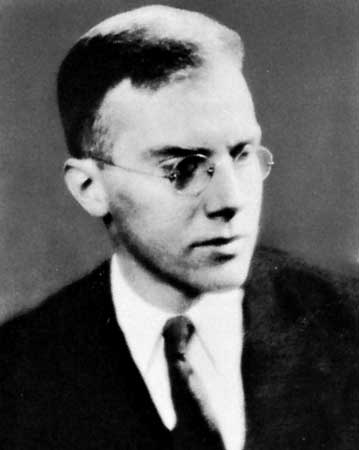
by: Conrad Aiken (1889-1973)

GRACIOUS and lovable and sweet,
She made his jaded pulses beat,
And made the glare of streets grow dim
And life more soft and hushed for him....
Over her shoulder now she smiled
Trustfully to him, like a child,
The while her fingers gayly moved
Alonge these white keys dearly loved,
Making them laugh a jocund measure,
Making them show and sing her pleasure....
A smile that dwelt upon his eyes,
To see what mood might therein rise,--
What point of soft light seen afar
Which might dilate to moon or star....
A smile that for a second space
Brooded wistfully on her face,
Opening soft her spirit's door,
Disclosing depths undreamed before:
Passionate depths of half-seen flame,
Young loveliness despising shame,
Desire that trembled to meet desire,
And fire that yearned to fuse with fire....
And lightly then she turned away,
Ironic music rippled gay,--
Subtle sarcastic flippancies
Disguising speechless ecstasies...
"Play something else..." He rose to turn
The pages, while the deep nocturne
Struck slow rich chords of plangent pain,
Beautiful, into heart and brain;
A tortured, anguished, suffering thing
That seemed at once to cry and sing;
Despairing love that strove to find
The face beloved with fingers blind.
He saw her body's slender grace,
This drooping shoulder, shadowed face;
All of her body, hidden so
In saffron satin's flush and flow,--
Its white and simple loveliness,--
Came on his heart like giddiness,
Seductive as this music came;
Until her body seemed like flame,--
Intense white flame, so swiftly moving
That it gave scarcely time for loving;
But rapid as the sun she seemed,
A blinding light that flowed and streamed
And sang and shone through roaring space....
The sun itself! for now her face,
Wherein this music's whole soul dwelt,
Drew him like helpless star, he felt
A fierce compulsion, reckless, mad,
A sweet compulsion, troubled, glad,
His trembling hands went out to her,
Her cool flesh made his senses blur;
While, head thrown backward, sinking dim,
She opened wide her soul to him....
Past his life went whirls of lights,
Chaos of music, days and nights,
Her wild eyes yearned to lure him in
And close him up in dark of sin,
To lure him in and drink him down
And all his soul in love to drown....
Her nakedness he seemed to see.
And breast to breast, and knee to knee,
Tremulous, breathless, swaying, burning,
Body to beautiful body yearning,
In joy and terror, flesh to flesh,
They flamed in passion's fine red mesh,--
Living in one short breath again
The cosmic tide's whole bliss and pain,
Darkness and ether, nebulous fire,
Vast suns whirled forth by vast desire,
Huge moons flung out with monstrous mirth
And stars in glorious hells of birth,
All jubilating, blazing, reeling,
An orgiastic splendor wheeling,
Moon torn from earth and star from sun
In screaming pain, titanic fun,
And stars whirled back to sun again
To be consumed in flaming pain!...
In them at last all life was met:
They were God's self! This earth had set.
Mad fires of life sang through their veins,
Ruinous blisses, joyous pains,
Life the destroyer, life the breaker,
And death, the everlasting maker....

Turns and Movies and Other Tales in Verse by Conrad Aiken. Boston: Houghton Mifflin, 1916.

Sunday, December 23, 2012

Winter and Reading


Two Favorite Poets


"Winter for a Moment Takes the Mind" 


Winter for a moment takes the mind; the snow
Falls past the arclight; icicles guard a wall;
The wind moans through a crack in the window;
A keen sparkle of frost is on the sill.
Only for a moment; as spring too might engage it,
With a single crocus in the loam, or a pair of birds;
Or summer with hot grass; or autumn with a yellow leaf.

Winter is there, outside, is here in me:
Drapes the planets with snow, deepens the ice on the moon,
Darkens the darkness that was already darkness.
The mind too has its snows, its slippery paths,
Walls bayonetted with ice, leaves ice-encased.
Here is the in-drawn room, to which you return
When the wind blows from Arcturus: here is the fire
At which you warm your hands and glaze your eyes;
The piano, on which you touch the cold treble;
Five notes like breaking icicles; and then silence.

The alarm-clock ticks, the pulse keeps time with it,
Night and the mind are full of sounds. I walk
From the fire-place, with its imaginary fire,
To the window, with its imaginary view.
Darkness, and snow ticking the window: silence,
And the knocking of chains on a motor-car, the tolling
Of a bronze bell, dedicated to Christ.
And then the uprush of angelic wings, the beating
Of wings demonic, from the abyss of the mind:
The darkness filled with a feathery whistling, wings
Numberless as the flakes of angelic snow,
The deep void swarming with wings and sound of wings,
The winnowing of chaos, the aliveness
Of depth and depth and depth dedicated to death.

Here are bickerings of the inconsequential,
The chatterings of the ridiculous, the iterations
Of the meaningless. Memory, like a juggler,
Tosses its colored balls into the light, and again
Receives them into darkness. Here is the absurd,
Grinning like an idiot, and the omnivorous quotidian,
Which will have its day. A handful of coins,
Tickets, items from the news, a soiled handerchief,
A letter to be answered, notice of a telephone call,
The petal of a flower in a volume of Shakespeare,
The program of a concert. The photograph, too,
Propped on the mantel, and beneath it a dry rosebud;
The laundry bill, matches, and ash-tray, Utamaro's
Pearl-fishers. And the rug, on which are still the crumbs
Of yesterday's feast. These are the void, the night,
And the angelic wings that make it sound.

What is the flower? It is not a sigh of color,
Suspiration of purple, sibilation of saffron,
Nor aureate exhalation from the tomb.
Yet it is these because you think of these,
An emanation of emanations, fragile
As light, or glisten, or gleam, or coruscation,
Creature of brightness, and as brightness brief.
What is the frost? It is not the sparkle of death,
The flash of time's wing, seeds of eternity;
Yet it is these because you think of these.
And you, because you think of these, are both
Frost and flower, the bright ambiguous syllable
Of which the meaning is both no and yes.

Here is the tragic, the distorting mirror
In which your gesture becomes grandiose;
Tears form and fall from your magnificent eyes,
The brow is noble, and the mouth is God's.
Here is the God who seeks his mother, Chaos, –
Confusion seeking solution, and life seeking death.
Here is the rose that woos the icicle; the icicle
That woos the rose. Here is the silence of silences
Which dreams of becoming a sound, and the sound
Which will perfect itself in silence. And all
These things are only the uprush from the void,
The wings angelic and demonic, the sound of the abyss
Dedicated to death. And this is you.

Stanza I from "Preludes for Memnon" by Conrad Aiken


The House Was Quiet And The World Was Calm

The house was quiet and the world was calm.
The reader became the book; and summer night

Was like the conscious being of the book.
The house was quiet and the world was calm.

The words were spoken as if there was no book,
Except that the reader leaned above the page,

Wanted to lean, wanted much to be
The scholar to whom his book is true, to whom

The summer night is like a perfection of thought.
The house was quiet because it had to be.

The quiet was part of the meaning, part of the mind:
The access of perfection to the page.

And the world was calm. The truth in a calm world,
In which there is no other meaning, itself

Is calm, itself is summer and night, itself
Is the reader leaning late and reading there. 

from The Collected Poems - Wallace Stevens


Here we have a magic moment of realization when the reader, with a book in his hands, recognizes himself, his world, the substance of things in what he is reading, so that the reader, the book, the summer night, the house, the world are all fused in an existential unity of real, inner and outer, truth.  


Collected Poems, Second Edition by Conrad Aiken. Oxford University Press, 1970.
The Collected Poems of Wallace Stevens.  Alfred A. Knopf, 1991.