Showing posts with label Hugo award. Show all posts

Tuesday, April 26, 2016

Matters of Culture and Identity

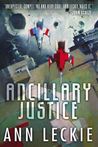
Ancillary Justice (Imperial Radch, #1)Ancillary Justice 
by Ann Leckie


“The problem is knowing when what you are about to do will make a difference. I’m not only speaking of the small actions that, cumulatively, over time, or in great numbers, alter the course of events in ways too chaotic or subtle to trace ... if everyone were to consider all the possible consequences of all one’s possible choices, no one would move a millimetre, or even dare to breathe for fear of the ultimate results.”   ― Ann Leckie, Ancillary Justice


The protagonist of Ann Leckie's novel, Ancillary Justice, is unique in my experience. Honored Breq, or One Esk, or Justice of Torren, has a human body, but artificial intelligence. The story presented in Ancillary Justice is a space opera set thousands of years in the future, where the primary galactic power of human-occupied planets is the expansionist Radch empire. The empire uses AIs to control human bodies ("ancillaries") that are used as soldiers, though regular humans also are soldiers. The Radchaai do not distinguish people by gender, and Leckie conveys this by using female personal pronouns for everybody, and by having the Radchaai main character guess wrongly when she has to use languages with gender-specific pronouns. This usage was somewhat confusing at first because some of the other characters would refer to a person with a male pronoun while Breq had been and continued using a female pronoun. It becomes clear that the Radch culture did not care about gender.

The narrative begins several years after the disappearance of a Radch starship, the Justice of Toren, when the sole surviving ancillary (and fragment of the Justice of Toren's consciousness), Breq, encounters an officer, Seivarden, whom she had known 1,000 years earlier. The two are on an ice planet, and Seivarden is in precarious condition. The plot unfolds between two strands: Breq's "present day" quest for justice for the Justice of Torren's destruction, and flashbacks from 19 years earlier when the Justice of Torren was in orbit around the planet of Shis'urna, which was being formally brought into the Radchaai empire. Each of these is told in alternating chapters. We eventually find out that the Justice of Torren's destruction was the result of a covert war between two opposed strands of consciousness of the Lord of the Radch, Anaander Mianaai, who uses multiple synchronized bodies to rule her far-flung empire. At the end of the novel, Breq associates herself with the more pacific aspect of Anaander Mianaai while waiting for an opportunity to exact her revenge.

Details of the Radch culture gradually unfold as the story progresses. This aspect is impressive as it becomes clear that there is a vast culture that exists beyond the aspects depicted in the story. I particularly enjoyed the personality of the main character, Breq, including her delight in singing. She displays an encyclopedic knowledge of songs of the Radch culture through her interactions with others while on her quest. But Breq often seems torn between her identities as the ship, Justice of Torren and Breq.  We also find out, interestingly, that “Ships have feelings.” 

In fact it is not clear that the Breq we meet at the beginning of the novel is the same person as Justice of Torren of nineteen years earlier in spite of the connections between the two that are established through Breq's existence as an ancillary. We read “is anyone’s identity a matter of fragments held together by convenient or useful narrative, that in ordinary circumstances never reveals itself as a fiction? Or is it really a fiction?”  It is questions like this that make this an exceptional science fiction novel. The author develops relationships like that between Breq and Seivarden, while demonstrating significant ideas through situations that are unusual even for speculative fiction.  Not surprisingly, this book won both the Hugo and Nebula Awards for Best Science Fiction novel.

View all my reviews

Monday, January 19, 2015

Myth of the Reluctant Warrior

The PostmanThe Postman 
by David Brin


“It’s said that ‘power corrupts,’ but actually it’s more true that power attracts the corruptible. The sane are usually attracted by other things than power. When they do act, they think of it as service, which has limits. The tyrant, though, seeks mastery, for which he is insatiable, implacable”  ― David Brin, The Postman


In this post-apocalyptic tale we meet a survivor, Gordon Krantz, who on one fateful day dons a postman's uniform and goes on his way creating a myth of "The Postman" and "The Restored United States". The country in which he creates this myth is a future Oregon laid to waste like the rest of the United States by a "doomwar" and the attendant disruption of society and crumbling of civilization.

The Postman had been wandering without establishing himself anywhere, and performing scenes from William Shakespeare plays for supplies. Taking shelter in a long-abandoned postal van, he finds a sack of mail and takes it to a nearby community to barter for food and shelter. His initial assertions to be a real postman builds, not because of a deliberate fraud (at least initially), but because people are desperate to believe in him and the Restored United States.

"Gordon smiled. He held up the bundle in his hand and touched his cap with the other.
"Good evening, Mizz Horton. It's a lovely night, yes? By the way, I happen to have a letter here for you, from a Mr. Jim Horton, of Pine View, Oregon....He gave it to me twelve days ago...."
The people on the parapet all seemed to be talking at once. There were sudden motions and excited shouts. Gordon cupped his ear to listen to the woman's amazed exclamation, and had to raise his voice to be heard.
"Yes, ma'am. He seemed to be quite well. I'm afraid that's all I have on this trip. But I'll be glad to carry your reply to your brother on my way back, after I finish my circuit down in the valley."
He stepped forward, closer to the light. "One thing though, ma'am. Mr. Horton didn't have enough postage back in Pine View, so I'm going to have to ask you for ten dollars...C.O.D."
The crowd roared.
Next to the glaring lantern the figure of the Mayor turned left and right, waving his arms and shouting. But nothing he said was heard as the gate swung open and people poured out into the night. They surrounded Gordon, a tight press of hot-faced, excited men, women, children. Some limped. Others bore livid scars or rasped in tuberculin heaviness. And yet at that moment the pain of living seemed as nothing next to a glow of sudden faith." (pp 80-81)

As the story continues he encounters a community, Corvallis, Oregon, which is led by Cyclops, who is apparently a sentient artificial intelligence which miraculously survived the cataclysm. In reality, however, the machine ceased functioning during a battle and a group of scientists merely maintain the pretense of it working to try and keep hope, order, and knowledge alive.

Eventually, as the Postman joins forces with Cyclops' scientists in a war against an influx of "hyper-survivalist militia", he begins to find that the hyper-survivalists are being pressed from Oregon's Rogue River area to the south as well. The hyper-survivalists are more commonly referred to as Holnists, after their founder, Nathan Holn. Nathan Holn was an author who championed both violence and misogyny. Holn himself is said to have been executed sometime before the events in the novel, but in the time following what should have been a brief period of civil disorder.

The denouement includes battles and confrontations between those opposing the Holnists led by The Postman and the bands of Holnist renegades. Through all his adventures and battles Gordon wonders "Who will take responsibility" to defend civilization. Questioning his own motives in creating and maintaining the mythic Postman he realizes that those who believe in it and him depend on his leadership. It is the questions that Gordon asks himself and his bravery in helping those he meets along the way that I found most appealing in this excellent narrative. Brin's story-telling ability shines as he pictures a world that has lost almost all of the accouterments of modern civilization. It makes one ask the question: what would I do to survive when (almost) all is lost?


View all my reviews

Saturday, July 26, 2014

The Twelve Century War

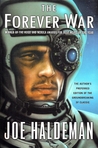
The Forever War (The Forever War, #1)The Forever War 
by Joe Haldeman


“The 1143-year-long war hand begun on false pretenses and only because the two races were unable to communicate.
Once they could talk, the first question was 'Why did you start this thing?' and the answer was 'Me?”   ― Joe Haldeman, The Forever War


The Forever War is an award-winning science fiction novel that many readers have enjoyed ever since its first publication forty years ago. Having finally read it I count myself among those who like the book, but I reserve placing it in my top ten SF novels. I found the story a bit slow on the uptake, however it did improve as the story moved on.

The protagonist, Private William Mandella, is about to embark on a journey that will traverse space and time, war and uneasy peace. By the denouement of his story, the reluctant soldier will have traveled over twelve centuries. That can be traumatic enough, but it is not the battles but it is the changes in society, mores, and norms that will be the most difficult barriers facing him. The Forever War portrays the emotional toll of time-travel effectively.
While light-years are handled by Haldeman he also explores a myriad of prospects of sexuality without any puritanism or lascivious behavior. Sex is presented as a part of the human existence, although you can question the logic of his predictions about  the direction that sexuality will take for mankind, and and we did just that during the discussion of our local Science Fiction book group, Chicago SF Irregulars and Friends. In my reading a more convincing portrayal of future sexuality was made by Anthony Burgess in his dystopian novel The Wanting Seed;  however, whether you find Haldeman's approach believable or not, it is treated as straightforwardly as he does every other aspect of the narrative. It can be a real eye-opening experience, depending upon the reader's background and views. It does not seem likely an “easy” surgery will be developed to change sexual orientation.

Haldeman's ability to develop characters is excellent starting with Private Mandella, who is a well-described, complex character. The reader comes to care deeply about the "hero," his beloved, and the loyal circle of friends who travel through the centuries together.
The Forever War's plot moves at a rapid pace that kept me reading as the centuries literally flew by. The story never forsakes humanity and the emotional facets of the situation in favor of action, explosions, and technology. And there is plenty of technology including fighting suits, light-speed space craft, time dilation, stargate portal planets, acceleration shells, human organ/limb regeneration, and psych-methods for officer training/indoctrination.
The book is very good science fiction, and in the top tier for many readers. Passing years have not weakened the impact or dated the material. The message presented regarding the futility of war resonates a society that has seen many wars in the years since it was written. I would recommend it to those readers who enjoy or wish to explore some classic science fiction.


View all my reviews

Monday, August 12, 2013

Biological Dystopia

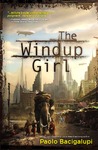
The Windup GirlThe Windup Girl 
by Paolo Bacigalupi

“We are nature. Our every tinkering is nature, our every biological striving. We are what we are, and the world is ours. We are its gods. Your only difficulty is your unwillingness to unleash your potential fully upon it.”  ― Paolo Bacigalupi, The Windup Girl

I was most impressed by the author's rich imagination displayed in this dystopic science fiction novel. There is also fast-paced action and colorful characters. It is all set in twenty-third century Thailand. Global warming has raised the levels of world's oceans, carbon fuel sources have become depleted, and manually wound springs are used as energy storage devices. Biotechnology is dominant and mega corporations (called calorie companies) control food production through 'genehacked' seeds, and use bioterrorism, private armies and economic hit men to create markets for their products. Frequent catastrophes, such as deadly and widespread plagues and illness, caused by genetically modified crops and mutant pests, ravage entire populations. The natural genetic seed stock of the world's plants has been almost completely supplanted by those that are genetically engineered to be sterile.
The current monarch of Thailand is a child queen. The capital city is below sea level and is protected from flooding by levees and pumps. The three most powerful men in Thailand are the Somdet Chaopraya (regent for the child queen), the chief of the Environment Ministry General Pracha, and the chief of the Trade Ministry Akkarat. The story focuses on Emiko, a "windup girl," (they refer to themselves as "New People") a humanoid GM organism used as a slave, genetically programmed to seek and obey a master. Also of interest is Anderson Lake, an economic hit man and the AgriGen Representative in Thailand. He owns a kink-spring factory trying to mass-produce a revolutionary new model that will store gigajoules of energy. The factory is a cover for his real mission: discovering the location of the Thai seed bank. He leaves the running of the factory to his Chinese manager, Hock Seng, a refugee from the Malaysian purge of the ethnic Chinese. A businessman in his former life, Seng plots to regain his former glory even as he struggles to survive day to day as a refugee. He waits patiently for an opportunity to steal the kink-spring designs kept in Anderson's safe, and embezzles copiously. The plot includes political machinations that upset the plans of these three while providing not a few cliff-hanging moments among the twists and turns of the story.
While I was impressed with the imaginative verve of the author I was disappointed in the cliche-ridden view of business as the big bad guys. The ideas that the world will be devastated by global-warming and biotechnology will be almost out of control are not new no matter how well the author presents them. Nevertheless this is an entertaining novel and worthy of consideration at our monthly Science Fiction group discussion. This novel won both the Hugo and Nebula Awards in 2010.

View all my reviews

Sunday, December 13, 2009

Alternative Reality


One had to blame the Germans for the situation. Tendency to bite off more than they could chew. After all, they had barely managed to win the war, and at once they had gone off to conquer the solar system, while at home they had passed edicts which . . .
- The Man in the High Castle, p. 24


I have enjoyed reading novels of ideas immensely over the years and The Man in the High Castle is one of the best I have read in a long time. My favorites include works by Mann, Musil, Dostoevsky and Orwell and among others -- now Philip K. Dick.

In his novel the author, Philip K. Dick, has created an alternative world and then tops that by having his title character author a book within the novel that imagines the world as it really is. What if the allies had lost World War II? That is the premise, and Dick's ability to build a believable alternative reality based on that premise is the foundation of this exciting, suspenseful and enjoyable book.
The characters, German spy, Jewish businessman, Japanese trade representative, Italian war veteran, and others, are each given individual fates that, woven together through a plot that creates suspense and wonder, inhabit a world that is scarily believable. Beyond them all lives "the man in the high castle" -- the author of the book about an alternative reality, a book that is banned throughout most of the world, inspiring even greater readership and fear. Honestly, I had previously viewed alternate reality fiction as more "gimmickry" than literature. Philip K. Dick, however, has written a novel that truly makes you think about the nature of fate (the I Ching is also an important element in the plot) and the small changes that could change history. An award-winning work of literature, it is a book that recreates the universe.


The Man in the High Castle by Philip K. Dick. Vintage Books, New York. 1992 (1962).