Showing posts with label Art History. Show all posts

Friday, February 06, 2026

Human Art

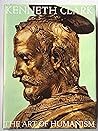
Art of Humanism (ICON EDITIONS) 

Art of Humanism 


“Ruskin said: ‘Great nations write their autobiographies in three manuscripts, the book of their deeds, the book of their words and the book of their art. - Kenneth Clark


Kenneth Clark's 1983 book The Art of Humanism is a succinct examination of the Italian Renaissance of the fifteenth century from a humanistic perspective. Clark, who is most known for his seminal series Civilization, explores how the visual arts were transformed by a renewed sense of human greatness and potential. The book focuses on five major masters of the era: Andrea Mantegna: Classical antiquity and the heroic figure; Paolo Uccello: The compulsive, scientific study of perspective; Donatello: Human emotion and drama in sculpture; and Leon Battista Alberti: Architecture and the mathematical foundation of beauty.
Sandro Botticelli: Humanism's poetic and spiritual side.

"Belief in the greatness of man and the supremacy of human values" is how Clark characterizes humanism. He contends that these artists were philosophers who gave these new ideals shape in addition to being expert craftsmen. Clark's "patrician self-confidence" and "great man" approach to art history, which emphasizes individual brilliance over larger social movements, are frequently highlighted in reviews of his larger body of work. In keeping with that model, this book offers a close-knit, knowledgeable tour of particular masterpieces.

View all my reviews

Tuesday, March 05, 2024

Two Artists

Peacock & Vine: On William Morris and Mariano Fortuny
Peacock & Vine: 
On William Morris 
and Mariano Fortuny 


“If Morris and his contemporaries were possessed by the medieval Christian imagination and the ancient sagas, the moderns looked further back to the ancient world, and rewrote the Greek myths and legends to suit their own ideas about society and history.”   ― A.S. Byatt, Peacock & Vine: On William Morris and Mariano Fortuny


It would be wonderful to be an artist whose life and work flowed together seamlessly, like water in a river, because your existence would be so complete. Peacock and Vine is a brief but frequently engrossing meditation on the lives of William Morris (1834–1896) and Mariano Fortuny (1871–1949), two people who succeeded in achieving this goal.

I'm still waiting for my invitation to visit Venice, but in the meantime, I can luxuriate in the prose and illustrations of Ms. Byatt's fine art biography. With a mix of criticism and history, she takes the familiar, William Morris, and the less familiar, Mariano Fortuny, and highlights their lives and work with the interpolation of beautiful illustrations. This was a pleasingly informative short excursion into the world of art. The quotes from Ruskin and Proust were an added delight.


Saturday, April 13, 2013

Impressionist Geniuses

Impressionist Quartet: The Intimate Genius of Manet and Morisot, Degas and CassattImpressionist Quartet: 
The Intimate Genius of Manet and Morisot, 
Degas and Cassatt 
by Jeffrey Meyers

"The leader, the hero of Realism, is now Manet. His partisans are frenzied and his detractors timid. It would seem that, if one refuses to accept Manet, one must fear being taken for a philistine, a bourgeois , a Joseph Prudhomme [JP, created by caricaturist Henri Monnier, was a personification of the vulgar self satisfied bourgeois who grew up under the July Monarchy], an idiot who cares for nothing but miniatures and painted porcelain . . ."  -  Théophile Gautier, writing in Le Moniteur universel.

Meyers is an accomplished scholar, biographer and editor, with highly regarded studies of Katherine Mansfield, Somerset Maugham, D.H. Lawrence and other literary lions to his credit. Writing about the impressionists is a perfect match for his talents because of the intimate relationship of art and letters in the late 19th century.
In his four-subject biography Meyers illuminates the intimacies of Edouard Manet, Berthe Morisot, Edgar Degas and Mary Cassatt. Their private ordeals and inner demons are used to accentuate the brilliance of their paintings and the revolutionary implications of their artistic vision. Many have speculated that the two male artists enjoyed sexual as well as artistic relationships with their female disciples. Meyers examines contemporary and modern secondary sources (the two couples’ letters were all burned), recording every connection. While he is not completely successful in this endeavor his journey is fascinating nonetheless.
An important aspect of nineteenth century art was the impact of Baudelaire. His concept of the modern painter was a charge of dynamite that Manet detonated in 1863 when he exhibited "Luncheon on the Grass." The enigmatic depiction of a nude woman lounging with fully dressed men in a forest glade was a frank admission of sexuality. It created a furor, as did his "Olympia," the even more arresting view of an unclothed (and visibly bored) prostitute viewing her next client. Both women look directly at the viewer, underscoring the complicity to be found in the eye of the beholder. Despite efforts to secure popular acclaim, Manet was never to rid himself of the notoriety provoked by "Luncheon" and "Olympia." Moreover, his inner torment affected his relationship with Berthe Morisot and found a counterpoint in the private lives of his friends Edgar Degas and Mary Cassatt.
There is much more in this educating and entertaining look at the lives of four Impressionist masters.

View all my reviews

Thursday, October 18, 2012

A Family History

The Hare With Amber Eyes: A Family's Century of Art and Loss

The Hare With Amber Eyes: 

A Family's Century of Art and Loss 

by Edmund de Waal

"As I stand in front of the museum with its stature of a wrestling Laocoon, the one that Charles drew for Victor, I realise how wrong I've been.  I thought the boys left Odessa to get their education in Vienna and in Paris.  I thought that Charles went off on his Grand Tour in order to broaden his horizons, to get away from the provinces and learn about the Classics.  But this whole city is a classical world balancing above the port." (p 343)

This book combines biography, autobiography, history, anthropology and art history. But above all The Hare with Amber Eyes is the story of a family. It is a memoir about their story over five generations as they moved around the globe from Odessa to Tokyo. It is a story of leavings and relationships intertwined with the history of Europe from the end of the nineteenth century through the end of the Second World War. It is also a story of a family whose experience and familiarity with the likes of Proust, Rilke, Japanese art, the rue de Morceau, and the society of the Ringstrasse in Vienna adorn their intimate family memories.
Edmund de Waal is the descendant of the founder of a family, the Ephrussis, that had once been as rich as the Rothschilds but saw their wealth reduced to a collection of tiny Japanese wood and ivory carvings known as netsuke. His desire to discover the story of his family led him to investigate how this occurred and write this memoir. It is a beautifully written book that highlights the literary, artistic, and historical events that surround the major figures in the family. But It begins in fin de siecle Paris (where part of the family had moved after leaving Odessa) before moving to Vienna where the family would be ensconced in the Ringstrasse for the early decades of the twentieth century. All that would change with the coming of the Nazis and the destructive force of war in Europe. At their height the Ephrussi were patrons of numerous geniuses – an aunt, Elizabeth, was a correspondent of the poet Rilke. Charles features in a famous Renoir painting and bought a picture of asparagus fresh from Manet’s studio. In their story one can see evidence Thomas Mann’s principle that, in great dynasties, the first generation makes money, the next spends it on art and the final ruin of the house is the last generation who become artists.

What impressed me, as it has other readers, was the importance of art and literature in this family. This is on prominent display in the section set in Paris that describes the family's connections with the impressionist and symbolist movements. The author's own interest in art and ceramics pervades the story and insures that his search will highlight these areas. It is a search that begins in Japan with his Uncle Ignace (Iggie), who died in 1994 in Tokyo. De Waal inherits the collection of netsuke that includes "The Hare with Amber Eyes" and he proceeds to investigate the story of his family and of the netsuke collection that represents their heritage. The memoir is a tale told modestly and subtlety, and its power grows through the small moments de Waal shares as he uncovers his family's history.

The Hare With Amber Eyes by Edmund de Waal. Picador Books, 2010.