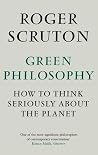
Green Philosophy: How to Think Seriously about the Planet
by Roger Scruton
“Top-down solutions have a tendency to confiscate problems from those whose problems they are.”
― Roger Scruton, Green Philosophy: How to Think Seriously About the Planet
Instead of framing environmentalism as a leftist monopoly, the book reframes it as a fundamental conservative obligation. Scruton contends that international treaties and top-down bureaucratic interventions are ineffective because they ignore local love and individual responsibility, which are the primary forces behind human conservation. His central idea is oikophilia. A few distinct pillars form the philosophical basis of Scruton's book: Oikophilia, which means "the love of home." According to Scruton, people preserve the environment because they cherish their immediate, physical surroundings rather than out of an abstract sense of global utilitarianism. He advocates for bottom-up stewardship, saying that small-scale institutions, friendships, and local civil associations are the most effective ways to manage conservation. Large NGOs, the UN, and international climate treaties are all criticized by Scruton in his critique of globalism as unaccountable bureaucracies that have far-reaching unintended consequences. Instead, he supports holding polluters directly accountable through the use of free-market networks, unambiguous property rights, and tort laws. This is a readable and sensible perspective on how conservatives can contribute to environmental preservation.
View all my reviews