Showing posts with label Friendship. Show all posts
Tuesday, February 21, 2017
A Commonplace Entry
Phaedrus
“Only a philosopher's mind grows wings, since its memory always keeps it as close as possible to those realities by being close to which the gods are divine.” ― Plato, Phaedrus
"Phaedrus: . . . But let’s be going, since now even the stifling heat is more gentle.
Socrates: Shouldn’t we pray to the gods here before going?
Phaedrus: Yes, surely.
Socrates: Dear Pan and ye other gods who dwell here, grant that I may become beautiful within and that my worldly belongings be in accord with my inner self. May I consider the wise man rich and have only as much gold as a moderate man can carry and use.
Is there anything else we need, Phaedrus? For me, our prayer was said with due measure.
Phaedrus: Make it a prayer for me, too. Friends have things in common.
Socrates: Let’s be going."
That is ending of the Phaedrus. Here we find the beauty of a friendship portrayed eloquently. Plato assures us that they have indeed, not just in story, shared “with due measure” an outpouring of divinity together; Socrates offers this noble prayer that the beauty of soul they have turned round and round in their talking may be theirs, but Phaedrus completes, perfects the prayer making it also his own, showing in this small but decisive way that he has accepted Socrates’ offer of love, and will share the poverty and riches of his rhetoric, to guide and stir each other on the way to truth. “ἴωμεν” — “Let’s be going.” They have this way reached an agreement with each other and with themselves; they have arrived where now their conversation something holds in common, something divine. And more talk is no longer needful. “Is there anything else we need Phaedrus?” Nothing else, but to take the double riches of sharing the best things with one you love.
"Phaedrus" from the Dialogues of Plato.
Saturday, June 18, 2016
Two Boys Discover Life
Aristotle and Dante Discover the Secrets of the Universe
by Benjamin Alire Sáenz
“i have this idea that the reason we have dreams is that we're thinking about things that we don't know we're thinking about-and those things,well,they sneak out of us in our dreams.Maybe we're like tires with too much air in them.The air has to leak out.That's what dreams are.” ― Benjamin Alire Sáenz, Aristotle and Dante Discover the Secrets of the Universe
"Through all of youth I was looking for you
without knowing what I was looking for."
-- W. S. Merwin
Friendship and family devotion are two of the themes of this wonderful book. But beyond those themes are the wonder and mystery of desire while developing an understanding about the relations between oneself and the object of desire.
Two boys, Ari and Dante, are as different as any two boys can be. Yet they become friends and their friendship becomes a bond that transcends their differences. Ari narrates the story and tells how he and Dante learn and grow as they share books and thoughts, feelings and dreams. The experience of growing and becoming is demonstrated by the life changes precipitated by the calendar:
"Summer was here again. Summer, Summer, Summer. I loved and hated summers. Summers had a logic all there own and they always brought something out in me. Summer was supposed to be about freedom and youth and no school and possibilities and adventure and exploration. Summer was a book of hope. That's why I loved and hated summers. Because they made me want to believe." (p 235)
Their shared lives and experiences help them grow and deal with the difficulties inherent in that process. The journey of Ari and Dante became one of discovery of what was hidden inside each of them from the beginning. For this reader it was enjoyable and ultimately inspirational. A reading adventure that I would recommend to all.
View all my reviews
Monday, December 30, 2013
A Young Boy's Epic Quest
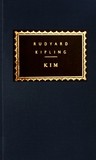
Kim by Rudyard Kipling
“He sat in defiance of municipal orders, astride the gun Zam-Zammeh, on her old platform, opposite the old Ajaib gher, the Wonder House, as the natives called the Lahore Museum. Who hold Zam-Zammah, that 'fire-breathing dragon', hold the Punjab, for the great green-bronze piece is always first of the conqueror's loot.” ― Rudyard Kipling, Kim
Today is the anniversary of the birth of Rudyard Kipling on this day in 1865. As a young boy I enjoyed reading the stories of the young boy Mowgli who is raised by wolves in the Indian jungle and "Rikki-Tikki-Tavi", the story of a heroic mongoose, in his wonderful Jungle Books. But my favorite book of all the Kipling I have read is his novel entitled simply Kim.
While it is one of the most beautiful tales of friendship I have ever read, Kim is much more. Rudyard Kipling created in Kim a novel in the mold of the classic heroic journey that has a pedigree reaching back to Gilgamesh and the Odyssey. With Kim, a young white boy, sahib, at it's center and his friend and mentor the Lama, we see the world of India in the nineteenth century as it is ruled by Great Britain. The story unfolds against the backdrop of The Great Game, the international political conflict between Russia and Britain in Central Asia. It is set after the Second Afghan War which ended in 1881, but before the Third. The novel is notable for its detailed portrait of the people, culture, and varied religions of India.
While Kim is often categorized as a children's novel it has much to offer adult readers not unlike other "children's" books like Huckleberry Finn. Kipling raises questions of identity (Who is Kim? In appearance a young Indian boy, but in reality an orphan whose Irish father came to India as representative of the Crown), culture, spirituality and the nature of fate. Most of all he depicts the growth of a young man through his quest to find his destiny and the bond that develops between Kim as 'chela' or disciple and his Lama. The young boy Kim starts out with the cleverness he obtains from living in the streets, but his cleverness gradually becomes thoughtfulness as his adventures and his Lama stimulate his growing maturity.
The greatness of this novel lies in Kipling's ability to combine all of these themes with a natural style that conveys the richness both of the lives of Kim and his friends and the fecundity of life in India; a vivid picture of India, its teeming populations, religions, and superstitions, and the life of the bazaars and the road. One of the most enduring images for me was the close tie Kim has with the land itself. This is shown several times throughout the novel culminating in his final renewal when he is stretched out on the earth near the end of the novel. The epic quest is successful as this novel unfolds a positive and uplifting narrative.
View all my reviews
Wednesday, July 04, 2012
House-Warming & Friendship
Notes on Walden, III
"Indivisibility"
"The perfect friendship I speak of is indivisible; each one gives himself so entirely to his friend, that he has nothing left to distribute to others: on the contrary, is sorry that he is not double, treble, or quadruple, and that he has not many souls and many wills, to confer them all upon this one object. Common friendships will admit of division; one may love the beauty of this person, the good-humour of that, the liberality of a third, the paternal affection of a fourth, the fraternal love of a fifth, and so of the rest: but this friendship that possesses the whole soul, and there rules and sways with an absolute sovereignty, cannot possibly admit of a rival. If two at the same time should call to you for succour, to which of them would you run? Should they require of you contrary offices, how could you serve them both? Should one commit a thing to your silence that it were of importance to the other to know, how would you disengage yourself? A unique and particular friendship dissolves all other obligations whatsoever: the secret I have sworn not to reveal to any other, I may without perjury communicate to him who is not another, but myself. 'Tis miracle enough certainly, for a man to double himself, and those that talk of tripling, talk they know not of what. Nothing is extreme, that has its like; and he who shall suppose, that of two, I love one as much as the other, that they mutually love one another too, and love me as much as I love them, multiplies into a confraternity the most single of units, and whereof, moreover, one alone is the hardest thing in the world to find. " (Montaigne, "Of Friendship" I, 27)
I have a gas fireplace in the living-room of my apartment and it provides warmth on cold winter mornings and other times as well. However the warmth that it exudes does not come close to that of the wood-fired fireplace of my friend and scholar, Stephen. Whether it is the knowledge that the fire is fed by wood that was prepared by his hands, the camaraderie we have experienced, or the warmth of our friendship, the mornings I have spent with him and his partner Walter in front of their fireplace, are of a more ethereal level of of warmth. The difference I have experienced between these two fires seems much like that described by Thoreau when he switched to the use of a small cooking-stove for reasons of economy in the second winter of his stay at Walden Pond:
"The next winter I used a small cooking-stove for economy, since I did not own the forest; but it did not keep fire so well as the open fireplace. Cooking was then, for the most part, no longer a poetic, but merely a chemic process. It will soon be forgotten, in these days of stoves, that we used to roast potatoes in the ashes, after the Indian fashion. The stove not only took up room and scented the house, but it concealed the fire, and I felt as if I had lost a companion. You can always see a face in the fire. The laborer, looking into it at evening, purifies his thoughts of the dross and earthiness which they have accumulated during the day. But I could no longer sit and look into the fire, and the pertinent words of a poet recurred to me with new force." -- (pp 254-55)
"Never, bright flame, may be denied to me
Thy dear, life imaging, close sympathy.
What but my hopes shot upward e'er so bright?
What but my fortunes sunk so low in night?
Why art thou banished from our hearth and hall,
Thou who art welcomed and beloved by all?
Was thy existence then too fanciful
For our life's common light, who are so dull?
Did thy bright gleam mysterious converse hold
With our congenial souls? secrets too bold?
Well, we are safe and strong, for now we sit
Beside a hearth where no dim shadows flit,
Where nothing cheers nor saddens, but a fire
Warms feet and hands -- nor does to more aspire;
By whose compact utilitarian heap
The present may sit down and go to sleep,
Nor fear the ghosts who from the dim past walked,
And with us by the unequal light of the old wood fire talked."
- Poem by Ellen Sturgis Hooper
But what of friendship? Is it based on the indivisibility between two people as Montaigne maintains in his essay quoted above? If it is, Thoreau's relationship with the poet, William Ellery Channing, was an example that would support Montaigne's opinion. His was much like the nature of friendship described by Aristotle in Book VIII of his Ethics, saying it was made of both "equality" and "virtue" (Nicomachean Ethics, 1158b12, 1170b14). Thoreau welcomed his best friend, Ellery Channing, to his cabin as the weather was cooling. He was the nephew of Dr. William Ellery Channing and he also appears as the poet at the beginning of the chapter "Brute Neighbors." They loved to laugh and make jokes, and the description in "Brute Neighbors" is intentionally deceiving. Channing's best claim to fame was his biography of Thoreau.
" I took a poet to board for a fortnight about those times, which caused me to be put to it for room. He brought his own knife, though I had two, and we used to scour them by thrusting them into the earth. He shared with me the labors of cooking. I was pleased to see my work rising so square and solid by degrees, and reflected, that, if it proceeded slowly, it was calculated to endure a long time. "(p 241)
And again as Winter descended on the woods and pond he received visitors, most prominently Channing who returned to continue his friendship. The combination of "boisterous mirth" with "sober talk" suggests the sort of relationship that can only be explained by the closeness of two equals.
"The one who came from farthest to my lodge, through deepest snows and most dismal tempests, was a poet. A farmer, a hunter, a soldier, a reporter, even a philosopher, may be daunted; but nothing can deter a poet, for he is actuated by pure love. Who can predict his comings and goings? His business calls him out at all hours, even when doctors sleep. We made that small house ring with boisterous mirth and resound with the murmur of much sober talk, making amends then to Walden vale for the long silences. Broadway was still and deserted in comparison. At suitable intervals there were regular salutes of laughter, which might have been referred indifferently to the last-uttered or the forth-coming jest. We made many a "bran new" theory of life over a thin dish of gruel, which combined the advantages of conviviality with the clear-headedness which philosophy requires."(pp 267-68)But Thoreau did not only share his hearth with Channing for Bronson Alcott also joined him in winter reveries. Alcott, who was born poor and self-educated had worked as a peddler in Virginia. Most know him only as the father of Louisa May Alcott, who wrote Little Women, partially based on her childhood. Among the Transcendentalists he tended to be the most radical in his views and the least able to accomplish anything. Perry Miller, in The American Transcendentalists, says "... no figure more invited ridicule than the gentle, dreamy, abstracted, utterly unworldly Bronson Alcott." "And yet, though he took no thought for the morrow, blithely let himself be supported by the labor of his wife, and in his last years basked contentedly in the prosperity brought by his daughter's books, he all the time showed himself a shrewd judge of men, a keen analyst of politics, [and] a competent carpenter (when he chose to be)..."( The American Transcendentalists, pp 85-86)
"I should not forget that during my last winter at the pond there was another welcome visitor, who at one time came through the village, through snow and rain and darkness, till he saw my lamp through the trees, and shared with me some long winter evenings. One of the last of the philosophers, -- Connecticut gave him to the world, -- he peddled first her wares, afterwards, as he declares, his brains. These he peddles still, prompting God and disgracing man, bearing for fruit his brain only, like the nut its kernel. I think that he must be the man of the most faith of any alive. His words and attitude always suppose a better state of things than other men are acquainted with, and he will be the last man to be disappointed as the ages revolve. He has no venture in the present. But though comparatively disregarded now, when his day comes, laws unsuspected by most will take effect, and masters of families and rulers will come to him for advice. -- "How blind that cannot see serenity!"(p 268)
Never the solitary hermit that some have subsequently imagined him to be, Thoreau would not hestitate to visit the town if there were no visitors forthcoming.
"There too, as everywhere, I sometimes expected the Visitor who never comes. The Vishnu Purana says, "The house-holder is to remain at eventide in his courtyard as long as it takes to milk a cow, or longer if he pleases, to await the arrival of a guest." I often performed this duty of hospitality, waited long enough to milk a whole herd of cows, but did not see the man approaching from the town."(p 270)
Walden by Henry David Thoreau. Princeton University Press, 2004 (1971, 1854)
The American Transcendentalists: Their Prose and Poetry ed. by Perry Miller. Doubleday Anchor Books, 1957
The Complete Essays by Michel de Montaigne, M.A. Screech (Translator). Penguin Classics, 1993 (1580)
Nicomachean Ethics by Aristotle, Martin Ostwald (Translator). Prentice Hall/Simon & Schuster, 1962 (350 BC)
Monday, June 25, 2012
Quote for Today
Henry David Thoreau
On Friendship
"As surely as the sunset in my latest November
shall translate me to the ethereal world,
and remind me of the ruddy morning of youth;
as surely as the last strain of music which falls on my decaying ear
shall make age to be forgotten,
or, in short, the manifold influences of nature
survive during the term of our natural life,
so surely my Friend shall forever be my Friend,
and reflect a ray of God to me,
and time shall foster and adorn and consecrate our Friendship,
no less than the ruins of temples."
from the chapter "Wednesday"
in A Week on the Concord and Merrimack Rivers
Subscribe to:
Posts (Atom)