Showing posts with label Machiavelli. Show all posts

Wednesday, May 22, 2024

Prudent and Virtuous Governance


Discourses on Livy
Niccolo Machiavelli


“The salvation of a republic or a kingdom is not, therefore, merely to have a prince who governs prudently while he lives, but rather one who organizes the government in such a way that after his death it can be maintained.”   ― Niccolò Machiavelli, Discourses on Livy


A thought-provoking and perceptive read, Discourses on Livy by Niccolò Machiavelli that is ideal for those who are passionate about politics, democracy, and the quest for a more just and equitable society. Machiavelli provides a radical vision of a new science of politics that continues to shape the modern ethos, as well as a foundational exploration of modern republicanism.

Discourses on Livy, is a seminal work that laid the foundation for modern republicanism, and it has been definitively translated into English by Harvey C. Mansfield and Nathan Tarcov. The translation is extremely readable, staying true to the original Italian text while paying appropriate attention to Machiavelli's idiom and subtlety of thought. Machiavelli's radical vision of a new science of politics—a vision of new modes and orders that continue to shape the modern ethos—is revealed in The Discourses, which includes a comprehensive introduction, extensive explanatory notes, a glossary of key terms, and an annotated index.

Livy, whose histories are also a profitable read,  provided Machiavelli with the inspiration scholars needed for five centuries. The discourses contain the germs of contemporary political philosophy, which are frequently concealed and occasionally unintentional by the writers. Reading this book gives you a very different perspective on the author than you may have received from reading his more famous masterpiece, The Prince. Mansfield and Tarcov's translation is careful and idiomatic.


Monday, May 20, 2024

Florentine Thinker


Machiavelli in Hell

Machiavelli in Hell 


One can take it as a rule, that if there are new things in heaven, there will be new things on earth. A new hierarchy in the first will bring about a new one in the second.   - Sebastian de Grazia, Machiavelli in Hell


This book's wisdom makes me think of Niccolo Machiavelli's advice to the hunter to become a knower of sites by getting to know one well. It demonstrates how much political science can be learned from a single source if it is chosen and studied carefully. Political theorists and political scientists may view their scholarship as derivative and docile, but this would silence their detractors and readily defend their subject and methodology in a competition before unbiased judges to see who can teach the most about politics. Nevertheless, the themes and plots of their novels diverge.


Sebastian de Grazia has done something amazing, whether we admit it or not: he has produced a book for the general reader. His book is a well-reasoned Pulitzer Prize-winning intellectual biography of Niccolo Machiavelli


Sunday, September 01, 2013

Three Princes

The PrinceThe Prince 
by Niccolò Machiavelli

“it is much safer to be feared than loved because ...love is preserved by the link of obligation which, owing to the baseness of men, is broken at every opportunity for their advantage; but fear preserves you by a dread of punishment which never fails.”   ― Niccolò Machiavelli, The Prince

I have read this several times over the last twenty years, in the Basic Program and with an independent study group. That it is still relevant and worth rereading is because it is considered by most to be the authoritative text on statesmanship and power (how to obtain it as well as an illustration of its trappings), although certainly a shrewd one.
From this arises an argument: whether it is better to be loved than feared. I reply that one should like to be both one and the other; but since it is difficult to join them together, it is much safer to be feared than to be loved when one of the two must be lacking.

Machiavelli wrote this book while banished to a country villa when out of favor. Part of The Prince’s appeal to readers over the years has been that it focused on facts; it did not touch on moral issues. Machiavelli works with what kinds of principalities there are; how they can be won, preserved, and lost; and what qualities the prince must have to be successful. He does not discuss moral issues pertaining to the existence of one-man rule, or the forceful acquisition of power. He separates the moral issues from the other issues, creating a science out of politics. The result of his work is a practical textbook on how to rule.
Essentially, Machiavelli advocates letting your people have their property and women, but making sure that they know what you are capable of doing if they step out of line. His seemingly amoral approach lends a modern realistic touch to this masterpiece that shows how little humanity has changed over the centuries.


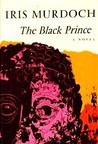
The Black PrinceThe Black Prince 
by Iris Murdoch

“Every artist is an unhappy lover. And unhappy lovers want to tell their story.”   
― Iris Murdoch, The Black Prince


"The ambiguously romantic Black Prince of the title, Bradley Pearson, is an aged bachelor, whose range of somewhat histrionic emotions involves the serene Rachel Baffin, her confused daughter Julian, Rachel's novelist husband Arnold, Bradley's rival in so many ways, Bradley's dysfunctional sister Priscilla, and Bradley's prying ex-wife Christian..."

Bradley Pearson, British writer, is suffering from a writer's block. He has waited all his life to write his masterpiece. Finally, he feels, the time has come when he can leave his small time job as a revenue officer, and go away from the city din to write. However, his fellow writer friend, Arnold Baffin, Arnold's wife Rachel, daughter Julian, Pearson's ex-wife Christian, ex-brother-in-law Francis and sister Priscilla all tug at his attentions in various ways to make Pearson's escape impossible. Each character has his own version of the series of incidents in the novel. Murdoch ingeniously builds the complications of these incidents or accidents into a delightfully painful and humorous story of erotic abandon. The mind remarkably colors the incidents of the novel to project a story that fits each character best. Julian comfortably forgets the intricate details of an embarrassing romance, Rachel feels that Bradley is madly in love with her while Arnold believes that Bradley is jealous of his success.
This is one of her very best, about mad love, and it justly won the James Tait Black Memorial Prize.


The Prince of TidesThe Prince of Tides 
by Pat Conroy

“There is such a thing as too much beauty in a woman and it is often a burden as crippling as homeliness and far more dangerous. It takes much luck and integrity to survive the gift of perfect beauty, and its impermanence is its most cunning betrayal.”   ― Pat Conroy, The Prince of Tides

This is the story of a destructive family relationship in which a violent father abuses his wife and children. Henry Wingo is a shrimper who fishes the seas off the South Carolina coast and regularly squanders what little money he amasses in farcical business schemes; his beautiful wife, Lila, is both his victim and a manipulative and guilt-inflicting mother.
Twins, brother and sister, are at the center of this family saga. The story is narrated by one of the children, Tom Wingo, a middle-aged man with a wife and three young daughters who has recently lost his job as a high school English teacher and football coach. Tom alternately recalls his growing-up years on isolated Melrose Island, then switches to the present in Manhattan, where his twin sister and renowned poet, Savannah, is recovering from a suicide attempt. Tom agrees to go to New York City, where Savannah lives, to look after her until she is well again. Before Tom leaves his home in South Carolina, he learns that his wife is having an affair. One secret at the heart of this tale is the fate of their older brother Luke; we know he is dead, but the circumstances are slowly revealed. Also kept veiled is "what happened on the island that day,'' a grisly scene of horror, rape and carnage that eventually explains much of the sorrow, pain and emotional alienation endured by the Wingo siblings. Conroy deftly manages a large cast of characters and a convoluted plot, although he undermines his credibility through a device by which Tom tells the Wingo family saga to Savannah's psychiatrist. Some readers may find here a pale replica of Robert Penn Warren's powerful evocation of the Southern myth; others may see resemblances to John Irving's baroque imaginings. Most, however, will be swept along by Conroy's felicitous, often poetic prose, his ironic comments on the nature of man and society, his passion for the marshland country of the South and his skill with narrative.
I read Conroy's novel with enjoyment and not a little admiration at the imagination that created this family. The more I learn about the author I find that some of his inspiration for this fiction was based in real-life experience. That does not detract from the enjoyment of this well-told tale.

View all my reviews