Showing posts with label Philosophy. Show all posts

Friday, May 22, 2026

The Enigma of Evil

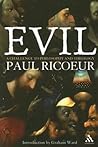
Evil: A challenge to philosophy and theology


Evil: 
A challenge to philosophy and theology 


This is a small but positively brilliant exegesis of the origin of evil. Ricoeur is eloquent and deep in his analysis based on a lecture given in Lausanne, Switzerland. Ricoeur's exploration of evil delves into its multifaceted nature, examining how it manifests in human experience and moral philosophy. He articulates the tension between the presence of evil and the quest for meaning, suggesting that understanding evil is essential to grasping the human condition.

Through his lens, Ricoeur emphasizes the importance of narrative in confronting evil, positing that storytelling allows individuals to process and make sense of their experiences with suffering and injustice. He invites readers to reflect on the ethical implications of evil, urging a deeper engagement with the moral dilemmas it presents.

Ultimately, Ricoeur's insights challenge us to confront the complexities of evil, encouraging a dialogue that transcends simplistic notions of good and evil and fostering a more profound understanding of our shared humanity.


View all my reviews

Wednesday, December 10, 2025

Ethics of the End

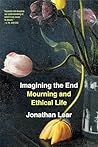
Imagining the End: Mourning and Ethical Life

Imagining the End: Mourning and Ethical Life 


Imagining the End: Mourning and the Ethical Life by Jonathan Lear is a profound philosophical and psychoanalytic meditation on how to find purpose and thrive during a period of pervasive worry about personal and societal loss. Lear examines the idea of "the end" in two senses: telos (the goal, purpose, or good of life) and termination (such as a planetary catastrophe or cultural collapse), drawing on his training as a philosopher and psychoanalyst. He contends that our confusion in the face of the former is closely linked to our inability to understand or agree upon the latter.

Lear's main contention is that, when properly understood and practiced, mourning is an ethical, creative, and active act that can create meaning and support our well-being rather than just a passive response to loss. By supporting a type of mourning that acknowledges the anguish of loss but transforms it into a capacity for hope and forward-looking renewal, he sets this apart from melancholia, which Freud defined as a pathological reaction where the lost object is incorporated into the ego.

In order to create a position from which the psyche can look outward and thrive, this "creative mourning" entails investigating dashed hopes, abandoned endeavors, and broken attachments. Expanding upon his previous book, Radical Hope: Ethics in the Face of Cultural Devastation, Lear explores the fragility of the institutions and cultures that provide us with comfort. He investigates how we might live when we acknowledge the frailty of the conventional framework of meaning.

Lear links the qualities of thankfulness and hope to a healthy grieving process. Gratitude is presented as a basic "attunement" to the world, emphasizing the benefits gained from what is now lost, rather than merely as an emotion. Moral exemplars, drawn from sources like Homer's Priam and personal history, serve as models for how to embody virtues and navigate life's inevitable setbacks, offering a kind of practical instruction in ethical living.
Lear suggests that the humanities serve as a special form of mourning. They conserve our best accounts of what it is to be human—what he terms the kalon (the fine, noble, or beautiful)—by preserving and presenting images of the past as models for creative "repetition" and ethical action in the present.

In essence, Imagining the End challenges readers to confront loss—personal, cultural, and even planetary—not with despair or melancholia, but by transforming the work of mourning into a powerful and ethical process of meaning-making that sustains the good life.


View all my reviews

Tuesday, August 19, 2025

Overcoming Life's Challenges

Thus Spoke Zarathustra
Thus Spoke Zarathustra 


“I am a forest, and a night of dark trees: but he who is not afraid of my darkness, will find banks full of roses under my cypresses.” ― Friedrich Nietzsche, Thus Spoke Zarathustra


How do you overcome life's challenges? Maybe by reading Friedrich Nietzsche or Schopenhauer, or even better, both. Thus, Nietzsche is a poet and philosopher who spoke Zarathustra. The chapter "Thousand and One Goals" presents Zarathustra, the book's protagonist and title character, as "the creator" (p. 58). His travels, speeches, and particularly his reflective monologues provide us with discourse on the nature of spirit, language, judgment, consciousness, and knowledge (gnosis). Some of Nietzsche's most important concepts are elaborated in this work, including "eternal recurrence" and the "death of god." Since Nietzsche disagrees with the conventional wisdom that morality originates from God above, the latter signifies a change in the foundation of morality. Nietzsche was a precursor, if not one of the founders, of existentialist philosophy because he substituted a morality grounded in the individual's existence for this viewpoint.

This work's literary quality is marked by its mythic poetical style, which also gives it a spiritual reading. Aphoristic elements are also present in Nietzsche's writing. It is a challenging book to read, but for those who want a more literary approach to philosophy, the issues it poses make the effort worthwhile.

View all my reviews

Tuesday, March 18, 2025

Ancient Wisdom

Confucian Analects, The Great Learning & The Doctrine of the Mean
Confucian Analects, 
The Great Learning & 
The Doctrine of the Mean 


“By three methods we may learn wisdom: First, by reflection, which is noblest; Second, by imitation, which is easiest; and third by experience, which is the bitterest.”
― Confucious


I have spent the last few weeks reading, thinking about, and contemplating James Legge's classic translation of Confucius, Confucian Analects, The Great Learning, and The Doctrine of the Mean. Confucius, who lived from 551 to 479 B.C., is the source of all works that have been condensed over centuries.

"The Analects of Confucius are the oldest complete intellectual and spiritual portrait of a man," Elias Canetti succinctly put it. It seems like a contemporary book. Additionally, this reader finds the book to be very un-Western and challenging to understand. Despite this, there are many similarities between western wisdom and Confucian thought. One of the most well-known theories is "reciprocity."

15.24 Zigong asked: "Is there any single word that could guide one's entire life?" The Master said, "Should it not be reciprocity? What you do not wish for yourself, do not do to others." (Simon Leys trans., p 77)


The more well-known "Golden Rule," which states that one should "do unto others as one would have them do unto you," is complemented by that. One gains an appreciation for culture, family, and what appears to be a conservative view of man after reading the aphorisms. Additionally, it is a very humanistic and compassionate perspective on society.

Given the significant changes in Confucius's society during his lifetime, it appears that this was exactly what was required. He lived in a time of profound cultural upheaval. Like Western thinkers from Socrates to Gandhi, Confucius exuded confidence, which attracted people to him and his ideas. For what little we do have of Confucius' ideas, we can thank them. His ideas are condensed in these books and fragments, and I find them to be worth considering. This is a human treasure.


Mind and Body

Discourse on Method and Meditations on First Philosophy
Discourse on Method 
and Meditations on First Philosophy 


“The reading of all good books is like conversation with the finest men of past centuries.” ― René Descartes


The foundational works of modern philosophy, René Descartes' Discourse on the Method (1637) and Meditations on First Philosophy (1641), signaled a dramatic turn toward rationalism and the growth of the scientific method. Their importance stems from Descartes' insistence that reason is the main source of knowledge, his systematic skepticism, and his effort to provide a solid basis for human comprehension.

Descartes describes his method of learning in Discourse on the Method, which is renowned for being summed up in the expression "Cogito, ergo sum" ("I think, therefore I am"). Its autobiographical style and its introduction of a methodical approach to doubt—questioning everything that can be questioned—to arrive at certain truths make this work noteworthy. He suggests four guidelines for thinking clearly: break problems down into their component parts, start with the simple and work your way up to the complex, accept only what is clear and distinct, and thoroughly review. His contributions to mathematics, such as Cartesian coordinates, and his goal of using reason to bridge the gap between philosophy and science are also reflected in the Discourse.

Thoughts on the first philosophy begins by exploring metaphysics and epistemology in greater detail and expands on this. In order to arrive at the conviction that he is a thinking being, Descartes methodically questions his senses, the outside world, and even the existence of his own body through six meditations. He then makes the case for God's existence (using the ontological and causal arguments) and asserts that knowledge is based on distinct and unclouded perceptions, which are ensured by an unfaithful God. The mind-body dualism, which distinguishes the material body from the immaterial mind, is a topic that is still relevant in both philosophy and science.


Thursday, March 06, 2025

Expressing the Inexpressible

Culture and Value
Culture and Value 


“Perhaps what is inexpressible (what I find mysterious and am not able to express) is the background against which whatever I could express has its meaning."  ― Ludwig Wittgenstein, Culture and Value


Culture and Value by Wittgenstein, translated by Peter Winch, presents a collection of his remarks on culture and value, including thoughts on art, music, religion, and other cultural areas, presented chronologically with the German text alongside the English translation and a subject index.
The book comprises Wittgenstein's notes and remarks on various aspects of culture and value, including art, music, religion, and literature. The entries are presented chronologically, with both the German and English texts side-by-side and a subject index for easy reference.

Wittgenstein discusses Christianity, stating it is not based on historical truth but offers a narrative to be believed, regardless of historical accuracy. The book includes Wittgenstein's thoughts on Shakespeare, contrasting his character depictions with those of Tolstoy. Wittgenstein lists individuals who influenced him, including Boltzmann, Hertz, Schopenhauer, Frege, Russell, and others. "Culture and Value" provides valuable insights into Wittgenstein's philosophical thinking beyond his formal works. The book offers a glimpse into his personal reflections and observations on cultural phenomena. It allows for a deeper understanding of Wittgenstein's broader philosophical framework.

Remarkably, many of the statements made throughout the text can be taken at face value without any additional context. Ultimately, Culture and Value is a great addition to the Wittgenstein Corpus because these comments can also help readers better understand Wittgenstein's philosophy.


Wednesday, November 20, 2024

The Empirical Approach to Learning

The Major Works

The Major Works 

by Francis Bacon


 “If a man will begin with certainties, he shall end in doubts; but if he will be content to begin with doubts, he shall end in certainties.”   ― Francis Bacon, The Advancement of Learning


Among other things, the intellectual justification for the scientific empirical approach is provided by this foundational work. Bacon contends that one should examine the evidence of their senses and investigate the outcomes, as the antiquated method of demanding classic authors is inadequate. This excellent collection also includes "The New Atlantic" and a selection of essays.

In "The Advancement of Learning," Francis Bacon argues for a new approach to knowledge acquisition, advocating for the empirical method as the primary means of scientific understanding, emphasizing observation and experimentation over traditional reliance on authority and speculation, with the ultimate goal of improving human life through practical applications of knowledge; he outlines a detailed classification of knowledge, dividing it into history (memory), poetry (imagination), and philosophy (reason), and criticizes existing scholarship for its focus on "vain speculations" rather than useful discoveries for mankind.


Thursday, September 26, 2024

A Glimpse of Eternity

Notebooks 1935-1942

Notebooks 1935-1942 

by Albert Camus


“Beauty is unbearable, drives us to despair, offering us for a minute the glimpse of an eternity that we should like to stretch out over the whole of time.”   ― Albert Camus, Notebooks 1935-1942


Albert Camus, a prominent existentialist philosopher and Nobel laureate, shares his philosophical ideas in this volume. Furthermore, there exist passages of description that were incorporated into specific publications during his lifetime. The notebooks help us understand Camus's reading preferences and the ways in which his activities shaped his ideas. The entries piqued my interest since they offered a glimpse into the process of creating some of Camus's works during this time. I would recommend these notebooks to anyone who enjoys the fiction of Albert Camus.


Friday, July 26, 2024

Learning for Understanding


The Ethics/
On The Improvement
 of The Understanding
by Baruch Spinoza


“The highest activity a human being can attain is learning for understanding, because to understand is to be free.”   ― Baruch Spinoza


In his Ethics Spinoza explores the nature of reality, God, and the human condition, inspiring readers to consider their own beliefs and look for greater meaning in life. I found that with his rigorous logic and meticulous reasoning, his Ethics and related writings succeeded in challenging interested readers to analyze closely their thinking about philosophy and the ethical life.

The method of Spinoza mirrors the mathematical logic of geometry in such a way to make his presentation rigorous beyond that of most philosophical treatises. Spinoza claims that "whatever is , is in God," and "from the necessity of the divine nature there must follow infinitely many things ..."  I found his argument that God equates with Nature and his derivative of the theoretical structure of the world in which we live to be enlightening in every sense.  Following in the steps of Socrates, Giordano Bruno, Descartes, and others, he developed a philosophy that emphasized the union of God and Nature and provided a scientific-based method for developing a way of life.  While addressing the nature of humans and the world around them, he explored the limits of knowledge and the limits of our own will.  I found even more impressive was  the way he could dispassionately promote a study of the passions. 

His disquisitions raise questions about who we are as humans, what are our causes and, most importantly, what is the nature of our being in reality.  In doing this he challenges all thinkers and believers to question the nature of God and God's relation to the world.  Interestingly, his approach to this involved developing a metaphysics and method to provide a foundation for his ethics.

Without trying to delineate all of the details of his philosophy (I'm certain that much of which is still somewhat beyond me) it is useful to summarize his premises of knowledge which revolved around imagination, reason, and intuition; all of which could be addressed via a scientific approach that evokes the rigor of geometry. The development of our personality depends on a mental acuity that encompasses the world around us. Yet, he argues that our reasoning demonstrates that truth is independent of our mind while challenging us to consider the cosmic order of things.


Thursday, February 08, 2024

Apolline vs. Dionysian

The Birth of Tragedy / The Case of Wagner
The Birth of Tragedy 
and The Case of Wagner 


“Without myth, however, every culture loses its healthy creative natural power: it is only a horizon encompassed with myth that rounds off to unity a social movement.”   ― Friedrich Nietzsche, The Birth of Tragedy


In The Birth of Tragedy Nietzsche not only narrates the origin of tragedy, but he also offers a postmortem that identifies its killers. According to Nietzsche, with Euripides' help and encouragement, Socrates destroyed this pinnacle of Greek culture. However, Nietzsche goes on to predict that Wagnerian opera will bring about its revival, at least in Germany. The ideas of Schopenhauer and Kant indicate that the rationalism that was introduced by Socrates and ultimately led to the abolition of tragedy has run its course and reached its limits, which means that the time is right for tragedy to reappear. Pace logic apart, the thing itself demonstrates that it is fundamentally unknown.

Nietzsche's analysis identifies the Apolline and the Dionysian artistic tendencies that are united in Greek tragedy. In contrast to the Dionysian, who offers chaos, intoxication, obscurity, excess, and fusion, the Apolline symbolizes clarity, beauty, order, shape, and individuation. Greek tragedy—at least the works by Aeschylus and Sophocles—exposes its audience to existential horrors like fate's hand, the impotence of even the most admirable people, and the certainty of suffering. It rises above the pit of sorrow and pessimism, however, to affirm life in the end, or at the very least, to affirm aesthetic force and its capacity to redeem pain and suffering, by crafting these brutal facts into a great work of art.

Sunday, October 29, 2023

Intellectual Vacuity

The Temptation to Exist
The Temptation to Exist 


“For all sensation is a bond, pleasure as much as pain, joy as much as misery. The only free mind is the one that, pure of all intimacy with beings or objects, plies its own vacuity.”  ― Emil Cioran, The Temptation to Exist


When this eleven-essay collection was first released in France, it caused a literary frenzy on the Left Bank. Cioran writes sharply about writers, novels, mystics, apostles, philosophers, and Western civilizations. Twenty years ago, Richard Howard's excellent translation of this remarkable European thinker's work, The Temptation to Exist, first introduced it to American readers. The book has subsequently turned into an underground classic, and the literary aura around Cioran has only deepened.

Cioran is a typical modern-day exponent of the metaphysical futility school. It is possible to argue that the titles of the first two articles in The Temptation to Exist, "Thinking Against Oneself" and "On a Winded Civilization," perfectly capture the tone and perspective of the entire collection as well as Cioran's body of work. Here, as elsewhere, Cioran presents a series of intensely personal observations on a variety of instructive subjects, including the collapse of Western civilization, the place of the intellectual in modern society, the end of the novel, the benefits of tyranny, the future of utopia, and other related subjects.

Cioran's persuasiveness stems from more than just the content of his argument; his style and epigrammatic tautness are just as, if not more, significant. His much-publicized efforts to master the French language have yielded a style that combines an almost Olympian coldness and intellectuality with an almost hysterical impression of passion. It is fundamentally a teenage style, like so much about Cioran: conceited, confessional, and theatrical, but full of vitality none the less. One of his most blatant rhetorical allusions to Nietzsche is the royal we, which he frequently employs to lend his work an air of authority. Cioran is also highly quotable if one ignores context and misses small details like meaning. Reading these essays is nonetheless engaging and demands the reader's thoughtful attention.


Sunday, August 20, 2023

Serious Thinker

Walter Benjamin: Selected Writings, Volume 1, 1913-1926
Walter Benjamin: 
Selected Writings, 
Volume 1, 1913-1926 


“Work on a good piece of writing proceeds on three levels: a musical one, where it is composed; an architectural one, where it is constructed; and finally, a textile one, where it is woven.”   ― Walter Benjamin


Although he wrote these essays when he was young, in his first thirteen years of writing, they belie his youth and ooze confidence while displaying a vast range of reading. His perspective on tragedy suggests studying both history and art in the quest to find significance in the terrible. The analysis of critique of German romanticism looks deeply into the inspiration behind the criticism as well as the ideas of intellectuals like Schelling and Fichte.

Benjamin consistently offers insights that continue to be relevant more than a century later, whether he is discussing the nature of translation or explaining how we use language. His reflections on the nature of being, along with the prerequisites for writing and the appropriate format for expressing ideas, most inspired me.

The writings by Walter Benjamin collected here offer opinions on a wide range of subjects, including language, translation, criticism, tragedy, and writing. Their superior writing and thoughtfulness are the only things they have in common. There is a message that emanates from a curious mind and permeates the pages of this anthology, regardless of how basic or flippant it may appear. His Arcades project is complemented by three volumes of essays, the first of which is this one. It is a good place to start exploring this writer who challenges you to think seriously about ideas.


Tuesday, June 13, 2023

Classical Consolation

The Consolation of Philosophy
The Consolation of Philosophy 


“Indeed, the condition of human nature is just this; man towers above the rest of creation so long as he realizes his own nature, and when he forgets it, he sinks lower than the beasts. For other living things to be ignorant of themselves, is natural; but for man it is a defect.”   ― Boethius, The Consolation of Philosophy


This is a new translation of Boethius Consolation of Philosophy. I found the book to be a fascinating approach to philosophy with the author sometimes using a sort of Socratic approach to question his own beliefs and those of the persona of philosophy herself. This relatively short tome provides a breadth of philosophical discussion that belies the size of the book. Written at the end of his life when he was in prison this thoughtfully raises questions about the use of philosophy for life and how one can pursue happiness as a human being. 

The Phaedo, in which Socrates describes how a philosopher approaches death while imprisoned and awaiting execution, had the most influence on the book. Porphyry and Proclus, two Neoplatonic interpreters, are used to interpret Plato. There also were moments that his approach suggested a touch of stoicism, which is not surprising given the environment in which he wrote this text.

The book narrates a discourse between Boethius and a vision of the Lady Philosophy, or philosophy personified in feminine form and resembling Diotima from Plato's Symposium. The work is primarily written in prose and is organized into five main portions, or books. It also includes 39 poems, which are almost like the chorus odes of Greek tragedy. The Lady Philosophy attacks Boethius for reneging on his philosophical principles under stress and contends that if he had been true to his philosophical education, he would not be sad about being imprisoned, going through torture, or waiting to be executed. Instead of expressing sympathy, the Lady Philosophy blames Boethius. 

His discussion of "what is true happiness'' was one of the high points in my reading. Given that happiness does not represent external occurrences but rather our emotional response to those situations, Lady Philosophy advances the Stoic idea that happiness is within our control. Even if we have no influence over the world around us, we do have control over how we react to it. She also makes the argument that because luck is erratic by nature, one shouldn't rejoice in good fortune or lament poor luck because it is unpredictable and always changing. He also touches on many other issues like the nature of perfection, the problem of evil, and the being of a good God.  

Overall this is one of the best short works of philosophy that I have read and I will put on my shelf with the Meditations of Marcus Aurelius and other great short philosophical works.


Tuesday, September 27, 2022

The Ultimate "One"

The Essential Plotinus
The Essential Plotinus 


“We must close our eyes and invoke a new manner of seeing, a wakefulness that is the birthright of us all, though few put it to use.”     ― Plotinus, The Essential Plotinus


Neoplatonism is credited with having its roots in the mystic philosopher Plotinus. He felt that throughout his life, he had repeatedly attained unity with the Supreme Principle, also known as the One. According to his idea, the Intellect, the Soul, and mankind were all manifestations of the One, as were all other material creatures and things. In his worldview, people should strive to achieve union (or reunion) with the One in order to escape the limitations of material reality. Plotinus was a well-known instructor who delivered lectures on this philosophy. One of his pupils, Porphyry of Tyre, eventually organized these lectures into six books with nine chapters each, which he termed Enneads. This book contains a selection from those lectures.

Plotinus’s interpretation of Platonic philosophy centers on his conception of the One, the creator-being. The One is that which makes all things possible; thus he claimed that the One is the penultimate element. It is made up of everything else, yet it remains in the purest form. Plotinus calls this state “the light before the light.” As this purest form, it cannot be described or discussed; living beings can only hope to realize that even with a sense of perfection in meditation, they must be aware that there is a greater perfection that exists.

The One is known only by what it is not; it is not comprehensible, but it is the source of both the intelligence and the soul. These three entities form a trinity that is hierarchical and to a great extent ineffable. The intelligence remind one of the forms of Plato's thought. In addition to clear connections to Platonic philosophy there are resonances with both the thought of Aristotle and the writings of Paul in the New Testament of the Christian Bible.

Plotinus' thought is paradoxical, yet through contemplation it appears to form a natural hierarchical structure that leads from the sentient world to the ultimate source of everything.


Monday, September 05, 2022

The Mystery of Oneself

Confessions 
“And men go abroad to admire the heights of mountains, the mighty waves of the sea, the broad tides of rivers, the compass of the ocean, and the circuits of the stars, yet pass over the mystery of themselves without a thought.”  ― St. Augustine of Hippo, Confessions


Rereading this book I am reminded once again how powerful it is and how modern it seems to be. Like all classics it bears rereading and yields new insights each time I read it. But it also is unchanging in ways that struck me when I first read it; for Augustine's Confessions is both an apologetic account of his intellectual search for understanding and wisdom, yet in pursuing that search finding a rootlessness due to an ultimate dissatisfaction with different philosophical positions that he explores. From the carnality of his youth to the moment in the Milanese Garden when his perspective changed forever you the story is an earnest and sincere exposition of his personal growth. You do not have to be a Catholic or even a believer to appreciate the impact of events in the life of the young Augustine. The certainty for which Augustine strives is not found in philosophy alone, but rather in faith, only Christian faith, is this certainty possible for him. Having recently read Cicero myself, I was impressed that Cicero's writing had an important impact on Augustine.

His relations with his mother, Monica, are among those that still have impact on the modern reader. The combination of his personal insights, relations with friends and teachers, and the unusual (for his time) psychological portrait make one realize that this is one of those "Great" books that remind you that true insight into the human condition transcends time and place.

I must add an additional recommendation of the book A Third Testament by Malcolm Muggeridge, the British journalist and author. Muggeridge provides brief chronicles of six great searchers for spiritual fulfillment. These include, in addition to St. Augustine, Blaise Pascal, William Blake, Soren Kierkegaard, Leo Tolstoy and Dietrich Bonhoeffer. It is a short but elegant treatment of their personal searches for meaning.


Tuesday, August 02, 2022

The Encounter of Existence

I and Thou
I and Thou 


This is the eternal origin of art that a human being confronts a form that wants to become a work through him. Not a figment of his soul but something that appears to the soul and demands the soul's creative power. What is required is a deed that a man does with his whole being..”  Martin Buber, I and Thou


I and Thou is a key text in ethical, religious, and intellectual philosophy from the 20th century. It exhibits elements of each of those even though it isn't strictly a work of philosophy, religion, poetry, or mysticism. Its introspective, aphoristic tone could even be described as "theopoetic." The book also covers a wide range of topics, even though it is only a little over 200 pages long, such as modernity, human psychology, perception and consciousness, evil, ethics, education, spirituality, religious tradition, the natural world, biblical hermeneutics, the relationship between personal and communal fulfillment, the relationship between the divine and the human, and so forth.

The book is not weighed down with obscure allusions and convoluted reasoning, but rather it is profoundly affected by and engages in an implicit dialogue with Kant, Hegel, Marx, Feuerbach, Kierkegaard, Nietzsche, and Heidegger, not to mention the mystic traditions of Hasidism. Buber's writings are still regarded as a turning point in existentialist philosophy.

I and Thou is a deceptively straightforward idea, which is that all existence is encounter, despite its weighty heritage. Additionally, it makes for a fascinating, stimulating, and enjoyable read.


Tuesday, June 14, 2022

Socratic Wisdom

Philosophy and the Return to Self-Knowledge
Philosophy and the Return to 
Self-Knowledge 


"Socrates was the first to call philosophy down from the heavens."
--- Cicero


This is a book dedicated to the importance of and need to return philosophy to an approach found in the origins of philosophy found in Socratic humanism. This means reviving the ideal espoused in the slogan "know thyself". The examined life and the wisdom derived from the search and process of achieving such a life is one that the author believes is necessary to reform philosophy. He is careful to comment on process and in the concluding sections of the book provide a discussion of virtues. As a student of the classics and someone who admires the Socratic process of seeking knowledge through dialogic means I found this book encouraging and thought-provoking.


Tuesday, March 15, 2022

The Birth of Modern Culture

Wittgenstein's Vienna
Wittgenstein's Vienna 
by Allan Janik & Stephen Toulmin


"those who are ignorant of the context of ideas are . . . destined to misunderstand them. " - p 27.


Set in the hot bed of ideas at the end of the nineteenth century this book covers the man at the center of philosophic discussions, Ludwig Wittgenstein. But more than that this is a work of cultural history defining the meaning of the changes abounding from the preoccupations of a society undergoing profound changes. 

The arc of the books narrative takes the reader from Habsburg Vienna during the last days of empire through changes to language, culture, and philosophy. Leavened by references to art, music, and literature the book attempts to make a case for the intelligibility of these changes. 

One reads about the impact of the thought of Sigmund Freud; the music of Arnold Schonberg; and the art of Klimt, Kokoschka, and others. If you are interested in the roots of Robert Musil's early work or the impact of the philosophy of Arthur Schopenhauer you should read this book. It is a seminal work in the history of ideas.


Monday, February 07, 2022

Philosophy in the Twentieth Century

The New World of Philosophy
The New World of Philosophy 


"To describe a man's philosophy is to say how he orients himself to the world of his experience, what meanings he finds in events, what values he aspires to, what standards guide his choices in all he does." (p 4, Abraham Kaplan)


A collection of interpretive examinations of some of the major intellectual movements of the modern era. Mr. Kaplan's nine lectures cover a wide range of topics, from pragmatism and analytic philosophy, which are regarded technical theories, to existentialism, communism, and psychoanalysis, and are written with a wit and pungency rarely seen in philosophic discourse. Lectures on Buddhism, Indian philosophy, Chinese philosophy, and Zen explore the philosophy and religion of the East.

In these essays he highlights common themes including rationality, activism, humanism, and values in general. Starting from a point of view that was characterized millennia ago by Aristotle as Man's "desire to know", Kaplan attempts to show how new philosophies have absorbed or reacted to the ideas promulgated by philosopher's over the centuries. In doing so he raises the question of how we should view this "brave new world" of philosophy and answers it in ways that hopefully emphasize a positive approach to these new ideas.


Monday, November 01, 2021

The Encheiridion

The Handbook (The Encheiridion)
The Handbook 


“Freedom is the only worthy goal in life. It is won by disregarding things that lie beyond our control.”
“The key is to keep company only with people who uplift you, whose presence calls forth your best.”   ― Epictetus


This is the little (29 pp) book that lays out the essence of Stoic philosophy.  Stoicism was founded by Zeno of Cytium more than three centuries earlier, but it is the works of Epictetus (along with Seneca and Marcus Aurelius) that form Stoic thought as we know it today. Stoicism, while not a well known today as the thought of Plato and Aristotle, was one of the major philosophic schools in Greece and Rome for a half a millenium. 

What makes the handbook most interesting today is the practical advice aspect of Epictetus' thought. One can put some of these ideas to good use even in the twenty-first century.
According to Epictetus one makes progress when "he censures no one; he praises no one; he blames no one; he never talks about himself as a person who amounts to something or knows something." And finally, "Never say about anything, 'I have lost it,' but instead, 'I have given it back.'" Follow the Stoic principles and you will not have an unhappy life.