Showing posts with label Lyric Poetry. Show all posts

Sunday, July 12, 2026

Deepest Essence

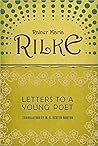
Letters to a Young Poet

Letters to a Young Poet 


“Perhaps all the dragons in our lives are princesses who are only waiting to see us act, just once, with beauty and courage. Perhaps everything that frightens us is, in its deepest essence, something helpless that wants our love.” ― Rainer Maria Rilke, Letters to a Young Poet


Rainer Maria Rilke's Letters to a Young Poet is a masterwork of introspective writing. The book, which was written between 1903 and 1908, is made up of ten letters that Franz Xaver Kappus, a 19-year-old military cadet, received asking for guidance on his poetry and life decisions. Rather than providing technical writing criticism, Rilke offers a profound manual on leading a genuine, creative life.

Loneliness is reclaimed by Rilke as a holy, useful place. He contends that a great deal of sometimes agonizing inner solitude is necessary for profound artistic creation and self-discovery. The letters promote accepting adversity rather than running away from it. Rilke famously suggests that instead of hurrying to find quick answers, we should love the questions themselves, like locked rooms. Love is presented as the ultimate test of maturity rather than as a straightforward emotional haven. According to Rilke, love is two solitudes that greet, border, and defend one another.

View all my reviews

Monday, May 19, 2025

Living Well

Music at Midnight: The Life and Poetry of George Herbert
Music at Midnight: 
The Life and Poetry of George Herbert 


“Living well is the best revenge.” ― George Herbert


Widely regarded as an important and perceptive biography, John Drury's "Music at Midnight: The Life and Poetry of George Herbert" provides a thorough and captivating examination of the 17th-century metaphysical poet. Instead of presenting a simple cradle-to-grave account, Drury skillfully combines Herbert's life story with insightful criticism of his poetry, showing how his enduring verse was significantly influenced by his own experiences, spiritual challenges, and the sociopolitical climate of early 17th-century England.

Without compromising academic rigor, Drury does a commendable job of making Herbert and his world understandable to modern readers. Both seasoned Herbert scholars and those unfamiliar with his work will find his prose appealing, often characterized as eloquent and devoid of complex academic jargon. Drury's insightful analysis of Herbert's poems, exploring their formal and stylistic mastery, theological profundity, and emotional resonance, is one of the book's main strengths. The book effectively reveals the "autobiographical implications" of Herbert's poetry, demonstrating how his poems "obviously and confessedly arise from his life experiences."

The main accomplishment of the book is the way it skillfully blends incisive literary criticism with Herbert's biography. By deftly situating readings of the poems within Herbert's life story, Drury enables readers to understand the background from which they were taken. Drury finds a balance between making the content understandable and offering an informed, in-depth account. He breaks down difficult theological concepts in an understandable way, clarifies historical context, and explains archaic language. The end product is an excellent read.


Monday, February 17, 2025

Greek Lyrics

Pure Pagan: Seven Centuries of Greek Poems and Fragments
Pure Pagan: Seven Centuries of Greek Poems and Fragments 


“EUROPA Europa costs you a dollar. No one cares, including her. She’s got clean sheets and a fire in winter. Why bother Becoming a bull, O Zeus!”  ― Burton Raffel, Pure Pagan: Seven Centuries of Greek Poems and Fragments


One of my favorite poet-translators, Burton Raffel, translated these Greek lyrics. Through their poetry, the poets in this anthology offer a window into ancient Greek culture. Among them are the very obscure to the somewhat less obscure, with a few familiar names like Plato. There are poems and fragments of poems for everyone's taste. Reading them, I enjoyed making connections with my own life and our twenty-first century culture. Seeing how these ancient poets influenced some of our greatest contemporary poets was also fascinating. 

"Pure Pagan" is celebrated for its role in bringing obscure Greek poetry to light, offering readers a glimpse into the diverse voices of ancient Greece. I appreciate Raffel's modern interpretation. Because of its wide range of selection and lively, if occasionally contentious, translation style, it is a great addition for anyone interested in ancient poetry. 
Overall, it is a beautiful selection of poetry.

If you're interested in exploring ancient Greek poetry through a contemporary lens, this book might serve as an engaging introduction or a complementary read to more traditional translations. However, for those seeking a translation closer to the original rhythm and tone, opinions suggest looking at other translators' works as well.


Friday, January 24, 2025

Sonnet for a Winter Day


 Sonnet 97: How like a winter hath my absence been


By William Shakespeare

How like a winter hath my absence been

From thee, the pleasure of the fleeting year!

What freezings have I felt, what dark days seen!

What old December's bareness everywhere!

And yet this time remov'd was summer's time,

The teeming autumn, big with rich increase,

Bearing the wanton burthen of the prime,

Like widow'd wombs after their lords' decease:

Yet this abundant issue seem'd to me

But hope of orphans and unfather'd fruit;

For summer and his pleasures wait on thee,

And thou away, the very birds are mute;

Or if they sing, 'tis with so dull a cheer

That leaves look pale, dreading the winter's near.

Monday, January 23, 2023

Poem for Today

The Complete Poems
The Complete Poems 

The last thirty years of Thomas Hardy's life was devoted to poetry. During this time after he had eschewed novel-writing he wrote hundreds of poems. These poems spanned a variety of styles including: satires, love poems, lyrics, reveries, and songs. The topics also spanned a great number including some focused on the Wessex countryside where he set his well-known novels. The result of all this poetic creation is a collection that rivals that of the greatest poets in the English-speaking world. I would recommend this volume to all who revere fine poetry. 

Here is a poem for this Monday selected from this collection:


To A Lady

Offended by a Book of the Writer's

NOW that my page is exiled, doomed, maybe,
Never to press thy cosy cushions more,
Or wake thy ready Yeas as heretofore,
Or stir thy gentle vows of faith in me:

Knowing thy natural receptivity,
I figure that, as flambeaux banish eve,
My sombre image, warped by insidious heave
Of those less forthright, must lose place in thee.

So be it. I have borne such. Let thy dreams
Of me and mine diminish day by day,
And yield their space to shine of smugger things;
Till I shape to thee but in fitful gleams,
And then in far and feeble visitings,
And then surcease. Truth will be truth alway.

Thomas Hardy


Sunday, November 27, 2022

Poetry of Sappho

If Not, Winter: Fragments of Sappho


If Not, Winter: 
Fragments of Sappho 


"Eros, that slackener of limbs, twirls me again---
bittersweet, untamable, crawling thing.

but you, Atthis, hate the thought of me,
and go flying off to Andromeda"
 

The poetry of Sappho is incomparably erotic and undeniably beautiful even in small fragments.

Sunday, July 31, 2022

The Smell of Burning Books


An Insubstantial Pageant


The smell of burning books permeates the air.

It hovers about those engaged in daily activity,

Yielding a strange sense of bittersweet victory.


Forcing our selves, attempting to escape the smoke

We feel the result of harnessing nature -

The written word is our yoke to the world.


The word belongs in heaven with the angels.

What beauty lies below, corroded by our touch?

Yes, there are tarnished tomes that remain.


Just as we turn to the spiritual for relief

We plead for support from the muses -

In vain, we seek what has been lost.


Simple supplication summons our spirits

Forth to the battle. Will there be future moments -

Recording our efforts to mold minds?


Seeing the possibility of pyrrhic victories

As the vapors overwhelm our souls,

We struggle within on this earth -

Players in the insubstantial pageant.


From Preludes of the Mind, 1996 (rev), James Henderson

Friday, May 27, 2022

The Odes of Horace

Odes, and Carmen Saeculare
Odes, and Carmen Saeculare 


“Not him with great possessions should you in truth call blest; with better right does he claim the name of happy man who realizes how to make use of the gods' gifts wisely, is skilled to meet harsh poverty and endure, as one who dreads dishonor far more than death; a man like that for friends beloved, or for his country fears not to perish.”   ― Quintus Horatius Flaccus, The Odes of Horace


Horace lived in the last half of the 1st century B.C.E. and wrote some of the greatest lyric poetry in ancient Rome. While the Odes often describe commonplace activities they still allow various interpretations by the reader based on construction, vocabulary and imagery. The activities are often as simple as inviting a friend for a drink or wishing a friend a safe journey. While describing what are often mundane activities they often yield deeper meanings like "remember you are going to die" or "stay in the middle, don't go too far out." The beauty of the poems, even in translation , is undeniable. He often praises famous men, refers to the gods and his muse, while praising his friend and benefactor, Maecenas.

I found reading these poems an antidote to the revulsion that I had while reading the brutality of battles and even daily life in the histories of Livy and Tacitus. Rome during this era was resplendent in artistic beauty. The poetry of Horace is evidence of some of that beauty.

View all my reviews

Sunday, February 27, 2022

Let Your Being Be

Duino Elegies and The Sonnets to Orpheus
Duino Elegies 
and The Sonnets to Orpheus 
“Let everything happen to you
Beauty and terror
Just keep going
No feeling is final”
― Rainer Maria Rilke


My introduction to Rilke was through his novel, The Notebooks of Malte Laurids Brigge, where he introduces many of the themes that permeate the Elegies and Sonnets. Here we find references to alienation, fear, poverty, loneliness, art, disease, and death. Yet even with death there is great beauty and soaring poetry even in translation (especially fine by Stephen Mitchell).


Rilke creates powerful yet elegant poetic odes to the majesty of the human experience and its relationship to the external world in this comprehensive translation of two major works. A realm in which the human being exists in a state of perplexity and struggle. I was fascinated by the ideas of death as an other, the "terrible rival" from the notebooks, and a meditation on the fear of death as well as death overcome. The great joy of learning to be yourself and enjoy your being; what I call a will to relax and "let your being be". The many aspects of love that appear both as desire and as a rival for the work of the artist.


Through it all we find the poet "learning to see" with a new will and a new being. There were moments I was reminded of Nietzsche's Zarathrustra, and of course Orpheus and and other myths from Ovid along with the Bible and other literary resonances. Above all I came to accept Rilke's admonishment for us to go ahead and become "beginners". To begin is to begin to create and will your being and ultimately your life, even in the face of death.


Tuesday, January 04, 2022

Beloved Poet of Ancient Greece

Sappho
Sappho 


Tonight I've watched

The moon and then
the Pleides
go down

The night is now
half-gone; youth
goes; I am

                                    In bed alone


Who is this poet? The lyrical nature of her poetry is evident at once, while the variety of thoughts resonate through the centuries. Can we get a glimpse of what life was like for this Greek woman from the fragments of her verse? Perhaps, we can get that glimpse and even more. I found the lines about lives lived under the sun and stars resonated with me and evoked memories of similar experiences in my own life. Hidden among the references to strange gods were words of wisdom, praise of virtue, and emotions as familiar as any experienced by those who have seen the beginning of a new century.

With only fragments of her verse she charms the reader and evokes human emotions from the realms of ancient Greece. The power and beauty of her poetry shines forth like pieces of broken glass that glisten in the light of the sun. The translation by Mary Barnard rings true as fresh metaphors line the pages. Read this poetry and be entranced by the wonder of her words.


Monday, July 26, 2021

Of Mere Being

The Palm at the End of the Mind: Selected Poems and a PlayThe Palm at the End of the Mind: 
Selected Poems and a Play 
by Wallace Stevens


“Out of this same light, out of the central mind,
We make a dwelling in the evening air,
In which being there together is enough.”
― Wallace Stevens


This collection, while not as definitive as The Collected Poetry, includes all the major longer poems and many important shorter poems of critical value. Arranged in chronological order by probable date of composition this text provides the reader the possibility of considering the overall arc of Stevens' career. I find myself dipping into the poems included here time and again and it is difficult to pull myself away. The thoughtful consideration of art and meaning in life is seldom conveyed any better than in the poetry of Wallace Stevens.


"Of Mere Being"

The palm at the end of the mind,
Beyond the last thought, rises
In the bronze decor,

A gold-feathered bird
Sings in the palm, without human meaning,
Without human feeling, a foreign song.

You know then that it is not the reason
That makes us happy or unhappy.
The bird sings. Its feathers shine.

The palm stands on the edge of space.
The wind moves slowly in the branches.
The bird's fire-fangled feathers dangle down.

Wednesday, July 14, 2021

Inspired by Cervantes


         BOOKS:  A  DREAM


While he was sitting in a rocky cave

By the sea-side, perusing, as it chanced,

The famous History of the Errant Knight

Recorded by Cervantes, these same thoughts

Came to him; and to height unusual rose

While listlessly  he sate, and having closed

The Book, had turned his eyes toward the Sea.

On Poetry and geometric Truth,

The knowledge that endures, upon these two,

And their high privilege of lasting life,

Exempt form all internal injury,

He mused; upon these chiefly: and at length,

His senses yielding to the sultry air,

Sleep seiz'd him, and he passed into a dream.


from "The Prelude" by William Wordsworth

Monday, May 31, 2021

Selections from Valery

An Anthology
An Anthology 
“Books have the same enemies as people: fire, humidity, animals, weather, and their own content.”   ― Paul Valéry


This anthology, in addition to a selection of poems, includes essays, two dialogues, and two selections from Monsieur Teste. The essays are perhaps the most accessible of all the selections. But all of Valery's prose and poetry is stunning and warrants rereading to approach a basic level of understanding.

I was most fascinated with his essay on "The Method of Leonardo". As he put it, he attempted to "go beyond indiscriminate admiration", but it would seem at least in part a form of hubris to be too critical in the case of Leonardo. He struggles to encompass the mind of Leonardo and determine the balance between art and science. 

In "The Crisis of the Mind", written in 1919 in response to the Great War we find Valery saying, "And we now see that the abyss of history is deep enough to hold us all. We are aware that a civilization has the same fragility as a life." (p 94) With observations of equal profundity and sufficient poetry to tantalize the reader, this is a volume to be recommended.


Sunday, March 28, 2021

Write, write, write . . .


Write, write, write, out of your guts, out of the sweat on your forehead and the blood in your veins. Do not think about Mr. Potter’s guide to the salesmanship of short stories produced, apparently, on the lines of the Ford works. Do not bother your head about the length of the stuff you are writing . . . . Write a story (if you must write stories) about yourself searching for your soul amid the horrors of corruption and disease, about your passionate strivings after something you don’t know and can’t express. (This is one of the few ways [of] knowing it and expressing it.)

Dylan Thomas (letter to Trevor Hughes, 1932)


Tuesday, February 02, 2021

Tribute to Melville

White Buildings: Poems
White Buildings: Poems 


Take this Sea, whose diapason knells
On scrolls of silver snowy sentences,
The sceptred terror of whose sessions rends
As her demeanors motion well or ill,
All but the pieties of lovers’ hands.  -  from "Voyages", Hart Crane


Hart Crane loved Melville and read Moby-Dick several times along with his other tales of the sea. This was in the early decades of the twentieth century before Melville was renowned as one of America's greatest authors. Crane had a difficult time getting his trbute, "At Melville's Tomb", published. Harriet Monroe rejected it when he submitted it to her Poetry Magazine and Marianne Moore wanted to change it before publication in the Dial, which she edited. Crane withdrew it, but it was included in White Buildings, his first collection of poetry to be published. When Eugene O'Neill agreed to write a foreward to the collection Boni & Liveright chose to publish it. Ultimately O'Neill backed out, but Allen Tate provided a foreward and Crane's first collection of poetry was printed in book form.

At Melville’s Tomb
BY HART CRANE

Often beneath the wave, wide from this ledge
The dice of drowned men’s bones he saw bequeath
An embassy. Their numbers as he watched,
Beat on the dusty shore and were obscured.

And wrecks passed without sound of bells,
The calyx of death’s bounty giving back
A scattered chapter, livid hieroglyph,
The portent wound in corridors of shells.

Then in the circuit calm of one vast coil,
Its lashings charmed and malice reconciled,
Frosted eyes there were that lifted altars;
And silent answers crept across the stars.

Compass, quadrant and sextant contrive
No farther tides ... High in the azure steeps
Monody shall not wake the mariner.
This fabulous shadow only the sea keeps.


Sunday, October 25, 2020

Enchanting Poetry

Stung with Love: Poems and Fragments
Stung with Love: 
Poems and Fragments 


“Some call ships, infantry or horsemen
The greatest beauty earth can offer;
I say it is whatever a person
Most lusts after."


While the title of this collection highlights the erotic attitude of the poems of Sappho, there is a wonderful fragment of a poem entitled "Troy" that presents a mythic narrative. In doing so she veers away from the emphasis of the Homeric epic and focuses on a conventionally 'feminine' theme, a wedding scene. She elevates the wedding to epic magnitude, all the while featuring excellence rather than the morality of good and evil.

Other poems and fragments present themes of goddesses, desire, girls and their family, and marriage. The result in an excellent translation is a delightful selection. Here is a typical quatrain:

Untainted Graces
With wrists like roses,
Please come close,
You daughters of Zeus.

Sappho lived in a time of transition for Greece, after the Homeric era but before the more famous Golden Age of Athens. I, like others, find her language enchanting, and the gathering of poems and fragments by subject lends an order to this collection. Her passion shines through both the millennia and the translation to charm the reader while leaving a bit of sadness that we do not have more of her oeuvre.

Tuesday, April 21, 2020

Spoken Words

Poetry Speaks: Hear Great Poets Read Their Work from Tennyson to Plath
Poetry Speaks: Hear Great Poets Read Their Work from Tennyson to Plath 


Those Winter Sundays

Sundays too my father got up early
and put his clothes on in the blueblack cold,
then with cracked hands that ached
from labor in the weekday weather made
banked fires blaze. No one ever thanked him.

I’d wake and hear the cold splintering, breaking.
When the rooms were warm, he’d call,
and slowly I would rise and dress,
fearing the chronic angers of that house,

Speaking indifferently to him,
who had driven out the cold
and polished my good shoes as well.
What did I know, what did I know
of love’s austere and lonely offices?


This is a wonderful collection of poetry with the added attraction of spoken verse. Each poet reads their own poetry as recorded on three CDs. The poets included range from the early nineteenth century with Tennyson, Browning, and Whitman to the late twentieth with Ginsberg, Sexton, and Plath. 

Some of my favorite poems are included from poets like Wallace Stevens, W. H. Auden, and Dylan Thomas. The introductions and commentary by some of our finest poets complement the verses making them all the more valuable and perhaps just a bit more understandable. The above poem, by Robert Hayden, is just one example of the great poetry included in this volume.


Saturday, August 31, 2019

Saturday Poem


per il Mulatto Brischdauer
gran pazzo e compositore mulattico
………. ––Ludwig van Beethoven, 1803


The Bridgetower

If was at the Beginning. If
he had been older, if he hadn’t been
dark, brown eyes ablaze
in that remarkable face;
if he had not been so gifted, so young
a genius with no time to grow up;
if he hadn’t grown up, undistinguished,
to an obscure old age.
If the piece had actually been,
as Kreutzer exclaimed, unplayable––even after
our man had played it, and for years,
no one else was able to follow––
so that the composer’s fury would have raged
for naught, and wagging tongues
could keep alive the original dedication
from the title page he shredded.
Oh, if only Ludwig had been better-looking,
or cleaner, or a real aristocrat,
von instead of the unexceptional van
from some Dutch farmer; if his ears
had not already begun to squeal and whistle;
if he hadn’t drunk his wine from lead cups,
if he could have found True Love. Then
the story would have held: In 1803
George Polgreen Bridgetower,
son of Friedrich Augustus the African Prince
and Maria Anna Sovinki of Biala in Poland,
traveled from London to Vienna,
where he met the Great Master
who would stop work on his Third Symphony
to write a sonata for his new friend
to premiere triumphantly on May 24th,
whereupon the composer himself
leapt up from the piano to embrace
his “lunatic mulatto.”
Who knows what would have followed?
They might have palled around some,
just a couple of wild and crazy guys
strutting the town like rock stars,
hitting the bars for a few beers, a few laughs . . .
instead of falling out over a girl
nobody remembers, nobody knows.
Then this bright-skinned papa’s boy
could have sailed his fifteen-minute fame
straight into the record books––where,
instead of a Regina Carter or Aaron Dworkin or Boyd Tinsley
sprinkled here and there, we would find
rafts of black kids scratching out scales
on their matchbox violins so that some day
they might play the impossible:
Beethoven’s Sonata No. 9 in A Major, Op. 47,
also known as The Bridgetower.
.
by Rita Dove
from Sonata Mulattica,  W.W. Norton, 2009

Sunday, July 28, 2019

Poem on Reading and Books


Collected Poems


A Study Of Reading Habits


When getting my nose in a book
Cured most things short of school,
It was worth ruining my eyes
To know I could still keep cool,
And deal out the old right hook
To dirty dogs twice my size.

Later, with inch-thick specs,
Evil was just my lark:
Me and my cloak and fangs
Had ripping times in the dark.
The women I clubbed with sex!
I broke them up like meringues.

Don't read much now: the dude
Who lets the girl down before
The hero arrives, the chap
Who's yellow and keeps the store
Seem far too familiar. Get stewed:
Books are a load of crap.


Monday, June 17, 2019

Surprised by Joy

Selected Poems 


Selected Poems


“Surprised by joy- impatient as the Wind
I turned to share the transport-- Oh! with whom
But thee, deep buried in the silent tomb,
That spot which no vicissitude can find?"


“I Wandered Lonely as a Cloud"


I wandered lonely as a cloud
That floats on high o'er vales and hills,
When all at once I saw a crowd,
A host, of golden daffodils;
Beside the lake, beneath the trees,
Fluttering and dancing in the breeze.

Continuous as the stars that shine
And twinkle on the milky way,
They stretched in never-ending line
Along the margin of a bay: 
Ten thousand saw I at a glance,
Tossing their heads in sprightly dance.

The waves beside them danced; but they
Out-did the sparkling waves in glee:
A poet could not but be gay,
In such a jocund company:
I gazed--and gazed--but little thought
What wealth the show to me had brought:

For oft, when on my couch I lie
In vacant or in pensive mood, 
They flash upon that inward eye
Which is the bliss of solitude;
And then my heart with pleasure fills,
And dances with the daffodils.” 

― William Wordsworth, "I Wander'd Lonely as a Cloud"

One can conjecture that the earthbound melancholy of the poet’s pensive mood (line 20) is transformed into its opposite, the sensual, cheerful sanguine humor which is associated with the element air. As fire and choler are the opposites of water and the phlegmatic humor, so air and the sanguine humor are the opposites of earth and melancholy. Since air (wind) and water (waves) are so prominent in the poem, one finds oneself with another Garden of Eden built of the same two elements that John Milton used to build his doomed Eden in Paradise Lost (1667, 1674). It is no accident that five lines near the start of the 1805 version of Wordsworth’s The Prelude (1850), written within a few months of “I Wandered Lonely as a Cloud,” subtly echo the final five lines of Milton’s Paradise Lost. At the end of Paradise Lost, Adam and Eve leave the Garden of Eden with the world “all before them”; providence is their guide as they take their “solitary way.” In The Prelude, Wordsworth writes that the “earth is all before me”; even if his guide is only “a wandering cloud,” he says, “I cannot miss my way.”