Showing posts with label Psychological Novel. Show all posts

Saturday, January 31, 2026

Some Kind of Journey

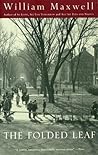
The Folded Leaf

The Folded Leaf 


“But to live in the world at all is to be committed to some kind of a journey.”
― William Maxwell, The Folded Leaf


When I first came across this book in college, I really liked the plot and the author's style. In the Midwest in the 1920s, when childhood lasted longer than it does now and even adults were more naive about what life could bring, two boys find each other in the quietly observed but profoundly moving tale The Folded Leaf. The narrative centers on Lymie and Spud, two young boys who, despite their apparent differences, have a close friendship. The majority of the book is told from the viewpoint of Lymie, a quiet, reserved, introverted, and extremely sensitive young man who adores Spud. On the other hand, Spud is a little stronger and an athlete who is able to recognize his friend's sensitivity while not really understanding. They work well together, with Spud drawing strength from his friend and Lymie taking security from Spud's strength.

When they fall in love with the same girl, Sally Forbes, their intense, almost symbiotic high school friendship turns into a tense college rivalry. A dramatic and possibly tragic climax results from the tension that follows. The book has overtly homoerotic undertones, despite Maxwell's refusal to call it "gay fiction." Readers today see the boys' frequent bed sharing and physical intimacy through a queer lens. Because of the author's poetic prose, emotional accuracy, and psychological realism, I have read this again since I was in college.

It is a classic book written by one of our most esteemed authors, who has written such well-known books as So Long, See You Tomorrow and All the Days and Nights. These novels demonstrate why William Maxwell is among the greatest authors I have ever come across.


View all my reviews

Tuesday, September 16, 2025

An Unfinished Life

Weir of Hermiston
Weir of Hermiston 


"and he went on through life with a mechanical movement, as of the unconscious, that was almost august." - Robert Louis Stevenson, Weir of Hermiston


The book's plot revolves around the long-standing conflict between a sensitive, idealistic son and his strict, unforgiving father. Because of his brutal application of the law, the father, Lord Justice-Clerk Adam Weir, is infamously known as the "hanging judge" or "Weir of Hermiston." Young law student Archibald "Archie" Weir, his son, is appalled by his father's ruthlessness, especially when he finds a man guilty and sentences him to death.

Archie is banished to the family's Hermiston estate in the moorland after openly denouncing his father's actions. In this isolated location, Archie finds comfort and develops feelings for Christina "Kirstie" Elliott, a local. Although their growing bond is essential to the story, the fragment ends suddenly.

The psychological study, Weir of Hermiston, is different from Stevenson's adventure novels. It is a foray into a more realistic style of writing that influenced later authors like Joseph Conrad. The novel, as I read it, presented strong characterization and a nuanced portrayal of the moral and social landscape of 19th-century Scotland.


View all my reviews

Monday, March 10, 2025

Escape into Secrets

Secretly Inside
Secretly Inside 


"a city boy, a student, his clothing smart, in these surroundings almost elegant. . . He looked frightened: what am I doing here?" - Hans Warren


"Secretly Inside" by Hans Warren is a novel that delves into the complexities of human relationships during the fraught period of Nazi-occupied Holland. The book is set in the Dutch countryside during World War II, providing a backdrop of tension and uncertainty. It explores the experience of a Jewish man, Ed, forced into hiding and the precariousness of his situation. The novel examines the nuances of human behavior, revealing that appearances can be deceptive. The family that shelters Ed is not as uniformly benevolent as they initially seem.

It addresses themes of repressed emotions and hidden desires, especially in the setting of a dangerous and constrictive environment. The book also touches on the psychological impact of war and the ways in which it can distort and intensify personal relationships. It also contains themes of homosexual relationships and the complications that those relationships had during that time period.

With their shifting allegiances and covert goals, Ed's interactions with the family members are at the heart of the story. The book explores the emotional turmoil of the characters, including grief, desire, and fear. In conclusion, "Secretly Inside" offers a nuanced portrayal of life under Nazi occupation, focusing on the intimate experiences of individuals rather than grand historical narratives. It is a story that brings to light the hidden emotions that people hold and how those emotions can effect their actions.

I found it to be a compelling novel that blends historical fiction with psychological depth, offering a thought-provoking exploration of human nature in a time of crisis.


Monday, May 22, 2017

The Spell of Love

Adolphe 


Adolphe


"How to depict the spell of love -- the conviction that we have found the one whom Nature destined for us; the sudden light shed on the mystery of life; the way that trifles gain a hidden meaning; the rapid hours . . . the certainty that the world can no longer harm us where we live, and a mutual understanding that guesses every thought and responds to every emotion -- ah, that spell; anyone who has felt it could never describe it." (p 91)


This is an unusual short novel. A story of a romance with virtually no context, however it suggests what Europe was like for a son of a wealthy family in the early 19th century. And, in one of the later chapters, Constant describes the physical geography of an area of Poland. But, beyond that, there's only Adolphe's emotions and his perceptions of Eleanor's. In its psychological approach it reminded me a bit of The Sorrows of Young Werther, but perhaps more closely resembles Lermontov's A Hero of Our Time.

The narrator, Adolphe, is an intelligent young man, given to analysis and raised in a household without much affection, who begins a relationship almost as an experiment – and also because he understands that this is what people are supposed to do. The woman is already the mistress of a Duke, and has two children with him but no real rights as acknowledged by society. He is young, 22 years old, and has just completed his studies at the University of Göttingen. He travels to a small town in Germany, where he becomes attached to the court of an enlightened Prince. During his stay he gains a reputation for an unpleasant wit. A friend inspires him to attempt the seduction of an older woman named Ellenore.

Eventually, the woman succumbs, and as far as the reader can tell she is entirely in earnest. She gives up everything for him. Rather quickly, Adolphe’s ardor entirely cools, but he feels unable to detach himself from her. He alternates between trying to be honest about his feelings and then, when he sees her getting more and more distraught, rapidly feigns emotions that he desperately wants to feel but no longer does. Adolphe becomes anxious as he realizes that he is sacrificing any potential future for the sake of Ellénore. She persuades him to extend his stay by six months, but they quarrel, and when she tends him after he is injured in a duel, he finds himself hopelessly indebted to her. He attempts to leave her only to have her follow him. The denouement leads Adolphe to return to a life of alienation more severe than that which he experienced before his affair.

I am not sure that I enjoyed this novel, but I certainly appreciated the approach - when, upon reflection, I realized the novelty of the psychological approach. It likely had a major impact on later "psychological" novels. According to a critic of Russian literature, Victor Terras, French literature of the nineteenth century influenced the major Russian writers, thus Dostoevsky likely was familiar with Constant. The fictional Adolphe is familiar with the things that he is supposed to say and how he is supposed to act, and in doing these things almost convinces himself that he is actually in love – for a short time, in fact, he might feel something similar to the real thing.


Saturday, August 20, 2016

Betrayed by His Passions

The Red and the BlackThe Red and the Black 
by Stendhal


“Ah, Sir, a novel is a mirror carried along a high road. At one moment it reflects to your vision the azure skies, at another the mire of the puddles at your feet. And the man who carries this mirror in his pack will be accused by you of being immoral! His mirror shews the mire, and you blame the mirror! Rather blame that high road upon which the puddle lies, still more the inspector of roads who allows the water to gather and the puddle to form.”   ― Stendhal, The Red and the Black


I have enjoyed rereading Le Rouge et le Noir (The Red and the Black) by Stendahl. It is a historical psychological novel in two volumes, published in 1830, that chronicles the attempts of a provincial young man to rise socially beyond his lowly upbringing through a combination of intelligence, talent, hard work, deception, and hypocrisy. He ultimately allows his passions to betray him. 

While the novel is usually classified as a bildungsroman or novel of education, in entitling it Le Rouge et le Noir: Chronique du XIXe siècle (The Red and the Black: A Chronicle of the 19th Century) Stendhal suggests a two-fold literary purpose as both a psychological portrait of the romantic protagonist, Julien Sorel, and an analytic, sociological satire of the French social order under the Bourbon Restoration. The title refers to the tension between the clerical (black) and secular (red) interests of the protagonist, which is a matter of some debate.

The story tells of a young man, Julien Sorel, whose provincial nature is inflamed with the passion of youth, a passion for the ideals of the Napoleonic age, but whose greatest passion is his ambition which, overwhelming any natural pudency, takes him to the heights and sets in motion his tragic fall. His passion is contrasted with his intellect which is strong enough to allow him to escape both his difficult home life and his lowly status. Stendhal is able to present his narrative with unmatched, for his time, psychological depth and realism. The love affairs of Julien and the political intrigues in which he participates are spellbinding for the reader even today. This novel truly presents a "mirror" of reality and provides an engaging challenge for the reader. The story presents a protagonist torn between his passion for the ideal of Napoleon represented by the red of the cavalry dragoons and the black of the bishops of the church. Ultimately he finds hypocrisy on all sides and turns upon one of his loves while rejecting his only true friend.

Stendhal repeatedly questions the possibility, and the desirability, of “sincerity”, because most of the characters, especially Julien Sorel, are acutely aware of having to play a role to gain social approval. In that 19th-century context, the word “hypocrisy” denoted the affectation of high religious sentiment; in The Red and the Black it connotes the contradiction between thinking and feeling. Le Rouge et le Noir is set in the latter years of the Bourbon Restoration (1814–30) and the days of the 1830 July Revolution that established the Kingdom of the French (1830–48). Stendhal was consciously writing a historical novel set in the present. The subtitle, "a chronicle of 1830," made his contemporary readers aware of not only the historical context of the novel but of their own lives as well. Julien's choice between the black of the Church and the red of the army was a decision that many of Stendhal's readers had to make themselves. His worldly ambitions are motivated by the emotional tensions, between his idealistic Republicanism (especially nostalgic allegiance to Napoleon), and the realistic politics of counter-revolutionary conspiracy, by Jesuit-supported legitimists, notably the Marquis de la Mole, whom Julien serves, for personal gain.  It is his first moments at the home of the Marquis de la Mole that I found most memorable (as a reader who loves books);  Julien rises with the help of Father Pirard to private secretary for Marquis de la Mole. His office is to be the library. ”A few minutes later, Julien found himself alone in a magnificent library; it was a delightful moment. So no one would come to him, excited as he was, he hid himself in a dark corner. From there, he looked out at the books’ glittering spines. ‘I could read every one of them,’ he told himself.”  

Even though Stendhal does not directly refer to the 1830 Revolution, he highlights the political tensions and corruption that had reached a recent boiling point. But this emphasis on history also serves as a warning to readers: Julien's failure to succeed in French society and his betrayal by M. Valenod present a foreboding distrust of the victorious liberal bourgeoisie. Would the death of the aristocracy mark the death of French society? Stendhal's comparison of the gamble of revolution to the red and black of a roulette wheel, presents a harrowing glimpse of the volatility of French politics--a vision that still fascinates readers today. 

In his famous book of literary criticism, Deceit, Desire and the Novel, philosopher and critic René Girard identifies in Le Rouge et le Noir the triangular structure he denominates as “mimetic desire”, which reveals how a person’s desire for another is always mediated by a third party, i.e. one desires a person only when he or she is desired by someone else. Girard’s proposition accounts for the perversity of Julien's relationship with Mathilde, the daughter of the Marquis de la Mole. This becomes clear when he begins courting the widow Mme de Fervaques to pique Mathilde’s jealousy, but also for Julien’s fascination with and membership of the high society he simultaneously desires and despises.

To help achieve a literary effect, Stendhal headed each chapter with epigraphs—literary, poetic, historic quotations—that he attributed to others. The first book of the novel is headed with the following epigraph, "Truth, bitter truth." - Danton. This quote, presumably from the works of the famous revolutionary leader who was sent to the guillotine in 1794 by Robespierre is prescient in hindsight as we read of the rise and ultimate fall of young Julien. With its psychological insight, social criticism, and political intrigue this is still an exciting, even exhilarating read and truly a great book for all time.


View all my reviews

Friday, April 12, 2013

Loss of Innocence

The ScapegoatThe Scapegoat 
by Jocelyn Brooke

"For Duncan, Jim Tylor became a personification of romance and adventure.  The secret "island" of his phantasies seemed nowadays almost to have lost its identity: the saga had become discredited by the impact of reality, had merged itself into the exciting quality of the poaching-expeditions in the soldier's company." (p 136)


This is very much a story of two lost persons, a boy and a man. We meet parent less young Duncan Cameron on a train heading toward his Uncle Gerald's farm called "Priorsholt". It soon becomes apparent that Gerald March is just as isolated as his nephew and as such has some interest in having a companion in spite of his reluctance and disinterest in taking on the responsibilities that he inherited with his Sister's estate.
Having just lost his mother, Duncan feels both excitement and fear as the narrative begins. He encounters a young soldier on the train whose presence tends to reinforce these feelings as Duncan meditates on his new life. "Glancing once again at the figure in the corner seat, it seemed to him that the soldier was a living symbol of that new existence, so exciting yet so frightening, towards which, every moment, the train was bringing him closer." (pp 7-8)
The actions of both Duncan and his Uncle raise more questions as the narrative evolves and the suspense slowly builds to a tragic denouement. Certainly both Uncle and nephew are sublimating emotions that they would prefer not to face openly much less share with each other. Duncan, as an adolescent on the cusp of manhood, is understandably confused about the changes he is feeling; changes that are both magnified by his seeming innocence and compounded by the strangeness of his new home. His uncle Gerald has practiced the sublimation of his feelings for the better part of a lifetime with the result that his actions take on a more sinister edge. Adding to the suspense is the return of the soldier, who he had met on the train, into Duncan's life in the second part of the novel.The effect of the actions and internal feelings of  Duncan and his Uncle heightens the interest of the reader making this fascinating story a thoughtful and enjoyable read.   Jocelyn Brooke, in this his first novel originally published in 1948, successfully creates a psychological suspense story.

The Scapegoat by Jocelyn Brooke. Turtle Point Press, 1998 (1948).

Thursday, February 28, 2013

The Whisper of the Blood

HungerHunger 
by Knut Hamsun

“I suffered no pain, my hunger had taken the edge off; instead I felt pleasantly empty, untouched by everything around me and happy to be unseen by all. I put my legs up on the bench and leaned back, the best way to feel the true well-being of seclusion. There wasn't a cloud in my mind, nor did I feel any discomfort, and I hadn't a single unfulfilled desire or craving as far as my thought could reach. I lay with open eyes in a state of utter absence from myself and felt deliciously out of it.”   ― Knut Hamsun, Hunger

Hunger by Knut Hamsun is a startling narrative told by a young journalist who is literally starving throughout the novel. Hamsun's technique, achieved in this first novel of his published in 1888, is to present a first person narrative that demonstrates a man subject to delusions and psychological stress that almost reaches the breaking point. This is not unusual for a contemporary author, but in the late nineteenth century it was very unusual.

Written after Hamsun's return from an ill-fated tour of America, Hunger is loosely based on the author's own impoverished life before his breakthrough in 1890. Set in fin-de-siecle Christiana, the novel recounts the adventures of a starving young man whose sense of reality is giving way to a delusional existence on the darker side of a modern metropolis. While he vainly tries to maintain an outer shell of respectability, his mental and physical decay are recounted in detail. His ordeal, enhanced by his inability or unwillingness to pursue a professional career, which he deems unfit for someone of his abilities, is pictured in a series of encounters which Hamsun himself described as 'a series of analyses.' In many ways, the protagonist of the novel displays traits reminiscent of the underground man and Raskolnikov, whose creator, Fyodor Dostoevsky, was one of Hamsun's main influences. Hunger encompasses two of Hamsun's literary and ideological leitmotifs: His insistence that the intricacies of the human mind ought to be the main object of modern literature.
“The intelligent poor individual was a much finer observer than the intelligent rich one. The poor individual looks around him at every step, listens suspiciously to every word he hears from the people he meets; thus, every step he takes presents a problem, a task, for his thoughts and feelings. He is alert and sensitive, he is experienced, his soul has been burned...” 

His literary program, to describe 'the whisper of the blood and the pleading of the bone marrow', is thoroughly manifest in Hunger; as seen here: “And the great spirit of darkness spread a shroud over me...everything was silent-everything. But upon the heights soughed the everlasting song, the voice of the air, the distant, toneless humming which is never silent.”
And he also demonstrated a depreciation of modern, urban civilization. In the famous opening lines of the novel, he ambiguously describes Christiana as "this strange city no one escapes from until it has left its mark on him . . .." (p.3)
In Hamsun's story you have the unnamed narrator imagining actions of others, impersonating other people and living on the brink of an existence that seems surreal. In effective clear prose this rises to the level of a nightmare in print. The beauty and power of this book makes it a great read and one that I will not forget.

Hunger by Knut Hamsun. Trans. by Robert Bly. Farrar, Straus & Giroux, 1998 (1890)

Thursday, January 21, 2010


Sebastian Faulks


Engleby


It is a small part of life we really live. Indeed, all the rest is not life but merely time.
- From On the Shortness of Life by Seneca


I read Sebastian Faulk's novel Charlotte Gray almost a decade ago. It is an historical novel of the best kind both for its historical accuracy and its dramatic characterization.
In reading Engleby I found a psychological novel where characterization is brought to the fore with the presentation in the first person. That person, Mike Engleby, gradually becomes several characters as the novel progresses. Much like Dickens, notably in David Copperfield and Great Expectations, Sebastian Faulks's protagonist adopts different names for his persona over the course of the novel. The reader gradually begins to doubt the reliability of Engleby as narrator of his life story and with good cause, as he develops psychological characteristics that one may only categorize as pathological. Where these lead him I will leave to those readers interested in finding our for themselves. I found his story suspenseful, even as it began to repulse me. My interest was also piqued by his recurrent meditations like this one on time:

"What is this present then? It's an illusion; it's not reality if it can't be held. What therefore is there to fear in it?"(p. 65)

This is early in the novel, he has later meditations on the nature of thinking itself, and you gradually wonder if these are not symptoms of his gradual loss of the ability to distinguish reality from imagination. His pathology includes a variant of voyeurism that allow the author to incorporate diaries and other documents into the narrative - perhaps to confirm Engleby's own views. The combinatorial effect of the narrative techniques made this an intriguing psychological novel and raised the author in my estimation. I look forward to reading more of his novels.


Engleby by Sebastian Faulks. Vintage Books, London. 2008 (2007)