Monday, January 31, 2022

The Cleaved Mind

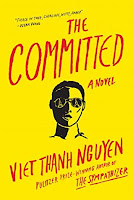
The Committed
The Committed 


“The typical American preferred the canned version of philosophy found in how-to manuals, but even average Frenchmen and Vietnamese cherished a love of knowledge.”  ― Viet Thanh Nguyen, The Committed


Having read and enjoyed Nguyen's prize-winning novel, The Sympathizer, I looked forward to reading his new novel. In it, once again the reader is presented with a unique mix of realistic action and superb emotional detail. The author also includes literary and philosophical references like the comment at one of his aunt's salons, "God is dead. Marx is dead., and I don't feel so well myself," - a rare bit of levity in what is otherwise a very serious tale. 

It is a tale narrated with the same memorable voice as the previous novel, The Committed follows the unnamed Sympathizer as he arrives in Paris in the early 1980s with his blood brother Bon. He says "our bags were packed with dreams and fantasies, trauma and pain, sorrow and loss, and, of course, ghosts. Since ghosts were weightless we could carry an infinite number of them." (p 5) The pair try to overcome their pasts and ensure their futures by engaging in capitalism in one of its purest forms: drug dealing.

Traumatized by his reeducation at the hands of his former best friend, Man, and struggling to assimilate into French culture, the Sympathizer finds Paris both seductive and disturbing. In his attempts to deal with his ghosts he acquires lessons from a coterie of left-wing intellectuals whom he meets at dinner parties given by his French Vietnamese "aunt." Through these he experiences stimulation for his mind but also customers for his narcotic merchandise. Strewn throughout the novel are references from the works of Sartre, Fanon, Kristeva, and de Beauvoir, and these are in addition to his interactions with the drug-dealing crime boss he works for in Paris. But the new life he is making has perils he has not foreseen, whether the self-torture of addiction, the authoritarianism of a state locked in a colonial mindset, or the seeming paradox of how to reunite his two closest friends whose worldviews put them in absolute opposition. The Sympathizer will need all his wits, resourcefulness, and moral flexibility if he is to prevail.

Both literary thriller and novel of ideas, The Committed is a blistering portrayal of commitment and betrayal. Its intensity was sometimes difficult to consider, but necessary to maintain the idea of what his new life meant to him. This novel maintained my interest and left me looking forward to a potential third novel by this outstanding author.

Thursday, January 27, 2022

Sorrowful, yet Great City

The Annals
The Annals 


“So obscure are the greatest events, as some take for granted any hearsay, whatever its source, others turn truth into falsehood, and both errors find encouragement with posterity.”  -
Tacitus, The Annals of Imperial Rome


The Annals of Tacitus covers the years 14–68 CE. Why these dates? Well, Augustus, a colossal figure in Roman history, died in 14 CE, and this is when Tiberius began his rule. 68 CE marks the year of the death of Nero, which would lead to the year of four rival emperors. Here, we see the end of the Julio-Claudian line.
Unfortunately there are gaps in this chronology. As one can imagine, not all books of the complete Annals survived the passage of time. Several books are missing and some others are incomplete. While it is disappointing that the entire reign of Caligula is missing there is much that is interesting in what remains.

The status of this book as a classic cannot be denied. But what is it that makes that true? Tacitus covers a time in Roman history when, as the result of the consolidation and planning of Augustus (originally Octavian) the beginnings of the Roman empire take shape. More significantly, what he started in 14 CE suggests that he wanted to show two pictures of the empire. On the one hand, he does not question the need for an emperor. Augustus established peace, which was desperately needed, in light of many civil wars and civil conflicts following the death of Tiberius Gracchus in 133 BCE. On the other hand, there is a dark side to all empires. Tacitus portrays this point, especially in the life of Tiberius. He paints a picture of tyranny. We read, for example, of Tiberius’s reign of terror, and we can say the same for Nero.

Some of the most fascinating aspects for this reader included the machinations and politics of the day which were both personal and brutal. In spite of the wealth of the Emperors and their immediate families, the plans of some, starting with Augustus, for an orderly succession were derailed, often by accidents and illness that, due to the primitive state of medicine, led to unexpected deaths. That, of course, was in addition to the deaths plotted by such angels as Tiberius and Nero's mother Agrippina. Tacitus narrates the rise of potential rulers like Sejanus alongside the unlikely rise to power of Claudius. There are many fascinating and exciting moments in this narrative including the infamous fire that devastated Rome during Nero's reign.

Earlier in the narrative, during the reign of Tiberius, Tacitus comments in an aside about his project:
"That much of what I have recorded, and of what I shall record, seems perhaps insignificant and trivial to recall I am not unaware; but no one should compare my annals with the writing of those who compiled the affairs of the Roman people of old." He notes that mighty events had occurred in centuries past, while "my work, on the other hand, is confined and inglorious: peace was immovable or only modestly challenged, affairs in the City were sorrowful, and the princeps indifferent to extending the empire." (4.32)

Here we read instead about villains, such as Sejanus, and darlings of the people, such as Germanicus, and so much more. Ultimately the history was one that was filled with brutality and death that seemed unending leading Tacitus to rail about the "anger of the divinities against Roman affairs" near the end of the book (16.6). In spite of this the remnants of his original tome still make a fascinating and exciting read - truly a great book.


Tuesday, January 11, 2022

Top Ten Tuesday

 The Top Ten Most Recent Additions to My Library

These are the latest books I've acquired for reading over the next couple of months.


The Committed: A Novel by Viet Thanh Nguyen. I read Nguyen's award-winning The Sympathizer five years ago and look forward to reading this follow-up with my local book group. Set in Paris it looks to be an exciting international thriller with a patina of ideas.


Walt Whitman's MEMORANDA DURING THE WAR: Written on the spot in 1863-'65. I'm already halfway through this beautiful and touching memoir of Whitman's time spent nursing soldiers during the civil war. There are moments when he waxes poetic and tells stories about soldiers that will break your heart.


Drum-Taps: The Complete 1865 Edition by Walt Whitman. More from Whitman with some of his most famous poems including "When Lilacs last in the door-yard bloom'd" and "O Captain! My Captain!".


The Annals of Tacitus.  Translated , with an introduction and notes , by A. J. Woodman. This is the latest monthly read for my Online Great Books group. Filled with the details of Augustus and his immediate successors through Nero (with some years missing because the complete text has not survived). Lots of interesting machinations and bloody endings for both good and bad alike.


Ambrose Bierce's Civil War, edited and with an introduction by William McCann.  Both Bierce's memoirs of the war and his short stories set in the Civil War are included in this edition of his works. I look forward to reading this along with the Whitman.


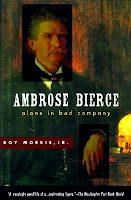
Ambrose Bierce: alone in bad company. This is the biography of Bierce by Roy Morris, Jr. who has also written about Mark Twain's time in the west and Walt Whitman's experiences during the civil war. I expect this will be as good as those works.


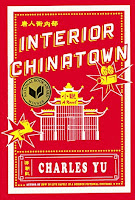
Interior Chinatown by Charles Yu. This won the National Book Award for Fiction in 2020 beating out Shuggie Bain among others for the prize. It is the hysterical and satirical story of Willie Wu who is described as a "generic Asian man".


Selected Poems of Herman Melville. Yes, the author of Moby-Dick was also a great poet. In particular he wrote about the Civil War in addition to the Sea and other topics. This is part of my reading for a University of Chicago Basic Program course called "The Unwritable War: Civil War Tales and Poems".


Duino Elegies and The Sonnets to Orpheus of Rainer Maria Rilke. This is the current read for my local study group. I am looking forward to diving deep into these famous poems by the author of one of my favorite novels, The Notebooks of Malte Laurids Brigge. 


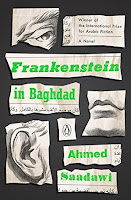
Frankenstein in Baghdad by Ahmed Saadawi. This prize-winning book was a finalist for the Man Booker International Prize in 2018. From the rubble-strewn streets of U.S.-occupied Baghdad, Hadi--a scavenger and an oddball fixture at a local cafĂ©--collects human body parts and stitches them together to create a corpse. Sounds like the makings for a fantastic journey.


Tuesday, January 04, 2022

Beloved Poet of Ancient Greece

Sappho
Sappho 


Tonight I've watched

The moon and then
the Pleides
go down

The night is now
half-gone; youth
goes; I am

                                    In bed alone


Who is this poet? The lyrical nature of her poetry is evident at once, while the variety of thoughts resonate through the centuries. Can we get a glimpse of what life was like for this Greek woman from the fragments of her verse? Perhaps, we can get that glimpse and even more. I found the lines about lives lived under the sun and stars resonated with me and evoked memories of similar experiences in my own life. Hidden among the references to strange gods were words of wisdom, praise of virtue, and emotions as familiar as any experienced by those who have seen the beginning of a new century.

With only fragments of her verse she charms the reader and evokes human emotions from the realms of ancient Greece. The power and beauty of her poetry shines forth like pieces of broken glass that glisten in the light of the sun. The translation by Mary Barnard rings true as fresh metaphors line the pages. Read this poetry and be entranced by the wonder of her words.


Monday, January 03, 2022

An Artificial Friend

Klara and the Sun
Klara and the Sun 


“Mr Capaldi believed there was nothing special inside Josie that couldn’t be continued. He told the Mother he’d searched and searched and found nothing like that. But I believe now he was searching in the wrong place. There was something very special, but it wasn’t inside Josie. It was inside those who loved her.”   ― Kazuo Ishiguro, Klara and the Sun


Klara is an "artificial friend"
or what we usually think of as an android. While looking lifelike when seen from the outside, the reader is presented with a narrative told by Klara and thus sees the world from her perspective -- inside her head. The sun is, for Klara, the source of her energy and we see the sun from her perspective as well; it is an almost spiritual connection for her. When a young girl named Josie, sickly but intelligent, sees Klara in the window of the store she knows that this is the artificial friend that is meant for her. 

Klara goes to live with Josie and her mother and the story of their life together is at the heart of the novel. We see the impact of human emotions on Klara, but we also are presented with the argument as stated by Mr Capaldi that there is "nothing special" inside humans - that they are not very different from the machines that are their artificial friends. The narrative demonstrates the flaw in that argument and brings home the truth about what makes each individual human special. The story of their time together and how Klara develops into a very special friend for Josie is one of the most remarkable stories I have encountered in my reading experience. It presents the reader with the power of the sun, but also the power of love and how that can transcend the distance between human and machine.

An amazing tour de force by one of my favorite authors. A speculative look at the not too distant future told by an android or as the narrative calls her, an artificial friend. What impressed me most was Ishiguro's ability to create a believable image of the world from the point of view of a machine and maintain it consistently. That being said this book is as much about relationships and feelings that are as human as possible. The world of the future with humans and machines has never been brought to life in a more realistic and moving way, Highly recommended for all who wonder at the nature of man and his machines.


Friday, December 31, 2021

Poem for the New Year


Good Riddance, But Now What?

By Ogden Nash 


Come, children, gather round my knee;

Something is about to be.

Tonight’s December thirty-first,

Something is about to burst.

The clock is crouching, dark and small,

Like a time bomb in the hall.

Hark! It’s midnight, children dear.

Duck! Here comes another year.

Tuesday, December 28, 2021

Greek Lyrics

Pure Pagan: Seven Centuries of Greek Poems and Fragments
Pure Pagan: 
Seven Centuries of Greek Poems and Fragments 


To Zeus

Zeus, in whom all things begin,
Ruler of  everything,
Zeus, to begin my hymns
I bring You this
As a gift.

-   Terpander


These are Greek lyrics translated by one of my favorite poet-translators, Burton Raffel. The poets included in this anthology provide a glimpse into archaic Greek culture through their poetry. Among them are the very obscure to the somewhat less obscure, with a few familiar names like Plato.  There are poems and fragments of poems for everyone's taste. I enjoyed making connections with my own life and our twenty-first century culture. It was also interesting to see the influence that these ancient poets had on some of our greatest modern poets. Overall it is a beautiful selection of poetry.


Tuesday, December 21, 2021

Sportcoat the Deacon

Deacon King Kong
Deacon King Kong 


“He felt like a radio tuning in to a new channel, one that was beginning to fuzz into range, slowly coming in clear, proper, the way his Hettie had always wanted him to be. The new feeling humbled him.”   ― James McBride, Deacon King Kong


James McBride’s novel Deacon King Kong is set in a Brooklyn housing project in 1969, soon after the poor but close-knit community has been decimated by the arrival of heroin. The book begins with an act of vigilantism—or maybe it’s just the result of drunkenness: One morning an old widower known as Sportcoat, strengthened by a bootleg liquor called King Kong, steps into the courtyard and shoots a drug dealer in the head. The dealer survives but the aftershocks are enormous. Not only does the shooting invite the police to come sniffing around the project but it kicks off a turf war between drug gangs competing for supremacy.

The remainder of the book tells the story of a wide variety of characters held together by ties to Sportcoat. There’s a running joke in which people ask just what exactly Sportcoat does in his role as a church deacon. He enumerates a list of random odd jobs, calling himself a “holy handyman.” The author has almost as many narrative styles as characters as he shifts from broad, slapstick comedy to shoot and blow violence to nostalgic meditations on New York history. There is even a subplot involving a hidden work of art that was smuggled out of Europe after World War II.

The result was a mixed bag for this reader. I found some of the vignettes exceptionally interesting, but just as I thought the story was beginning to coalesce it fell apart with a character or highlight that just did not work for me. The book fell short of my previous experience with this author in his historical novel about John Brown, The Good Lord Bird, which I would recommend you read instead.


Tuesday, December 14, 2021

Annual Top Ten Favorites

 Top Ten Favorite Books of 2021


These are my favorite reads since January 1, 2021.  They include an extensive variety of reading: from the Classics to contemporary literary fiction; from the very long to quite compact works; and from fiction, non-fiction, philosophy, and poetry.  It was a very rich year for reading and there were others that could have made my list if I were to expand it.  While the others were very good books these are the ten that I felt will stay with me over the years; in fact a couple of them were rereads.  

The list is in no particular order, but if I had to pick my favorite of the year it would be Metamorphoses by Ovid, which blends beautiful poetry with a richness of imagination that has inspired readers, writers, and artists of all kinds ever since.  Several of the very good books that just missed my top ten include Oscar Wilde's The Picture of Dorian Gray, the other five novels of Walker Percy, The Republic of Cicero, The Snow Child by Eowyn Ivey, and Invisible Boys by Holden Sheppard. 


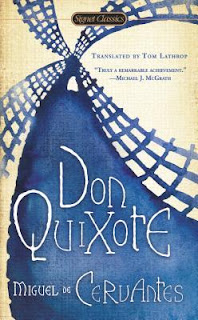
Don Quixote  by  Miguel de Cervantes Saavedra


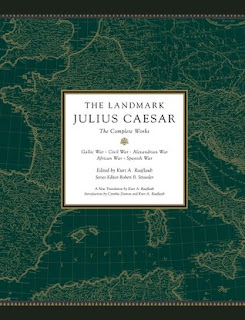
The Gallic Wars by Gaius Julius Caesar


The River by Peter Heller


Metamorphoses by Ovid 


Dialogues and Essays by Seneca


Philosophical Investigations by Ludwig Wittgenstein


The Border Trilogy by Cormac McCarthy


The Good Lord Bird by James McBride


The Revolt of the Masses by Jose Ortega y Gassett


The Second Coming by Walker Percy


Friday, December 10, 2021

Dreams and Shadows

The Border Trilogy: All the Pretty Horses, The Crossing, Cities of the Plain
The Border Trilogy: 
All the Pretty Horses, The Crossing, Cities of the Plain 


"The fire burned down and it grew colder and they sat close to the flames and hand fed them with sticks and with old brittle limbs they broke from the windtwisted wrecks of trees along the rimrock. They told stories of the old west that once was. The older men talked and the younger men listened and light began to show in the gap of the mountain above them and then faintly along the desert floor below." (COTP, p 91)

The first volume of The Border Trilogy, All the Pretty Horses, combined intensely lyrical prose with the laconic wit of its cowboy protagonists. In it McCarthy mixed the quotidian details of ranch life with just the right balance of mythic phantasmagorical imaginings. Just when his prose seems to be over-the-top, he suddenly returns to the Beckett-like dialogue of two buddies alone on the prairie. One instance of this occurs when John Grady is out on the mesa with his buddy Lacey Rawlins--his Sancho to at least the extent that his adventures approached the Quixotic .

In the next volume, The Crossing, we read of two young brothers on a quest that plunges them into the bloody maelstrom of Mexican politics. Billy Parham who is later joined by his younger brother Boyd, sets out on a series of quests, all of which are doomed to failure. While the travels of Billy make up the action of the novel, it is less about achieving goals and more about larger themes of good and evil, fate and responsibility, and the nature of friendship and relationships in this gray and desolate world of shadows. Related to these themes that permeate the novel is the characters' ability or inability to clearly see the world around them.
"Between their acts and their ceremonies lies the world and in this world the storms blow and the trees twist in the wind and all the animals that God has made go to and fro yet this world men do not see. They see the acts of their own hands or they see that which they name and call out to one another but the world between is invisible to them." (The Crossing, p 46)

Cormac McCarthy concludes his border trilogy with a book that is spare and almost allegorical in its storytelling. In it he unites John Grady Cole with his older "buddy" Billy Parham, and focuses on a doomed relationship between John Grady and a Mexican prostitute. With Cities of the Plain the dreams have receded, the young men Billy and John Grady are older and their journeys have goals. This is a book that is bleaker in the telling even as the romanticism of John Grady Cole provides significant interest for the reader. The time is 1952, the place a cattle ranch in New Mexico. The West is changing as suggested by a brief interchange between John Grady and Billy early in the novel:
"What are you readin? Destry." (COTP, p 59)

Destry Rides Again by Max Brand is a classic example of the "myth of the old West". This is the life that is fading in the early 1950's and the question is will our heroes adapt or rebel against the inevitability of change. This change is not without difficulty and there are the ghosts of the past which they face as depicted in the following passage: "They sat against a rock bluff high in the Franklins with a fire before them that heeled in the wind and their figures cast up upon the rocks behind them enshadowed the petroglyphs carved there by other hunters a thousand years before." (p 87)

Shadowed by ghosts of the past and chastened but not defeated by their youthful misadventures, John Grady Cole and Billy Parham have become blood brothers of a sort, clinging stubbornly to a vanishing way of life. Billy reflects on their struggle, “When you’re a kid you have these notions about how things are goin to be. . . . You get a little older and you pull back some on that. I think you wind up just tryin to minimize the pain.”

While they fantasize about owning a little spread in the mountains, where they might run a few cattle and hunt their own meat, John Grady falls in love with a teenage prostitute. His desires collide with powers reminiscent of those he encountered in All the Pretty Horses.
''There's a son of a bitch owns her outright that I guarangoddamntee you will kill you graveyard dead if you mess with him,'' Billy warns him. ''Son, aint there no girls on this side of the damn river?''

Alas, for John Grady there are none that can compare with Magdalena. He does not worry about Eduardo, her pimp, with whom he must deal if he is to have her and his stubborn idealism sets in motion his inevitable doom. In fact, the question of one's destiny is present throughout this final part of the trilogy. Before the ultimate scenes of the novel there is a telling exchange between Billy and John Grady. I believe it alludes to John Grady's passions:
"John Grady nodded. What would you do if you couldnt be a cowboy?
I dont know. I reckon I'd think of somethin. You?
I dont know what it would be I'd think of.
Well we may all have to think of somethin." (COTP, p 217)

Combine McCarthy's two previous novels with the final somber tome and you have a masterpiece of contemporary fiction and a worthy contribution to the literature of the West. All three are works of a master story-teller, an author who speculates (some might say pontificates) on the nature of stories. So I will end with an observation about stories that I encountered during my journey through the novel.

"These dreams reveal the world also, he said. We wake remembering the events of which they are composed while often the narrative is fugitive and difficult to recall. Yet it is the narrative that is the life of the dream while the events themselves are often interchangeable. The events of the waking world on the other hand are forced upon us and the narrative is the unguessed axis along which they must be strung. It falls to us to weigh and sort and order these events. It is we who assemble them into the story which is us. Each man is the bard of his own existence." (COTP, p 283)


Wednesday, December 01, 2021

The Bard of His Own Existence

Cities of the Plain (The Border Trilogy, #3)
Cities of the Plain 


"The fire burned down and it grew colder and they sat close to the flames and hand fed them with sticks and with old brittle limbs they broke from the windtwisted wrecks of trees along the rimrock. They told stories of the old west that once was. The older men talked and the younger men listened and light began to show in the gap of the mountain above them and then faintly along the desert floor below." (p 91)


Cormac McCarthy concludes his border trilogy about the west with a book that is spare and almost allegorical in its storytelling. All the Pretty Horses combined intensely lyrical prose with the laconic wit of its cowboy protagonists while its sequel, The Crossing, sent two young brothers on a quest that plunged them into the bloody maelstrom of Mexican politics. Cities of the Plain unites John Grady Cole with his older "buddy" Billy Parham, and centers on a doomed relationship between John Grady and a Mexican prostitute. It is notable for its shockingly brutal feral dog-roping scene, its coruscating, vivid depiction the lost world of small horse-ranch life in the American southwest, and also for its fabular epilogue, an extended meditation on the nature of narrative and the forms of human destiny.

With Cities of the Plain the dreams have receded, the young men Billy and John Grady are older and their journeys have goals. This is a book that is bleaker in the telling even as the romanticism of John Grady Cole provided significant interest for this reader. The time is 1952, the place a cattle ranch in New Mexico. The West is changing as suggested by a brief interchange between John Grady and Billy early in the novel:

"What are you readin? Destry." (p 59)

Destry Rides Again by Max Brand is a classic example of the "myth of the old West". This is the life that is fading in the early 1950's and the question is will our heroes adapt or rebel against the inevitability of change. The change is not without difficulty and there are the ghosts of the past which they face as depicted in the following passage:
"They sat against a rock bluff high in the Franklins with a fire before them that heeled in the wind and their figures cast up upon the rocks behind them enshadowed the petroglyphs carved there by other hunters a thousand years before." (p 87)

Shadowed by ghosts of the past and chastened but not defeated by their youthful misadventures, John Grady Cole of All the Pretty Horses and Billy Parham of The Crossing have become blood brothers of a sort, clinging stubbornly to a vanishing way of life. With the U.S. Army proposing to turn their employer's ranch into a military base, the two fantasize about owning a little spread in the mountains, where they might run a few cattle and hunt their own meat. But when John Grady falls in love with a teenage prostitute in a brothel called "White Lake" across the Rio Grande, his desires collide with powers reminiscent of his those he encountered in All the Pretty Horses.

''There's a son of a bitch owns her outright that I guarangoddamntee you will kill you graveyard dead if you mess with him,'' Billy warns him. ''Son, aint there no girls on this side of the damn river?''
Alas, for John Grady there are none that can compare with Magdalena. He does not worry about Eduardo, her pimp, with whom he must deal if he is to have her and his stubborn idealism sets in motion a chain of events that cannot be avoided. In fact, the question of one's destiny is present throughout this final part to the trilogy. Before the ultimate scenes of the novel there is a telling exchange between Billy and John Grady.

"John Grady nodded. What would you do if you coundnt be a cowboy?
I dont know. I reckon I'd think of somethin. You?
I dont know what it would be I'd think of.
Well we may all have to think of somethin." (p 217)

Combine McCarthy's two previous novels with this somber tome and you have a masterpiece of contemporary fiction and a worthy contribution to the literature of the West. All three are works of a master story-teller, an author who speculates (some might say pontificates) on the nature of stories. So I will end with one moment of speculation about stories among many that I encountered during my journey through the trilogy:

"These dreams reveal the world also, he said. We wake remembering the events of which they are composed while often the narrative is fugitive and difficult to recall. Yet it is the narrative that is the life of the dream while the events themselves are often interchangeable. The events of the waking world on the other hand are forced upon us and the narrative is the unguessed axis along which they must be strung. It falls to us to weigh and sort and order these events. It is we who assemble them into the story which is us. Each man is the bard of his own existence." (p 283)

Monday, November 15, 2021

A Mother with Suffering Child

Hamnet
Hamnet 


“He has, Agnes sees, done what any father would wish to do, to exchange his child’s suffering for his own, to take his place, to offer himself up in his child’s stead so that the boy might live.”   ― Maggie O'Farrell


Hamnet is a historical fiction novel about the life of William Shakespeare’s family at the time of his son Hamnet’s death in 1596 and the writing of the play Hamlet around 1600. I was disappointed with this award-winning novel. I found it boring, but even worse was the prose style of the author that succeeded in what I can only call piling on the adjectives and adjective phrases in describing in detail the mundane activities of the characters.

The description of William Shakespeare’s early life, his marriage to Anne Hathaway, whom O’Farrell calls Agnes, the death of his son Hamnet from the plague and the subsequent impact of this tragedy on their marriage and his work comprise the plot of the novel. Will is never named and is referred to as ‘her husband’, ’the father’ or ‘ the latin tutor’. He also has very little to say for himself. This deliberate omission is most likely made to free the narrative from the weight of association that his name carries, but I found it quite contrived considering how much detail we are given about the setting, including the house interiors and streets of Stratford.

The novel begins with Hamnet but the central character is his mother Agnes who is unconventional, free spirited, a gifted herbalist and clairvoyant. It is the events between Hamnet’s parents’ meeting and his birth that provide a major part of the story. At her first meeting with Will she presses the flesh between his thumb and forefinger which reveals his incredible future to her but disappointingly very little subsequently emerges from this insight. There are some interesting descriptions of his former home and the life of the household. The story is narrated in a non-linear fashion with each chapter relating to a different time period. However I found the frequent back and forth an unnecessary stylistic approach that added to my overall disappointment.


Monday, November 01, 2021

The Encheiridion

The Handbook (The Encheiridion)
The Handbook 


“Freedom is the only worthy goal in life. It is won by disregarding things that lie beyond our control.”
“The key is to keep company only with people who uplift you, whose presence calls forth your best.”   ― Epictetus


This is the little (29 pp) book that lays out the essence of Stoic philosophy.  Stoicism was founded by Zeno of Cytium more than three centuries earlier, but it is the works of Epictetus (along with Seneca and Marcus Aurelius) that form Stoic thought as we know it today. Stoicism, while not a well known today as the thought of Plato and Aristotle, was one of the major philosophic schools in Greece and Rome for a half a millenium. 

What makes the handbook most interesting today is the practical advice aspect of Epictetus' thought. One can put some of these ideas to good use even in the twenty-first century.
According to Epictetus one makes progress when "he censures no one; he praises no one; he blames no one; he never talks about himself as a person who amounts to something or knows something." And finally, "Never say about anything, 'I have lost it,' but instead, 'I have given it back.'" Follow the Stoic principles and you will not have an unhappy life.


Murder and Memory in Northern Ireland

Say Nothing: A True Story of Murder and Memory in Northern IrelandSay Nothing:
 A True Story of Murder and Memory in Northern Ireland 
by Patrick Radden Keefe


“Who should be held accountable for a shared history of violence? It was a question that was dogging Northern Ireland as a whole.”   ― Patrick Radden Keefe


Patrick Radden Keefe's book captures the history of the Troubles as told through the stories of the individuals involved in the events of the days from the nineteen-seventies till our current age. The narrative starts and ends  with the story of a young widow named Jean McConville and her ten children. Her story provided the backbone for a series of vignettes and set pieces that held my interest from beginning to the end. The details of the various episodes told stories of secrets and violence, both loyalty and betrayals, and events that stretched from the neighborhoods of Belfast to Boston in America and to the Houses of Parliament in London.

The structure of the book with its variety of characters and interrelated events provided a sort of motion that mimicked the changes in the fortunes of the actual participants involved in these events. I enjoyed the set pieces as well as the detail of the lives of the important players with names like Gerry Adams, Brendan Hughes, and the Price sisters; but I also appreciated the stories, sometimes horrific, of the less well-known persons, especially the children of Jean McConville who were shuttled off to institutions after Jean was "disappeared".

Whether the narrative was describing the famous bombings in London, the "hunger strikes" of the Price sisters and others, or the secret documentary "Belfast Project" at Boston College, the author seamlessly tied the incidents, events, and characters together into a riveting story that I found simply fascinating. 

No matter how much you may remember about these events, that is if you are of an age like mine that lived through this history as current events, I expect that you will read this history with amazement, similar to mine, at the details that the author puts on display. The book successfully portrayed many intimate moments while conveying history on a grand scale.


Monday, October 18, 2021

A Diagnostic Novel

The Thanatos Syndrome
The Thanatos Syndrome 


“he believed that there is no end to the mischief and hatred which men harbor deep in themselves and unknown to themselves and no end to their capacity to deceive themselves and that though they loved life, they probably loved death more and in the end thanatos would likely win over eros.”   ― Walker Percy, Lost in the Cosmos: The Last Self-Help Book


The return of Dr. Tom More brings with it an unusual forensic mystery story intertwined with the mystery of belief. One would not expect less from the pen of Walker Percy.  While a common criticism of Walker Percy's novels is that they are repetitive, this is probably because similar themes echo throughout his fiction -- no doubt a testimony to the novelist's fervent belief in the importance of highlighting key problems and issues of humanity, and to his belief that their continued presence in our lives demands scrutiny. We see this from the opening pages when the narrator announces that he notices something strange going on in Feliciana upon his return from two years in prison.

Percy, who himself had medical and pathology training, described this kind of philosophical book as a "diagnostic novel." Although the emphasis is clearly on the book's ideas and moral themes, The Thanatos Syndrome is also a medical thriller. As such, it was almost inevitable that the author would revisit a theme that he dealt with on numerous occasions in earlier novels: the relationship between the "abnormal" and the rest of the nominally healthy and sane society. The recovery of the "real" through pain, suffering, or illness underlies almost all of Percy's fiction. It is rooted in his conviction (with a nod to pioneer psychologist Carl Jung), that at least some of our neuroses, psychoses, anxieties, or depressions may be more than just symptoms; they may actually be resources for learning something about our inner "selves."

The relationship between the sane and the abnormal in the novel seems curiously reversed, almost like in Saul Bellow's Herzog. It has been noted that the author himself described his fictional design as combining Bellow's depth of character and Kurt Vonnegut, Jr.'s, outrageousness and satire. In The Thanatos Syndrome words of apocalyptic warning are spoken by Father Rinaldo Smith, an aging, decrepit, and cranky priest who is given to seizures, catatonia, and bouts of odd behavior. While he is hardly a figure to command respect, Smith is a typical Percy creation whose purpose is to make us question who really deserves to be branded as "crazy."

The theme of alienation is also important in this work. Dr. Tom More's return from federal prison has him unsure if society has changed or if, instead, he has lost touch as a result of his years in prison. His alienation and status as an outsider allow him to ask questions that no one else cares to. Father Smith, declared mentally unsound by More, appears to have a firmer grasp on morality than does society, as represented by the duo of Comeaux and Van Dorn, both of whom represent the forces of evil.

Although the novel is in some ways structured as a thriller, the reader never gets the impression that More is in serious danger. The threats against him are subtle: implied loss of his favored parole status, arrests for trespassing, and a cable television van that appears to be following him. The subtlety of the threats underscores the idea that society as a whole can be attacked nonviolently, with damage done before anyone realizes the danger. I found this concluding novel of Percy both convincing due to its strong structure while not as emotionally powerful as either The Moviegoer or The Second Coming. I would, however, recommend it to readers interested in southern fiction or Walker Percy.


Friday, October 15, 2021

Strange Journeys

In a Free State
In a Free State 

"
All at once the lilies lost their brightness; it grew dark below the trees; the swamped garden was silent.  The stream raged on.  On the other bank tree trunks were black in the gloom; leaves and branches hung low.  The wood of a fairy tale, far from home: what was so recently man-made, after the forests had been cut down and the forest-dwellers flushed out and dismissed, what had perhaps been intended only as an effect of art in a landscape made secure, had become natural.  It spoke of the absence of men, danger." (p 128)


Nominally a novel, but actually more like a collection of short stories, In a Free State by V. S. Naipaul is in this way different than other works of Naipaul that I have read. But in other ways it is similar and even better than the others. This is primarily because all the five stories are linked thematically and they share Naipaul's beautiful prose style.

The novel includes stories that are all about people who find themselves in places where they feel, or are made to feel, that they don’t belong; the stories are about boundaries, purity, pollution, incommensurability and just plain strangeness. In the opening prologue, the presence of an English tramp on a Greek ferry causes uproar. The second story tells of an Indian servant who tries to adjust to a new life in Washington D.C. Next, in a story that demonstrated a striking voice with a melancholy that I found disturbing, a South Asian West Indian immigrant in London reflects on the ruins of his life. His relationship with boy he is helping deteriorates as he slowly realizes the failure of the boy to live up to his naive ideal.

The final story, “In a Free State,” is equally pessimistic. In it, Bobby and Linda share a car ride from the capital, in the northern part of the African country, to the so-called Southern Collectorate, where Bobby works and where Linda will rejoin her husband. Ethnic rivalries within the country make this journey perilous because the president, whose politically and militarily dominant people control the north, has set up roadblocks to apprehend the king, whose weaker people populate the south.

The basic conflict between the two characters concerns their attitude toward Africa: Bobby, a homosexual who suffered a nervous breakdown at Oxford, has emigrated to Africa and plans to make it his home. “My life is here,” he says. Linda has lived in the country for six years and considers it an exciting place for her and her husband to work, but she intends to go to South Africa, if it ever stops being “like a John Ford Western.” Her attitude suggests that Europeans can never be accepted in black African society. In the epilogue an Asian businessman travelling through Milan and Cairo reflects on cruelty and empire.

While I found interesting aspects to all the shorter stories, In a Free State clearly stands out among the lot. While neither of the two main characters are appealing, the contrast between the self-deluding Bobby, who claims to have some sort of authentic connection with “Africa,” and the cynical, weary Linda is very effective. They wear their prejudices on their sleeves, so to speak, and only differ in tone and personality. More effective for me was the setting and the use of description to maintain a tension that suggested (not unlike a Hitchcock thriller) the presence of horror just around the bend. Whether you agree with the view represented in these stories about the difficulty of adjusting your being to a new place and a different culture you can, through the graceful prose style of V. S. Naipaul, enjoy the book.

Thursday, September 30, 2021

Sex Strike & The Thinkery

Lysistrata and Other Plays
Lysistrata and The Clouds 


“What doesn’t polite society, in all seriousness, want to discuss? Sex, money, political corruption, bodily functions, religion, loss and despair?

These have been the very subjects attracting writers of comedy since Aristophanes penned “Lysistrata” as a vehicle for the young Joan Rivers.”  ― Gina Barreca


Lysistrata is a bawdy and demented fest of diatribes between women and men. When the women, led by the titular character, withhold their sex in their demand for peace the men seem to be at a significant disadvantage.

The name Lysistrata can be loosely translated as "she who disbands armies". That is behind both her mission and her leadership of the women of Athens who she encourages to withhold their sex from the men until peace can be brokered with Sparta. The play was produced during the Peloponnesian War and Athens had suffered a major blow when defeated in Syracuse with the loss of her navy. While they were recovering from that disaster the war continued with no end in sight (did I mention that these plays address very contemporary issues for those of us living in twenty-first century America?).

The play is famous for the roles given to women, particularly noteworthy since there is no evidence for women attending Athenian theater, and since it entailed the somewhat comic difficulty of having men, already in their phallic-oriented costumes, play the roles of the women. It is much more bawdy and extreme in its humor than The Clouds with the focus on the "battle of the sexes" centered at the Acropolis as a means used by the women, led by Lysistrata, to bring the men to their senses. The humor is magnified in the opening sections as the men who oppose them are old and perhaps a bit senile since the young men are all at war.

The pride of the old men is deeply wounded when Lysistrata declares that the women have assumed all civil authority and will henceforth provide for the safety and welfare of Athens. The magistrate cannot believe his ears when he hears Lysistrata say that the women have grown impatient with the incompetence of their husbands in matters that concern the commonweal. For rebuking the women, the magistrate receives pots of water poured on his head. When the ineffectual old men declare that they will never submit, the women answer that the old men are worthless and that all they have been able to do is legislate the city into trouble.

The women do have difficulties maintaining order within their ranks, but that just adds to the comedy. The result of this and further comic moments, including a riot surrounding the birth of a baby to one of the women, is a delight that transcends the centuries and overcomes many of the difficulties of translation. This has become my favorite play by Aristophanes.


While also a comedy critical of aspects of culture, in The Clouds Aristophanes takes as his theme the contrast between an older educational mode and the new interrogative style, associated with the name of Socrates. He begins with a prologue (lines 1-262), which introduces the two principal characters, Strepsiades (“Twister”), worried by the debts accumulating because of the propensity for chariot racing of his long-haired son, Pheidippides (“Sparer of Horses,” or “Horsey”). The idea occurs, with the assistance of “a student,” to have the son enter the school, the "Thinkery" next door, operated by Socrates, wherein by the logic of the sophists one should be able to learn how to talk so as to evade one’s debts. Not unlike sons in our culture, Pheidippides son refuses to attend, lest his suntan be ruined, and his father goes instead. He finds Socrates suspended in a basket from the roof, wherein rarefied thinking can be more appropriately done in the atmosphere of the clouds.

What follows is the entrance of the chorus of “clouds” singing and dancing (lines 263-509), following the incantations and chanted prayers of Socrates, to the alarm of Strepsiades. In brilliant repartee, the chorus is introduced as the goddesses, who, with wind, lightning, and thunder, patronize intellectual development. Yet the buffoonery that follows indicates that it is some weird intellect, for Socrates, in answer to questions about rain and thunder, assures Strepsiades that there is no Zeus but only clouds displaying analogies to the human bodily functions of passing water or gas. Strepsiades is convinced and agrees to become a student.  He proves to be incompetent as a student, for he cannot memorize what is required but only wants to learn how to outwit his creditors. Subsequent to his own dismissal, he forces Pheidippides to enroll under threat of expulsion from home. It here that he is exposed to the debate between “Right” (“Just Logic”) and “Wrong” (“Unjust Logic”), from which it is obvious that the argument of the latter will prevail.

Aristophanes is successful in parading buffooneries and a satiric presentation of his son's great success, he discovers that success means that his son now knows how to whip him. Along with a commentary on the ancient tragedians there are amusing anecdotes concerning child development in Strepsiades’ argument to Pheidippides, but Strepsiades has been defeated by his own intentions. 
I found Aristophanes somewhat more cerebral and obscure in this play when compared to Lysistrata, but the caricature of Socrates is enough to make the play worth while for anyone who is interested in the golden age of Athens.


Tuesday, September 21, 2021

Being Present for Your Life

The Second Coming
The Second Coming 


“How did it happen that now he could see everything so clearly. Something had given him leave to live in the present. Not once in his entire life had he come to rest in the quiet center of himself but had forever cast himself from some dark past he could not remember to a future that did not exist. Not once had he been present for his life. So his life had passed like a dream. Is it possible for people to miss their lives the way one can miss a plane?”   ― Walker Percy, The Second Coming


What is wrong with Will Barrett? He is depressed and his golf game is off kilter. He has a sort of falling down sickness and that theme pervades this tale of revelation and change in the life of this widower who has become a somewhat different person than the young seeker whose story was told in The Last Gentleman.

In this, his fifth novel, Walker Percy once again surveys the themes of alienation, from self and from God, and dissatisfaction with the commercialism of modern American life. This book, while filled with realistic details about life in North Carolina in the 1980s, is able to speak to twenty-first century readers with its existential approach to life's problems. Many of the people Will encounters, and there are some memorable side characters like a chaplain whose belief is somewhat doubtful, remind me of the mediocre Christians who provided fodder for the commentaries of thinkers like Kierkegaard. We find Percy asking the important question whether people may be missing their own lives while going through the motions like shopping or wasting away on the local golf course.

At the center of the novel Will has an epiphany of sort that leads him to a fall that becomes a catalyst for a new life - a new relationship both for him and for a young woman named Allison who has her own psychological baggage. It was somewhat ironic, however, that Will's fall was due in part to his hubristic demand that 
he would commit suicide if God did not reveal himself. And even more ironic was that this demand led Will closer to being present for his own life than ever before.

Best of all is the way that Percy packages the story - in two parts that fit together so well that this may be his best novelistic effort. It certainly rivals the brilliance of his premiere effort of The Moviegoer. As a reader I was thankful that he returned to Will Barrett and found a way to tell a story of second chances and new love wrapped in an elegant package. The existence of god in the life of Will Barrett is brought home in a more thorough way here than in The Last Gentleman. I found it a transformation made possible by a reasonable belief.


Monday, September 13, 2021

The Chief Horror


The Forest


 “The whole forest was peopled with frightful sounds--the creaking of the trees, the howling of wild beasts, and the yell of Indians; while sometimes the wind tolled like a distant church bell, and sometimes gave a broad roar around the traveler, as if all Nature were laughing him to scorn. But he was himself the chief horror of the scene, and shrank not from its other horrors.”


― Nathaniel Hawthorne, Young Goodman Brown

Sunday, September 12, 2021

A "Different" Boy

Shuggie Bain
Shuggie Bain 


“He had long perfected the art of staring through people, leaving conversations to follow his daydreams through the back of their heads and out any open window.”   ― Douglas Stuart, Shuggie Bain


In a book whose story has moments of wry humor interspersed between many more moments of almost unrelenting sadness, Shuggie Bain, the titular character, is tossed back and forth between disappointments too numerous to count. We meet him as he is growing up in the projects in 1980s Glasgow with his mother and family. Both his mother, Agnes, and the environment of lower class Glasgow are characters that rival and sometimes surpass Shuggie in interest for the reader. The combination in this first novel from the pen of Douglas Stuart make for an engrossing read in spite of a heavy dose of heartbreak.

After a brief introductory section and two chapters where we meet Agnes, her girl friends, and her second husband, Shug, we finally meet a five-year-old Shuggie who is dancing while being cheered by his mother in her Glasgow tenement. Shuggie is the last born among Agnes’ children. The other two children were sired by a different father. Agnes abandoned her first husband for a taxi driver who is rarely at home. Shuggie’s father, Big Shug, is a womanizer and has pushed Agnes into a depression due to his philandering behavior. Agnes has turned to alcohol, thus, becoming a shadow of her former self. In spite of flaws, Shuggie loves his mother and sometimes misses school to look after her.

Agnes’ behavior forces her first two children to plot their escape. Therefore, Shuggie is left with his mother. Shuggie hides from the outside world for being mocked about his sexuality. This leaves him alone and he spends much time with his mother. To make his mother happy, Shuggie sings and dances for her. When Agnes’ conditions worsen, men take advantage and molest her sexually. Readers get insight into a bitter and humiliating woman, whose downfall is catalyzed by love and marriage. Simply, it is a case of a dysfunctional love affair.

Shuggie is displayed as a character who longs to make his mother happy no matter what happens. Although he has been failed by his parents, Shuggie is never judgmental. Gradually he begins to realize he is "different" than the other boys.
"He felt something was wrong. Something inside him felt put together incorrectly. It was like they could all see it, but he was the only one who could not say what it was. It was just different, and so it was just wrong."

In spite of this devastating realization, or perhaps because of it, Shuggie is a strong character dealing with rejection by friends and abandonment by his father, just as his mother is also dealing with rejection. The rejection experienced by a mother and her son leads to a huge love that binds them together. The decade of the eighties is not kind to either Shuggie or Agnes. While Shuggie gradually enters manhood in his teen years he begins both to accept his gay persona and to learn how to dance for himself.

Stuart's book won the 2020 Booker Prize whose judges praised this "amazingly intimate, compassionate, gripping portrait of addiction, courage and love."