Saturday, July 29, 2017

By the Side of Darwin

Mr. Darwin's Shooter 


Mr. Darwin's Shooter


"The great trust that Covington had in the world's advancement of his fate, that he was born to and found only rarely shaken, he brought with him from Bedfordshire to the sea." (p 71)


Roger McDonald is a noted Australian novelist however this is the first of his books that I have had the pleasure of reading. Like The Moor's Account by Laila Lalami that I read earlier this year, this is a book based on the life of a real person. Syms Covington, the titular protagonist of this story was a person like most people who have lived and were forgotten. Now his life has been impressively reclaimed from history's notorious dustbin in this novel by Roger McDonald.

Syms Covington was 15 years old when he joined the crew of H.M. S. Beagle for a journey that would change forever both his own life and humanity's view of our place in the world. As collector and shooter and all-around assistant, young Covington accompanied Darwin throughout the five-year voyage and for two years of wrap-up work after the return to England. The Darwin biographer Janet Browne describes Covington as the unacknowledged shadow behind Darwin's every triumph. McDonald's fictionalized account of Covington's life is a well-researched book, rich in the complicated issues that surround Darwin and his work, especially its shock to Victorian religious sensibilities. But this novel is genuinely about Syms Covington, not about Darwin. It is about his adventurous life, which happens to accompany for a time that of a man destined to become the most influential scientist of his era.

McDonald imbues his story with the textures and assumptions of 19th-century life including religion, work, clothes, food, even shipboard floggings. The result is a well wrought tale of a man who embodies the milieu of his generation. It is the story of a daring, courageous, passionate man who is troubled by his own small role in the shocking changes going on about him. When we first meet Syms he is 12 years old, the religion-drenched son of a butcher. We accompany him as he and Charles Darwin and the natural sciences grow up. As readers we follow him into a contentious, disappointed middle age.

McDonald constantly surprises. His prose is ebullient, at times boisterous, holding the interest of the reader with language so vivid and original, alternately comic and tragic, that it reminded me of the novels of Dickens. McDonald makes his history come alive by refusing to stray from the sweaty, angry, sad, and sometimes violence of reality. This is one of the better historical novels I have read.


Tuesday, July 25, 2017

Empathy for Aliens

Speaker for the Dead 

Speaker for the Dead (Ender's Saga, #2)
"The tribe is whatever we believe it is. If we say the tribe is all the Little Ones in the forest, and all the trees, then that is what the tribe is. Even though some of the oldest trees here came from warriors of two different tribes, fallen in battle. We become one tribe because we say we're one tribe."Ender marveled at his mind, this small raman [member of another sentient species]. How few humans were able to grasp this idea, or let it extend beyond the narrow confines of their tribe, their family, their nation.”   ― Orson Scott Card, Speaker for the Dead


I have read many science fiction books whose narrative includes aliens as major characters. Often the plot hinges on differences between humans and aliens -- for those who enjoy science fiction this is one of the reasons. The aliens may be good or evil, but often they are misunderstood and this leads to plot complications and results in an interesting story. With Speaker for the Dead the reader is presented with humans studying "pequeninos", strange aliens known as "piggies". In this case these aren't evil aliens who want to eat you or enslave you so you have to shoot them with large guns like in Ender's Game (the novel for which this is a sequel), nor are these friendly helpful aliens who work with humans to fight the bad guys like some in Star Trek or Star Wars. Instead, these aliens are just different, very different in a way that appears to be similar to the difference between human cultures.

This is presented in a realistic way in that there is fear and even hatred among the humans that is attributable to the unknown nature of the aliens. Through their study they slowly begin to realize "you can't really know them until you stop hating them." The drama in the narrative arises from the humans' attempts to figure out how to live with aliens who aren't like you. With the buggers in Ender's Game alien contact resulted in xenocide. In this story there is an artificial intelligence element, "Jane", a spontaneously generated artificial intelligence that results in alien contact with Ender becoming something that approximates love. Thus in this narrative contact ends up becoming a wary exchange and negotiation which begins with a scientific anthropological cataloging and ends with a treaty. As Ender says of the piggies, "We didn't come here to attack them at the root of their lives… We came here to find a way to share a world with them." The journey to reach that understanding is strewn with difficulties and tragedy that provides for suspense as the reader begins to learn the reasons for certain events.

The title of the book is the name for what Ender has become, for after having wiped out the "buggers" in Ender's Game he has traveled the universe for thousands of years participating when requested in memorials for the dead. A Speaker for the Dead's job is to professionally care. They tell the story of a person's life, and in order to tell that story, the Speaker has to understand a person completely, even more fully than the person might understand oneself. Speakers are geniuses of empathy, and Ender—as the first speaker—is the king genius. "Will [Ender] always come between us?" Novinha asks her daughter, and Ela responds, "Yes… like a bridge he'll come between us, not a wall" (16.129-130). Ender is a living embodiment of empathy.

This novel embodies aliens that are stranger than most I've ever read about, it has suspense resulting from human contact with these aliens, and it explores the nature of death and the way two exceedingly different cultures deal with the experience of death. The novel also explores Ender's relations with other humans and the difficulty he has in maintaining long term relationships due to the itinerant nature of his vocation.  It is the focus on the nature of death and Ender's role as Speaker for the Dead that makes this novel exceptional among the many works of science fiction I have read.


View all my reviews

Friday, July 21, 2017

From the Journals of Henry David Thoreau

Aspiration


Jan. 24, 1856  A Journal is a record of experiences and growth, not a preserve of things well done or said. I am occasionally reminded of a statement which I have made in conversation and immediately forgotten, which would read much better than what I put in my journal. It is a ripe, dry fruit of long-past experience which falls from me easily, without giving pain or pleasure. The charm of the journal must consist in a certain greenness, though freshness, and not in maturity. Here I cannot afford to be remembering what I said or did, my scurf cast off, but what I am and aspire to become."


The Journal: 1837-1861, Henry David Thoreau. New York Review Books, 2009. p. 362

Thursday, July 20, 2017

Blind Date

Samuel Johnson Is Indignant 


Samuel Johnson Is Indignant

"Sometimes I did exactly what I wanted to do all day—I lay on the sofa and read a book, or I typed up an old diary—and then the most terrifying sort of despair would descend on me: the very freedom I was enjoying seemed to say that what I did in my day was arbitrary, and that therefore my whole life and how I spent it was arbitrary.”   ― Lydia Davis, Can't and Won't: Stories


Rather than comment on the stories in this collection I will let the author speak for herself.  Here are selected paragraphs from "Blind Date";

""There isn't really much to tell," she said, but she would tell it if I liked. We were sitting in a midtown luncheonette. "I've only had one blind date in my life. And I didn't really have it. I can think of more interesting situations that are like a blind date--say, when someone gives you a book as a present, when they fix you up with that book. I was once given a book of essays about reading, writing, book collecting. I felt it was a perfect match. I started reading it right away, in the backseat of the car. I stopped listening to the conversation in the front. I like to read about how other people read and collect books, even how they shelve their books. But by the time I was done with the book, I had taken a strong dislike to the author's personality. I won't have another date with her!" She laughed. Here we were interrupted by the waiter, and then a series of incidents followed that kept us from resuming our conversation that day."

...

"I was fifteen or sixteen, I guess," she said. "I was home from boarding school. Maybe it was summer. I don't know where my parents were. They were often away. They often left me alone there, sometimes for the evening, sometimes for weeks at a time. The phone rang. It was a boy I didn't know. He said he was a friend of a boy from school—I can't remember who. We talked a little and then he asked me if I wanted to have dinner with him. He sounded nice enough so I said I would, and we agreed on a day and a time and I told him where I lived."

...

"Well, when the day came, I didn't want to go out to dinner with this boy. I just didn't want the difficulty of this date. It scared me—not because there was anything scary about the boy but because he was a stranger, I didn't know him. I didn't want to sit there face-to-face in some restaurant and start from the very beginning, knowing nothing. It didn't feel right. And there was the burden of that recommendation—'Give her a try.'


"Then again, maybe there were other reasons. Maybe I had been alone in that apartment so much by then that I had retreated into some kind of inner, unsociable space that was hard to come out of. Maybe I felt I had disappeared and I was comfortable that way and did not want to be forced back into existence. I don't know.


Samuel Johnson Is Indignant by Lydia Davis. Picador, 2002 (2001)

Tuesday, July 18, 2017

Tahiti and Literature

In the South Seas 


In the South Seas


“For my part, I travel not to go anywhere, but to go. I travel for travel’s sake. The great affair is to move; to feel the needs and hitches of our life more nearly; to come down off this feather-bed of civilization, and find the globe granite underfoot and strewn with cutting flints.”   ― Robert Louis Stevenson


Tahiti was the setting for Herman Melville’s Omoo, published in 1847. This was the second of Melville’s novels — a sequel to Typee and so a second “Peep at Polynesian Life.” While both of his books were popular, another of my favorite authors also wrote eloquently of his travels including Tahiti. While he had previously travelled with a donkey, Robert Louis Stevenson in 1888 travelled to Tahiti, and after two more voyages settled in the Samoan Islands for the remainder of his life. It was from his time in Tahiti that he was inspired to write some of his most evocative poetry including the following:

Let me fathom out with my arms the length of golden-bred Tahiti
And number one by one the lands of Tautira.
I am seized with fear at Tepari
I shall stop short at Vaita
Clouds are over the sun and it blows a bad wind,
And my home is beyond at Faaroa.
At Vaiumete is a ledge where a man must go with the arms spread.
I must measure with my arms the face of that weary cliff.

Stevenson loved Tahiti and developed a close friendship with a Tahitian named Ori, becoming a "brother" to the Tahitian sub chief (Bell, p 217). While he published three tales about Tahiti his collection of travel essays, In the South Seas, did not include essays on the time he spent in Tahiti. I have always marveled at the various, often famous, adventure novels by Stevenson. My fascination with this author is enhanced by his life story, for as a sickly child, would grow up to travel extensively, often because of his illness. Needless, his wanderlust led in part to the wonderful novels of adventure that we have today.


In the South Seas by Robert Louis Stevenson. Penguin Classics, New York. 1999 (1896)
Dreams of Exile, Robert Louis Stevenson: A Biography by Ian Bell. Henry Holt, New York. 1992

Wednesday, July 12, 2017

Reading for Life

Thoreau on Reading


"How many a man has dated a new era in his life from the reading of a book. The book exists for us perchance which will explain our miracles and reveal new ones. The at present unutterable things we may find somewhere uttered."


About a third of the way into the text of Walden one encounters a chapter simply titled "Reading".  What does this have to do with Walden pond and Thoreau's small home beside it?  Well, he answers that his "residence was more favorable, not only to thought, but to serious reading, than a university".  That this was important to Thoreau is emphasized by the opening sentence of the chapter:  "With a little more deliberation in the choice of their pursuits, all men would perhaps become essentially students and observers, for certainly their nature and destiny are interesting to all alike."

All men, and women too, would be like Thoreau, deliberate students and observers of the world.  All this, and I count myself one with Thoreau, is for the purpose of improving oneself.  That reading can be an important source of one's personal improvement is clear from the next paragraph where Thoreau quotes the poet Mir Camar Uddin Mast, "Being seated to run through the region of the spiritual world; I have had this advantage in books." To this Thoreau immediately adds that he "kept Homer's Iliad on my table through the summer".  Now my choice would be The Odyssey, but Homer is certainly a great choice for a small library in a little hut by a pond surrounded by the fresh beauty of Nature.

Thoreau not only encourages one to read but makes a case for the classics.  Whether it is Homer or Aeschylus (and for Thoreau this meant the original Greek, but I'm sure the fine translations available to us today will suffice for us moderns).  He argues that the classics are "the noblest recorded thoughts of man . . . and there are such answers to the most modern inquiry in them as Delphi and Dodona never gave."
  
He continues with a paean to reading that is nothing if not inspirational:  "To read well, that is, to read true books in a true spirit, is a novel exercise, and one that will task the reader more than any exercise which the customs of the day esteem. . . Books must be read as deliberately and reservedly as they were written."  Even Alexander, when carrying on his conquest of the Mediterranean world, carried the Iliad with him.  As Thoreau goes on to say, "A written word is the choicest of relics. It is something at once more intimate with us and more universal than any other work of art. It is the work of art nearest to life itself."

Heady stuff this is, but readers all, and I can only base this on my personal experience, have their own stories of reading from an early age.  Whether it was the stories of the Bible or Aesop, the adventures of Tom Sawyer or Jack Hawkins, or heavier tomes as one matures like those of Dickens or Dante; whatever path you choose in reading you learn and grow and eventually learn your letters as Thoreau would say.  He adds the following encouragement, saying "I think that having learned our letters we should read the best that is in literature, and not be forever repeating our a b abs, and words of one syllable, in the fourth or fifth classes, sitting on the lowest and foremost form all our lives."  

In other words, read widely and deeply and never be "satisfied".  Like Thoreau,"aspire to be acquainted with wiser men than this our Concord soil has produced, whose names are hardly known here. Or shall I hear the name of Plato and never read his book?"  Of course  Thoreau's best friends included the likes of Ralph Waldo Emerson and Ellery Channing.  While we can only read these great writers along with Thoreau himself, we can follow his advice by reading other great books of every age from classic to modern.

Let us celebrate the birthday of Henry David Thoreau by following both his example and his advice in reading books that will make us better persons.  The result will bring us a greater appreciation of nature, move us closer to all persons in our lives, and open to us the miracles of the world around us.

Tuesday, July 11, 2017

Top Ten Tuesday


Best Books I have read so far in 2017.


Responsibility and Judgment  by Hannah Arendt

This collection gathers together unpublished writings from the last decade of Arendt’s life, where she addresses fundamental questions and concerns about the nature of evil and the making of moral choices. At the heart of the book is a profound ethical investigation, “Some Questions of Moral Philosophy,” in which Arendt confronts the inadequacy of traditional moral “truths” as standards to judge what we are capable of doing and examines anew our ability to distinguish good from evil and right from wrong. We also see how Arendt comes to understand that alongside the radical evil she had addressed in earlier analyses of totalitarianism, there exists a more pernicious evil, independent of political ideology, whose execution is limitless when the perpetrator feels no remorse and can forget his acts as soon as they are committed.


The Underground Railroad  by Colson Whitehead

Cora is a slave on a cotton plantation in Georgia. Life is hellish for all the slaves but especially bad for Cora; an outcast even among her fellow Africans, she is coming into womanhood - where even greater pain awaits. When Caesar, a recent arrival from Virginia, tells her about the Underground Railroad, they decide to take a terrifying risk and escape. 


Survival in Auschwitz  by Primo Levi

In 1943, Primo Levi, a twenty-five-year-old chemist and "Italian citizen of Jewish race," was arrested by Italian fascists and deported from his native Turin to Auschwitz. Survival in Auschwitz is Levi's classic account of his ten months in the German death camp, a harrowing story of systematic cruelty and miraculous endurance. Remarkable for its simplicity, restraint, compassion, and even wit, Survival in Auschwitz remains a lasting testament to the indestructibility of the human spirit. 


Other Minds: The Octopus, the Sea, and the Deep Origins of Consciousness  
by Peter Godfrey-Smith

A philosopher dons a wet suit and journeys into the depths of consciousness.  Peter Godfrey-Smith is a leading philosopher of science. He is also a scuba diver whose underwater videos of warring octopuses have attracted wide notice. In this book, he brings his parallel careers together to tell a bold new story of how nature became aware of itself.


Notes From Underground  by Fyodor Dostoyevsky

"I am a sick man . . . I am a spiteful man," the irascible voice of a nameless narrator cries out. And so, from underground, emerge the passionate confessions of a suffering man; the brutal self-examination of a tormented soul; the bristling scorn and iconoclasm of alienated individual who has become one of the greatest antiheroes in all literature. 


The Sympathizer  by Viet Thanh Nguyen

The winner of the 2016 Pulitzer Prize for Fiction, as well as five other awards, this had the pace and suspense of a thriller and prose that has been compared to Graham Greene and Saul Bellow, The Sympathizer is a sweeping epic of love and betrayal. The narrator, a communist double agent, is a “man of two minds


Gulliver's Travels  by Jonathan Swift

The classic tale from Lilliput to the land of the Houyhnhms.


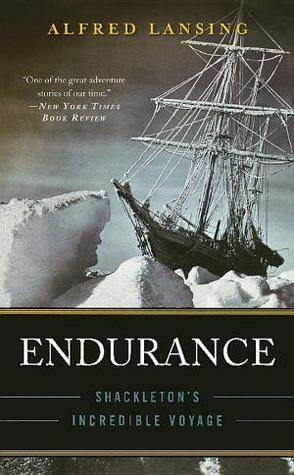
Endurance: Shackleton's Incredible Voyage  
by Alfred Lansing

In August 1914, explorer Ernest Shackleton and his crew set sail from England for Antarctica, where Shackleton hoped to be the first man to cross the uncharted continent on foot. Five months later, the Endurance - just a day's sail short of its destination - became locked in an island of ice, and its destiny and men became locked in history.

According to One's Own Nature

On Civil Disobedience 


Walden and Other Writings

"the State never intentionally confronts a man's sense, intellectual or moral, but only his body, his senses. It is not armed with superior wit or honesty, but with superior physical strength. I was not born to be forced.  I will breathe after my own fashion. . . . when an acorn and a chestnut fall side by side, the one does not remain inert to make way for the other, but both obey their own laws, and spring and grow and flourish as best they can, till one, perchance, overshadows and destroys the other.  If a plant cannot live according to its nature, it dies; and so a man."   - Henry David Thoreau


On or about July 23, 1846 Henry David Thoreau was detained in Concord for nonpayment of the poll tax, and he spent the night in the Concord Jail. He described his experience in jail thus:  "The rooms were whitewashed once a month; and this one, at least, was the whitest, most simply furnished, and probably the neatest apartment in the town." He described his fellow inmate ("room-mate") as someone accused of "burning a barn" who had been incarcerated for three months waiting for trial. He was "quite domesticated and contented, since he got his board for nothing, and thought that he was well treated." They each had a window of their own to look out and Thoreau noted that "It was like traveling to a far country, such as I had never expected to behold, to lie there for one night." The next day some anonymous person paid the tax and Thoreau was once again a free man.

The episode would be little noted but for the essay that Thoreau proceeded to write, an essay that would become one of the great Western statements on the importance of conscience. The essay is now known as "On Civil Disobedience" although its original title was "Resistance to Civil Government". It is short, less than twenty pages in the edition I read, but it lays out Thoreau's thoughts on the nature of Government: where it gets its authority, when it must be resisted, and more. 

He begins the essay with the motto, "That government is best which governs least;" and he immediately makes a case for a government that "governs not at all", at least when men are "prepared for it". He will go on to identify three objections that he, and others, have against the government: namely, maintaining a standing army, the mistreatment of native Americans, and the institution of slavery. He claims that the American government has lost some of its integrity and is not worthy of our respect. However he quickly notes that he is not a "no-government man", because "to speak practically and as a citizen" he does not want no-government but merely "better government". That is he wants a government he can respect.

How does he recommend that he and his friends should resist a government that has lost his respect? He does not speak of a "call to arms".  He is not a man like John Brown would become in less than a decade; rather he lays out a pacifist strategy of civil resistance to the government. He describes this resistance in several ways throughout the essay, including: refusing allegiance to the state of Massachusetts; receding from government (withdrawing his association with it); resigning your office (for those who have been appointed); refusing to pay taxes; and refusing to serve in an "unjust war" (the Mexican-American war had begun in April, 1846 and would continue until February, 1848).

To a great extent the essay is both anti-war and anti-slavery. Thoreau references sources as disparate as Confucius and the Bible to under gird his arguments. Although he makes an effort to sound practical at times his primary tendency is one of dissociation from the current American government. His rhetoric demonstrates a moral absolutism that is reminiscent of the speeches of William Lloyd Garrison. He is a genuine radical as he makes statements like: "If I have unjustly wrested a plank from a drowning man, I must restore it to him though I drown myself . . . The people must cease to hold slaves, and to make war on Mexico, though it cost them their existence as a people." He castigates as "the most serious obstacle to reform" those liberals who personally disapprove of slavery or the war yet still support the government. Moreover, he observes that "action from principle . . . is essentially revolutionary". His personal episode in jail is one small example of the consequences of his adherence to principle. "Under a government which imprisons any unjustly, the true place for a just man is also a prison."

These are strong words that suggest why the ideas presented in this essay have continued to have a profound effect until our own day. It is why the essay has influenced subsequent thinkers like Gandhi, Martin Luther King, and others. It is why this essay is considered one of the "great essays" of Thoreau's era and our own.


Monday, July 10, 2017

Recreating the Past

The History of the Siege of Lisbon 


The History of the Siege of Lisbon


“Every novel is like this, desperation, a frustrated attempt to save something of the past. Except that it still has not been established whether it is the novel that prevents man from forgetting himself or the impossibility of forgetfulness that makes him write novels.”   ― José Saramago, The History of the Siege of Lisbon


With this engaging postmodern narrative Jose Saramago has created a complex tale that encompasses many themes including language, history and historiography, and war in the medieval world. At the same time the story dwells on the power of Eros over the mind and imagination and what results therefrom.

At the heart of this novel is Raimundo Silva, a middle-aged bachelor and proofreader in a contemporary Portuguese publishing house. However the focal point for Raimundo and the reader is the siege of the Moorish city of Lissibona (Lisbon) in 1147 by Portuguese forces under Christian King Alfonso I, its conquest and the expulsion of the Moors-a battle in which as many as 150,000 perished. Under the sway of his own fertile imagination, a dangerous thing for a proofreader, on one day Raimundo writes his own alternative history of the siege by changing a single word in a manuscript, thereby implying, contrary to the historical record, that the Crusaders refused to help the Portuguese besiege and capture the city.

Why does he do this? It seems that he is in love with the city of Lisbon as seen when the narrator says, "for it might well be that Lisbon, contrary to all appearances, was not a city but a woman, and the perdition simply amorous". But he is also enamored of his younger, iconoclastic boss, Maria Sara, with whom he falls in love. He is inexplicably encouraged by her to rewrite the entire history of the siege. He does so by continuing to weave a web of chivalrous deeds, love and intrigue around the bare historical record. The romantic affair with Maria blossoms, the apparent present and the imagined past meld into one another in a complicated narrative that shifts constantly between past and present tenses. In doing so it develops into a complex meditation on the meaning of both history and words as well as a romance and parable of life under authoritarian rule. Another major theme is Saramago's appreciation of the Reconquista, a central element in the history of Portugal as well as Spain, of which the conquest or re-conquest of Lisbon by Christians and its transformation into the capital of Portugal is a key event.

On one level, Saramago is exploring the thirst for power, religious and political fanaticism, intolerance, hypocrisy and jingoism, as well as the human need for love, companionship, sex. On another level, of more import for this reader, he is developing his abiding theme that history is a form of fiction, a selective reordering of facts. This reminds me of Tolstoy's philosophic musings near the end of War and Peace. Saramago's prose style does take some extra effort to adjust to with a stream-of-consciousness technique, long paragraphs, and serpentine sentences; but it is worth the effort and, like Faulkner and others with difficult prose styles, repays the reader who perseveres. This is nevertheless a mesmerizing tale that engages the reader's mind and emotions.


Wednesday, July 05, 2017

Viewers of Nature

Watchers at the Pond 


Watchers at the Pond (Nonpareil books)


“The hawk turned slowly and flexed his great wings to maintain his height. In this cold wind, he flew merely to see and to travel. Gone was the exhilaration of fast-rising summer air carrying him so high into the sky's blue vacuum that the pond became a silver speck and the great southern lake dazzled him with a glaring slash of reflected sun.”  ― Franklin Russell, Watchers at the Pond


The poetic style of this book reminded me of Loren Eiseley's marvelous science writing. Franklin Russell watches along with other animals and narrates what he sees over the course of the seasons. The other watchers include hawks and hares and muskrats, but the observations of the narrator bring the pond alive merging science with poetry.

He begins his story in the winter with some ladybirds encased in ice while chipmunks and others would hibernate nearby. Some of the birds have flown south for the winter only to return in the spring. Nature explodes in the fury of a blizzard that wrenches limbs from trees and exposes sleeping carpenter ants to the frigid cold.

The pond of the title was actually based on many ponds from a park in Hamilton, Ontario to many other ponds that he would explore in the Canadian countryside. What he finds he relates in beautiful prose that does not ignore the science on display. He can visualize single-celled organisms "by the billions in the pond . . . infinitely more varied than visible creatures . . . their soft unicellular bodies pulsing with slow and stately dignity." He does not let the scientist get in the way of the watcher or the writer. The ducks flying over the pond pass "very low and fast" and are "gone in the sound of a quack." Spring and summer come with more variety from mosquitoes to more waterfowl. He does not ignore the flora with descriptions of flowers and fruits like wild strawberries. Some of this reminded me of my own Wisconsin upbringing and time spent near similar ponds.

Thoreau wrote, near the end of Walden: "We can never have enough of Nature. We must be refreshed by the sight of inexhaustible vigor . . . We are cheered when we observe the vulture feeding on the carrion . . . and deriving health and strength from the repast . . . I love to see that Nature is so rife with life that myriads can be afforded to be sacrificed and suffered to prey on one another . . . The impression made on a wise man is that of universal innocence."

The year at Russell's pond ends in a kind of innocence as well. The beauty of his prose mirrors the beauty of nature yielding a classic small book about the science and poetry that one can find at the edge of ponds. I would recommend this book as a great read for any season.

Monday, June 26, 2017

The Search for Perfection

A Romance on Three Legs: 
Glenn Gould's Obsessive Quest 
for the Perfect Piano 


A Romance on Three Legs: Glenn Gould's Obsessive Quest for the Perfect Piano

“Gould’s playing evoked a visceral response from people who had never thought to stop and really listen to classical music. There was something about the silence between and behind each note, the richness of the different voices, that captured the imagination and caused listeners to feel that their lives had been deepened and enhanced. Thousands of people over the years had heard Gould’s best-selling 1955 recording of Bach’s Goldberg Variations—the little air and its thirty virtuosic variations—and became lifelong fans.”   ― Katie Hafner, A Romance on Three Legs: Glenn Gould's Obsessive Quest for the Perfect Piano


A most unusual biographical study, this is a book about a musician and his music, but even more it is about his search for perfection. The author writes of a search for a piano that is more intense than anything I have experienced in my piano-playing life. While I have encountered several different pianos, from the old upright of my youth to the local public library grand and sturdy spinets at the University of Wisconsin School of Music, I have never obsessed the way Glenn Gould did.

Katie Hafner makes the story interesting with details of the life of the piano, its caretaker and the marriage of artist and piano in the studio. The piano is a Steinway grand piano known as CD318. The caretaker, an almost completely blind piano tuner, reminded me of a piano tuner who maintained my own spinet for several years. The marriage meant that this piano became part of the history of music performances by one of the greatest pianists of the twentieth century. While the marriage of piano and pianist was not fated to last forever, that part of the story is best left for the reader to discover for himself. It is a story that this music lover found exceptional. And it is a unique perspective on the life of an artist notorious for his personal eccentricities.

The Man of Principle

The Fountainhead 


The Fountainhead


“I came here to say that I do not recognize anyone's right to one minute of my life. Nor to any part of my energy. Nor to any achievement of mine. No matter who makes the claim, how large their number or how great their need…. It had to be said. The world is perishing from an orgy of self-sacrificing....”  — Ayn Rand, The Fountainhead;


Ayn Rand began writing her best seller on June 26, 1938. It was published in 1943 and by the summer of 1945 it was on the bestseller lists and has remained in print ever since. I have always enjoyed reading books about heroes and this was one of my favorite discoveries. When I was in high school I read this story of Howard Roark and in it found a representative of individualism with whom I could identify.

In lucid direct prose Ayn Rand narrates a story of an architect with principles who will defer to no one in the pursuit of his life goals. The basic conflict is between Roark as an exemplar of egoism who uses his reason to judge for himself contrasted with the character of Peter Keating who is a"second-hander", that is one who bases his life on the opinions of others. She creates characters who represent principles of good and evil including one of the most evil characters in literature in the person of Ellsworth Toohey, a man who manipulates others into giving up that which they hold most dear.  While Roark suffers, especially due to the machinations of Toohey, he is ultimately vindicated and stands as a hero to all who choose to think and create and produce.

The novel is written in a clear and lucid style that belies the Romanticism inherent in the story-line.  If you have enjoyed The Count of Monte Cristo or the works of Victor Hugo you will like The Fountainhead.


Friday, June 23, 2017

An Irish Family

The Green Road 

The Green Road


“Far below were the limestone flats they called the Flaggy Shore; grey rocks under a grey sky, and there were days when the sea was a glittering grey and your eyes could not tell if it was dusk or dawn, your eyes were always adjusting. It was like the rocks took the light and hid it away. And that was the thing about Boolavaun, it was a place that made itself hard to see.”   ― Anne Enright, The Green Road


The Green Road is a family narrative told through place and time. The writing demonstrates real lives filled with compassion and selfishness and effortlessly carries the reader forward. It is a thoroughly Irish book that considers issues both modern and traditional through that lens. Our Thursday night book group enjoyed it for a variety of reasons that led to a lively discussion. I found the writing style and the structure of the book the best aspects, even while some of the characters, not all, were somewhat opaque. The story explored both the gaps in the human heart and family tensions in our modern age.

The story unfolds over decades with the first half of the book constructed from vignettes that might stand on their own as short stories. These stories explore the lives of the children of Rosaleen, matriarch of the Madigans, a family on the cusp of either coming together or falling irreparably apart. Each of the four Madigan children and their mother Rosaleen receive a chapter of their own beginning with Hannah Madigan. Hannah's chapter focuses on a family member as a child and deals with her relationship with her father. She is traumatized by viewing the culling of a chicken for dinner on her grandmother's farm. Dan Madigan's story jumps forward to 1991 during his time in New York with his fiance as his repressed homosexuality comes to the fore during the AIDS epidemic. He gradually accepts his life and begins living in Canada with a life partner. Constance Madigan's chapter is based in 1997 Limerick and considers her domestic roles of mother and wife. She is seen balancing the concerns of her health that make her face her own mortality. Emmet has traveled to Mali in 2002 and works with impoverished children even as he is haunted by previous relief work he has been involved with. All the while his relationships are slowly deteriorating.

Rosaleen, in her early old age, announces that she's decided to sell the house and divide the proceeds. Her adult children come back for a last Christmas, with the feeling that their childhoods are being erased, their personal history bought and sold. The second part of the book focuses on this homecoming as the story comes together through a combination of memories and family interactions. This was the best section of the book for this reader. It is where the home becomes a character as much as the Matriarch and her children.

The book is a pleasure to read through the story of the family and the author's beautiful prose. The story about a family's desperate attempt to recover the relationships they've lost and forge the ones they never had becomes a profoundly moving work.


Tuesday, June 13, 2017

A Favorite Poet

The Collected Poems of W.B. Yeats 


The Collected Poems of W.B. Yeats


“Had I the heavens' embroidered cloths,
Enwrought with golden and silver light,
The blue and the dim and the dark cloths
Of night and light and the half light,
I would spread the cloths under your feet:
But I, being poor, have only my dreams;
I have spread my dreams under your feet;
Tread softly because you tread on my dreams.” 

― W.B. Yeats, The Wind Among the Reeds


I have enjoyed the poetry of William Butler Yeats for many years as evidenced by my well-worn copy of his Complete Poems. But there is more to enjoy when considering this protean author for throughout his long life, William Butler Yeats produced important works in every literary genre, works of astonishing range, energy, erudition, beauty, and skill. His early poetry is memorable and moving. His poems and plays of middle age address the human condition with language that has entered our vocabulary for cataclysmic personal and world events.

"O body swayed to music, O brightening glance,
How can we know the dancer from the dance?"
("Among School Children", p 105)

The writings of his final years offer wisdom, courage, humor, and sheer technical virtuosity. T. S. Eliot pronounced Yeats "the greatest poet of our time -- certainly the greatest in this language, and so far as I am able to judge, in any language" and "one of the few whose history is the history of their own time, who are a part of the consciousness of an age which cannot be understood without them."

There are always new things to be learned when reading and meditating on the poetry of this masterful author.  But I often return to his greatest poems like "The Second Coming".  It was written in 1919 in the aftermath of the first World War. The version of the poem below is as it was published in the edition of Michael Robartes and the Dancer dated 1920.


Turning and turning in the widening gyre
    The falcon cannot hear the falconer;
    Things fall apart; the centre cannot hold;
    Mere anarchy is loosed upon the world,
    The blood-dimmed tide is loosed, and everywhere
    The ceremony of innocence is drowned;
    The best lack all conviction, while the worst
    Are full of passionate intensity.

    Surely some revelation is at hand;
    Surely the Second Coming is at hand.
    The Second Coming! Hardly are those words out
    When a vast image out of Spiritus Mundi
    Troubles my sight: a waste of desert sand;
    A shape with lion body and the head of a man,
    A gaze blank and pitiless as the sun,
    Is moving its slow thighs, while all about it
    Wind shadows of the indignant desert birds.

    The darkness drops again but now I know
    That twenty centuries of stony sleep
    Were vexed to nightmare by a rocking cradle,
    And what rough beast, its hour come round at last,
    Slouches towards Bethlehem to be born?

― W.B. Yeats, The Collected Poems of W.B. Yeats

Thursday, June 08, 2017

Satirical Voyages

Gulliver's Travels 


Gulliver's Travels

“He was perfectly astonished with the historical account gave him of our affairs during the last century; protesting “it was only a heap of conspiracies, rebellions, murders, massacres, revolutions, banishments, the very worst effects that avarice, faction, hypocrisy, perfidiousness, cruelty, rage, madness, hatred, envy, lust, malice, and ambition, could produce.”  -  Jonathan Swift, Gulliver's Travels


The first volume of Jonathan Swift’s Gulliver’s Travels was published on October 28th in 1726. This was part of the onset of a literary tidal wave that included the novels of Daniel Defoe and would pick up speed by mid-century with the appearance of Fielding's masterpiece, Tom Jones.

Swift clearly relished the hoax aspect of his book, taking pains (under a pseudonym) to give his hero a genealogy and history, and a reputation for veracity so legendary “that it became a sort of proverb among his neighbours at Redriff, when any one affirmed a thing, to say, it was as true as if Mr. Gulliver had spoken it.” This kept up through the publication of subsequent volumes and editions, Gulliver himself now going on record to quibble over misprinted facts, or chortle over those “so bold as to think my book of travels a mere fiction out of mine own brain, and have gone so far as to drop hints, that the Houyhnhnms and Yahoos have no more existence than the inhabitants of Utopia.” The ideas are embodied in grotesques and fantastic creatures, in the six-inch high Lilliputians, the gigantic Brobdingnagians, the horse-like Houyhnhnms and the disgusting Yahoos.

The book itself is a fantastical satire that uses the ancient method of a journey (in this case multiple journeys) to foreign lands in the service of social satire and cultural commentary. The motivating force behind Gulliver's Travels is the author's apparent disgust with human folly and pretension. The Fourth Voyage is perhaps the most disturbing . Gulliver encounters disgusting ape-like creatures who "discharge their excrements" onto him from a tree, and then a pair of unusually thoughtful horses. These horses call themselves Houyhnhnms. They are super-rational beings who do not even understand the concept of lying, referring to it as "saying the thing which is not." For all their reasonableness they lack any passion and lead what would appear to most humans as dull lives. By contrast the "Yahoos" as they call the ape-like creatures are pure passion and emotion with no visible restraint. Gulliver gradually becomes enamored of the Houyhnhnms, so much so that when he eventually returns home he cannot abide the smell of of his wife and family and is happiest when spending time with his horses. While the land of the Houyhnhnms is superficially a utopia, this reader, after consideration of the life presented, found it to be a very drab and boring place. Nonetheless Gulliver, when relating life in England to his Houyhnhnm masters, is scathing in his attacks on lawyers, doctors, and the ruling classes. He confesses that he could be reconciled to the English Yahoos "if they would be content with those Vices and Follies only which Nature hath entitled them to. I am not in the least provoked at the sight of a Lawyer, a Pick-pocket, a Colonel, a Fool, a Lord, a Gamster, a Politician, a Whoremunger, a Physician, . . . or the like: This is all according to the due Course of Things: but, when I behold a Lump of Deformity, and Diseases both in Body and Mind, smitten with Pride, it immediately breaks all the Measures of my patience."

The characters imagined in this tale are so memorable that their names have become part of our culture. The journeys provide lessons for Lemuel Gulliver who is an honest if gullible narrator. Whether he learned the right lessons or ones that have value for others is for each reader to decide. Ultimately it is a satire that has stood the test of time and its relevance suggests the follies of twenty-first century humans are not so different from those caricatured by this brilliant eighteenth century satirist.


Saturday, June 03, 2017

Who Can Remember Pain?

The Handmaid's Tale 


The Handmaid's Tale


“But who can remember pain, once it’s over? All that remains of it is a shadow, not in the mind even, in the flesh. Pain marks you, but too deep to see. Out of sight, out of mind.”   ― Margaret Atwood, The Handmaid's Tale


I have enjoyed several of Margaret Atwood's novels over the years; especially Oryx and Crake, the first novel in her Maddam Trilogy. I had not read The Handmaid's Tale until our Thursday evening book group chose it for our most recent book discussion. This also gave me the opportunity to use my Kindle app which I rarely use since I prefer the feeling of holding a "real" book. I was not disappointed by this unusual dystopian postmodern tale of a future that one hopes we may avoid.

The title of this now classic novel echoes the component parts of Geoffrey Chaucer's The Canterbury Tales, this is suggestive of an almost allegoric aspect of the story but also a pervasive theme that is woven throughout the book; that is theocracy, a government in which there is no separation between state and religion. We see this in the names of the servants who are called “Marthas” and the local police as “Guardians of the Faith”; soldiers as “Angels”; and the “Commanders of the Faithful”. In addition Atwood's vocabulary incorporates religious terminology and biblical references. All the stores have biblical names: Loaves and Fishes, All Flesh, Milk and Honey. Even the automobiles have biblical names like Behemoth, Whirlwind, and Chariot. Using religious terminology to describe people, ranks, and businesses, masks political skulduggery in pious language. The reader is faced with an ever-present reminder that the founders of Gilead insist they act on the authority of the Bible itself. Politics and religion sleep in the same bed in Gilead, where the slogan “God is a National Resource” predominates.

In the society of The Handmaid's Tale, while even the powerful live very restricted lives, however the Handmaids are confined to their bedrooms except for sanctioned outings to grocery stores, childbearing Ceremonies, and executions; as a result they are worse off than most. Doubly trapped by their low social statuses and their fertile bodies, Handmaids barely get to do anything. Their bodies' fertility both enforces their confinement and paradoxically promises them a kind of freedom.
If Handmaids become pregnant by their Commanders (this is their sole purpose in this society) their reward is not being sent off to die. If they do get pregnant, they're confined to their bodies in a different way, forced to give birth to children they don't get to keep, fathered by men they don't love.

I found this a book that I appreciated for its literary values more than the content which was brutal at times. This is undoubtedly to be expected in a dystopian tale, but understanding the fact did not provide solace for the reader. The story is a tale of "witness" by a rebellious handmaid named Offred. Her rebellion begins with recording her story, but extends to other activities that eventual provide what little suspense there is in the tale. As with all first person narratives the reader must maintain some skepticism in recognition of the unreliability of the narrator. We never quite know what's true in The Handmaid's Tale; even when people state their names, they're lying. Throughout the book we're reminded that this is a story and that the narrator is altering some of the details. The narrator wishes she could change the events that happened to her through retelling them, or what she calls "reconstruction." Even the epilogue, with its "Historical Notes," reinforces the idea that this is a tale, a story, and that the manner of the telling is as important as what the narrator reveals through it.

This leads me to the only substantive criticism I have of the book in that I would have appreciated more information about some of the other characters, especially Offred's friend Moira who disappears from the story before it is concluded. We find Offred narrating "I can't remember the last time I saw her. It blends in with all the others; it was some trivial occasion. She must have dropped by; she did that, she breezed in and out of my house", but that was some time ago and it is only her memory of Moira that Offred captures.

This is not a book for the faint of heart, but as some in our book group related Atwood's beautiful prose has an almost mesmerizing effect that helps you move past some of the more gruesome details of this dystopic tale. My conclusion is that this deserves to be considered a postmodern classic that adds luster to the standing of Margaret Atwood in my personal reading pantheon of authors.

View all my reviews