Monday, November 16, 2015

Quote for Today


Virginia Woolf on Shakespeare

I read Shakespeare directly I have finished writing.  When my mind is agape and red-hot. Then it is astonishing.  I never yet knew how amazing his stretch and speed and word coining power is, until I felt it utterly outpace and outrace my own, seeming to start equal and then I see him draw ahead and do things I could not in my wildest tumult and utmost press of mind imagine.  Even the less known plays are written at a speed that is quicker than anybody else’s quickest; and the words drop so fast one can’t pick them up.  Look at this. “Upon a gather’d lily almost wither’d.”  (That is a pure accident.  I happen to light on it.) Evidently the pliancy of his mind was so complete that he could furbish out any train of thought; and, relaxing, let fall a shower of such unregarded flowers.  Why then should anyone else attempt to write?  This is not “writing” at all.  Indeed, I could say that Shakespeare surpasses literature altogether, if I knew what I meant.

From the Diaries, April 13th, 1930

Saturday, November 14, 2015

Ideological Divisions

The Righteous Mind: Why Good People are Divided by Politics and ReligionThe Righteous Mind: 
Why Good People are Divided by Politics and Religion 
by Jonathan Haidt

“Morality binds and blinds. It binds us into ideological teams that fight each other as though the fate of the world depended on our side winning each battle. It blinds us to the fact that each team is composed of good people who have something important to say.”   ― Jonathan Haidt, The Righteous Mind

The title of this book suggests that it will contain information about the thoughts, and feelings that we have about what is morally right, and why there exist such a divergence of views about this subject. The author approaches the topic using psychological tools to determine the basis for this divergence. After a brief summary of the book I will discuss my misgivings about his project.

In the first section of the book the author discusses the idea that we use our intuition to first identify what is right and afterward apply strategic reasoning. The concept is summarized metaphorically by the image of an elephant and its rider with the elephant representing our intuition or "automatic" processes and the rider our rational deliberative mind. He goes on in the second section to identify five categories (later expanded to six) of moral issues using the metaphor of taste; based in part on the philosophical views of David Hume. In the final section he discusses why humans tend to form groups based around shared approaches toward moral categories. In this case the metaphor is the chimp and the bee, with the chimp representing the individual and the bee the group or "hive". The formation of groups is helpful in understanding the different viewpoints toward issues as each group emphasizes different categories of moral issues. All of this discussion is laced with observations of responses to hypothetical questions and situations by individuals and different groups.

I found Haidt's approach to be fundamentally flawed, yet I also found it fascinating and helpful both in enlarging and refining my thinking about the subjects he discussed. The fundamental flaw is the author's attempt to identify moral principles by using behavior and in the process of doing so eliminating the possibility that some moral principles may be foundational for any other activities. The result of his method is to conclude that good people can hold any combination of moral beliefs the difference between which can only be considered a difference in emphasis.  This may be useful for a relatively homogeneous culture but it does little to explain the fundamental differences between cultures for whom there are fundamental differences in moral principles. He also seriously underestimates the power of reason in our moral judgements.  While it is true that we sometimes make mistakes in moral judgement due to faulty reasoning;  our reasoning can be improved, resulting in better judgement.  In either case this is not sufficient ground to claim that there are no right or wrong answers to questions of morality.  The psychological approach used by Haidt leads him to these conclusions.

In spite of some specious eristics the book contains much useful information about the nature of the human mind, its development and actions such as decision-making. Reading it stimulated me to consider related works in philosophy, anthropology and evolutionary biology. This is one of the aspects that I value most in reading and The Righteous Mind was successful in this regard.

View all my reviews

Monday, November 09, 2015

Forgetting Buddha

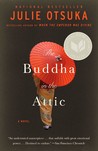
The Buddha in the AtticThe Buddha in the Attic 
by Julie Otsuka


“We forgot about Buddha. We forgot about God. We developed a coldness inside us that still has not thawed. I fear my soul has died. We stopped writing home to our mothers. We lost weight and grew thin. We stopped bleeding. We stopped dreaming. We stopped wanting.” 


“And we knew it would only be a matter of time until all traces of us were gone.”… except… “Haruka left a tiny laughing brass Buddha up high, in a corner of the attic, where he is still laughing to this day.”   ― Julie Otsuka, The Buddha in the Attic

What an intense reading experience. Using simple prose and the first person plural the author creates a unique perspective on a very real historical episode. The story begins, "On the boat we were mostly virgins." That is they were innocents on a voyage to a strange new world; one that would not be what they expected. It would turn out to be a new life that they had dreamed about, but it would sometimes seem more like a nightmare. It is a story told from the point of view of many girls and women, none of whom is individualized as a continuing character, but all of whom are vividly described in a sentence or two.

The first chapter, "Come, Japanese!" describes a boatload of Japanese picture brides coming to California to marry men they have never met; men whom they have no true idea about, for they are entering the unknown. The next chapter, "First Night", tells of the consummation of their marriages with their new husbands, most of whom are nothing like the descriptions they had given. In the following chapter "Whites", the communities of the young women and their husbands are described: "We settled on the edges of their towns, when they would let us."(p 23) There was no assimilation as the women lived lives apart in this foreign country. Some of the women labor as migrant workers living in rural shacks, some become domestic workers living in the servants' quarters of suburban homes, and some set up businesses and living quarters in the "Japantown", or "J-Town", area of big cities. "Babies" tells about giving birth and "Children" about raising American-born children, who want to speak only English and are ashamed of their immigrant parents, but are discriminated against by most of their classmates, neighbors and merchants.

The final chapters depict the terrible impact of the Pearl Harbor attack and World War II on the families: the rumors and increasingly the reality of Japanese men being arrested without warning, the fear and eventually the reality of entire families being sent away to parts unknown. "Some of us left weeping. And some of us left singing. . . A few of us left drunk. Others of us left quietly, with our heads bowed, embarrassed and ashamed." (p 105) "Last Day" tells of the departure of the Japanese from their homes, jobs and schools. Finally, "A Disappearance," is told from the point of view of the white American families left behind, who at first miss their Japanese neighbors but gradually forget about them.

This is a heart-rending look at a culture that was held together by the hard work and discipline of a group of warm-hearted young women. And which was tossed asunder by the internment of Japanese Americans during World War II. The author raises her prose to the level of poetry with the simplicity and rhythm of her writing. Brilliantly she manages to leaven the hardship with humor while allowing the women share their personal stories. The result is a short novel that cuts deeper and closer to my heart than almost anything I have ever read. It is an emotional look at history that I will never forget.


View all my reviews

Tuesday, November 03, 2015

German Literature Month


Wilhelm Tell

by Friedrich Schiller


When on Alpine heights
The beacons all are kindled and shine forth
And tyrants' strongholds fall in smoking ruins,
Then shall the Switzers to your cottage come
And bear the joyous tidings to your ear:
So, bright in your dark night, shall freedom dawn.

- Wilhelm Tell, Schiller (lines 745-750)


Physical freedom and liberty of the soul are central ideas of Schiller’s literature. In his very first play The Robbers (1781), Schiller spoke of the ideas of liberty. His famous play Wilhelm Tell, on which Rossini’s famous opera is based, was also a tribute to freedom. The Romantic influence is apparent in Wilhelm Tell: “The mountain cannot frighten one who was born on it.” Indeed, this play was also a tribute to men living close to nature—the Romantic ideal of the harmony between nature and mankind. Don Carlos, another play by Schiller on the issue of liberty, inspired the famous Italian Romantic opera composer Giuseppe Verdi to write one of his greatest operas.

Seldom does a play include fewer scenes or lines for the title character, yet Wilhelm Tell is in few scenes and has relatively little to say in this great play, the last completed, by Friedrich Schiller. Nature looms as the play begins during a tempest on Lake Lucerne when Tell braves the angry waves to row to safety a peasant who is pursued by the Governor's horsemen. "The lake may take pity on him; but the Governor, never," says Tell. And yes, there is the famous scene where Tell refuses to bow to the "hat", the symbol of repressive Habsburg power, and is in turn forced to shoot the apple off his son's head. And there is the ultimate act which makes him a patriotic hero when he kills the Governor Gessler, the imperial representative hated by Tell's fellow countrymen and women. Beyond that the scenes in this play demonstrate the importance of those countrymen and their closeness to the land and traditions of their forefathers.


This is a powerful romantic drama about the desire for freedom, but it is also an Arcadian idyll that presents the best of nature. It seems almost Rousseauian in the opening scenes that are set in a seeming "state of nature". Eden like as the country may be it is also beset by tyranny from the dreaded imperial Hapsburg empire. We see the attraction this life has for Ulrich von Rudenz, the nephew of Baron von Attinghausen. While Attinghausen is a patriot his nephew is attracted to the other side and is brought back to support his countrymen only through the intervention of his love for young Berta. The importance of Berta and Lady Gertrud in their influence over the men closest to them is worth noting.


Schiller's play, the culmination of his dramatic art, is a joy to read. Over the years it, along with other plays by Schiller, has found its way to the operatic stage, in this case through the pen of Rossini, while Verdi was attracted to other of Schiller's works. While the large cast and number of different scenic locations make this a difficult work to stage I could not help thinking that we are overdue for a cinematic traversal of this tremendous literary resource.


View all my reviews

Sunday, November 01, 2015

The Original Essayist

The Complete Essays 
by Michel de Montaigne


“I speak the truth, not so much as I would, but as much as I dare; and I dare a little more as I grow older.” 

"When I am attacked by gloomy thoughts, nothing helps me so much as running to my books. They quickly absorb me and banish the clouds from my mind."
  
-   Michel de Montaigne 


This is a difficult book to review, not because it is difficult to read or comprehend but rather because it is so exceptionally comprehensive in its topics and thoughts and ideas. In one sense it began in 1571 when Michel de Montaigne, suffering increasingly from melancholy, retired to the library tower on his estate in the Périgord, and began to write what we know now as his Essays. At the age of thirty-eight he could look out his windows to see over his estates and check if his men were shirking their work. Inscribed on the walls and beams of his tower room were about 60 maxims in Greek and Latin taken from the philosophers. He replaced and augmented them as his moods and his reading led him.

In this room Montaigne produced three significantly different editions of his endlessly growing essays. By his death in 1592 he had scrawled in the margins of his copy of the most recent edition a significant set of further revisions, which were printed in a modified form in 1595. Montaigne wrote on a wide range of topics -- education, cannibals, drunkenness, war-horses, repentance, thumbs -- and he wrote in a highly readable, thoroughly skeptical way. The roof-beam carvings of his "solarium" convey his general frame of mind and include sayings like these: "The plague of man is the opinion of knowledge. I establish nothing. I do not understand. I halt. I examine. Breath fills a goatskin as opinion fills an hollow head. Not more this than that -- why this and not that? Have you seen a man that believes himself wise? Hope that he is a fool. Man, a vase of clay. I am Human, let nothing human be foreign to me."

The essays that he wrote defined the form of his thought while providing a window into both his mind and his life. Through his essays he has influenced writers and thinkers in every place and century since. One of my favorite examples of those he influenced is the self-taught working-man's philosopher Eric Hoffer who commented on the influence of Montaigne in his life. When on a gold-digging trip to the Sierras he took along a copy of Montaigne's essays. "We were snowed in and I read it straight through three times. I quoted it all the time. I'll bet there are still a dozen hobos in the San Joaquin Valley who can quote Montaigne." Montaigne's collected essays are worth returning to again and again to spur one's own thoughts about living and dying. I have read and enjoyed these essays over most of my adult life.  With them I would also recommend those of Francis Bacon, Emerson, and Orwell, among others.

View all my reviews

Saturday, October 31, 2015

Quote for Today


Maimonides' Guide for Readers 


In the prefatory remarks to the original edition of his Guide to the Perplexed, Maimonides points out that he “hesitated very much before writing on the subjects contained in this work, since they are profound mysteries,” and considers the three primary ways we see truth:


"Ignorant and superficial readers take them in a literal, not in a figurative sense. Even well informed persons are bewildered if they understand these passages in their literal signification, but they are entirely relieved of their perplexity when we explain the figure, or merely suggest that the terms are figurative. For this reason I have called this book Guide for [to] the Perplexed. I do not presume to think that this treatise settles every doubt in the minds of those who understand it, but I maintain that it settles the greater part of their difficulties."


One Omen Too Many

The AlchemistThe Alchemist 
by Paulo Coelho


"It's the possibility of having a dream come true that makes life interesting, he thought." (p 13)

"Another Omen!" (p 166)


I began reading this book with some skepticism with regard to whether it would live up to its hype. While I found that my skepticism was rewarded by the author I may have been better served if I would have noticed an omen when the young sheepherder remembered the old woman "who interpreted dreams"(p 13).  Perhaps if I had "listened to my heart" I would not have read the book in the first place. 

While it started relatively simply, seeming to be a sort of allegory, the further I read the more convoluted the story became. Instead of holding my interest with great writing or suspense or deep thoughts the book encouraged me to read on to see how quickly I could finish it.  The narrative became an unsuccessful attempt to provide some meaning that I would compare to someone mixing their metaphors.

The main character, Santiago, goes on a journey of exploration ending in a sort of mystical experience that has taken him far away from the simple life that he had. In doing so it left him with a muddle of different methods for finding his dream like "speaking with the wind and the sun" and "being a shepherd" and getting over "personal hardship". Whether this amounted to a "higher plan" for his life is far from transparent to this reader.

Rather than attempt to make any further sense out of the story I would prefer to warn other readers that this is a book that pretends to be deep with references to alchemy and spiritualism and even an allusion to Plato's theory of ideas. However, the whole does not equal the sum of its parts primarily because it does not present a coherent message.  It does succeed in a way, but only by devolving into a combination of confusing claptrap; therefore I would not recommend reading it for omens good, bad, or otherwise.


View all my reviews

Thursday, October 29, 2015

Danish Saga

BeowulfBeowulf 
translated by Seamus Heaney


“Meanwhile, the sword
began to wilt into gory icicles, 
to slather and thaw. It was a wonderful thing, 
the way it all melted as ice melts 
when the Father eases the fetters off the frost
and unravels the water-ropes. He who wields power
over time and tide: He is the true Lord.” 

― Seamus Heaney, Beowulf


Seamus Heaney’s translation of Beowulf is both modern and satisfying poetry.  It is a translation as if from another world. The poem has in Heaney’s words a ‘hand-built, rock sure feel’ and yet at the same time his lines are expansive with an elemental feeling emanating from within the verse. It’s what Heaney elsewhere calls ‘the ore of longing’. The world of Danish kings, gold hoards and minstrels keeps revealing regions remote from human influence, making exciting reading. It’s as though you almost had to conceive of two dimensions at once. And Heaney tends to set his words so starkly as to allow the direct opposing pull of those separate forces:
"His warrior band did what he bade them
when he laid down the law among the Danes:
they shouldered him out to the sea’s flood,
the chief they revered who had long ruled them."

The story begins as King Hrothgar, the ruler of the Danes, is troubled by the rampages of a demon named Grendel. Every night, Grendel attacks King Hrothgar's wealthy mead-hall, Heorot, killing Danish warriors and sometimes even eating them. Hrothgar was a great warrior in his time, but now he's an old king and can't seem to protect his people. Fortunately, a young Geat warrior named Beowulf travels to Heorot Hall from his own lands overseas to lend a helping hand – literally.   After explaining that he owes Hrothgar a favor because Hrothgar helped out his father, Beowulf offers to fight Grendel himself. King Hrothgar gratefully accepts his offer.  The rest awaits the reader in this wonderful translation.

For Heaney the whole poem is bordered by yet related to the beyond, by which he means both the immanent and the imminent, ‘unknowable but certain’. He stresses that the queer sounds of Beowulf to modern ears is not merely the result of our distance in time from that epic world (the dragons, barrows, and boar-shapes flashing over golden cheek-guards). Rather the poem’s difference (perhaps shared with similar sagas) lies in its ‘mythic potency’:
"Like Shield Sheafson… [the poem] arrives from somewhere beyond the
known bourne of our experience, and having fulfilled its purpose (again
like Shield) it passes once more into the beyond."

Rereading the poem in this translation was a delight even though I would still recommend the fine translation by Burton Raffel that I read in the early nineties. I intend to return to this poem, but plan to seek out the new version by Neil Gaiman – that is sure to be yet a new way to experience this great medieval epic.


View all my reviews

A Modern Sir Gawain


American Gods (American Gods, #1) American Gods 
by Neil Gaiman


“People believe, thought Shadow. It's what people do. They believe, and then they do not take responsibility for their beliefs; they conjure things, and do not trust the conjuration. People populate the darkness; with ghosts, with gods, with electrons, with tales. People imagine, and people believe; and it is that rock solid belief, that makes things happen.”   ― Neil Gaiman, American Gods


This book almost defies description among those that I have read. It certainly does not fit in any of the standard categories for novels. While it won the Hugo, Nebula and Locus Awards in 2002 for best novel, edging out more traditional science fiction contenders, it is not a traditional fantasy novel either. Having read Neil Gaiman's more recent fantasy novel, Neverwhere, recently I am beginning to realize that one of the prime characteristics of his novels is defiance of traditional categories and escape from easy descriptions.
With American Gods Neil Gaiman has raised the specter of the Norse gods (primarily) and imagined that they came to America along with the immigrants from the countries of Northern Europe. Add to this an ex-convict as a wandering knight-errant who traverses the wasteland of Middle America all the while assisting his boss, Mr. Wednesday, who is otherwise known by many names including Wotan or Odin (King of the Norse Gods, God of poetry, battle and death. Chief god of the Aesir. Also known as the “all-father”, the “terrible one”, “one-eyed” and “father of battle”). This aspect alone interested me as I enjoy the Norse mythology from my love of Wagner's operas.

The knight-errant, named Shadow, has been recently released from prison after serving a three-year term. He is immediately faced with the news that his beloved wife Laura has been killed in an automobile accident. While en route to Indiana for her funeral, Shadow meets an eccentric businessman who calls himself Mr. Wednesday (see the mythological reference above), and passively accepts the latter’s offer of an imprecisely defined job as his assistant. Gaiman skillfully interleaves brief vignettes of various ancient gods and their myths with action in what seems to be real places like Lakeside, Wisconsin and other sites. The novel is effective in describing episodes on and off the plane of reality, as a series of mysterious encounters suggest to Shadow that he may not be in Indiana or Wisconsin anymore—or indeed anywhere on Earth he recognizes. In dreams, he’s visited by a grotesque figure with the head of a buffalo and the voice of a prophet—as well as by Laura’s rather alarmingly corporeal ghost. Shadow undergoes a succession of tests that echo those of Arthurian hero Sir Gawain bound by honor to surrender his life to the malevolent Green Knight, Orpheus braving the terrors of Hades to find and rescue the woman he loves, and numerous other archetypal figures out of folklore and legend.  The plot of the novel, while becoming more intricate as it proceeds also becomes more enjoyable. This is the book that answers the question: When people emigrate to America, what happens to the gods they leave behind?

Gaiman succeeds through his ability to provide fantastic details that are visually exciting to the reader. The dream sequences, even though bizarre and irrational, are beautiful and sometimes horrific in their detail. His prose flows with an ease that belies the complexity of the story and the surprises, of which there are plenty, come with every turn of the chapter. One realizes well before the end of this novel why the voters and writers of fantasy fiction gave it their highest awards. This is a book that reminds you why you love bookstores, which leads me to one more quote from the book:

“What I say is, a town isn't a town without a bookstore. It may call itself a town, but unless it's got a bookstore it knows it's not fooling a soul.”


View all my reviews

Tuesday, October 27, 2015

Poetry as Winter Approaches


Robert Frost, who lived from 1874-1963 published “October” in 1915.  It was among the poems that he included in “A Boy’s Will”.


Outside there is an autumn mist upon my windowpane. Inside where I am warm I turn to the poem “October” in which Frost wishes that time be slowed, "Begin the hours of this day slow",  before the approaching winter.  He urges the reader to cherish each moment with "Hearts not averse to being beguiled".  Winter becomes a metaphor for death and finality, as he seeks enchantment.  Like many of Frost’s poems, “October” references nature to draw out meaning. This is done similarly in “Nothing Gold Can Stay” and “Stopping by Woods on a Snowy Evening”.

Marcel Proust's narrator for In Search of Lost Time said, "A change in the weather is sufficient to recreate the world and ourselves anew." I hope you will find similar thoughts expressed by Robert Frost in his poem simply titled "October".


October

O hushed October morning mild,
Thy leaves have ripened to the fall;
Tomorrow’s wind, if it be wild,
Should waste them all.
The crows above the forest call;
Tomorrow they may form and go.
O hushed October morning mild,
Begin the hours of this day slow.
Make the day seem to us less brief.
Hearts not averse to being beguiled,
Beguile us in the way you know.
Release one leaf at break of day;
At noon release another leaf;
One from our trees, one far away.
Retard the sun with gentle mist;
Enchant the land with amethyst.
Slow, slow!
For the grapes’ sake, if they were all,
Whose leaves already are burnt with frost,
Whose clustered fruit must else be lost—
For the grapes’ sake along the wall.

-  Robert Frost


A Boy's Will by Robert Frost.   1st World Library, 2006 (1915) 


Monday, October 26, 2015

A Dangerous Glory

Iphigenia in AulisIphigenia in Aulis 
by Euripides


"Agamemnon: I envy you old man.  I envy a man who lives a life without a name.  But those that have power--I envy them least of all.

Old Man: But such men have a life of glory.

Agamemnon:  A glory that is filled with danger.  Yes, power is sweet, but it stands on the brink of grief.  Sometimes it is the gods who destroy a man's life.  Sometimes it is the minds of men, vicious and beyond number, that bring ruin." (pp 11-12)


Near the end of Iphigenia at Aulis, Iphigenia has offered herself as a sacrificial victim: 
"I have decided that I must die. And I shall die gloriously."(p 58) At this point the Chorus echoes her praises, but one wonders at the events that have led to this point and the event that will come to follow this moment as the ending turns the drama on its head.

The story told in this drama by Euripides is one that Athenians knew well. It was told by Aeschylus in his drama Agamemnon, the first play in the trilogy known as The Oresteia. Thus it would have had a tremendous impact on this audience and that impact has continued to this day.  In Aeschylus's play the Chorus, made up of the old men of Argos, enters and tells the story of how the Trojan Prince Paris stole Helen, the wife of the Greek king Menelaus, leading to ten years of war between Greece and Troy. Then the Chorus recalls how Clytemnestra's husband Agamemnon (Menelaus' brother) sacrificed their daughter Iphigenia at Aulis to the god Artemis to obtain a favorable wind for the Greek fleet.   

Euripides' play raises serious questions about the value of an individual life, and under what circumstances that life can be taken. Is the play's central event, the sacrifice of Iphigenia, a pointless waste, or a tragic necessity?  Do the players, her father Agamemnon, Achilles, and Iphigenia herself,  have a choice or is their fate determined by the gods (Artemis in particular)?  Is the war that will be fought as a result of her sacrifice a just cause, or a petty quarrel over individuals and the fate of the beautiful Helen?  Is her decision to offer herself an act of heroic patriotism?  Acceptance of the inevitable or possibly a sign of madness?  These questions and more linger in one's mind during and after reading this powerful drama.  

In Euripides play Iphigenia invokes values important to the Greeks (p 58-9); including obedience to the gods, "Artemis has determined to take this my body--can I, a mere mortal, thwart a goddess's will?"; that the community is more important than the individual, the Greeks must prevail over the barbarians, that men are more valuable than women, and that death in defense of these values is glorious and brings everlasting fame, "Sacrifice me and destroy Troy. That will be my epitaph for eternity. That will be my glory,".  That the glory that she seeks is one determined by men is an open question.  The play also raises questions about the importance of the family as her mother, Clytemnestra and supposed suitor, Achilles, take on important roles.

The translation of this play by Nicholas Rudall is both lucid and poetic in an attempt to capture some of the music that Euripides was famous for. His tragic irony shines through the dialogue. The questions raised in this play are universal in the sense that we still are concerned over the nature of heroism and fidelity to one's community. Euripides won a prize for this drama even though he was no longer present in Athens and had died the previous year. I would recommend this to all who are interested in these questions and their presentation in one of the singular dramas of the Western tradition.

View all my reviews

Thursday, October 22, 2015

Two Waifs in a Wartime Setting

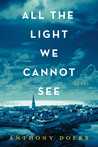
All the Light We Cannot SeeAll the Light We Cannot See 
by Anthony Doerr


“When I lost my sight, Werner, people said I was brave. When my father left, people said I was brave. But it is not bravery; I have no choice. I wake up and live my life. Don't you do the same?”   ― Anthony Doerr, All the Light We Cannot See


This is a book that was selected for our Thursday night book group. I mention this because I probably would not have read this novel had it not been selected, as I seldom read novels that are current best-sellers (The Martian was a recent exception, also selected by a book club).  By the end of the novel I found that I enjoyed reading All the Light We Cannot See,  but I did not share the views of the Pulitzer selection committee and those readers that have claimed greatness for this novel. 

Beginning in August 1944, we meet Marie-Laure LeBlanc, a blind 16-year-old living in the walled port city of Saint-Malo in Brittany. She is there with her great-uncle Etienne as they have moved out of Paris hoping to escape the effects of Allied bombing. D-Day took place two months earlier, and Cherbourg, Caen and Rennes have already been liberated. Marie-Laure’s father was a locksmith and craftsman who made scale models of cities that Marie-Laure studied so she could travel around on her own. He also crafted clever and intricate boxes, within which treasures could be hidden. Parallel to the story of Marie-Laure we meet Werner and Jutta Pfennig, a brother and sister, both orphans who have been raised in the Children’s House outside Essen, in Germany.

The story is told with parallel short chapters providing flashbacks where we learn that Werner had been a bit of a math prodigy who at a very early age developed an obsession with radio transmitters and receivers, both in their infancy's during this period. Werner is selected to attend a technical school and later is transferred by a mentor into the Wehrmacht, where his technical aptitudes are recognized and he’s put on a team trying to track down illegal radio transmissions.
Etienne and Marie-Laure are responsible for some of these transmissions, but Werner is intrigued since what she’s broadcasting is innocent—she shares her passion for Jules Verne by reading aloud 20,000 Leagues Under the Sea. A subplot involves Marie-Laure’s father’s having hidden a valuable diamond, one being tracked down by Reinhold von Rumpel, a relentless German sergeant-major.

The story plays out in short chapters and the time shifts from the present to the past. All of this is presented in a lucid and uncomplicated style that I found easy to read. The author is best in his use of theme and metaphor with the motif of light and the use of Verne's novel as a way to demonstrate the importance of imagination and an inner life for Marie-Laure. There is also a related motif of the voyage both from the Verne novel and from her great-uncle's reading of Darwin's Voyage of the Beagle to her; "She loves especially to hear about the dark coasts of South America with their impenetrable walls of trees and offshore breezes full of the stink of rotting kelp and the cries of whelping seals.  She loves to imagine Darwin at night, leaning over the ship's rail to stare into bioluminescent waves, watching the tracks of penguins marked by fiery green wakes."(p 150-1)  Passages like this are all the more memorable and meaningful when you reflect that the little blind girl is imagining these views and smells in her mind with no visual referent.

The life of the mind is just as important for Werner as he solves mathematical problems related to the building and repair of radios. This skill undoubtedly helps him survive what becomes a more difficult existence as the war proceeds. He is also inspired by "the Frenchman's radio program" (not realizing the source) and books like "Heinrich Hertz's Principles of Mechanics". (p 220)  Likewise Marie-Laure's imagination helps her as she and her great-uncle struggle for survival. The two main characters also are buoyed by their love for family; Werner for his sister Jutta, and Marie-Laure for her father.

Unfortunately the story was somewhat predictable and the information about the war was not enlightening to anyone with even an average knowledge of the history of World War II. Moreover I found the secondary characters appeared as stereotypical types; for example, Werner's best friend at the technical school, Frederick, who was portrayed as wealthy but weak (you realize immediately that he is unlikely to survive the competitive atmosphere of the school). There is an episode (notable only for its violence) when Frederick is culled from the class through horrible physical tests. He suffers more through Werner's inability to show any courage to stand up for him. Perhaps Werner learns a lesson in this episode for he demonstrates much courage later in the story. Finally, the denouement of the the story of Marie and Werner lacks suspense and I found it tended toward the melodramatic.

However, these issues did not significantly diminish my enjoyment reading this novel;  thus I would recommend it to those who like entertaining historical novels. Just do not expect to be challenged by it.

View all my reviews

Friday, October 16, 2015

A Fearless Literary Life

Andre Gide: A Life in the PresentAndre Gide: A Life in the Present 
by Alan Sheridan


"Gide was, by general consent, one of the dozen most important writers of the 20th century. Moreover, no writer of such stature had led such an interesting life, a life accessibly interesting to us as readers of his autobiographical writings, his journal, his voluminous correspondence and the testimony of others. It was the life of a man engaging not only in the business of artistic creation, but reflecting on that process in his journal, reading that work to his friends and discussing it with them; a man who knew and corresponded with all the major literary figures of his own country and with many in Germany and England; who found daily nourishment in the Latin, French, English and German classics, and, for much of his life, in the Bible; [who enjoyed playing Chopin and other classic works on the piano;] and who engaged in commenting on the moral, political and sexual questions of the day."


André Paul Guillaume Gide lived from 1869 until 1951. He was a French author and winner of the Nobel Prize in Literature in 1947 "for his comprehensive and artistically significant writings, in which human problems and conditions have been presented with a fearless love of truth and keen psychological insight". Gide's career ranged from its beginnings in the symbolist movement, to the advent of anticolonialism between the two World Wars.

Known for his fiction as well as his autobiographical works, Gide exposed to public view the conflict and eventual reconciliation of the two sides of his personality, split apart by a straitlaced education and a narrow social moralism. Gide's work can be seen as an investigation of freedom and empowerment in the face of moralistic and puritanical constraints, and centers on his continuous effort to achieve intellectual honesty. His self-exploratory texts reflect his search of how to be fully oneself, even to the point of owning one's sexual nature, without at the same time betraying one's values. His political activity is informed by the same ethos, as indicated by his repudiation of communism after his 1936 voyage to the USSR.

Alan Sheridan's biography of Gide narrates his life year-by-year with beautiful style. He distills the significant biographical writings of Gide (Journals, autobiography, etc.) along with his literary work and very event-filled life. The book, at more than seven hundred pages, is nothing if not comprehensive; providing more detail on his subject’s life than you might want to know, unless you love his writing as I do. It is a scholarly work, with all the apparatus that one has come to expect of contemporary biographies – a forest of footnotes, an extensive bibliography and index.

From a relatively early date, Gide discussed his homosexuality in his books and elsewhere with commendable courage. His earlier autobiographical work, If it Die (Si le Grain ne Meurt), describes his African encounters, and in 1925 he published Corydon, an essay on homosexuality and its place in society, written in the form of a Socratic dialogue. Some of his arguments now seem, inevitably, dated, but to have published such a book at all at that time, even in the relatively more civilised culture of France, was brave. I especially appreciated Sheridan's commentaries on Gide's fiction, most of which I have read and love.  Like all but the most famous European writers he is not well-enough known or appreciated in the United States.


View all my reviews

Thursday, October 08, 2015

Active vs Reactive Man


As one advances in life, one realizes more and more that the majority of men - and of women - are incapable of any other effort than that strictly imposed on them as a reaction to external compulsion. And for that reason, the few individuals we have come across who are capable of a spontaneous and joyous effort stand out isolated, monumentalized, so to speak, in our experience. These are the select men, the nobles, the only ones who are active and not merely reactive, for whom life is a perpetual striving, an incessant course of training.
- Jose Ortega y Gasset, The Revolt of the Masses (pp. 65-66)


The drama Faust by Goethe is a work that I have read and returned to over the years.  In addition to the enjoyment of the drama I have found it a font of ideas containing connections with other works.  Reading Ortega y Gasset's seminal The Revolt of the Masses raised one of those ideas, reminding me of the importance of Goethe's drama for modern thinkers like Ortega y Gasset.  For it is the realization man gains through the experience of life that extends only to those who choose to think and act. Men and women of principle who have identified their goals, and who act upon them with a "spontaneous and joyous effort", are those who strive with a purpose. It is in opposition to this that we consider the directionless striving of Goethe's Faust. His action is that which leads not to nobility, but rather to the ultimate dissolution of his life and ideals.


Faust Part I, embodies a search for the essence of human spiritual growth and understanding. Early in the play we find Faust concluding, "and see there is nothing we can know!" (I, 364). He says this following a life whose purpose was the pursuit of wisdom and understanding.  It was a pursuit that appeared to be fruitless yet, in spite of his apparent conclusion, moments later he is seeking and finding, "enchantment at the sight of this" (sign of the Macrocosm) (I, 430). The enchantment he seeks is that which comes with the union of human spirit with the spirit of nature, or the universe, for which all noble humans strive. Yet this is not possible for Faust, for he is torn apart by a duality of spirit, as shown by the famous lines:

Two souls , alas, are dwelling in my breast,
And either would be severed from its brother;
The one holds fast with joyous earthly lust
Onto the world of man with organs clinging;
The other soars impassioned from the dust,
To realms of lofty forebears winging. (I, 1112-17)


This duality is the manifestation of Faust's ultimate inability to focus on a purpose for his life and his striving. He wagers with Mephistopheles (I, 1692-8), but by that point he has succumbed completely to a permanent separation from the Macrocosm, and thus from the reality of himself. It is Mephistopheles who identifies this separation (I, 1346-54), which seems not unlike the separation of man and god presented by Augustine in his Confessions (Book I, 1).


What do we make of this separation or duality? When combined with Faust's striving - or perhaps avoiding - it becomes the path to Faust's ultimate dissolution. For it is this separation that prevents Faust from focusing on a purpose for his life, without which he he cannot gain the understanding he is seeking. And what do we see as the role of knowledge? It seems that knowledge is not enough to save Faust, not just because he views the attempt to gain knowledge as futile, but because he lacks a purpose or goal for that knowledge beyond the striving itself. Faust becomes like the man described by Ortega y Gasset, "incapable of any other effort than that strictly imposed . . . as a reaction to external compulsion."


But , you may say, is he not inwardly driven toward the striving or action for some purpose? An answer to this question may be found in Mephistopheles request to, "explore what life can be." (I, 1543), and in Faust's reply in which he concludes, "Existence seems a burden to detest. Death to be wished for, life a hateful jest." (I, 1570-1) Faust's inward compulsion is seen to be directed toward death, and only Mephistopheles is able to compel him toward action in this world. Thus striving in this world cannot be maintained by Faust alone, without purpose, and we ultimately see him as an empty creature waiting to be fulfilled by death and, he hopes, union with god.


Is this the nobility of the sort desired by men and women of principle? Those who are "active and not reactive" reject the lure of Mephistopheles and the irrational; focusing on their purpose in life with a joyous rationality. They are driven by an inward striving toward knowledge and understanding as suggested by the famous statement of Aristotle at the beginning of his Metaphysics, "All men by nature desire to know" (980a). These are the men and women described by Aristotle in his Nicomachean Ethics:


Now those activities are desirable in themselves from which nothing is sought beyond the activity. And of this nature virtuous actions are thought to be, for to do noble and good deeds is a thing desirable for its own sake. (1176a 33)


That the doing of noble and good deeds requires a purpose distinguishes the active man from the merely reactive. It is this that leads to the nobility of spirit and it is this that Faust rejects as he says, "Thus I reel from desire to fulfillment, and in fulfillment languish for desire." (I, 3249-50) Later in the same scene Faust again admits the purposelessness of his striving (I, 3348-9). We thus see in Faust the rejection of the virtuous activity that leads to nobility in man, a rejection that leads Faust to death and dissolution.


Faust Part I by Johann Goethe, trans. by Walter Arndt. Norton Classics, New York. 1976 (1808)
Confessions by St. Augustine, trans Rex Warner. Penguin, New York. 1963 (401)
Metaphysics and Nicomachean Ethics by Aristotle, trans. David Ross. Random House, New York. 1941.
The Revolt of the Masses by Jose Ortega y Gasset. W. W. Norton, New York. 1957 (1930)

Monday, October 05, 2015

Magical Realism and Satire

The Master and MargaritaThe Master and Margarita 

by Mikhail Bulgakov


“Follow me, reader! Who told you that there is no true, faithful, eternal love in this world! May the liar's vile tongue be cut out! Follow me, my reader, and me alone, and I will show you such a love!”  ― Mikhail Bulgakov, The Master and Margarita


I have read this novel several times, most recently with our Thursday evening book group. With its complex construction including three major story lines and fantastic elements including the presence of Satan and a large black cat as two major characters it certainly warrants rereading. And it rewards that rereading with a wonderful depth of meaning. The story is set in Moscow in the nineteen thirties when literature is controlled by the state. The reality of Soviet state suppression is one of the primary story lines and this is displayed with a flair for satire. The major state literary association is chaired by a bureaucrat named Berlioz. One of the main reasons I liked the book was its fundamental literary foundation with strong influence of the Faust story and the work of Russians, particularly Gogol and Pushkin.

The style seems dreamlike one moment and yet suddenly becomes very realistic. For example at one point Ivan Ponyrev, the "homeless" poet, is involved in a fantastic chase with the large black cat by his side as they jump from street to street until, with the beginning of a new paragraph, he is in a very dingy apartment building that is described in realistic detail. There is also the whimsy of naming several of the characters after famous composers, Berlioz and Rimsky [Korsakoff] for two examples. This appealed to my musical interests while the literary references abound as seen by this excerpt:
“You're not Dostoevsky,' said the citizeness, who was getting muddled by Koroviev. Well, who knows, who knows,' he replied.
'Dostoevsky's dead,' said the citizeness, but somehow not very confidently.
'I protest!' Behemoth exclaimed hotly. 'Dostoevsky is immortal!”

Satan, referred to as Woland and appearing as an old professor, with his familiar, a cat called Behemoth, prepares a fantastic ball (compare to Walpurgisnacht).  At the ball the cat with the help of demons creates a scene of mayhem and ferocious comedy. I came to appreciate the humor even more after seeing a dramatic adaptation of it performed by a small theater company some time ago. The imagination displayed by the adaptation expanded my own horizons upon a subsequent rereading.

The satire becomes more apparent after rereading the novel while other humor includes slapstick episodes and the sheer insanity of the story. Another primary story line is religious as it is depicted through an inserted tale of Pontius Pilate and Christ as written by the poet known as the Master. With his mistress, Margarita, the Master leads the novel into a final phase that continues the fantastic elements of the story. I found the new translation by Pevear and Volokhonsky excellent as all their Russian translations have been. For those readers interested in magic and supernaturalism, Satan and Pontius Pilate with a beauty and a poet, this is the novel for you. This is certainly a twentieth century masterpiece.

View all my reviews

Friday, September 25, 2015

Traces of the Past

The Search Warrant: Dora BruderThe Search Warrant: Dora Bruder 
by Patrick Modiano


"It takes time for what has been erased to surface.  Traces survive in registers, and nobody knows where these registers are hidden, and who has custody of them, and whether or not their custodians are willing to let you see them.  Or perhaps they have simply forgotten that such registers exist." (p 9)


I had not heard of Patrick Modiano before he won the Nobel Prize in Literature last year. He was born outside Paris in 1945 to a Sephardic Jewish family with roots originally in Italy, although his ancestors, longtime inhabitants of Thessaloniki, Greece, included eminent rabbis. While he is apparently quite popular in France he is not well-known in the United States. Our Thursday evening reading group chose to read his novel, The Search Warrant (also known as Dora Bruder), this month.

At the core of this poignant novel, published in 1997, is Modiano's real-life investigation into the disappearance of a young Jewish girl-Dora Bruder, announced in a newspaper—back in 1941. Struck by this discovery, haunted by the legacy of this mysterious teenager, the author seeks out any tiny scraps of information in an effort to finally come to terms with his own lost adolescence.
What first impressed me was the economical, straightforward, journalistic style of the narrator; basically a stand-in for the author. Yet this was not journalism but rather a sort of fictional historical memoir. The narrative blends both the search for information about Dora with reminiscences of the narrator's own youthful memories. There is so little true information about Dora that the narrator tries to compensate with details about the events and places of the time that Dora was alive.  Searching for documents, he describes those that may still exist, that may be remembered or may yield memories of her life and his own.  The result is the gradual recreation of the world as it was then with fascinating details that bring the narrative to life.

Among the few specifics about Dora the narrator scatters speculation like this moment:
"My father had barely mentioned this young girl when, for the first and only time in his life, one night in June 1863, he told me about his narrow escape as we were dining in a restaurant off the Champs Elysees almost opposite the one where he had been arrested twenty years before. He gave me no details about her looks or clothes, and I had all but forgotten her until the day I learned of Dor Bruder's existence. Then, suddenly remembering the presence of this young girl among the other unknowns with my father in the Black Maria on that February night, it occurred to me that she might have been Dora Bruder, that she too had just been arrested and was about to be sent to Tourelles."(pp 57-8)

This is noted more than one third of the way through the novel following tidbits from documents, gleanings of register entries, and a brief history of her family. One of the pieces of data is the presence of her name on a list of Jews deported to Auschwitz in September 1942.  The book is part meditation on this loss and the greater loss of humans, their stories and their history. There were further moments in the narrative where the subjunctive is suggested with events that could have taken place but about which we do not know anything. Thus we have another theme of this work, the problem of knowledge, that is demonstrated with the blending of bits of historical data with suggestions about what or where Dora fits into the story.

There is also the narrator's own story exemplified by his own youthful episode of running away from boarding school; the intensity about which he writes:
"I remember the intensity of my feelings while I was on the run in January 1960 -- an intensity such as I have seldom known." (p 71).  He goes on to compare this personal episode to Dora's experience suggesting that it must have been harder for her in a world dominated by Nazi occupation and the war. The fate of Dora is thus intertwined with that of French Jews as well. Sometimes a whole chapter is spun out of a speculation on the simple question of what happened to Dora at such and such a time. Somehow the speculation, the bits of data, the mix of authorial reflection with Dora's story all combine to create a fascinating and inexplicably suspenseful novel.

It is short and intense and rewards the reader with the urge to start rereading it almost immediately to see if the intensity of the experience might be heightened by doing so. Alice Kaplan, who teaches Patrick Modiano's work at Yale, said that after her first experience of reading him she "devoured all of his books." (Alice Kaplan on Patrick Modiano) This was my first excursion in the writing of Patrick Modiano. It will not be my last.


View all my reviews

Sunday, September 20, 2015

The Detritus from Alien Visitors

Roadside PicnicRoadside Picnic 
by Arkady and Boris Strugatsky


"'Imagine a picnic----'
Noonan jumped. 'What did you say?'
'A picnic.  Imagine: a forest, a country road, a meadow. . .

'I get it,'  said Noonan.  'A roadside picnic.'
'Exactly.  A picnic by the side of some space road.  And you ask me whether they'll come back . . .'" (pp 129-30)


When we meet Redrick Schuhart, the protagonist of this story, he is working as a laboratory assistant at the Institute of Extraterrestrial Cultures. But he is also a "stalker", only twenty-three when the book begins, and already an expert in the dangers and possibilities of The Zone. The Zone is one of several areas created from the remains of a brief alien visitation. Now gone, the aliens left in their wake both advanced items of technology and areas where the laws of physics no longer apply, or where strange substances and forms instantly kill or disable any human that comes into contact with them.

We learn in the prologue through an interview with the Nobel laureate who discovered the source of the zones. humans have set up an institute that delves into the Zone in order to extract technology. It is the Zone that also attracts illegal Stalkers who venture into the Zone without the technological safeguards offered by the institute but for whom the potential rewards on the black market are far greater. As the story continues we follow Red as he first gets lured into the world of illegal Stalking and then, after a period in prison, as he prepares to venture deep into the Zone in search of a golden ball that is said to grant wishes.
The main setting of the novel is in Harmont, a town near one of the zones in an unnamed country. The setting seems contemporary but, lacking veridical landmarks it takes on a dream-like quality. Red describes Harmont:
"Our little town is a hole. Always was and always will be. Except right now, it's a hole into the future. And the stuff we fish out of this hole will change your whole stinking world. Life will be different, the way it should be, and no one will want for anything. That's our hole for you. There's knowledge pouring through this hole. And when we figure it out, we'll make everyone rich, and we'll fly to the stars, and we'll go wherever we want. That's the kind of hole we have here . . ." (p 42)

These thoughts provide a somewhat idealistic patina for the dangers Red and his cohorts face. About a quarter of the way into the story the narration shifts from first to third person. This transition occurs smoothly and allows for a type of objectivity for the reader after having been inside the head of Redrick Schuhart. It also allows the author to present scenes that Red is not aware of and to discuss ideas that are raised by the events in the story. I found the questions raised thought-provoking. What were the aliens doing on Earth and why did they stop here? Did they notice the existence of human life or were they oblivious to it?
"'what if I turn out to be completely superfluous in their society?' He became more animated. 'What if we're all superfluous? . . . your question falls under the umbrella of a pseudoscience called xenology. Xenology is an unnatural mixture of science fiction and formal logic. At its core is a flawed assumption---that an alien race would be psychologically human.'" (p 129)

There is implicit criticism of the scientific bureaucracy that rings true, but is not identified with a specific terrestrial culture. Along with this the issue of technological change is raised. One wonders what effect dramatic overnight changes in technology might have on our culture. Should we be protected from those changes? Entry to the zones is prohibited to all but a few.

Red has his entire life determined by the Zone. As the book begins, he is defined by his superior knowledge of the Zone's dangers; later he acquires a wife and a daughter as a result of the affairs that he has while living the Stalker's life. Red and his fellow "stalkers" choose to ignore the prohibition risking incarceration at the least and, more importantly, the possibility of death. The denouement of this short novel leaves the reader wondering if this choice is worth the risk.  

Roadside Picnic is a thrilling and beautifully written novel. In the opening part Red Schuhart almost comes across as a hard-boiled narrator but less cynical; later, he remains a curious protagonist throughout the narrative. This is a surreal, tense story that threw out the rules found in a ‘first contact’ novel and ended up redefining the genre. It is an exciting science fiction adventure that blends cultural criticism and philosophical speculation.


View all my reviews