Monday, July 11, 2011

Literary Blog HopLiterary Blog Hop: July 7-10

The Literary Blog Hop is hosted by The Blue Bookcase! This week's question is:


What is one of your favorite literary devices? Why do you like it? Provide a definition and an awesome example.


A favorite literary device in my reading experience is the Bildungsroman. This is a German term which describes a novel of education or development of the hero (or heroine). My favorite novel of this type and a perfect example is David Copperfield by Charles Dickens. In this we see young David's growth and development from his early years in school through his failed first marriage that ends with the death of his wife Dora and concluding with his more satisfactory marriage to Agnes who had loved him all along.
As a Bildungsroman it was influential in the genre which included Dickens's own Great Expectations, Charlotte Brontë's Jane Eyre, published only two years prior, Thomas Hardy's Jude the Obscure, W. Somerset Maugham's Of Human Bondage, Thomas Mann's Magic Mountain, and D. H. Lawrence's Sons and Lovers.
This form of novel has appealed to me since I encountered Maugham's work in my teens and I found I enjoyed reading about the early life, education, and growth of his hero Philip Carey. Even though after several re-readings I still find Carey's choices in life questionable and frustrating I enjoy the journey and continued to read similar novels (all of those listed above and others) while learning more about this genre and its name.  I find them alternately educational and inspirational.  They remind me of biographies which I also enjoy for similar reasons.  
These novels are similar to "coming-of -age" stories and the Kunstlerroman (novel of the artist) which I also enjoy reading.  The latter group is exemplified by James Joyce's A Portrait of the Artist as a Young Man.

Sunday, July 10, 2011


Sunday Commonplace Entry


This weeks entry comes from The Double Helix: A Personal Account 
of the Discovery of THE STRUCTURE OF DNA by James D. Watson


The final refinements of the coordinates were finished the following evening. Lacking the exact X-ray evidence, we were not confident that the configuration chosen was precisely correct. But this did not bother us, for we only wished to establish that at least one specific two-chain complementary helix was stereochemically possible. Until this was clear, the objection could be raised that, although our idea was aesthetically elegant, the shape of the sugar-phosphate backbone might not permit its existence. Happily, now we knew that this was not true, and so we had lunch, telling each other that a structure this pretty had to exist. (p 205)


The Double Helix by James D. Watson. Touchstone Editions, New York. 2001 (1968)
A Day of Theater:


Play Reading in the Morning and Comedy at Night


 Yesterday was a day filled with drama and comedy for me.  I spent the morning at a reading of two short plays based on the work of Proust by Joel Rich, formerly an instructor at both the Newberry Library and the Basic Program of Liberal Education.  Joel has been teaching and lecturing on Proust for many years and these two plays, The Lady in Pink and Proust and Dreyfus, are demonstrations of his knowledge and love of the work of this author. 


 After a break for lunch and an interlude of surveying (my condo building is updating its survey plat) I hopped on the number eight Halsted bus for a ride to 18th Street on the south side of Chicago for an evening of comedy at the Dream Theatre.  I was glad that I attended both morning and evening productions for they provided superior entertainment. 


The evening theatrical event was a new play from the pen of John Enright, Wild Flowers produced by Barely Concealed Productions.  I was very impressed with all aspects of the production.  The play was entertaining both due to the presence of interesting ideas and believable characters.  
The Dream Theatre is an intimate setting for this romantic comedy that presents a young woman whose United States citizenship has come into question due to doubts about her birthplace.  Into the mix comes a stranger with whom she discovers she has been engaged with via the internet in on-line games with their identities hidden behind avatars.  Add to the stranger's advances an amorous boss whose scheming is apparent to all but the young woman at the center of the play, a surprise visit from a delightful Russian mother who may be a spy, and you have all the ingredients necessary for an entertaining evening.  What sets this play apart is both the writing and acting.  Each of the actors performed well however I found Hasket Morris as Jason Bolton and Denise Smolarek as the mother, Yuliana both stood out in their respective performances.  Denise almost stole the show when she was on stage with her delightful Russian accent and her uncanny ability to read the minds of the other characters (perhaps not so uncanny in the case of her daughter Maggie) -- she always seemed to know what was going on and what had just occurred the moment before she entered the stage.  Haskett portrayed the character of Jason with an almost perfect mix of shyness and geekiness under girded by the bravado of his online avatar, Thunderbolt.  I found the internal battle within his character as interesting as his struggle in wooing Margarita.  Their journey from nervous and contentious strangers to a relationship that I would compare to one like Bulgakov's Master and Margarita was one of the best aspects of the play. 
I thoroughly enjoyed the evening of comedy and, based on their laughter and applause, so did the rest of the appreciative audience.  

Wednesday, July 06, 2011

The Quest

The Razor's Edge (Vintage Classics)                                    
The Razor's Edge 
by W. Somerset Maugham

"Wouldn't it be better to follow the beaten track and let what's coming to you to come? And then you think of a fellow who an hour before was full of life and fun, and he's lying dead; it's all so cruel and so meaningless. It's hard not to ask yourself what life is all about and whether there's any sense to it or whether it's all a tragic blunder of blind fate." − (p 51)


The Razor’s Edge tells the story of an American pilot traumatized by his experiences in World War I, who sets off in search of some transcendent meaning in his life. At heart, The Razor's Edge is the story of a young man, Larry Darrell, trying to answer basic questions about life and mankind through knowledge. It's also about taking a different path to modern life, choosing spirituality over money and other material things. The story begins through the eyes of Larry’s friends and acquaintances as they witness his personality change after the War. His rejection of conventional life and search for meaningful experience allows him to thrive while the more materialistic characters suffer reversals of fortune. In the end, Larry through his independence from shallow desires is one of the few characters that is truly happy and without regret.


Although the characters or their interactions might be cardboard to some or seemingly complicated to others, the story line itself is fairly straight forward and simple, basically conforming to the classic steps of the hero's quest as laid out by Joseph Campbell and others. Throughout his book Maugham makes fairly blatant hints that the central character, Larry Darrell, is based on an actual person and that the story is based on actual fact. However, nowhere, either before, during or after, does Maugham offer any solid proof that such was the case. I found Larry's quest fascinating even while I did not agree with many of the ideas of Eastern philosophy toward which he seemed to gravitate. However, the independence he achieves is more appealing to me and the quest for wisdom is always worthwhile.


View all my reviews

Monday, July 04, 2011

The Glory and the Dream: A Narrative History of America 1932-72          Cultural and Historical America
  
The Glory and the Dream:  A Narrative History of America 1932-72 


"So we beat on, boats against the current, borne back ceaselessly into the past."  
-  F. Scott Fitzgerald


This is history that reads like a novel. Beginning with the advent of the Roosevelt administration in 1932 William Manchester chronicles the cultural history of America through the subsequent four decades ending with the beginning of the second Nixon administration. Through all those years Manchester highlights the events that animated the American people and had a profound impact on life in America. Whether it was life during the depression, the home front of WWII, the rise of corporate America, or the turbulent sixties with protest and more war the book provides a clear if breathtaking narrative of the immensity of change. His coverage includes the famous whether they are political like Truman and McCarthy or cultural icons like Hepburn and Tracy. Fads are not neglected as evidenced by discussions of Swing music, victory gardens, and hula hoops. The major social movements range from the bonus marchers to The Silent Generation to the Woodstock Generation. For those readers, like myself, who experienced some of those events (the fifties and sixties in my case) the book becomes an interesting blend of history and nostalgia. But no matter what your age, Manchester is a good historian and writer who is a joy to read.


View all my reviews

Friday, July 01, 2011


A Poem for July


To George Sand: A Desire

Thou large-brained woman and large-hearted man,
Self-called George Sand! whose soul, amid the lions
Of thy tumultuous senses, moans defiance
And answers roar for roar, as spirits can:
I would some mild miraculous thunder ran
Above the applauded circus, in appliance
Of thine own nobler nature's strength and science,
Drawing two pinions, white as wings of swan,
From thy strong shoulders, to amaze the place
With holier light! that thou to woman's claim
And man's, mightst join beside the angel's grace
Of a pure genius sanctified from blame
Till child and maiden pressed to thine embrace
To kiss upon thy lips a stainless fame.

—Elizabeth Barrett Browning


- George Sand (Aurore Dupin) was born on July 1, 1804.

Passionate Love

Indiana (Oxford World's Classics)      
 Indiana 


"So all Indiana's reflections, all her activities, all her sorrows, were linked to nature's terrible, great struggle against civilization.  If the island's deserted mountains had been able to hide her for long, she would certainly have taken refuge there on the day she was assaulted. " (p 210) 


George Sand was among those nineteenth century female authors who chose to use a male pseudonym for her writing. Born Aurore Dupin, she chose the nom de plume of George sand for this her first novel and subsequent work. In this work Sand creates an entertaining romance built around a dysfunctional family. Around the heroine Indiana she adds a trio of men whose rivalry for Indiana propel the novel. The novel transcends the simple romance with resonance of Balzac-like depiction of social class structure and imbuement of the rival characters with abstract ideals. Thus we have a novel of ideas as well romance and Sand has joined the ranks of those authors who demonstrate their worth with strong debut novels. Another aspect of the novel that I enjoyed was the contrast of the Bourbon island setting with the simple manor house in Brie. This creates and aura that, overlaid with dreams of more exotic locales, gives us a romance that successfully mixes the ideal with the real, the allegorical with the everyday in presenting the story a young French woman.


View all my reviews

Thursday, June 30, 2011

The Border Trilogy, Part 1

All the Pretty Horses (Border Trilogy, #1)
A Dream of Horses  
All the Pretty Horses by Cormac McCarthy


"They rode out on the high prairie where they slowed the horses to a walk and the stars swarmed around them out of the blackness." (p 30)


The story begins in a room lit by candle light with John Grady Cole wearing a black suit and looking at his dead grandfather laying in an oak coffin. "It was dark outside and cold and no wind." This bleak opening beckons, yet the seventeen year-old boy at the center of this scene and the novel is nothing if not bleak in his aspect. Cormac McCarthy blends gritty realism with mystical dreams of horses and meditations on the meaning of fate and life and horses in this mesmerizing novel of a young man's quest for love and life and, ultimately, redemption.


What makes this novel great? Is it the archtypeal experiences of a young man's first love, of the pains of that and the initiation into the violence and reality of the west? Is it the beauty of words strung together in phrases that take your breath away?  It is these and more as McCarthy succeeds in mixing the quotidian details of ranch life with just the right balance of mythic phantasmagorical imaginings. Just as his prose seems to be over-the-top he suddenly returns to the Beckett-like dialogue of two buddies alone on the prairie. One example of this occurs when he is out on the mesa with his buddy Lacey Rawlins--his Sancho to at least the extent that his adventures approached the Quixotic--when one evening a few nights later he is approached by Alejandra, the daughter of the Ranch owner. Two pages and many nights together riding their horses up and swimming in the lake until; "She was so pale in the lake she seemed to be burning. Like foxfire in darkened wood." (p 141) She beckons and he says yes and just as the scene reaches a mystic climax we return to the world of the two buddies. The dynamic tension is like the immediate break from fortissimo to piano in a Beethoven Symphony.


The story of John Grady Cole takes many turns and he looks back at regrets while going forward on his own personal quest. One constant question that is raised like a drumbeat accompanying his actions is what does fate have in store for him. Alejandra's grandaunt and godmother is the Duena Alfonsa who is the matriarch of the family. Like several of the characters she eventually relates her story to John Grady Cole. Not the least important aspect of this is her view of fate, "Yes. We'll see what fate has in store for us, won't we?" (p 241). McCarthy presents a complex world and John Grady Cole dives into it with the fervor of innocence. The excitement is watching him lose that innocence while maintaining a sort of fervor for life, at least for the life that he chooses for himself.


"That night he dreamt of horses in a field on a high plain where the spring rains had brought up the grass and the wildflowers out of the ground and the flowers ran all blue and yellow as far as the eye could see . . . and the horses out along the high mesas where the ground resounded under their running hooves and they flowed and changed and ran and their manes and tails blew off of them like spume and there was nothing else at all in that high world and they moved all of them in a resonance that was like a music among them . . . " (p 163)


View all my reviews

Saturday, June 25, 2011

Salinas River Valley

Of Mice and MenOf Mice and Men 


When you read John Steinbeck you read stories in which the place is as important a character as the people. His novels are alive with the feel of the place whether it be Oklahoma or California or America as in his late book Travels With Charley. In rereading Of Mice and Men I was immediately taken with the opening paragraph, for he does not immediately introduce George and Lennie but rather he introduces the Salinas River valley and it is lush with willow trees and golden foothills and animals that enjoy the evening without an apparent worry in the world. The scene is broken by a path "beaten hard" by footsteps of boys and tramps and it is this path that is the source of the entry of two new men into this idyllic setting. These men are George and Lennie, simple working men who are heading for a planned rendezvous with jobs on a nearby ranch. The story is one of an allegorical nature that demonstrates loyalty among friends and the danger that always is present when humans congregate. But I was most impressed by the simple style in which the story plays out against the background of nature and how men attempt to do the right thing yet do not always succeed. Lennie is a simple man, but his simplicity and his intentions, limited as they may be, are not enough to overcome the brutality of men and nature whose seeming innocent beauty betrays our trust.


Of Mice and Men by John Steinbeck.  Penguin Editions.

Friday, June 24, 2011

Literary Blog HopLiterary Blog Hop: June 22-25

Welcome to this week's Literary Blog Hop as usual  
hosted by the ladies from The Blue Bookcase!


Should literature have a social, political, or any other type of agenda? Does having a clear agenda enhance or detract from its literary value?


Once again the question is challenging and one that I find fascinating because, while I consider the aspects of a specific work of literature, I am not sure if I consider the existence of a "clear agenda" for a work of literature a quality that would necessarily affect its literary value.  I first ask myself if the work has the requisite characteristics to be considered literature.  One definition of literature that seems reasonable is that presented by Rene Wellek in his essay "What is Literature?":
"To speak sweepingly one can say, summarizing, that in antiquity and in the
Renaissance, literature or letters were understood to include all writing of quality
with any pretense to permanence."
The fundamental criteria  of permanence, or in the case of great literature transcendence, seems sufficient.  The presence of an agenda would not seem to be a determining factor in determining its literary value.
Another way to look at this question is to ask what work of literature does not have an "agenda" of one sort or the other.  The authorial point of view may be more (as in Tolstoy for example) or less (as in Proust) evident, but it is always there.  In fact I am not sure if I can think of a work of literature without an agenda.  Perhaps that is reason to suggest that having an agenda does not enhance a work of literature but may be an additional requirement for it to be literature or at least a necessary, if not sufficient, attribute.  The digressions in such novels as War and Peace, Les Miserables and Moby-Dick are just as necessary as the story lines which they seem to interrupt.  The overall character of the work must include these explicit representations of authorial agendas just as the characters and incidents of the story, which may indirectly demonstrate an agenda, are also necessary. This is a question worthy of further reflection and some works on the margin of literature may not be as clear examples as those I have used.  For me the continuing joy of reading literature includes consideration of issues just like this one.


Wellek, René. 1978. What Is literature? In Hernadi 1978, 16-23.


Hernadi, Paul, ed. 1978. What is literature? Bloomington: Indiana University Press.

Tuesday, June 21, 2011

The Secret Passage

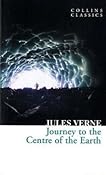
Journey to the Centre of the Earth
         Journey to the Centre 
of the Earth 
by Jules Verne


“While there is life there is hope. I beg to assert…that as long as a man’s heart beats, as long as a man’s flesh quivers, I do not allow that a being gifted with thought and will can allow himself to despair.”
― Jules Verne, Journey to the Centre of the Earth


A decade ago I read Jon Krakauer's exciting travel adventure book Into Thin Air about a disastrous attempt to scale Mt. Everest. The book read like a fictional adventure tale though it was reporting actual events. Jules Verne's classic travel adventure tale reads like a non-fiction account of an actual expedition even though it was the fictional product of Verne's imagination. Journey to the Centre of the Earth was Jules Verne's second book, the first was Five Weeks in a Balloon (and another was being published serially in a magazine).
When Prof. Lidenbrock deciphers an old parchment that describes a secret passage through a volcano to the centre of the earth, nothing will stop him and his nephew Axel from embarking on a perilous, terrifying journey through the subterranean world. Thus begins the adventure that will take them to Iceland and downward through a volcano into the center of the earth itself. Verne uses young Axel as the protagonist and in so doing creates a version of the classic heroic journey. Alex will eventually be separated from the other travelers and face challenges on his own before rejoining them for the conclusion of the journey. Each of Verne's novels are marvels of action, adventure, ideas, science and sometimes the fantastic. In this case the emphasis is primarily on the scientific, but if you suspend your disbelief and join Verne on his more fantastic journeys like From the Earth to the Moon you find enjoyable tales. This novel is not my favorite by Verne -- see Twenty Thousand Leagues Under the Sea for that, but it is as they say, a rollicking good story.


Journey to the Centre of the Earth by Jules Verne.  

Saturday, June 18, 2011


The High City
Cecelia Holland


In Constantinople at the turn of the first millennium, the early years of the reign of Basil II were racked by civil war and his wife's murderous intrigue.  This historical novel from the pen of Cecelia Holland captures that intrigue and the glory of the Byzantine empire.  It is one of many volumes she has written over the years and it is both entertaining and educational for those who enjoy this genre.  Cecelia Holland is an American novelist, born in Nevada, educated at Pennsylvania State University. Most of her novels are based on historical subjects including her first, The Firedrake (1966), which explores past history from the fall of Rome onwards. The Death of Attila (1973) and The Belt of Gold (1984) encompass the Dark Ages; Until the Sun Falls (1969) is set in Mongol Asia; The Earl (1971) and several companion volumes deal with medieval Europe; and Home Ground (1981) is set in the contemporary world, as is Pacific Street (1992). Even her first science fiction tale, Floating Worlds (1976), unfolds an environment which seems to reflect some actual domain.


Cecelia Holland (Cecelia Anastasia Holland) Biography - (1943– ), (Cecelia Anastasia Holland), The Firedrake, The Death of Attila, The Belt of Gold
Book Beginnings on Friday: Never Any End to Paris


This week, as I entered a hiatus between classes at the University, I started a new book, Never Any End to Paris by Enrique Vila-Matas. Here are the first couple of lines:


I went to Key West in Florida this year to enter the annual Ernest Hemingway look-alike contest.  The competition took place at Sloppy Joe's, the writer's favorite bar when he lived in Cayo Hueso, at the southern tip of Florida.  It goes without saying that entering this contest--full of sturdy, middle-age men with full gray beards, all identical to Hemingway, identical right down to the stupidest detail--is a unique experience.


Given the title of the book, which is what intrigued me enough to consider this novel by the author of Bartleby & Co., the opening paragraph suggested a comedy that just might lead back to Paris.  One hopes.

Book Beginnings on Friday is a meme hosted by A Few More Pages.
Anyone can participate; just share the opening sentence of your current read,
making sure that you include the title and author so others know what you're reading.
If you like, share with everyone why you do, or do not, like the sentence.

Friday, June 17, 2011


The Art of Getting By


"Before life gets in the way, start living."


George, a lonely and fatalistic teen who's made it all the way to his senior year without ever having done a real day of work, is befriended by Sally, a popular but complicated girl who recognizes in him a kindred spirit in The Art of Getting By a clever, coming-of-age film that, while imperfect, has a gifted cast that makes it extremely interesting and watchable. It’s a small film from a first time director (Gavin Wiesen), which came out of the Sundance Film Festival under the original title of Homework. The story centers around a high school senior named George (Freddie Highmore of August Rush and Charlie & the Chocolate Factory fame) who is a slacker. He is extremely intelligent, gifted and a talented artist who struggles with his purpose in life and is accomplished in getting out of having to complete his homework assignments.  The strict, but supportive Principal Martinson (Blair Underwood), against the wishes of his teachers, allows him one last chance to  complete all his assignments from the past year or he will be expelled. At home there is trouble, he encounters a new mentor who begins to inspire him and a romantic relationship develops with one of his few close friends, Sally (Emma Roberts). The Art of Getting By ends up being a thoughtful story of a troubled young man coming to grips with his life laced with a hint of romantic comedy. While some of the subplots are wanting, the film succeeds on the strength its star performances and their chemistry together.  I particularly enjoyed the quiet depth and confused mix of seriousness and dazed confusion that Freddie Highmore brought to George. He is fascinating to watch as his character wins the audience over with his dry wit, troubled expressions, and yearning for understanding far deeper than what lies within many high schools’ walls and students’ minds. Every emotion, fear and desire is just floating off him like a series of misguided emotional auras. Across from Highmore is the beautiful Emma Roberts as Sally who is attracted to George, finding him a kindred spirit. Rita Wilson is excellent as George’s mother, full of sorrow and fear and, later, strength. Blair Underwood is a believably understanding high school principal and  Alicia Silverstone makes an extended cameo as Ms. Herman, the English teacher who sees past George’s excuses and attitude. There are others worth watching and the ensemble works together in spite of the sea of troubles that almost sinks the film. 

It slowed a bit about two thirds of the way through but then picked up for an unexpectedly optimistic ending (sorry if that spoils the suspense for anyone).  Highmore and Roberts shine in the lead roles and exhibit infectious chemistry onscreen. Both are instantly likable and engaging. It is difficult not to root for George.  The film is unusually optimistic for one having such gloomy visual style and a cast of despondent characters. I was glad I sought it out as it was not at my favorite neighborhood theater.


Thursday, June 16, 2011

Literate Traveler


Patrick Leigh Fermor

My spirits, already high, steadily rose as  I walked.  I could scarcely believe that I was really there; alone, that is , on the move, advancing into Europe, surrounded by all this emptiness and change, with a thousand wonders waiting." (A Time of Gifts, p 23)


PATRICK LEIGH FERMOR, who died last week at age 96 at his home in England, was one of the great travel writers of the twentieth century.  I knew of him from his two great travel books, A Time of Gifts and Between the Woods and the Water.  But there was more to the man than these books. 
Robert Kaplan, writing in the New York Times, commented that,
"At first glance, Fermor seems a throwback to the age of derring-do imperialists like T. E. Lawrence. But he did not simply glorify king and country; rather,  he combined the traits of a soldier, linguist and humanist, and he appreciated history and culture for their own sake even as he used that wisdom to defend civilization. In today’s world of overly specialized foreign-policy knowledge, in which military men, politicians and academics inhabit disconnected intellectual universes, we need more generalists like Fermor."
This speaks to the larger achievements of the man beyond literature.  Yet, for many, it was through literature that Patrick Leigh Fermor became a friend and beloved author.  The London Telegraph expressed these thoughts in their obituary,
"His most celebrated book told the story of his year-long walk across Europe from Rotterdam to Istanbul in 1934, when he was 18 and the Continent was on the verge of cataclysmic change. His account of his adventures was projected as a trilogy, of which only the first two parts have so far been published, A Time of Gifts in 1977 and Between the Woods and the Water nine years later.
The journey was a cultural awakening for Leigh Fermor that bred in him a love of language and of remote places and set the pattern for his future life."
This is the author that I encountered when reading these two books.  It was his charm and learning that became immediately evident through his ability to sketch a landscape, limn a portrait, and through his way with words bring the past to life.  His encounters with individuals were vivid as he traveled through the heart of Europe, up the Rhine, down the Danube and beyond into the past of a countries that were once part of the most powerful Empire in the west.  In the second volume he delved deeper into the former Hungarian empire and depicted the impressive plains and forests as well as the great Hungarian novelists like Banffy and von Rezzori.  I look forward to reading further in the works of Patrick Leigh Fermor and salute his achievements.


A Time of Gifts by Patrick Leigh Fermor. New York Review Book Classics, 2005 (1977)
Between the Woods and the Water by Patrick Leigh Fermor. New York Review Book Classics, 2005 (1986)

Wednesday, June 15, 2011


A  Poem


SENSATION


Through blue summer nights I will pass along paths, 
Pricked by wheat, trampling short grass:
Dreaming, I will feel coolness underfoot,
Will let breezes bathe my bare head.


Not a word, not a thought:
Boundless love will surge through my soul,
And I will wander far away, a vagabond
in Nature--as happily as with a woman.


Arthur Rimbaud   --  March 1870


Rimbaud Complete, Arthur Rimbaud. Wyatt Mason, trans. 
The Modern Library, New York. 2002.

Tuesday, June 14, 2011

Exhilarating Memoir


Stop-Time: A Memoir 
Stop-Time: A Memoir

"Alone in the bow of the lighter, I breathed the salt air and looked up at the stars.  Going home.  Going home.  Behind me the other passengers moved in the darkness, their voices muted by the wind.  Slowly the boat swung around a jetty and out into the swell of the open sea.  Dead ahead the huge ocean liner spilled light over the black water, its whole long side blazing under the starry sky.  My skin tingled as our ship's horn blasted the air.  Moments later the liner answered with a deep, bone-shaking note--an immense sea-mother calling her lost child."(p 277)


This is a memoir that reads like a novel and undoubtedly contains some fiction scattered among the exhilarating stories of Frank Conroy's youth. Covering the period up to his entrance into Haverford University this memoir creates a world pain and joy and the often awkward encounters of a young boy with real life. I was drawn back into the memoir upon reading a reference to it in David Ulin's wonderful extended essay, The Lost Art of Reading, where Ulin comments on young Conroy's reading habits. After cataloging some of the authors he was reading in the winter of his seventeenth year Conroy writes:
"I read very fast, uncritically, and without retention, seeking only to escape from my own life through the imaginative plunge into another. . . It was around this time that I first thought of becoming a writer."(p 230)
Conroy was not much a student so he probably retained more of his reading than he claims for, after a year in school in Paris, he was accepted into Haverford University. The memoir is filled with flights of imagination that demonstrate the potential author hidden in a young boy whose exploits and adventures are as exciting as most fiction that I have encountered. The memoir succeeds in bringing you, the reader, into that life as a co-conspirator in the adventure.


View all my reviews

Saturday, June 11, 2011

Serio-comic Reflection

English, August: An Indian Story                    
 English, August: 
An Indian Story 
"Agastya? What kind of a name is Agastya?"
"He's a saint of the forest in the Ramayana, very ascetic.  He gives Ram a bow and arrow.  He's there in the Mahabharata, too.  He crosses the Vindyhas and stops them from growing."(p 9)


English, August is fundamentally a comedy, but I would rather call it a serio-comic reflection on a young Indian man of intelligence who exhibits, among other things, an ennui that permeates his actions and choices throughout the novel. It is the story of Agastya Sen, known to his friends by the English name, August, who is a member of the Indian elite, educated at Yale, and recently ensconced in a prize government job. It is a job which takes him to Madna, "the hottest town in India," deep in the rural countryside. Surrounded by an amalgam of neer-do-wells, bureaucrats and characters of various kinds that share only the common characteristic of being both annoying and of no interest to August he wonders what to do? While settling into a self-indulgent life that includes both pot and pleasing himself  incongruously he begins reading a combination of Marcus Aurelius and the Bhagavad Gita.
"In those months he grew to like immensely this wise sad Roman. Marcus immediately made him feel better, because Marcus seemed to have more problems than anyone else--not the soul-squashing problems of being poor, but the exhilarating abstract problems of one immersed wholly in his self."(p 80)
On the recommendation of one of his new acquaintances, who runs his father's hotel, he also begins to read the Gita.
"Thus, through happenstance, Agastaya could place the Bhagavad-Gita beside Marcus Aurelius on his shelf. . . Most passages were abstruse, but Agastaya was surprised by some:"(p 96)


Omnipresent throughout the novel was the ennui of this young man who had no direction in his life and no interest the profession that had been chosen for him by his father, prestige notwithstanding. August, on the contrary, after almost two hundred pages thinks:
"No emotion was sacredly his own, and he half-hoped that his restlessness would thus succumb to attrition. Perhaps his mind would finally realize that its disquietude was merely an index of its immaturity, as inevitable a sign of growing-up as the first emission of semen, as universal as excrement, and about as noteworthy."(p 195)
"At night he would lie awake and hear the clack of his uncle's typewriter and watch the dark shape of the bougainvillea outside the window, and see in its twists and turns a million things, but never his future."(p 197)


Yet this is a comic novel. One that is filled with humorous characters, recognizable to anyone familiar with bureaucracies. The omnipresent heat and fecundity of life demonstrated, to the consternation of August, in mosquitoes and animal feces, presents an unquestionable level of discomfort that is put to use for comic purposes. But the central irony is Agastya himself and that is no better illustrated than by the derivation of his name. His doctor's father shares this near the end of the story:
"Agam is mountain. Agastya could be agam plus asyat, one who pushes a mountain. Or agam plus styayati, one who stops a mountain. We often have this ambiguity, and uncertainty about our names, their origins."
There may also be a suggestion of Sisyphus in all this mountain-pushing business, but perhaps not. What is present is great irony when considering the life of this young dreamer of uncertain origins who is adrift in the heart of India near the start of a life that may merely drift off into the future.


View all my reviews
Literary Blog Hop

Literary Blog Hop:
 June 9-11

The Literary Blog Hop is hosted by The Blue Bookcase! This week's question is:


What other outside influences affect your reading experience? Do you think these influences enhance or detract from the experience?


This seems to me a fairly broad question that, as intended, provokes many different avenues of thought about my reading experience.  One of the most important influences in recent years  since I have been writing about my reading has been the group discussions in which I have participated.  These discussions, which have varied based upon the type of group, have included: formal class settings, informal study groups, and even more casual reading groups.  The influences have included guiding me to particular books and authors, providing a wealth of different perspectives on the texts read and discussed, and spurring my own thoughts regarding other authors and ideas to pursue on my own.  
For example, I recently participated in a class where we read and discussed Vikram Seth's magnificent novel A Suitable Boy and a collection of short stories, Malgudi Days, by R. K. Narayan.  Reading and discussing these books indirectly led me to a comic-satirical Indian novel that I have just finished reading, English, August: An Indian Story by Upamanyu Chatterjee.  I was better able to apprehend and enjoy this book as a result of the class discussion of the Seth and Narayan books:  not to mention that I probably would not have sought out and read the book had I not participated in the class.
The influence of these group discussions upon my reading experience has been both positive through providing discipline to read more and different books than I may have on my own, but also negative as I seldom have sufficient time to read books for my own leisure and enjoyment apart from the groups.  Overall the benefits have far outweighed the disadvantages and the influences have been well worth the time I have invested in these discussions.


To set your wisdom (holding not a doubt of it, Although in truth there's neither bone nor skin to it) At work upon a book, and so read out of it The qualities that you have first read into it.”
- Ambrose Bierce, The Devil's Dictionary

Friday, June 10, 2011

Travesties
  Travesties


Travesties is not really a play at all but an intellectual vaudeville, frothier and more stuffed with factual arcana and philosophical inquiry than even Stoppard's Jumpers, to which it bears a certain stylistic resemblance. Its strength is not in its narrative (there isn't much) or characters (they're conceits), but in Mr. Stoppard's literate gags and glittering cerebral syntax, which finds or creates correspondences in the most hilarious places.


Stoppard's comedy is rooted in history here, although the roots don't go too deep. While World War I raged across Europe, a remarkable collection of uninterested or conscientiously objecting figures assembled in Zurich, in the still center of the storm: a brooding Russian named Lenin; the Romanian-born poet Tristan Tzara, who was fomenting revolution of a different kind, doodling up the texts that would define (rather vaguely) the Dada movement in art; and James Joyce, embarking on a magnum opus that would shake the literary world to its foundations, Ulysses.


Mr. Stoppard's imagination was arrested by this odd footnote in European history, and in "Travesties" he created a mad tea party with all three in attendance, presided over, in memory, by Carr, a minor consular official who lived in Zurich during the same period. Carr came to know Joyce when the Irish writer founded a theatrical troupe that staged a single performance of Oscar Wilde's Importance of Being Earnest, with Carr as Algernon Moncrieff.


This last, curious occurrence provides the narrative glue that holds together - just - a freewheeling romp through an encyclopedia's worth of artistic and intellectual concepts. Stoppard exploits this historical fact in large and small ways, making his entire play a parody of the plot and style of Wilde’s Earnest, and making a running joke out of one odd moment in the Carr-Joyce relationship. Unhappy with his recompense for playing Algernon, Carr apparently sued The English Players for the cost of the trousers he had purchased as part of his costume. Joyce then countersued Carr for the price of the complimentary tickets he had been given. When the dispute went to trial, the judge rendered a split decision; when Stoppard worked the moment into Travesties, by way of a frustrating dream Carr has, Joyce win hands down:
"…I dreamed about him, dreamed I had him in the witness box, a masterly cross-examination, case practically won, admitted it all, the whole thing, the trousers, everything, and I flung at him — “And what did you do in the Great War?” “I wrote Ulysses,” he said. “What did you do?”
Bloody nerve."
Turning Wilde's subversive style on these proud subversives, to often hilarious effect, Mr. Stoppard allows his characters to intersect with actual or approximated scenes from Wilde's peerless comedy of manners. In the second act, for example, Lenin gives an inspirational oration to the masses that concludes with a swipe from Lady Bracknell: "To lose one revolution is unfortunate. To lose two would look like carelessness!"


View all my reviews

Tuesday, June 07, 2011

Leonard, Virginia and Friend


Mitz The Marmoset of Bloomsbury 


"At that time I had a marmoset called Mitz which accompanied me almost everywhere, sitting on my shoulder or inside my waistcoat."
- Leonard Woolf, Downhill All the Way

First, let me say that I agree with Vita Sackville-West's assessment of Virginia Woolf's Three Guineas as a book filled with "misleading arguments".

Now that I have made that clear, I can add that I enjoyed this delightful short romp through the lives of Virginia and her husband Leonard Woolf and, of course, Mitz, the marmoset that adopted them and became a member of their family for a short while. Sigrid Nunez captures the flavor of Bloomsbury in this novella while providing details about the lives of its inhabitants that I would presume are as new to many readers as they were to me. 
 While I have read fine and lengthy biographies of Lytton Strachey and Lord Keynes I am not enough of a Bloomsbury aficionado to find this book anything but entertaining in the tidbits about the health and sickness, and the quotidian details of the everyday lives of this trio. The inclusion of the interaction of the Bells, Sackville-West and others in their circle added to the veridical character of the story.
Outside of warm, fuzzy, purring cats I am not an animal-lover (and even cats make me sneeze after too much of them up close), but I could still understand the relationship Leonard and Virginia developed with their marmoset friend. Nunez has written a small masterpiece built upon the sort of humaneness that can only be seen when reflected in the eyes of a small mammal with big heart.


View all my reviews