Thursday, March 19, 2026

Clinic for the Past

Time Shelter

Time Shelter 

by Georgi Gospodinov


Time Shelter introduces Gospodinov to American readers as a key figure in international literature.


Georgi Gospodinov's Time Shelter is a conceptually bold and satirical novel about the allure and danger of nostalgia. The winner of the 2023 International Booker Prize, the book follows an unnamed narrator and a mysterious figure named Gaustine, who opens a "clinic for the past." Initially designed to treat Alzheimer's patients by meticulously recreating specific decades of their youth, the clinics have grown in popularity to the point where healthy people are seeking refuge there, sparking a pan-European movement in which entire nations vote to live in a preferred decade of history.

The novel has a complex, fragmented, and philosophical structure. The author has a distinct voice and "Borgesian strangeness," and it is precisely the type of novel of ideas that I enjoy. Its reflections on memory and the "weaponization of nostalgia" are also intriguing. The second half, which details various European countries' previous referendums, can be "meandering," "diffuse," or "a bit of a slog."

While it is deeply compassionate, some of the "nebulous" characters and metafictional elements made me question the story. It took me a while to get into this book, but once I understood the structure, I was engrossed... [the book leaves] you wondering what is 'safer' for a person—a familiar past with its trauma, or an unfamiliar present."

Time Shelter is both thought-provoking and entertaining. While the novel stretches itself a little thin, the end result is one of the best books I've read this year.


View all my reviews

Wednesday, March 18, 2026

Being Created

At Night All Blood Is Black

At Night All Blood Is Black

by David Diop


“Until a man is dead, he is not yet done being created.”
― David Diop, At Night All Blood is Black


The story is about a Senegalese soldier named Alfa Ndiaye who is fighting for France. After Mademba, his "more-than-brother," is mortally wounded and Alfa can't kill him out of mercy, he goes into a ritualistic madness. Every night, Alfa sneaks into enemy lines, kills a German soldier, and comes back with their hand. At first, his friends praised him for being "brave," but as he collected more and more hands, they started to see him as a "soul-eater" or sorcerer.

The book looks at "temporary madness" as a way to stay alive and how the line between a hero and a monster is often drawn by who is doing the killing. Diop shows how French leaders used stereotypes of "African savagery" to scare their enemies, colonizing not only their bodies but also their minds. The unbearable guilt of watching Mademba die slowly and painfully is what drives Alfa's journey. The writing seems to put you in a trance and is almost like an oral history or a dark poem. Anna Moschovakis's English translation is great because it captures the rhythm of Alfa's thoughts, which are imagined in Wolof even though they are written in French.
The last few chapters seem to be very unclear and symbolic. This was a hard book to read at times, but it was worth it.

View all my reviews

Monday, March 16, 2026

Voices of a Guilty Past

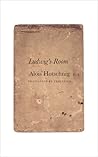
Ludwig's Room (The Seagull Library of German Literature)

Ludwig's Room 


"What we've become is horrifying and what we will become is disastrous. We're destroyed from the beginning," - Alois Hotschnig


This was a chilling and masterful exploration of collective guilt and the haunting nature of the past. It is an atmospheric, deeply psychological work that reveals the complexities of a community's involvement in wartime atrocities.

The plot revolves around Kurt Weber, who inherits his great-uncle's lakeside villa in Carinthia, Austria.
Kurt was forbidden as a child from entering "Ludwig's room," where his uncle Georg would spend nights pacing and shuffling papers.
Kurt discovers a hidden cache of letters, photographs, and documents following Georg's death, revealing his family's involvement with a nearby Nazi prison camp. Kurt recognizes that the entire community is bound by a "widely understood agreement" to keep silent about their shared history of betrayal and cowardice. The plot is similar to a "haunted house" story, with the ghosts representing the living and dead voices of a guilty past.

The author's prose is intense, aphoristic, and "superfluous-free." The book could be interpreted as a literary riddle. Tess Lewis' English translation captures the story's "wit and sheer power of description," as well as the nuanced concept of Heimat.
Due to its bleak subject matter, the book can be "dense and opaque" or "difficult to read," but the emotional payoff at the end makes it worthwhile.

View all my reviews

Sunday, March 15, 2026

Bernhard Short Stories

Goethe Dies

Goethe Dies 


"I went inside myself, so to speak, and not outside myself anymore." - Thomas Bernhard


Thomas Bernhard's Goethe Dies is a collection of four short stories that serve as a concise introduction to the Austrian master's signature style: bleakly comic, inspiringly rancorous, and obsessively musical. The volume captures Bernhard's "philosophy of doubt" through satirical narratives about Europe's intellectual giants and cultural myths.
The four stories include "Goethe Dies": Written for the 150th anniversary of Goethe's death, this title story portrays a dying, solipsistic Goethe who obsesses over his legacy and demands an impossible meeting with the philosopher Ludwig Wittgenstein (who was not yet born): "Montaigne: A Story." Follows a young man who seals himself in a tower to read the works of Montaigne, exploring the impulse to escape into intellectual isolation; "Reunion": A satire of the very escape depicted in the previous story. It concludes with "Going up in Flames": a travelogue where Bernhard portrays himself as a victim of his greatest enemy—Austria—unleashing a vision of total destruction in just eight pages.


View all my reviews

Friday, March 13, 2026

London Novel

Under the Net

Under the Net 


“I took a deep breath, however, and followed my rule of never speaking frankly to women in moments of emotion. No good ever comes of this.”
― Iris Murdoch, Under the Net


Iris Murdoch's first novel, Under the Net, is full of wonderful characters, including writers, eccentrics, and a glamorous actress, but the character that stands out the most is London itself. The novel has a picaresque structure, with a series of episodes narrated in the first person by James Donaghue, aka Jake. Furthermore, London becomes the primary setting for the main character's adventures (particularly Holborn and the financial districts), with brief but significant scenes set in another great and enigmatic city, Paris.

London appears in numerous other ways, including philosophically. She wrote, "Some parts of London are necessary, while others are contingent." Murdoch, on the other hand, incorporates all of London into her novel, which revolves around her writer-hero, Jake Donaghue. Raymond Queneau was the recipient of the dedication. When Jake leaves Madge's flat in Chapter 1, he mentions taking two books: Murphy by Samuel Beckett and Pierrot mon Ami by Queneau, both of which appear in this story. Hugo Belfounder, another character, is based primarily on Wittgenstein's student Yorick Smythies. It appears that literary references abound, as in this example.
"...I like the women in James and Conrad's novels who are peculiarly flower-like and described as 'guileless, profound, confident, and trustful. That 'profound' is good: fluttering white hands, deep as the sea..." (p 28)

The novel's epigraph, taken from John Dryden's Secular Masque, describes how the main character's misunderstandings propel him from one location to another. Angus Wilson described it as "wine, women, and Wittgenstein." Overall, the novel is an exciting start to what will be a successful writing career.

View all my reviews

A Son's Story

If You Kept a Record of Sins

If You Kept a Record of Sins 


"I think it happened to you, too, the first time you arrived." - Andrea Bajani


This novel impressed me with its unusual narrative style as well as its moments of great beauty and strength. Many scenes, particularly those in Bucharest and the Palace, were breathtaking. The story of young Lorenzo and his mother's abandonment was difficult to follow at first, but as the narrative progressed, clarity became apparent.
Bajani simply tells his story, seemingly without regard for effect—but this is the essence of art. The book is full of details, but they are the kinds of details you notice when your mind is distracted and your spirit is nearly broken. The grief is all the more intense because it is so rarely observed. As the story progressed, the characters became increasingly clear.
After rereading the novel, it became even more moving and satisfying to this reader.

View all my reviews

Tuesday, March 03, 2026

Nuclear Age

The Fate of the Earth & The Abolition (Stanford Nuclear Age Series)

The Fate of the Earth & The Abolition 


“It was not unless one lifted one's gaze from all the allegedly normal events occurring before one's eyes and looked at the executioner's sword hanging over everyone's head that the normality was revealed as a sort of mass insanity. . . Passengers on a ship who are . . . engaging in all the usual shipboard activities appear perfectly normal as long as their ship is sailing safely in quiet seas, but . . . deranged if in full view of them all their ship is caught in a vortex that may shortly drag it and them to destruction.”
― Jonathan Schell, The Fate of the Earth


This book examines the "unthinkable" consequences of nuclear war, contending that it poses a fundamentally different threat than conventional warfare. In A Republic of Insects and Grass, Schell describes the complete collapse of the ecosystem, claiming that only "lower orders" such as insects would survive a full-scale exchange. The Second Death is a metaphysical investigation into extinction. Schell contends that nuclear war kills twice: once by annihilating the living and once by "canceling" all subsequent generations. In The Choice, he identifies the nation-state system and the concept of national sovereignty as the primary causes of the threat, contending that humanity must choose between sovereignty and survival.

In response to critics who deemed The Fate of the Earth overly idealistic, Schell proposed more concrete paths to disarmament. Schell proposes that even after all warheads are physically destroyed, "deterrence" will remain because the knowledge of how to build them exists. He believes that this technological know-how serves as a permanent, non-lethal deterrent, allowing nations to maintain security without the immediate threat of a global catastrophe. He advocates for a strict international system to deter "cheaters," effectively decoupling disarmament from the urgent need for a global government.

Overall, this is an outstanding commentary on the growth and development of the "Nuclear Age," complete with analyses that raise concerns about the "fate of the earth." One wonders about the conclusions reached, but the reader is unwilling to dismiss the gravity of the issues raised in this
weighty tome.


View all my reviews

Monday, March 02, 2026

Intense Abundance

Heat and Dust

Heat and Dust 


“Shortly before the monsoon, the heat becomes very intense. It is said that the more intense it becomes, the more abundantly it will draw down the rains, so one wants it to be as hot as can be. And by that time one has accepted it -- not got used to but accepted; and moreover, too worn-out to fight against it, one submits to it and endures.”
― Ruth Prawer Jhabvala, Heat and Dust 


Ruth Prawer Jhabvala's Heat and Dust, a brief but powerful book, won the 1975 Booker Prize. The main story follows a young woman from England who travels to India to learn more about her past.
The story revolves around two women from different eras and their adventures in India. Olivia Rivers, a young lady from London, traveled to British colonial India with her husband Douglas. While Douglas works at his office, Olivia is left alone in their bungalow during the long Indian hours. However, the story's narrator is the other lady in the novel who recognizes Olivia as her grandfather Douglas' first wife. The narrator's name is never mentioned in the novel. The narrator has traveled to India in order to learn more about Olivia. Heat and Dust is both Olivia's story and a record of the narrator's first impressions of India. 'India always changes people, and I have been no exception,' says the narrator at the start of the story. One of the novel's most impressive features is the way the heat and dust are depicted—you can almost feel it. The hot, dusty countryside of Satipur transforms the beautiful and adoring Olivia into the harem lady of a corrupt and wasted Nawab. Two generations after Olivia, the narrator readily absorbs the various "characteristic odors of India," such as spices, urine, and betel.
Whether or not the novel accurately portrays Indian reality, it is effective in its story of love and becoming a part of India.

View all my reviews

Sunday, March 01, 2026

Mystery, Bach & Aristotle

Personae

Personae 


"Creation is often a nebulous process, not susceptible to easy categorization, at the end of which a prototypical single creator emerges." - Sergio De La Plava


For the simple reason that De La Pava isn't attempting to write a simple book, Personae isn't the easiest to read. For instance, it is assumed that the reader will understand how Aristotle's energeia relates to the paired narratives that conclude the book. The reference to Bach helps; however, the play in the middle of the book, which has the same title as the book, is the elephant in the room ("The writer displayed zero reticence about using others' titles, as will be apparent to the discerning reader upon further development"). I find it difficult to decide how to handle this, but it is intriguing, and that is something I welcome in a novel


View all my reviews