Tuesday, December 23, 2025

Riveting Debut

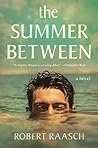
The Summer Between

The Summer Between 


"I worked a palmful of mousse through my hair, and clicked each pearly shirt snap closed save the top two. I stepped before the full-length mirror and didn't hate the person I saw." - Robert Raasch, The Summer Between. 


The protagonist of this tale about coming to terms with one's sexual orientation is a teenager who just finished high school and is planning to attend college. The story illustrates the feelings, perplexity, anguish, and happiness of a young man discovering his sexuality and identity in that group. Despite some of the narrative's rough edges, I still found the book to be enjoyable enough to finish. Although the teen's sensibilities were occasionally unclear and the circumstances he encountered appeared somewhat manufactured, the narrative ultimately came together in a satisfying manner.

View all my reviews

Sunday, December 21, 2025

Annual Top Ten Reads


 Annual Top Ten Favorites


Since January 1, 2025, these books have been my favorite reads, and sometimes rereads.  They span a wide range of reading genres, from nonfiction to fiction, from lengthy to short works, and from the classics to modern literary fiction. I would recommend them to one and all.

The list is in no particular order, but if I had to pick my favorite of the year, it would be Orlando by Virginia Woolf.


Under Western Eyes by Joseph Conrad


And There Was Light by Jon Meacham


Knife by Salman Rushdie


Too Loud a Solitude by Bohumil Hrabal 


Orlando by Virginia Woolf 


Praise of Folly by Erasmus


The Immense Journey by Loren Eiseley 


Arturo's Island by Elsa Morante


2001: A Space Odyssey by Arthur C. Clarke


 Playground by Richard Powers

Shadows of Clouds

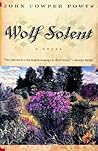
Wolf Solent

Wolf Solent 

by John Cowper Powys


"The world is not made of bread and honey…nor of the sweet flesh of girls. This world is made of clouds and of the shadows of clouds. It is made of mental landscapes, porous as air, where men and women are as trees walking, and as reeds shaken by the wind.”
― John Cowper Powys, Wolf Solent


In 1929, Powys, then 57 years old and still earning a living from his traveling lecture show, published Wolf Solent. It was his first work as a mature novelist, an intensely poetic character study of the kind that would become his specialty, and it was brutally analytical. The conflict between brothers, the hypnotic eroticism of girls, the depraved elders, and the remnants of innocence are all typical components of his unique psychodrama. Wolf Solent is not a sentimental pastoral. Powys, who extolled the virtues of nature, never hesitated to expose its horrors. Violent implications abound in his work. He considered it a mistake to ignore what he referred to as "the necessity of opposition," in a somewhat Zen way: Good and Evil; Male and Female; Life and Death; Appearance and Reality. He claims that all of these

"All solid entities have to dissolve, if they are to outlast their momentary appearance, into atmosphere, while they must be joined together, forced into one another, and proven dependent upon each other."

Similar to Hardy's Return of the Native, the novel appears to be a fairly simple tale of a native son's return. After having a mental breakdown in London, Wolf, the title character and incredibly sensitive person, returns to his hometown on the South Coast of England. However, he completely loses his innocence at home rather than regaining it. He is traveling to a supposedly peaceful writing assignment for the local squire in order to get away from the city's intensity, comprehend his past, and in some way defend his deeply wounded mother. Nothing goes according to plan. He gets caught up in a number of romantic and professional affairs and learns terrible things about some former neighbors and friends. In his mind, a struggle rages between his mother's anxiety and his father's joy of life. He starts to feel sympathy for his father's mistress and develops feelings for his half-sister. He came for a job that was completely different from what he had anticipated. Actually, there's nothing in this town that relieves the intensity.

Ultimately, he returns to the anonymity of London, disillusioned. The novel can be summed up as "You can't go home again," but Powys finds this to be far too brief. It is what permeates every aspect of this book, from the living hero to every grass blade, housefly, and surrounding environment. He plays out every interpretation of his life on numerous reflective walks through the English countryside in an attempt to make sense of it. His respect and care for the natural world are admirable, though they can be challenging at times. Powys stayed where others might go because he detested most aspects of modern life, including capitalism and technology. This is central to the narrative and every one of Powys's books.

At one point, the critic George Steiner asserted that Powys was the only English author of the twentieth century who was comparable to Tolstoy and Dostoevsky. The renowned English novelist Margaret Drabble feels that "we need to pay attention to this man." She describes the fantasy setting of his books as "densely populated, thickly forested, mountainous, erudite, and strangely self-sufficient." Although this country receives fewer visitors than Tolkien's, it is just as fascinating and has more air.

View all my reviews

Wednesday, December 10, 2025

Ethics of the End

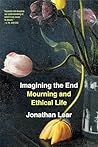
Imagining the End: Mourning and Ethical Life

Imagining the End: Mourning and Ethical Life 


Imagining the End: Mourning and the Ethical Life by Jonathan Lear is a profound philosophical and psychoanalytic meditation on how to find purpose and thrive during a period of pervasive worry about personal and societal loss. Lear examines the idea of "the end" in two senses: telos (the goal, purpose, or good of life) and termination (such as a planetary catastrophe or cultural collapse), drawing on his training as a philosopher and psychoanalyst. He contends that our confusion in the face of the former is closely linked to our inability to understand or agree upon the latter.

Lear's main contention is that, when properly understood and practiced, mourning is an ethical, creative, and active act that can create meaning and support our well-being rather than just a passive response to loss. By supporting a type of mourning that acknowledges the anguish of loss but transforms it into a capacity for hope and forward-looking renewal, he sets this apart from melancholia, which Freud defined as a pathological reaction where the lost object is incorporated into the ego.

In order to create a position from which the psyche can look outward and thrive, this "creative mourning" entails investigating dashed hopes, abandoned endeavors, and broken attachments. Expanding upon his previous book, Radical Hope: Ethics in the Face of Cultural Devastation, Lear explores the fragility of the institutions and cultures that provide us with comfort. He investigates how we might live when we acknowledge the frailty of the conventional framework of meaning.

Lear links the qualities of thankfulness and hope to a healthy grieving process. Gratitude is presented as a basic "attunement" to the world, emphasizing the benefits gained from what is now lost, rather than merely as an emotion. Moral exemplars, drawn from sources like Homer's Priam and personal history, serve as models for how to embody virtues and navigate life's inevitable setbacks, offering a kind of practical instruction in ethical living.
Lear suggests that the humanities serve as a special form of mourning. They conserve our best accounts of what it is to be human—what he terms the kalon (the fine, noble, or beautiful)—by preserving and presenting images of the past as models for creative "repetition" and ethical action in the present.

In essence, Imagining the End challenges readers to confront loss—personal, cultural, and even planetary—not with despair or melancholia, but by transforming the work of mourning into a powerful and ethical process of meaning-making that sustains the good life.


View all my reviews

Monday, December 08, 2025

Playfulness

Playground

Playground 


"Evie liked Captain Cousteau--his playfulness, his singsong voice, his tobacco scent." - Richard Powers, Playground.


Four characters—Evie Beaulieu, a trailblazing oceanographer; Ina Aroita, a French Polynesian artist; Rafi Young, a scholar of literature; and Todd Keane, a tech entrepreneur who creates the wildly popular, gamified social media platform also known as "Playground"—are interwoven in Playground. The story comes together on the isolated island of Makatea, where locals are voting on a contentious "seasteading" project put forth by Todd's group. Makatea is still healing from the effects of colonial phosphate mining.

The book examines the benefits and drawbacks of social media and artificial intelligence, raising concerns about who gains from technological development and its unforeseen effects on interpersonal relationships and society.
The vulnerability of ocean ecosystems and the effects of human exploitation and climate change are major topics of discussion. Powers presents the ocean as a "playground" that humans are in danger of destroying, both literally and figuratively.
The book explores betrayal, ambition, complicated relationships, and forgiveness. The "infinite game" of life and planetary stewardship is contrasted with human "finite games" that are centered around winning.
Through literature, art, science, and technology, the characters represent various perspectives on the world, encouraging contemplation of whether wisdom and knowledge can coexist to secure a better future.