Showing posts with label Art. Show all posts

Saturday, May 16, 2026

Art and Morals

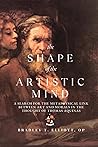
The Shape of the Artistic Mind: A Search for the Metaphysical Link Between Art and Morals in the Thought of Thomas Aquinas

The Shape of the Artistic Mind: 

 A Search for the Metaphysical Link Between Art and Morals in the Thought of Thomas Aquinas 


by Bradley T. Elliott OP


Is the ethical life an art form? Are the arts a form of virtue? This book explores how Thomas Aquinas responds to these questions by situating classical depictions of art and virtue within a rich account of God as creator. Helpful resources are provided for readers who want to further appreciate the role of the arts in the moral life.

View all my reviews

Wednesday, April 07, 2021

The Divine Force in Painting


On Painting


 "Painting contains a divine force which not only makes absent men present, as friendship is said to do, but moreover makes the dead seem almost alive. Even after many centuries they are recognized with great pleasure and with great admiration for the painter. Plutarch says that Cassander, one of the captains of Alexander, trembled through all his body because he saw a portrait of his King.  Agesilaos, the Lacedaimonian, never permitted anyone to paint him or to represent him in sculpture; his own form so displeased him that he avoided being known by those who would come after him. Thus the face of a man who is already dead certainly lives a long life through painting. Some think that painting shaped the gods who were adored by the nations. It certainly was their greatest gift to mortals, for painting is most useful to that piety which joins us to the gods and keeps our souls full of religion. They say that Phidias made in Aulis a god Jove so beautiful that it considerably strengthened the religion then current."

On Painting by Leon Battista Alberti, trans. by John R. Spencer. Yale University Press, 1966 (1436). p. 63.

Thursday, May 09, 2019

Modern "Art"

The Painted Word 

The Painted Word


“All of them, artists and theorists, were talking as if their conscious aim was to create a totally immediate art, lucid, stripped of all the dreadful baggage of history, an art fully revealed, honest, as honest as the flat-out integral picture plane.”   ― Tom Wolfe, The Painted Word


If you abjure the chic and dream of a realist approach to art this may be your book. Written by novelist and essayist Tom Wolfe, this is an extended essay on the current state of art (circa 1975).  In it he extends his social critique into the world of art with not surprising results. Those results are both witty and amusing. More importantly they are thought-provoking while raising the skeptical bar for art criticism. 


Modern art has morphed into postmodernism and beyond since this book was written, but his commentary has not lost its bite.  Moreover, there may be good modern art, but there certainly is a lot of bad modern art to sort through before you find it. This short introduction is one good place to find out where and how to look for it.


Friday, August 29, 2014

The Story of a Great Artist

My Name Is Asher LevMy Name Is Asher Lev 
by Chaim Potok


“You can do anything you want to do. What is rare is this actual wanting to do a specific thing: wanting it so much that you are practically blind to all other things, that nothing else will satisfy you,.”   ― Chaim Potok, My Name Is Asher Lev


What is the source of artistic genius in an individual? Is it a mystery -- of art, the artist, the genius that cannot be taught? This novel is the story of one such individual, Asher Lev, who is one such man. Born with a prodigious artistic ability into a Hasidic Jewish family, Asher is drawn to art from a very early age in a way that mystifies his parents and his community. It is only later after he has been studying for some time with another great artist, Jacob Kahn, that he hears these words from his teacher: "Asher Lev, an artist is a person first. He is an individual. If there is no person there is no artist." (p 257)

Asher's story is one of how he becomes an individual person who is also a great artist. He tells his story in the first person emphasizing on the first page that he is an observant Jew. Yet at the same time confirming that observant Jews are not artists and do not paint at all. The tension between the importance of his cultural traditions and his personal individuality as an artist are present in this beginning and this tension is a presence in his relationships, his development, and even his dreams.
The setting is the 1950s in the time of Joseph Stalin and the persecution of Jews in the Soviet Union. During Asher's childhood, his budding artistic inclination brings him into conflict with the members of his Jewish community, which values things primarily as they relate to faith and considers art unrelated to religious expression to be at best a waste of time and possibly a sacrilege. Most importantly it brings him into strong conflict with his father, a man who has devoted his life to serving their leader, the Rebbe, by traveling around the world bringing the teachings and practice of their sect to other Jews, and who is by nature incapable of understanding or appreciating art.

Asher's mother is firmly in the midst of this conflict. She has experienced her own trauma from the death of her brother, who was killed while traveling for the Rebbe; she suffers anxiety for her husband's safety during his almost constant traveling. It doesn't just affect her, but it affects her whole family and community. After her anxiety had passed, she decided she wanted to continue her brother’s work.

The Rebbe asks Asher’s father to travel to Vienna, since it would make his work easier. Asher becomes very upset about this and complains that he doesn't want to go to Vienna. His mother decides to stay in Brooklyn with Asher, while his father goes to Vienna. While Asher’s father is away, Asher draws more than ever; "I drew endlessly all those weeks after my father's departure. I drew while I walked; I drew while I ate; I drew while I sat in class; I drew in Yudel Krinsky's store; I drew in the museum." (p 161) His mother brings him a gift of a wooden box oil painting supplies along with an easel and some canvases that December. His first oil painting is of his mother. The conflict with his father continues, however, and it is only through the wisdom of the Rebbe that Asher is allowed to continue and to study with Jacob Kahn, the artist who recognizes in Asher Lev a genius that is even greater than his own. They meet with an exchange of drawings and a recognition that Asher has no choice but to become an artist, and Jacob to become his teacher.

Asher begins to learn by doing, by drawing and painting, by viewing the masters and copying them. His teacher shows him the way by challenging him, but cannot make him an artist. Jacob tells his friend Anna Schaeffer, an art dealer, that Asher's development will take time. "It will be five years. Millions of people can draw. Art is whether or not there is a scream in him wanting to get out in a special way." (p 212) Yet the tension with his tradition remained for Asher. But Jacob would say "As an artist you are responsible to no one and to nothing, except to yourself and to the truth as you see it. Anything else is what the Communists in Russia call art. I will teach you responsibility to art. Let your Landover Hasidim teach you responsibility to Jews." (p 218)
Asher begins to go to art museums where he studies paintings. He becomes very interested in the paintings, especially the ones of the crucifixions. He starts copying the paintings of the crucifixions and nudes, but this would only get him into trouble. Asher’s father returned home one night after a long trip to Russia for the Rebbe. He then sees Asher’s paintings of the crucifix and nudes and is furious. Asher’s father thinks that his gift is foolish and from the Sitra Achra, or Other Side. Asher’s mother doesn't know whether to support her son or her husband. She is torn between the two of them.
Asher continues to paint and to expand his artistic abilities culminating in several shows and subsequent travel to Europe to study further. He gradually enters a new religion. It is a religion called painting, but never before had a religious Jew been a great painter. 

“I looked at my right hand, the hand with which I painted. There was power in that hand. Power to create and destroy. Power to bring pleasure and pain. Power to amuse and horrify. There was in that hand the demonic and the divine at one and the same time. The demonic and the divine were two aspects of the same force. Creation was demonic and divine. Creativity was demonic and divine. I was demonic and divine.”

 He paints and he studies and he broods about his differences with his father. He does not understand even as Jacob tells him "Do not try to understand. Become a great artist." (p278)  Asher's ultimate mastery of his art and his greatest triumph will further test him and demand that he make a choice between his family and his art.

Written in a simple, lucid style, this novel of artistic and personal growth has a power that is difficult to describe. Anyone who has had a passion for living a certain life that may be different than that of your parents or community must be moved by Asher's story. He relates the struggle of individuals everywhere, both those of genius and the rest of us, as we make our own way creating a unique place in the world.


View all my reviews

Thursday, March 06, 2014

Sculptor, Artist and Genius

Michelangelo: The Artist, the Man and his TimesMichelangelo: The Artist, the Man and his Times 
by William E. Wallace


“The greatest artist does not have any concept
Which a single piece of marble does not itself contain
Within its excess, though only
A hand that obeys the intellect can discover it.”
― Michelangelo, I Sonetti Di Michelangelo: The 78 Sonnets of Michelangelo with Verse Translation


Oscar Wilde once said, "I think a man should invent his own myth." One man for whom it could be said that he did this, at least indirectly through his contributions, is Michelangelo. He was born on March 6, 1475, in Caprese, Italy to a family of moderate means in the banking business. He became an apprentice to a painter before studying in the sculpture gardens of the powerful Medici family. What followed was a remarkable career as an artist in the Italian Renaissance, recognized in his own time for his artistic virtuosity. It was a career of "an aristocrat who made art" according to his biographer William Wallace. Wallace's biography is compact at less than four hundred pages but it provides a generous amount of detail and interesting theories about the nature and importance of Michelangelo's life. Wallace studied biographies of other artists in his preparation for this work including those written by Richard Ellman, David Cairns, and Maynard Solomon. I think this helped him shape a worthy life of Michelangelo.

That Michelangelo was an artist worthy of note is a notion that began in his own lifetime as his contemporaries were writing about his life when he was in his early fifties. He was the only living artist to be included in Giorgio Vasari's famous Lives of the Most Excellent Painters, Sculptors and Architects in 1550. Although this was an honor, perceived inaccuracies in Vasari's text led Michelangelo to ask his pupil and amanuensis, Ascanio Condivi, to write his biography. This Life of Michelangelo appeared three years later and emphasized, among other things, Michelangelo's noble origins. Thus the potential myth-making began. Wallace relies on many original documents including the letters of Michelangelo, of which there were more than a thousand, his records, and his family correspondence. I was interested in the attention paid to his poetry as I have long been fond of his sonnets. Not unexpectedly, however, the documentation for his life is uneven with gaps that make some of his life, especially the earlier years, more difficult to portray.

I appreciated the biographer's attention to the culture of the Renaissance and Michelangelo's place in it. The cultural history of society was presented with a focus on his times in Rome and Florence during progressive artistic periods of his life. The story of the artist reminded me of the story of other artists as Michelangelo was like many others who had difficulty persuading their father that the career of an artist was better than a prestigious profession and an advantageous marriage. Yet, even while Michelangelo insisted on an artistic career he still sometimes harbored misgivings and had doubts; nonetheless forging ahead in a direction that he thought would "resuscitate" his family name. Even more important to him, and this was an aspect of the life of painters and sculptors of his day, was his insistence that he was truly an artist; not a mere artisan running a workshop.

With works that include the "David" and "Pieta" statues and the ceiling paintings of Rome's Sistine Chapel, including the "Last Judgment" we look at him today as one of the greatest sculptors and painters of all time--a true genius. While Michelangelo lived most of his life in Rome, where he died in 1564 at age 88, he always considered himself a Florentine. He also was a generous family man who created great works of art for patrons that were more often than not his friends.

View all my reviews

Sunday, November 10, 2013

A Venetian Phoenix

The City of Falling AngelsThe City of Falling Angels 
by John Berendt


"…it occasionally felt like walking through a funhouse, especially at times when, twenty minutes after having set out on a course that I had thought was a straight line, I discovered I was right back where I started." - John Berendt


The myth of the Phoenix is famous as a metaphor of rebirth and regeneration. In Venice the opera house La Fenice is appropriately named as it as risen from the ashes more than once over its life of more than two centuries. Most recently it suffered a severe fire in 1996. John Berendt arrived three days after the fire. Intrigued by the rumors circulating among the Venetians as to the source and cause of the conflagration, he decided to stay for a while so he could listen to the stories and, experience the city without its usual herds of tourists. For several years thereafter, he followed the investigation. Was the fire arson, or negligence, or maybe an act of God? Or could there possibly be a more sinister explanation, one involving mafia ties?
It was this event that served as the catalyst for John Berendt's curious book about Venice, The City of Falling Angels. I call it curious because it is not easily categorized as a particular genre. It is certainly non-fiction, but within that broad category it has attributes of a detective story--about the fire that destroyed all but the facade of the opera house; but it also includes aspects of several varieties of history. In addition to the fascinating story of the arson that ultimately led to the convictions of two electricians there are also historical narratives about the specific literary, artistic, architectural, and political events in the history of Venice.
The result is a fascinating book for anyone interested in arcana about Venice or about some of the characters whose stories have become part of the Venice mythos. Both Henry James and Ezra Pound figure importantly in this regard. There are other stories of American ex-patriots like the fabulously wealth Curtis family, and several Venetian clans that are connected with the Fenice.
The stories can be spicy whether they are about the feud over the Ezra Pound papers or the boardroom battle over control of the Save Venice foundation. The battle over who will win the contract to restore the Fenice is yet another episode that combines architectural detail with Italian corporate politics. Ultimately La Fenice was rebuilt in 19th-century style on the basis of a design by architect Aldo Rossi.
The result of these stories is a book that is exceptionally interesting to read even though Venice the magnificent city sometimes fades into the background. Reading about the city that has been slowly sinking into the sea for centuries is ultimately an uplifting experience.

View all my reviews

Sunday, May 06, 2012

Surrealism: questions of self and sexuality


Entre Nous: The Art of Claude Cahun


 On a Friday in April past I visited the Art Institute of Chicago. While browsing through the corridors trying to escape some of the construction and its concomitant plaster dust I happened upon this exhibit ("Entre Nous: The Art of Claude Cahun", on view at the museum from February 25th through June 3rd), an unexpected treat and tremendously exciting learning experience -- expanding my knowledge of the world of Surrealist art. Entre Nous introduced me to the life and art of Claude Cahun:

 Born Lucy Renee Mathilde Schwob to a family of French intellectuals and writers in Nantes, Claude Cahun (who adopted the pseudonym at age 22) is best known for the staged self-portraiture, photo montages, and prose texts she made principally between 1920 and 1940.
She began making photographic self-portraits as early as 1912, when she was 18 years old, and she continued taking images of herself through the 1930s.  Around 1919, she settled on the pseudonym Claude Cahun, intentionally selecting a sexually ambiguous name, after having previously used the names Claude Courlis (after the curlew) and Daniel Douglas (after Lord Alfred Douglas). During the early 20s, she settled in Paris with her life-long partner and stepsister Suzanne Malherbe. For the rest of their lives together, Cahun and Malherbe (who adopted the pseudonym "Marcel Moore") collaborated on various written works, sculptures, photo montages and collages. She published articles and novels, notably in the periodical "Mercure de France", and befriended Henri Michaux, Pierre Morhange and Robert Desnos.
Around 1922 she and Malherbe began holding artists' salons at their home.  Among the regulars who would attend were artists Henri Michaux and André Breton and literary entrepreneurs Sylvia Beach and Adrienne Monnier.  Cahun's work encompassed writing, photography, and theater.

Rediscovered in the late 1980s, her work has not only expanded our understanding of the Surrealist era but also serves as an important touchstone to later feminist explorations of gender and identity politics. In her self-portraits, which she began creating around 1913, Cahun dismantled and questioned preexisting notions of self and sexuality. Posing in costumes and elaborate make-up, Cahun appears masked as various personae: man or woman, hero or doll, both powerful and vulnerable. Almost a century after their making, these innovative photographs and assemblages remain remarkably relevant in their treatment of gender, performance, and identity.

Her published writings include "Heroines," (1925) a series of monologues based upon female fairy tale characters and intertwining them with witty comparisons to the contemporary image of women; Aveux non avenus, (Carrefour, 1930) a book of essays and recorded dreams illustrated with photo montages; and several essays in magazines and journals.
In 1932 she joined the Association des Écrivains et Artistes Révolutionnaires, where she met André Breton and René Crevel. Following this, she started associating with the surrealist group, and later participated in a number of surrealist exhibitions, including the London International Surrealist Exhibition (New Burlington Gallery) and Exposition surréaliste d'Objets (Charles Ratton Gallery, Paris), both in 1936. In 1934, she published a short polemic essay, Les Paris sont Ouverts, and in 1935 took part in the founding of the left-wing group Contre Attaque, alongside André Breton and Georges Bataille.
The overall impression I took away was one of a unique fascination with the bizarre, the morbid, Eros and elegance.

Don't Kiss Me: The Art of Claude Cahun and Marcel Moore by  Louise Downie.  Aperture, London. 2006

Thursday, January 05, 2012

Architectural Masterpiece


The Taj Mahal


The Taj Mahal, the architectural masterpiece of the Islamic ruler of India, Shah Jehan, was built using artisans from Baghdad, Constantinople, and other centers of the Muslim faith. In 1983, the Taj Mahal became a UNESCO World Heritage Site. While the white domed marble mausoleum is the most familiar component of the Taj Mahal, it is actually an integrated complex of structures. The construction began around 1632 and was completed around 1653, employing thousands of artisans and craftsmen.  The construction of the Taj Mahal was entrusted to a board of architects under imperial supervision, including Abd ul-Karim Ma'mur Khan, Makramat Khan, and Ustad Ahmad Lahauri.  
Jehan spent the last years of his life viewing his masterpiece from a jail cell:


"A brutal, wasteful, and ruthless emperor, who ordered the killing of all his male relations who might possibly claim the throne, Shah Jehan (ruled 1627-1658 CE) also had a passion for architecture, and he imported Italian artists who taught his craftsmen the art of inlaying marble with a mosaic of precious stones. He built forts with luxurious halls bearing panels of Florentine mosaic on black marble, as well as ceilings and arches carved with such skill they looked like lace. However, he is mostly remembered for the hauntingly beautiful Taj Mahal, a tribute to his eternal love for his beauteous queen, Mumtaz Mahal (Exalted of the Palace). Mumtaz gave her husband fourteen children in eighteen years and died in childbirth at the age of thirty-nine.


"In 1632, the mausoleum was built for the queen by the inconsolable Shah Jehan. There is no trace of Hindu influence. Artisans were brought from Baghdad, Constantinople, and other centers of the Muslim faith. It took twenty-two years and twenty-two thousand laborers and craftsmen from India, Asia, and Europe to build the white marble Taj. The building is set in a Persian landscaped garden on the banks of the Yamuna River. The Taj Mahal is exquisitely proportioned, with minarets and a central dome mirrored in a reflecting pool. It features perforated marble grilles, semiprecious stones (including jasper, lapis lazuli, and bloodstone) inlaid in marble, as well as arabesques and chevrons. There is hardly a break between the stones. One flower an inch square can have sixty different inlays. The Taj Mahal reflects the varying moods of night and day: brilliant and dazzling at noon, warm and glowing at dusk, and ethereal in the moonlight. The main entrance was once guarded with heavy silver gates. The stone carving is of alabaster lace, beautiful and sublime with delicate detail.


"Another legendary work of art created at this time was the Peacock Throne, which took seven years to complete. It was legendary for its components of precious metals and stones. Four legs of gold supported the seat, and twelve pillars of emeralds held up the enameled canopy, while each pillar bore two peacocks glittering with rubies and pearls. Between the peacocks was a tree, covered with diamonds, emeralds, rubies, and pearls. The fabled throne was carried off to Persia in 1739 by Nadir Shah and then was gradually dismantled to pay off the expenses of the royal personages.


"Yet another project on a grand scale, the Red Fort (Lal Kila) - of red sandstone - was built in Delhi in 1640. It includes towering ramparts, factories, storehouses, military barracks, stables, and a mint. It housed thousands of servants, courtiers, and princesses. A magnificent mosque, Jama Masjid, was built facing the main entrance. Every Friday, tens of thousands of Muslims in India still gather here to pray at noon.


"Shah Jehan, the most lavish spender of the Moghul emperors, ruled for three decades. He began his reign by killing his brothers but neglected to kill his sons, one of whom, Aurangzeb, not only overthrew him but imprisoned him. Shah Jehan languished in prison for eight years, looking sorrowfully through a grille at his creation, the Taj Mahal, where the body of his beloved rested."


Source:  India: an Illustrated History by Prem Kishore & Anuradha Kishore Ganpati.  Hippocrene, New York.  2003.  (Pages: 86-90)

Friday, September 30, 2011

French Art


Nature Unveiling Herself to Science


This statue was commissioned in 1889 to decorate the new Faculty of Medicine of Bordeaux. A young woman, the allegory of nature, raises a slow movement of the sails of which it is wrapped. After completing the first version of white marble for the decoration of the building, Barrias conceives a second, full color, for the staircase at the Conservatoire des Arts et Metiers in Paris.Carved with care so as to exacerbate the decorative building materials, the different pieces are on the veins of banded onyx for sailing, mottled red marble for the dress, the precious lapis lazuli eye and malachite for the beetle, coral for the mouth and lips.The overall effect is a surprising richness. The work belongs to a vast movement of rediscovery of polychrome sculpture, launched by the archaeological finds and illustrated fifty years earlier by Cordier. Before the success of the work, many editions were made.


Source: Musee d'Orsay

Monday, September 12, 2011

Real Men and Real Art


The Pitmen Painters
by Lee Hall


"Real art belongs to everyone."


A theater production depends on many different aspects of the performance. The quality of the play, the actors, the staging, the direction, and the intangible essence that brings everything together -- all of these contributed to the brilliance of the production that I was fortunate to see as TimeLine Theatre Company opened its latest production this past weekend. The playwright, Lee Hall, has brought the skills that he demonstrated so well with Billy Elliot to his play, The Pitmen Painters. Using those skills he has created literate and entertaining drama that explores the meaning of art and its ability to change lives.  
I found the direction and acting of the production were up to the high standards I have come to expect from TimeLine. Standouts in the excellent ensemble were Dan Waller who, as Oliver Kilbourn, demonstrated the breadth of emotion and power that embodies becoming an artist while Andrew Carter was perfect as the Art Professor, Robert Lyon. This play is about hard working men, coal miners, who in a straightforward way want to learn about more than the depths of the pits, extending their education and in the process find they have talent of which they were not aware. The loyalty of these men for each other and for their work also impressed me as they stood together in the new (to them) world of art. The production was helped by the intimacy of TimeLine's  Wellington Avenue venue as you felt like you had become part of the miners' world. The humor and camaraderie of the pitmen demonstrated another reason to believe in the aspirations of this hardy band of fellows. The resulting evening of theater is another example of the exceptional entertainment that has become the hallmark of TimeLine Theatre Company.

Wednesday, August 31, 2011

The Drunken Poet

Charles Baudelaire

"An artist is an artist only because of his exquisite sense of beauty, a sense which shows him intoxicating pleasures, but which at the same time implies and contains an equally exquisite sense of all deformities and all disproportion."  - Charles Baudelaire


In the 1860s Baudelaire wrote articles and essays on a wide range of subjects and figures. He was also publishing prose poems, which were posthumously collected in 1869 as Petits poémes en prose (Little Poems in Prose). By calling these non-metrical compositions poems, Baudelaire was the first poet to make a radical break with the form of verse.


In 1862, Baudelaire began to suffer nightmares and increasingly bad health. He left Paris for Brussels in 1863 to give a series of lectures, but suffered from several strokes that resulted in partial paralysis. On August 31, 1867, at the age of forty-six, Charles Baudelaire died in Paris. Although doctors at the time didn't mention it, it is likely that syphilis caused his final illness. His reputation as poet at that time was secure; writers such as Stephane Mallarmé, Paul Verlaine, and Arthur Rimbaud claimed him as a predecessor. In the 20th century, thinkers and artists as diverse as Jean-Paul Sartre, Walter Benjamin, Robert Lowell and Seamus Heaney have celebrated his work.


You have to be always drunk. That's all there is to it—it's the only way. So as not to feel the horrible burden of time that breaks your back and bends you to the earth, you have to be continually drunk. But on what? Wine, poetry or virtue, as you wish. But be drunk. And if sometimes, on the steps of a palace or the green grass of a ditch, in the mournful solitude of your room, you wake again, drunkenness already diminishing or gone, ask the wind, the wave, the star, the bird, the clock, everything that is flying, everything that is groaning, everything that is rolling, everything that is singing, everything that is speaking. Ask what time it is and wind, wave, star, bird, clock will answer you: It is the hour to be drunken! to escape being the martyred slaves of time, be ceaselessly drunk. On wine, on poetry, or on virtue, as you wish.
—“Be Drunk,” by Charles Baudelaire

Saturday, July 30, 2011

Rococo Art

Giambattista Tiepolo: His Life and Art                   Giambattista Tiepolo: 
His Life and Art 


Giovanni Battista Tiepolo was the greatest of the Venetian painters of the Rococo period and, indeed, all of the 18th century. His characteristic style displays numerous active figures in vivid pastel colors ranged across vast, airy spaces. Critic Robert Hughes described Tiepolo's work as "full of soaring and twisting space, transparency and delicious shot-silk color -- a place dedicated to the imagination and filled with idealized personages from history, myth and fable." Yet arts historian Paul Holberton observed that Tiepolo "could temper the graceful, operatic posturing typical of the Rococo school with an Olympian grandeur."


Tiepolo began his career as a student of Gregorio Lazzarini, but his elegant and sumptuous style was perhaps most heavily influenced by his study of the work of his predecessor more than 100 years earlier, Paolo Caliari [Veronese].


Tiepolo executed paintings and frescos throughout Venice and the Veneto, with excursions to Bergamo (Colleoni Chapel) and Milan (ceiling, Palazzzo Clerici). Among prominent installations of his work in Venice are the ceiling panels of the Scuola Grande dei Carmine (early 1740s). His earliest surviving frescos were created, 1734, for the then newly-rebuilt villa of Count Loschi at Brion de Monteviale near Vicenza.
Tiepolo is buried in Venice in his parish church of Madonna dell'Orto, where he is represented by the giant canvas The Worship of the Golden Calf and by The Last Judgment. Tiepolo's reputation has seen ups and downs over the last century but the "distanced, self-aware theatrics of his style" are seen as precociously modern -- but with a virtuosity unique to Tiepolo himself.


View all my reviews

Monday, March 07, 2011


Sunday Commonplace Entry
on Monday morning


This weeks entry comes from Lives of the Artists by Giorgio Vasari


"In short, the best historians have tried to show how men have acted wisely or foolishly, with prudence or compassion and magnanimity;  recognizing that history is the true mirror of life, they have not simply given a dry, factual account of what happened to this prince or that republic but have explained the opinions, counsels, decisions, and plans that lead men to successful or unsuccessful action.  This is the true spirit of history, which fulfills its real purpose in making men prudent and showing them how to live, apart from the pleasure it brings in presenting past events as if they were in the present."  (from the Preface to Part II)

Monday, January 31, 2011

Memoir of Voices

Satyr Square: A Year, a Life in Rome
Satyr Square: A Year, a Life 
in Rome 


"Poets' voices. I had come to feel, were too easy to hear, which, oddly enough, meant that their voices were being drowned out by too many professors -- my colleagues -- speaking on their behalf. I came to Rome to hear voices hoarse from much longer silence, the voices of material objects, statues of marble and bronze that had lived the public and private life of ancient Rome," (pp 35-36)


This is a memoir of voices, both that of the author and that of the antiquities and that of the  Renaissance as well as writers and poets, like Shakespeare. All the voices come together to form the story of a year spent in Rome. But there are also the tastes, for this is as much a culinary journey as an aesthetic travelogue. The combination may prove too much for some readers, but I was at home with the lonely man, Leonard Barkan, at the center and his voices and tastes and experiences were seldom less than interesting. His passions suggested new ideas and thinkers to me and presented his take on those with whom I was already acquainted. All of this within a travelogue with fragments of Italy presented -- fragments and images of places that I enjoyed having shared the author's erudite and humorous views from his year in Rome.


Satyr Square by Leonard Barkan. Farrar, Straus & Giroux, New York. 2006


View all my reviews

Saturday, July 31, 2010


Byzantine Art


The Icon from Constantinople to the Twentieth Century


The most famous of the surviving Byzantine mosaics of the Church of the Holy Wisdom (Hagia Sofia) in Istanbul (formerly Constantinople) - the image of Christ on the walls of the upper southern gallery. Christ is flanked by the Virgin Mary and John the Baptist. The mosaics were made in the 12th century.

Byzantine art and the icon seem almost synonymous after more than six weeks of study and discussion of this topic. I just completed a summer class at the Newberry Library on this and found that both the history and the art of Byzantium intrigued and invigorated me. Throughout the course there was a focus on icons which were most often based on stories from the life of Jesus. These church images started as early as the catacombs of Rome but flourished during the rise of the Eastern Roman Empire founded by Constantine and continued after the fall of Rome and the west as what we know as the Byzantine Empire for almost one thousand years until it too succumbed to invaders in 1453 AD. Constantine's conversion and the subsequent declaration of Christianity as the official religion of the empire was an important factor in the influence of the sacred in Byzantine art. Other influences on Byzantine art icons included Egyptian mummy portraits.

One of the best sources for viewing the influence of Byzantine art is in the sacred mosaics of Ravenna Italy. They are the finest outside Istanbul. A thriving seaport in ancient times (it now lies five miles inland), Ravenna rose to power in the 1st century BC under the Emperor Augustus. The Roman emperor built a port and naval base at nearby Classe, which is currently undergoing archaeological excavation. The town converted to Christianity very early, in the 2nd century AD. As Rome's power declined, Ravenna took over as capital of the Western Empire (402 AD). The following century it came under the rule of Thedoric and the Arian Ostrogoths, and in 540 the city became part of the Byzantine empire under Justinian. Ravenna's exquisite early Christian mosaics span the years of Roman, Ostrogothic and Byzantine rule. Today, Ravenna is a very pleasant town of about 140,000. It looks much like any other Italian city at first glance, with old streets, fine shops and peaceful squares, but the Byzantine domes of its churches still evoke its Eastern heritage. Ravenna's early Christian churches and mosaics have been collectively designated a World Heritage Site.

With the fall of Constantinople and the Byzantine Empire to the Ottoman Turks in 1453 some of the artists fled to Crete and established a Greek artist colony. Notable artists included Michael Damaskenos (1530/35-1592/93) and others of the "Cretan School", but the most famous today is the artist simply known as El Greco (1451-1614). It is in his early work that the influence of icons is most evident, but it can be seen in his large-scale masterpieces produced in Spain later in his career. For more than two centuries Byzantine art was out of favor, primarily as a result of the Reformation, but in mid-nineteenth century France artists rediscovered Byzantine art and the Orient in general as can be seen in the work of Gustave Moreau and Jean Renoir. This influence spread throughout Europe and can be seen in the works of such diverse artists as Gustave Klimt (Austria, 1862 – 1918), and Theodore Ralli (Greece, 1852 – 1909). The influence grew into the twentieth century, particularly through the interest and work of Henri Matisse. The interest in Byzantine art has continued to grow and the field today includes scholars, best exemplified by the work of Hans Belting on the history of the Image, interested in a multitude of aspects of this classic tradition that had its roots in Rome and Egypt.


Likeness and Presence by Hans Belting. University of Chicago Press. 1996 (1994)

Thursday, July 29, 2010


El Greco


Born in Candia [now Herakleion], Crete, c. 1541; d Toledo, 7 April 1614, El Greco was a Greek painter, designer and engraver, active in Italy and Spain. He is considered the first great master of Spanish painting.
Documentation on his early life is limited, but it is known that he was in Venice c. 1566 – 70 and may have studied in Titian's workshop. One of the most original and interesting painters of 16th-century Europe, he transformed the Byzantine style of his early paintings into another, wholly Western manner. He was active in his native Crete, in Venice and Rome, and, during the second half of his life, in Toledo. He was renowned in his lifetime for his originality and extravagance and provides one of the most curious examples of the oscillations of taste in the evaluation of a painter, and of the changes of interpretation to which an artist's work can be submitted. El Greco's Mannerist method of composition is nowhere more clearly expressed than in his masterpiece, The Burial of the Count de Orgaz (1586 – 88), where all of the action takes place in the frontal plane. From 1590 until his death his output was prodigious. His major commissions included the complete altar composition for the Hospital de la Caridad at Illescas (1603 – 05), for which he also worked as architect and sculptor. He excelled as a portraitist. His workshop produced many replicas of his works, but his style was so individual that his only followers were his son and a few forgotten imitators.

Sunday, July 04, 2010


London City Poem


The artist American artist Jenny Holzer was commissioned to present a series of poems to mark Samuel Beckett's centenary, as a part of of the Beckett Centenary Festival at the Barbican. Each night for 8 days she projected a number of poems against London landmarks, such as City Hall, Somerset House on the Strand and the Barbican.

Writings from Beckett and a selection of works by celebrated poets, were cast as light projections onto well-known London landmarks, allowing light and text to flow over the cityscape, creating an extraordinary visual experience.

This series of light projections is part of a programme by Jenny Holzer called ‘For the City’, which took other cities too, such as New York (to be published on Inspiring Cities later).

In London, she projected poems by several poets. The Poem Projected in the above picture was written by the 1996 Nobel Prize winning Polish poet Wislawa Szymborska. Printed in bold is the text in the picture.


Source: InspiringCities.org

Monday, June 21, 2010


A tapestry reproduction of the painting Summer by Alphonse Mucha, the famous Art Nouveau artist .

Monday, March 22, 2010


This is one of Michael Frayn's lighter works, but enjoyable nonetheless. In it a weak plot is put in service of an enjoyable analysis of Bruegel's paintings and, eventually, the painter himself (it helps to come to the book with some knowledge of his oeuvre as this may heighten your reading enjoyment). As the story goes on the plot and characters become less important. If you have an interest in 16th century Dutch painting, the intellectual fervor centered around Antwerp or the details of the Counter-Reformation, this book is probably just right for you.

Monday, May 11, 2009


Little Ashes


Little Ashes chronicles the relationship between Frederico Garcia Lorca, Salvador Dali and Luis Bunuel. Lorca and Dali eventually become intimate and that intimacy is at the core of this film. It is an impressionistic view of their lives with scenes from various locations and brief moments of the lives punctuated by newsreel-style interludes that provide a broader background.

Madrid in 1922 was a city wavering on the edge of change as traditional values were challenged by the dangerous new influences of jazz, Freud and the avant-garde.
Salvador Dalí arrived at university at the age of 18 years old, determined to become a great artist. His bizarre blend of shyness and rampant exhibitionism attracted the attention of two of the university’s social elite — Federico García Lorca and Luis Buñuel. For a while they are an active, decadent and formidable trio, the most ultra-modern group in Madrid. However, as time passes, Salvador feels an increasingly strong pull toward the charismatic Federico — who is oblivious to the attention he is getting from his beautiful writer friend, Magdalena. But it is Frederico who seems to be the one who, once prompted, leads the way in their dalliance. Finally, in the face of his friends’ preoccupations — and Federico’s growing renown as a poet — Luis sets off for Paris in search of his own artistic success. The film has gorgeous settings and evocative Spanish guitar music. I thoroughly enjoyed it.