Showing posts with label Favorite Authors. Show all posts

Thursday, May 30, 2024

Legendary Neighborhood

Harlem Shuffle (Ray Carney, #1)
Harlem Shuffle 
by Colson Whitehead


". . . maybe don't play the same number all the time. Play something else, see what happens. Maybe you been playing the wrong thing this whole time."   - Colson Whitehead, Harlem Shuffle


I have eagerly anticipated and delighted in reading Colson Whitehead's novels ever since I first read  The Intuitionist.      In his recent novel, Harlem Shuffle, the tension increases with each act as Ray Carney, the main character, delves further and deeper into the world of crime. Social unrest, racism, and classicism are the backdrop against which it is set. As a black man, Carney faces ongoing obstacles in his pursuit of success. He encounters class and racial divides in addition to them.

While racism is pervasive in Harlem Shuffle, to the point where the characters find it difficult to imagine a society in which everyone is treated equally, it plays an equally large role in the evolution of the 1960s New York City and Harlem communities. Even though there are several civil rights demonstrations throughout the book and people are aware of social injustice, characters like Ray have a negative outlook on racism. In addition, a number of unsavory characters are highlighted, including Ray Carney, who the reader found endearing, as part of a skillful depiction of the apparent side of Harlem business.

The book ends with what I consider its best narrative section making it impossible not to recommend it to anyone who enjoys a great read.


Wednesday, September 09, 2020

The Possessed

Demons 

Demons

“Life is now given to man at the cost of pain and fear. Here, they are blinded by this sometimes. Now man is not yet that man. There will be another, new person, happy and proud, and for him it wouldn’t matter the death-life. He who overcomes pain and fear will become God himself. There will not be that God any longer.”  ― Fyodor Dostoyevsky, Demons


What is a “true” Russian? Why is “the real truth” always implausible. Is belief only ironic or is it real or both? These are just a few of the questions dealt with by Dostoevsky in Demons, his great novel that is predecessor to The Brothers Karamazov.

He questions whether atheism is a reason or a result of rebellion, and the saying that “An atheist cannot be Russian”. The result is a novel that compares favorably and provides an eloquent introduction to themes that will be dealt with at the family level in The Brothers Karamazov.

Liberalism and Socialism are contrasted by representative characters from two different generations. One is that of Herzen and the liberals, represented by Stepan Verkhovensky and others. While Stepan's son, Pyotr, is the reputed leader of the new generation of nihilist anarchists who are the precursors and somewhat participants in the rise of the Russian intelligentsia.

Demons does not only look forward, but also backward as can be seen in comparison with The Idiot which ends with Prince Myshkin in a Swiss Asylum; the silence of madness. 
The Demons ends with the silence of suicide. (You have to read it to find out who, when, and why) The cabalists (the fivesome) are representatives of the central importance of ideology (nihilistic anarchism). The lives of the cabalists literally depend on the whims of their leader, Pyotr, and their own willingness to follow the ideology.

Through all of the novel there is in the background, Nikolai Stavrogin, son of Varvara Petrovna, spinning his web, better yet acting as a puppeteer while others speak and act for him and as his whim commands. Compared to The Underground Man, Stavrogin is relatively silent; he lets others speak for him: Pyotr, “you wrote the rules . . .); Shatov, “I was the pupil, you were the teacher”; Kirilov, “Go look at [Kirilov] now---he's your creation”.

The plot seems somewhat complex, but the organization can be seen more simply when one views the contrast between the two generations, Stepan and Varvara vs. Pyotr and Nikolai, and within that the detail maneuvering with the additional characters, especially the changing views within each generation and between the two.

Ultimately there is a coming together of characters and the ideas they represent in a sort of maelstrom of events at the end of Part Three of the novel. It concludes with an explosion of activity that is only hinted at in the long introduction in Part One. That is just one of the aspect of this novel that raises it to one of the best from the pen of Dostoevsky.

Tuesday, July 07, 2020

Top Ten Tuesday

The Top Ten Authors I’ve Read Most


This week’s Top Ten Tuesday, bloggers are sharing the top ten authors they’ve read the most books by.  My list includes authors I have read over most of my many decades of reading with some on the list due to my youthful reading preferences while others are there because my interests have changed with age. All of these authors I would heartily recommend to anyone who enjoys reading. The reading numbers are from GoodReads.


1. William Shakespeare, 28 readings :  I have read and reread most of Shakespeare's plays over the more than five decades. His works are essential for understanding humanity and provide a reference point for understanding many more contemporary authors. 


2.  Plato, 26 readings:  Plato's Dialogues have provided me with intellectual stimulation for almost as long as Shakespeare. I read my first dialogue as a Freshman in college and have continued to read a reread Plato ever since.


3.  Leo Tolstoy, 18 readings:  While I did not read War and Peace until I was almost forty years old, I have managed to reread it several times while reading almost all of Tolstoy's other novels, novellas, and short stories. 


4.  William Faulkner, 16 readings:  I struggled with The Sound and the Fury in high school as part of my outside reading, but persevered over several readings and in the meantime found Faulkner's prose style in all of his novels and short stories to be most felicitous.


5 . Iris Murdoch, 16 readings:  I encountered Iris Murdoch while I was in college and over the years have read most of her novels and also her philosophical writings. The way she weaves philosophy and psychology into her novels appeals to me.


6. Charles Dickens, 15 readings:  My first Dickens novel was Oliver Twist which I read while at Summer Camp when I was twelve years old. Since then I have read  and reread all of his novels with delight, counting David Copperfield as my favorite.


7.  Henry James, 15 readings:  While I have not read all of his novels, I've read and sometimes reread most of the more important ones.


8.  Aristotle, 14 readings:  Again starting in college and continuing to this day I have read many of Aristotle's philosophic works. My favorite is the Nicomachean Ethics.


9.  A. E. Van Vogt, 14 readings:  This is evidence of my fascination with Science Fiction which peaked in my teen years, but has continued, albeit at a slower pace, till today. Van Vogt's superheroes were some of my favorite SF characters.


10. Thomas Mann, 12 readings: I planned to read all the novels of Thomas Mann when I retired, having enjoyed those I had read before then. I reached my goal a couple of years ago when I finally read Doktor Faustus, while Death in Venice remains my favorite.


Special Mentions (Authors who came close to making this list): Joseph Conrad, Robert Heinlein, Ayn Rand, H. G. Wells, and Virginia Woolf.

Wednesday, February 28, 2018

Top Ten Tuesday (on Wednesday)


Top Ten Tuesday: Books I Could Re-read Forever

What would you do if you could only own a few books, in this case, ten? What if you had to downsize? Which books could you live with and read over and over? It is NOT easy to choose just a few, but if I had to choose right now, this is what I could read over and over again. These are what I call my lifetime books because I have read them (some from an early age) again and again, and I look forward to the next reread.


Alice's Adventures in Wonderland by Lewis Carroll


Jane Eyre by Charlotte Bronte


My Antonia by Willa Cather


Of Human Bondage by Somerset Maugham


The Fountainhead by Ayn Rand


The Brothers Karamazov by Fyodor Dostoevsky


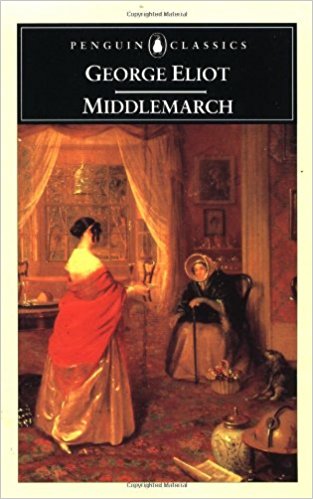
Middlemarch by George Eliot


The Return of the Native by Thomas Hardy


David Copperfield by Charles Dickens


In Search of Lost Time by Marcel Proust 

Wednesday, April 26, 2017

A Doubled Solitude

The Confusions of Young Törless 


The Confusions of Young Törless


“The feeling of not being understood and of not understanding the world is no mere accompaniment of first passion, but its sole non-accidental cause. And the passion itself is a panic-stricken flight in which being together with the other means only a doubled solitude.”   ― Robert Musil, The Confusions of Young Törless


Robert Musil is one of my favorite authors and his story of Young Torless, published in 1906, is one reason. The novel reflects an obsession in this period with educational institutions and the oppressive impact they exert on personal development. While it is in the tradition of the German Bildungsroman, the novel of education, it is critical of educational system and the institutionalized coercion portrayed in the novel. In my reading experience I compared it with the experience of Philip Carey in Maugham's Of Human Bondage or other traditional British school novels (see Tom Brown). In the American tradition, one thinks of J. D. Salinger's Catcher in the Rye as representing a protest against a social disciplining that is also a disciplining of sexuality. Sexual disciplining can often become the standard for other forms of discipline.

The novel tells the story of three students at an Austrian boarding school, Reiting, Beineberg and the titular young Törless. The three catch their classmate Basini stealing money from one of them and decide to punish him themselves instead of turning him in to the school authorities. They start an abusive process, first physically and then psychologically and sexually, while also blackmailing him by threatening to denounce him. While the treatment of Basini becomes openly sexual and increasingly sadistic, he nevertheless masochistically endures it all.

It is the moral and sexual confusion of young Torless that leads him to join Beineberg's and Reiting's degradation of Basini; he is both sexually attracted to Basini and Beineberg and repelled by them. Even though he is a willing participant he tells himself that he is merely trying to understand the gap between his rational self and his obscure irrational self. In a modern way he is both a disturbed and despairing observer of his own states of consciousness. Basini professes love for Törless and Törless begins to reciprocate, but he is ultimately repelled by Basini's unwillingness to stand up for himself. His disgust with Basini's passivity ultimately leads him in a curious way to stand up to Beineberg and Reiting. When the torment becomes unbearable, Törless secretly advises Basini alleviate his situation by confessing to the headmaster.

While an investigation is made, the only party to be found guilty is Basini. Törless makes a strange existential speech to the school authorities about the gap between the rational and irrational: "I said it seemed to me that at these points we couldn't get across merely by the aid of thought, and we needed another and more inward sort of certainty to get us to the other side, as you might say. We can't manage solely by means of thinking, I felt that in the case of Basini too." (p 208)
After he had finished, "When he had left the room, the masters looked at each other with baffled expressions." (p 212)
They decide he is of too refined an intellect for the institute, and suggest to his parents that he be privately educated, a conclusion that he comes to on his own.

Other subplots include Törless's experience with the local prostitute Božena, his encounter with his mathematics teacher, and his analysis of his parents' attitudes toward the world. The severity of the conditions makes one wonder about Musil's own experience. One important theme Musil also takes up is the Nietzschean idea of the dichotomy between Apollo and Dionysus. This can be seen in the "two worlds" (p 45) in which light is contrasted with dark, the controlled and disciplined intellect with more spontaneous sensuality. 

Young Torless is an impressive short novel with a depth of meaning and character that often is not achieved in much longer works. It is a worthy introduction to an author who is one of the first modernists of the twentieth century. If you are a reader who is daunted by the size of The Man Without Qualities, his unfinished masterpiece, this would be a good place to start reading Musil.


Sunday, January 24, 2016

First Sentences . . .


…from a few of my favorite books:


"I was born in the year 1632, in the city of York, of a good family, though not of that country, my father being a foreigner of Bremen, who settled first at Hull.  He got a good estate by merchandise, and leaving off his trade, lived afterwards at York, from whence he had married my mother, whose relations were named Robinson, a very good family in that country, and from whom I was called Robinson Kreutznaer; but, by the usual corruption of words in England, we are now called—nay we call ourselves and write our name—Crusoe; and so my companions always called me."   -  Robinson Crusoe,  Daniel Defoe


“If you really want to hear about it, the first thing you'll probably want to know is where I was born, and what my lousy childhood was like, and how my parents were occupied and all before they had me, and all that David Copperfield kind of crap, but I don't feel like going into it, if you want to know the truth."  - The Catcher in the Rye,  J. D. Salinger


“I have been here before," I said;  I had been there before;  first with Sebastian more than twenty years ago on a cloudless day in June, when the ditches were white with fool's parsley and meadowsweet and the air heavy with all the scents of summer;  it was a day of peculiar splendour, such as our climate affords once or twice a year, when the leaf and flower and bird and sun-lit stone and shadow seem all to proclaim the glory of God;  and though I had been there so often, in so many moods, it was to that first visit that my heart returned on this, my latest."  - Brideshead Revisited, Evelyn Waugh


“Mr. Utterson the lawyer was a man of rugged countenance that was never lighted by a smile;  cold, scanty and embarrassed in discourse;  backward in sentiment;  lean, long, dusty, dreary and yet somehow loveable." The Strange Case of Dr. Jekyll and Mr. Hyde, Robert Louis Stevenson


“I stand at the window of this great house in the south of France as night falls, the night which is leading me to the most terrible morning of my life."  - Giovanni's Room,  James Baldwin


"So, then people do come here in order to live;  I would sooner have thought one died here."  - The Notebooks of Malte Laurids Brigge,  Rainer Maria Rilke


“A Saturday afternoon in November was approaching the time of twilight, and the vast tract of unenclosed wild known as Egdon Heath embrowned itself moment by moment."  - The Return of the Native,  Thomas Hardy


"A screaming comes across the sky."   - Gravity's Rainbow, Thomas Pynchon


"There was a depression over the Atlantic."   - The Man Without Qualities, Robert Musil


“Buck did not read the newspapers, or he would have known that trouble was brewing, not alone for himself, but for every tide-water dog, strong of muscle and with warm, long hair, from Puget Sound to San Diego."  - The Call of the Wild,  Jack London


"High up on the long hill they called the Saddle Back, behind the ranch and the county road, the boy sat his horse, facing east, his eyes dazzled by the rising sun."  - My Friend Flicka,  Mary O'Hara


"I am twenty-six inches tall, shapely and well proportioned, my head is perhaps a trifle too large."   - The Dwarf, Par Lagerkvist


…and perhaps the best opening sentence in all of literature:

“It was the best of times, it was the worst of times, it was the age of wisdom, it was the age of foolishness, it was the epoch of belief, it was the epoch of incredulity, it was the season of light, it was the season of darkness, it was the spring of hope, it was the winter of despair, we had everything before us, we had nothing before us, we were all going direct to Heaven, we were all going direct the other way--in short, the period was so far like the present period, that some of its noisiest authorities insisted on its being received, for good or for evil, in the superlative degree of comparison only."   - A Tale of Two Cities, Charles Dickens

Saturday, September 12, 2015

The Presence of Ghosts


Dead Authors


"The older I get, the more convinced I am that the best books
 are by dead writers.  Even if they are not yet dead, to sense 
 their presence is to sense a ghost."
- Orhan Pamuk, Other Colors, p 4


For more than two decades I have adhered, in part, to the view of Orhan Pamuk in my choice of which books to read.  I have found that many of the best books are by dead authors.  When I first started to read books by dead authors I was not surprised by the quality, but I was surprised by the not infrequent discovery of 'new' dead writers - at least new to my experience.  Some of the great books that I have enjoyed while traveling with the ghosts of these new dead writers include The Dwarf by Par Lagerkvist, Hunger by Knut Hamsun, and Memoirs of Hadrian by Marguerite Yourcenar.  This reading has also led me to great historical fiction like The Leopard by Giuseppe di Lampedusa or The Siege of Krishnapur by J. G. Farrell,  and crime fiction like The Big Sleep by Raymond Chandler. 

I have long been enamored of the great writers of the past who have been my reading companions from an early age.  My favorites among these include the Brontes, Dickens, Hardy, Dostoevsky, Dumas, and Maugham.  There is little need to look for great living writers (except for Nobel prize winners like Coetzee, Pamuk, and Modiano) when you can savour the work dead writers like Naguib Mafouz or Albert Camus, also a Nobel prize authors.  Literature that has passed on beyond the life of the author begins to attain the patina of transcendence and with this the imprimatur of greatness.  These books are worth putting on the top of your reading list - setting aside the latest best-sellers for the day, whether tomorrow or next year, when their author may join the ghosts of other dead authors.

Thursday, May 01, 2014

A Titanic Triumph

Seven Pillars of Wisdom: A Triumph 


Seven Pillars of Wisdom: A Triumph


"All men dream, but not equally. Those who dream by night in the dusty recesses of their minds, wake in the day to find that it was vanity: but the dreamers of the day are dangerous men, for they may act on their dreams with open eyes, to make them possible."  -  T. E. Lawrence, Seven Pillars of Wisdom


The source of the title of T. E. Lawrence's masterpiece is the book of Proverbs:
"Wisdom hath builded a house: she hath hewn out her seven pillars." (Proverbs, 9:1)

This quotation is used as an evocative phrase for the title of a book that Lawrence compared to Moby Dick and The Brothers Karamazov, and Nietzsche's Thus Spake Zarathustra. He considered these "titanic books" that were distinguished by "greatness of spirit". I would agree that his literary achievement at least approaches those levels and also demonstrates the bravado demonstrated by his comparison to them. His book was published in 1926 even though he wrote most of it about 1919 following his return from the desert.

Reading this classic account of Lawrence's exploits is both exhilarating and informative. I was impressed by his depiction of Arab culture of the time and its seeming connection with past and present. The importance of tales told around the hearth as the heart of Arab culture seems to be similar to the culture encountered by Muhammad as he was growing up centuries earlier. Under the most arduous conditions, Lawrence found time for keen analysis: he applied that analysis to the differing forces that were interdependent within the Arab culture and did so with out betraying his loyalty to all or surrendering his loyalty to any.

Further, Lawrence's keen ability to describe his surroundings and bring the events, of which he was often the center, alive is shown in almost every chapter. He is able, through the extensiveness of his narrative, to share both bristling detail and a sense of the intricacy of the events he portrays. He often takes time to share descriptions of the terrain and the weather which provide background for his continuing struggle. At the same time this detail provides as sense of both a documentary approach and also the drama of his escapades. The portraits of the Arab leaders from Abdulla and Auda to Feisel are fascinating in their detail and psychological insight. Lawrence, it seems, was born for this journey and fated to share it with us. T. E. Lawrence acted upon his dream 'with open eyes' and made it happen. In a book filled with deception he gives us a view into the world before the end of World War I changed everything. We see the various Arab factions and the deals made with the British. More importantly we are given insight into the men through Lawrence's eyes, his acute judgement, and his poetic narrative. He notes the keys to the Arab Revolt in the common language they shared and their heritage of the greatness that existed under the Caliphs going back to the six centuries following the death of Muhammad. We share in his pangs of conscience and his judgements of others and his own life and actions.

He notes that "feeling and illusion were at war within me" and it reminded me of the birth of modernity with Faustian man. Also important are his comments on the British in the Middle East and the nature of the soldier in war. Reading this treatise was a moving experience as I gradually found support for my own subjunctive mood in this inspirational book.

Tuesday, January 21, 2014

Tuesday Intros: Embers by Sandor Marai

 
Every Tuesday Diane from Bibliophile By the Sea hosts First Chapter First Paragraph Tuesday Intros, where  participants share the first paragraph (or a few) of a book they are reading or thinking about reading soon.  Today's selection is from Embers Sandor Marai's beautiful and elegiac novel I am rereading for our First Sunday book group.


"In the morning, the old general spent a considerable time in the wine cellars with his winegrower inspecting two casks of wine that had begun to ferment.  He had gone there at first light, and it was past eleven o'clock before he had finished drawing off the wine and returned home.  Between the columns of the veranda, which exuded a musty smell from its damp flagstones, his gamekeeper was standing waiting for him, holding a letter."

Friday, December 06, 2013

Moments of a Writer's Life

Burning the Days: RecollectionBurning the Days: Recollection 
by James Salter

“Sometimes you are aware when your great moments are happening, and sometimes they rise from the past. Perhaps it's the same with people.”   ― James Salter, Burning the Days: Recollection


James Salter calls his memoir a "recollection" as it is more a collection of scenes and episodes selected from throughout his life than it is a typical memoir. Published in 1997 when he was a youthful seventy-two it includes some fascinating vignettes of youth, middle age and beyond, all told with his signature narrative style that is both precise and beautiful.
Several of these episodes were particularly memorable in my reading. He grew up in New York City. But he tells of an unexpected sojourn at West point early in the recollections. As a young boy he had a poetic bent and he had been accepted at Stanford, looking forward to heading west. His father who had graduated from West Point had arranged a second alternate's appointment for him and, improbably, both appointees ahead of him were unable to attend so he received notification that he had been admitted. He comments, "Seventeen, vain, and spoiled by poems, I prepared to enter a remote West Point. I would succeed there, it was hoped, as he had." His four years at West Point were difficult and he is honest about his difficulties, but he gradually found his true self and upon graduation in 1945 he would enter the Army Air Corps which he would call home for a dozen years, becoming a fighter pilot. His experience as a pilot would provide material for his first novel, The Hunters.

Salter displays an earnestness and life in his telling is a serious undertaking, a gesture toward glory and immortality through love and a kind of private ethics revealed in the large and small choices that add up to tell a story. He excels as a writer with a devotional purpose, though not religious in a modern sense. Instead, there are ancient, perhaps unspoken, tests to pass. Salter was a cadet at West Point and an Air Force fighter pilot during the Korean War, and in his prose about flying, we see his guiding assumptions:
"It was among the knowledgeable others that one hoped to be talked about and admired. It was not impossible—the world of squadrons is small. The years would bow to you; you would be remembered, your name like a thoroughbred’s, a horse that ran and won."
Pilots were the elegant gladiators of the twentieth century, their battles were distilled examinations of mettle and will. Some of these pilots, friends of Salter, became astronauts later in their careers.  Two of these friends, Virgil Grissom and Edward White were killed on the launching pad at Cape Canaveral in 1967.

He jumps ahead to other moments in his life, writing having become his profession following the service career. Salter has written about fighter pilots and mountain climbers but also about poets and novelists, notably in two fine short-story collections, Dusk and Last Night.  He was officially credited with eight screenplays according to the Internet Movie Database, only one from his novels (The Hunters) and one other that stands out and is highlighted in his recollections, Downhill Racer, a film from 1969 based on Oakley Hall's novel and starring Robert Redford. Only a few pages are devoted to this episode but it is a fascinating one about a beautiful life, dining with the Redfords, and discussing his idea of writing a film that would be about something which he described simply as "the justice of sport."  And he includes a few moments about his most famous novel, A Sport and a Pastime, choosing to comment on the passage from the Qu'ran that provided the title for that book.

There are many such moments in this memoir including portraits of writers like John Cheever and Irwin Shaw, the latter a good friend to Salter; also film directors like Roman Polanski in addition to Redford. The culmination of these moments suggest a life that illuminates the meaning of becoming a humane person through a life of creativity.
I would compare this memoir to some of the best I have read, Vladimir Nabokov's Speak, Memory and Gregor von Rezzori's The Snows of Yesteryear come to mind. James Salter's achievements have been compared to those of Flannery O'Connor, Paul Bowles, Tennessee Williams and John Cheever by Michael Dirda, book critic for The Washington Post. This is an opinion that I share as I recommend his work to fellow readers.


View all my reviews

Wednesday, November 27, 2013

Historical Novels of Rome

Memoirs of HadrianMemoirs of Hadrian 
by Marguerite Yourcenar


“The true birthplace is that wherein for the first time one looks intelligently upon oneself; my first homelands have been books, and to a lesser degree schools.” 

“He had reached that moment in life, different for each one of us, when a man abandons himself to his demon or to his genius, following a mysterious law which bids him either to destroy or outdo himself.”   ― Marguerite Yourcenar, Memoirs of Hadrian


In 1951 Jules Romains, commenting on the most recent work by Marguerite Yourcenar, said that she had a writing style "of near constant perfection and felicity". He was referring to her novel, Memoirs of Hadrian, and more than fifty years later all I can do is concur and add a few more superlatives to describe my reaction to Yourcenar's novel. This is an unique historical novel in the form of a memoir. It is the story of the traditions of Rome and how a great man - an historical figure and superior to many if not most of the leaders of Rome - led the empire in an era when it was near the beginning of its centuries-long decline.
She captures the spirit of one of the truly great Roman emperors. Hadrian was a builder, a dreamer and a spiritual man with a particular eye for youthful male beauty. The aesthetics of the all-powerful emperor are mirrored in Ms. Yourcenar's prose with felicitous results. She has a style that is at once aphoristic and philosophical. You are encouraged to think about the characters and their actions.
All this and more is expressed in the flawless prose of Ms. Yourcenar. With her other works, especially The Abyss, Alexis, Coup de Grace and Fires, she created an oeuvre that is a reader's delight. One of my favorite authors.


Quo VadisQuo Vadis 
by Henryk Sienkiewicz


"Life is a great treasure. I have taken the most precious jewels from that treasure, but in life there are many things which I cannot endure any longer. Do not suppose, I pray, that I am offended because thou didst kill thy mother, thy wife, and thy brother; that thou didst burn Eome and send to Erebus all the honest men in thy dominions. No, grandson of Chronos. Death is the inheritance of man; from thee other deeds could not have been expected. But to destroy one's ear for whole years with thy poetry, to see thy belly of a Domitius on slim legs whirled about in a Pyrrhic dance; to hear thy music, thy declamation, thy doggerel verses, wretched poet of the suburbs, — is a thing surpassing my power, and it has roused in me the wish to die."  ― Henryk Sienkiewicz, Quo Vadis 

Near the end of Quo Vadis Petronius (Arbiter) writes a letter in reply to his nephew Vicinius who has fled Rome with his bride, Ligia. In the letter Petronius discusses his philosophy and his fate contrasting it with the Christian belief that Vicinius has accepted. He says:

"There are only two philosophers that I care about, Pyrrho and Anacreon. You know what they stand for. The rest, along with the new Greek schools and all the Roman Stoics, you can have for the price of beans. Truth lives somewhere so high that even the gods can't see it from Olympus."(QV, p. 566)

It is interesting to note that Pyrrho is noted for a philosophy of skepticism that claims the impossibility of knowledge. For him our own ignorance or doubt should induce us to withdraw into ourselves, avoiding the stress and emotion which belong to the contest of vain imaginings. This theory of the impossibility of knowledge suggests a sort of agnosticism and its ethical implications may be compared with the ideal tranquility of the Stoics and Epicureans (who were more popular among Romans). This certainly contrasts with the Christian spiritual view that emphasizes belief in the supernatural. It is a philosophy that, at least for Petronius, lets him face death unequivocally with a sort of stoicism that provides a potent example in opposition to the Christian view. It also is an example of the breadth of beliefs shown by Sienkiewicz in his portrayal of the culture and character of the Roman world.

This contrast of philosophies underlies the novel and made it more interesting to me than the simple love story that it also presents. In Quo Vadis we are presented with an historical novel of depth that shows us the corruption and depravity of Nero's Rome while it presents the worlds of aesthetics and skepticism represented by Petronius and that of the young Christian sect whose believers include Peter and Paul, of biblical fame, and Ligia, the barbarian princess who becomes the focus of young Vicinius' amour. It is perhaps not a coincidence that the nineteenth century had several writers (Bulwer-Lytton, Kingsley, and Wallace) including Sienkiewicz who reacted to the prevalence of anti-christian views among the romantics (Shelley, et. al.). This is seen in the pronounced admiration for the poor Christians and the sensational nature of the culmination of the story involving the Neronic destruction of many of the Christians in terrifically brutal games. In spite of this Sienkiewicz through vivid detail creates a believable historical setting for his love story; and overcoming his biased portrayal of the Christians and the contrast with the irrationality and evil of Nero, he succeeds in telling a moving and thoughtful portrayal of Rome in the first century A.D.

Goodreads Updates

Monday, July 08, 2013

Victorian Adventure

KidnappedKidnapped 
by Robert Louis Stevenson

“There are two things that men should never weary of, goodness and humility; we get none too much of them in this rough world among cold, proud people.”  ― Robert Louis Stevenson, Kidnapped

In 1886, Robert Louis Stevenson's Kidnapped began serialization in Young Folks magazine. It was this book, along with the earlier Treasure Island (1883) and A Child's Garden of Verses (1885) which first drew me to Stevenson more than fifty years ago. Along with a handful of other authors these books became the foundation of my early reading and love of books. I still have that feeling for Stevenson as I have gradually explored some of his other novels and essays. While he is considered one of England's most popular writers of "Children's Literature", these novels and his others, especially The Strange Case of Dr. Jekyll and Mr. Hyde, are worth exploring and enjoying as an adult. Jekyll and Hyde in particular, provoked by a dream and written in a ten-week burst during the writing of Kidnapped, is one of the outstanding examples of the use of the theme of 'the double' in literature, and a classic late Victorian text.
In Kidnapped Davy Balfour is the central character and narrator of the adventure, which was based around historical events in eighteenth-century Scotland. It tells the story of Balfour's kidnapping, his shipwreck on a desert island and subsequent adventures with Highland Jacobites.
Though Stevenson wrote prolifically and in almost every genre, these four books from the mid-1880s are all he would need to be remembered more than a century later. This reader continues to look back a the beginning of his reading as a boy and remember when he first encountered the adventures depicted in Kidnapped and Treasure Island.


View all my reviews

Friday, May 24, 2013

Magnificent stories of Nature and Man

Sketches from a Hunter's AlbumSketches from a Hunter's Album
by Ivan Turgenev

"It is a remarkably pleasant occupation, to be on one's back in a forest and look upwards!  It seems that you are looking into a bottomless sea, that it is stretching out far and wide below you, that the trees are not rising from the earth but, as if they were the roots of enormous plants, are descending or falling steeply into those lucid glassy waves, while the leaves on the trees glimmer like emeralds or thicken into a gold-tinted, almost jet-black greenery." (p 131)

In his Preface to "The Seasons" the Scottish poet James Thomson wrote, "I know no subject more elevating, more amazing, more ready to poetical enthusiasm, the philosophical reflection, and the moral sentiment than the works of nature. Where can we meet such variety, such beauty, such magnificence?"
This is a theme that runs through the Sketches From a Hunter's Album. The beauty of the sylvan glade or the summer sun glistening off the meadows flowers is brought to life by the prose of Turgenev in these vignettes. Certainly the characters are also finely drawn and include all social stratas while emphasizing the narrator's interactions with peasants and serfs. It is the latter that impress the reader by the respect and generosity with which they are treated. The combination of fascinating characters and beautiful nature writing made this book a joy to read. I found myself looking forward to the next chapter with expectation that I would be treated to another even more interesting facet of the countryside and its denizens. I was not disappointed until the end of the book and only then because I did not want it to end.

Considering this book was first published in 1852 after having appeared serially as separate sketches, it is a further wonder because the serfs would not be freed for another decade. These short stories revealed Turgenev's unique talent for story-telling. And they greatly influenced Russian short story writers into the early 20th century, including Anton Chekhov, Ivan Bunin, Alexander Kuprin and others. The stories remain fresh today, even in translation, and reward the reader with their magnificence.  But let me leave you with a quote from Turgenev himself that expresses my feelings as well:

“the deep, pure blue stirs on one’s lips a smile, innocent as itself; like the clouds over the sky, and, as it were, with them, happy memories pass in slow procession over the soul”

View all my reviews

Thursday, March 21, 2013

Progress versus Tradition

The Mill on the Floss: A Norton Critical Edition
The Mill on the Floss
by George Eliot


"Nature repairs her ravages, but not all. The uptorn trees are not rooted again; the parted hills are left scarred; if there is a new growth, the trees are not the same as the old, and the hills underneath their green vesture bear the marks of the past rending. To the eyes that have dwelt on the past, there is no thorough repair." - George Eliot, The Mill on the Floss

What a pleasure it is to read the novels of George Eliot. The sheer intelligence of the author shines on every page. In this, her second novel following closely after Adam Bede, she draws on her own experience to create a world of characters surrounding her hero & heroine, Tom and Maggie Tulliver.
The story develops at a leisurely pace with the first two books devoted to the childhood of Maggie and Tom. As Tom goes off to be tutored, Maggie must stay at home and their lives slowly diverge until in subsequent books, as their father's world disintegrates in debt, they are found on opposite sides with their filial love tested again and again. One of the most impressive aspects of the novel is the complexity of these characters as created by Eliot. Tom distinguishes himself at the trading firm of his Uncle Deane and matures into a confident and courageous young man, repaying the debts of his father. Yet, his character is flawed in both his inflexibility and his inability to appreciate the needs of his sister Maggie. Maggie, who is significantly more intelligent than Tom, and self-taught, has developed from a somewhat over-emotional young girl into a sort of Christian ascetic based on her reading of Thomas a Kempis. She is forbidden friendship with Philip Waken, the son of the lawyer who bought her father's mill, and is prevented from developing the potential that is central to her character. The choices she makes define who she is, how she will live, how her community will see her, and in some cases, how those around her will live. The tension between progress and tradition is central in The Mill on the Floss. In many ways, it is embodied in Maggie. The pull she feels between her individual desires and her communal duties is very much a pull between progress and tradition, as those communal duties are highly traditional, and her individual desires are far more suited to a more progressive world.
Though Maggie is deeply intelligent and passionate and has clearly defined desires, she finds fulfilling these desires nearly impossible. The denouement of the novel leads it down the path of the tragic side of life if not true tragedy, but the complexity of the characters and realism of the world in which they live continues to impress.

View all my reviews

Wednesday, March 13, 2013

Prose Miniatures

Posthumous Papers of a Living Author


"you may very well both diagree with and disapprove of your best friends;  indeed there are many friends who can't stand each other.  And in a certain sense, those friendships are the deepest and the best, for without any admixtures, they contain that indefinable essence in its purest form." - Robert Musil, "The Blackbird"


Robert Musil  who was born in Austria is one of my favorite authors. A lifelong journalist and writer, Musil was a war correspondent during World War I. He is best known for his dark, haunting, ironic and Utopian prose style, showcased in his major works, The Man Without Qualities and Confusions of Young Torless.
Posthumous Papers of a Living Author begins with a section called “Pictures,” which features a series of sketches. These include short stories and some observations about things like horses and a village funeral. The writing here, some of Musil’s earliest published work, is polished. These are miniatures that suggest Kafka in a surreal vignette about monkeys; while there are a number of little prose poems. It is easy to dismiss these, but they portray a subtle style that is deeper than it appears. There is a small piece that shows up again in his collection Five Women. And memorable sentences like this from "Maidens and Heroes": "How lovely are you servant girls with your peasant legs and those peaceful eyes, about which you just can't tell, do they wonder about everything or about nothing?"(p 37) Or this from his essay on waking up at dawn: “I discover strange fellows, the smokestacks. In groups of three, five, seven and sometimes alone, they stand up on the rooftops; like trees in a landscape. Space winds around them and into the deep.”(p 19-20)

There is also some very enjoyable fiction: absurd tales, parables, and long narrative jokes. Finally, in “The Blackbird,” the strange, visionary story that ends this collection, Musil discovers how to combine the imaginative and analytical sides of his character. The story is a masterpiece, and the collection is worth owning for it alone. It was the last volume Robert Musil published before his sudden death in 1942. Musil had begun to fathom the impossibility of completing his monumental masterpiece The Man Without Qualities and this volume reveals his shift to a radically different form. Musil observes a fly’s tragic struggle with flypaper, the laughter of a horse; he peers through microscopes and telescopes, dissecting both large and small. Musil’s quest for the essential is a voyage into the minute.

Posthumous Papers of a Living Author by Robert Musil. Peter Wortsman, transl. Eridanos Press, 1987

Friday, July 06, 2012

Around the World

Around the World in Eighty Days


“A true Englishman doesn’t joke when he is talking about so serious a thing as a wager.”
― Jules Verne, Around the World in Eighty Days


I read this novel many years ago when I was attending what the French might call the Ecole Junior. It was the beginning of my love affair with Verne's novels. In 1872 Phileas Fogg wagers that he can circle the earth in eighty days; and traveling by steamer, railway, carriage, sledge, and elephant he wins his bet in seventy-nine days, twenty-three hours, and fifty-seven minutes. Verne builds the suspense and populates the book with strange places and characters which inspire wonder in both young readers and old.
 I became entranced by Phileas Fogg and especially his valet Jean Passepartout. His name translates literally to "Goes-Everywhere", but means "skeleton key" in French.  At the beginning of the novel, Passepartout has just been hired by Phileas Fogg after Fogg's previous valet failed to meet his exacting standards. Passepartout, who has lived an irregular and well-travelled life, is looking forward to a restful employment, as Fogg is known for his regular habits which never take him farther afield than the Reform Club.
Ironically, on Passepartout's first day at work, Fogg makes a bet with his friends at the Club that he can circumnavigate the world in no more than eighty days and Passepartout is obliged to accompany him.
All of the action of these wonderful characters made the book difficult to put down. While its science may be dated in this age of space shuttles as an entertaining adventure tale I would recommend this to dreamers and readers of all ages.

Around the World in Eighty Days by Jules Verne. Penguin Classics, 2004 (1873)

Sunday, June 17, 2012

First sentences…


…from a few of my favorite books:


“The difference between the Parthenon and the World Trade Center, between a French wine glass and a German beer mug, between Bach and John Philip Sousa, between Sophocles and Shakespeare, between a bicycle and a horse, though explicable by historical moment, necessity, and destiny, is before all a difference of imagination.” The Geography of the Imagination, Guy Davenport


"In the 1970s in New York everyone slept till noon." City Boy: My Life in New York in the 1960s and 70s, Edmund White


“I had the story, bit by bit, from various people, and, as generally happens in such cases, each time it was a different story." Ethan Frome, Edith Wharton


“He awoke, opened his eyes.” The Sheltering Sky, Paul Bowles


"When Gregor Samsa woke up one morning from unsettling dreams, he found himself changed in his bed into a monstrous vermin." The Metamorphosis, Franz Kafka


“Mr. Utterson the lawyer was a man of rugged countenance that was never lighted by a smile;  cold, scanty and embarrassed in discourse;  backward in sentiment;  lean, long, dusty, dreary and yet somehow loveable." The Strange Case of Dr. Jekyll and Mr. Hyde, Robert Louis Stevenson


“These last few days I have thought and thought of the Nordland summer's endless day." Pan, Knut Hamsun


"Lolita, light of my life, fire of my loins." Lolita, Vladimir Nabokov


“The essayist is a self-liberated man, sustained by the childish belief that everything he thinks about, everything that happens to him, is of general interest.” Essays of E.B. White


"A screaming comes across the sky." Gravity's Rainbow, Thomas Pynchon


"There was a depression over the Atlantic." The Man Without Qualities, Robert Musil


“When I wrote the following pages, or rather the bulk of them, I lived alone, in the woods, a mile from any neighbor, in a house which I had built myself, on the shore of Walden Pond, in Concord, Massachusetts, and earned my living by the labor of my hands only.” Walden, or Life in the Woods, Henry David Thoreau


“I am unlike other boys." Maltaverne, Francois Mauriac


"I am twenty-six inches tall, shapely and well proportioned, my head is perhaps a trifle too large." The Dwarf, Par Lagerkvist


…and perhaps the best opening sentence in all of literature:


“It was the best of times, it was the worst of times, it was the age of wisdom, it was the age of foolishness, it was the epoch of belief, it was the epoch of incredulity, it was the season of light, it was the season of darkness, it was the spring of hope, it was the winter of despair, we had everything before us, we had nothing before us, we were all going direct to Heaven, we were all going direct the other way--in short, the period was so far like the present period, that some of its noisiest authorities insisted on its being received, for good or for evil, in the superlative degree of comparison only." A Tale of Two Cities, Charles Dickens