Showing posts with label Ecology. Show all posts

Wednesday, July 08, 2026

Thinking About the Planet

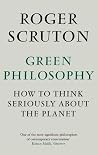
Green Philosophy: How to Think Seriously about the Planet

Green Philosophy: How to Think Seriously about the Planet 

by Roger Scruton


“Top-down solutions have a tendency to confiscate problems from those whose problems they are.”
― Roger Scruton, Green Philosophy: How to Think Seriously About the Planet


Instead of framing environmentalism as a leftist monopoly, the book reframes it as a fundamental conservative obligation. Scruton contends that international treaties and top-down bureaucratic interventions are ineffective because they ignore local love and individual responsibility, which are the primary forces behind human conservation. His central idea is oikophilia. A few distinct pillars form the philosophical basis of Scruton's book: Oikophilia, which means "the love of home." According to Scruton, people preserve the environment because they cherish their immediate, physical surroundings rather than out of an abstract sense of global utilitarianism. He advocates for bottom-up stewardship, saying that small-scale institutions, friendships, and local civil associations are the most effective ways to manage conservation. Large NGOs, the UN, and international climate treaties are all criticized by Scruton in his critique of globalism as unaccountable bureaucracies that have far-reaching unintended consequences. Instead, he supports holding polluters directly accountable through the use of free-market networks, unambiguous property rights, and tort laws. This is a readable and sensible perspective on how conservatives can contribute to environmental preservation.

View all my reviews

Search for Nature

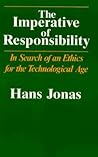
The Imperative of Responsibility: In Search of an Ethics for the Technological Age

The Imperative of Responsibility: In Search of an Ethics for the Technological Age 


“Blind nature will nearly always select the most probable, but man can let the most improbable become actual.”  ― Hans Jonas


A risk-averse framework for the scientific era is introduced by Jonas. The worst-case scenario must take precedence over ideal projections when assessing existential risks such as genetic engineering or climate change. He contends that although we can afford to lose a bet on advancement, we cannot afford to lose a bet on human survival. Jonas bases his ethics on metaphysics, in contrast to many modern philosophers who separate ethics from objective reality. He claims that Being is intrinsically more valuable than Non-Being. Humanity has an unavoidable obligation to safeguard nature's intrinsic purpose for existing. The last sections criticize utopianism by focusing on both capitalist and Marxist ideas of unending technological advancement. Jonas argues for a politics of self-control and clearly illustrates how utopian visions of technological abundance directly result in ecological collapse.

View all my reviews

Thursday, April 14, 2011

In a Dark Wood: The Fight over Forests and the Rising Tyranny of Ecology
In a Dark Wood: The Fight 
over Forests and the 
Rising Tyranny of Ecology 


"Ideas have consequences." - Richard M. Weaver


With his book, In a Dark Wood, Alston Chase has written a story about the ecological struggle over the forests, but in doing so he has also developed the history of an idea. The idea is really many ideas, incorporating questions about the definition of nature, the science of ecology and the question of eco-systems -- just what are they and what should we do about them.


"It is a tale without heroes or villains, in which the bad guy isn't a person at all but an idea"(p xi)


His story begins with people, from John Muir and Henry David Thoreau to the eco-revolutionaries of the seventies and eighties. But the story also begins with the question: What is Nature? For it is the battle over nature that guides the narrative and the history of the ecological movement. His focus is primarily on the forests of Northwestern United States, and the battles to protect "endangered" species like the Spotted Owl. In doing so he provides a tremendous amount of detail about incidents that, like a mosaic of tiles, fit together to create a story. But the battle is also philosophical and political. Alston points out the unintended consequences of ideas that are not fully understood, of actions that are based on questionable science or faulty and limited studies, and the irrational passions that drove many of the people in the story, both good and bad, to take unreasonable actions. Ultimately it becomes a story about those who insist on determining the one way that all must follow to do what is good for man, forgetting the folly that has occurred throughout history when that has been attempted in the past.


For Chase his ne plus ultra was a focus on people and ideas, devising a book interesting to all who are stimulated by the history of ideas and the actions men take. It also allowed him to be balanced in his approach, emphasizing science and carefully pointing out what we do know and, more importantly, what we do not know.


In a Dark Wood by Alston Chase. Houghton Mifflin Company, New York. 1995