Friday, May 22, 2026

Tragic Moment

A Separate Peace

A Separate Peace 

by John Knowles


“What I mean is, I love winter, and when you really love something, then it loves you back, in whatever way it has to love.”
― John Knowles, A Separate Peace


This remains one of the most enduring and psychologically astute coming-of-age novels in American literature. The novel is set in 1942, during the dark days of World War II. The story takes place at the Devon School, a fictional elite New England boarding school based on Knowles’ alma mater, Phillips Exeter Academy. The story is told from the perspective of an older, wiser Gene Forrester, looking back fifteen years later, and it is a harrowing exploration of identity, envy, and the tragic end to adolescent innocence.

It takes a close look at the complicated co-dependent relationship of two roommates who are polar opposites. Gene Forrester: The narrator. An intellectual, very insecure, introverted, and very neurotic person. Phineas (Finny): Gene’s best friend, a charismatic, fiercely athletic daredevil who glides through life with a natural charm and an innate purity of heart. This tension comes to a head during an idyllic summer term, when Gene becomes convinced that Finny’s effortless grace is a deliberate attempt to undermine Gene’s academic success. This toxic mixture of deep resentment and adoration leads to a momentary, impulsive act of betrayal.

As the boys come of age, they are faced with the worldwide violence of World War II. Knowles is a master at reflecting the large-scale warfare of the world in the small-scale, private wars of the human soul. The "separate peace" that the boys discover during that quiet summer is an illusion.


View all my reviews

The Enigma of Evil

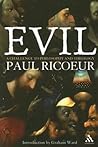
Evil: A challenge to philosophy and theology


Evil: 
A challenge to philosophy and theology 


This is a small but positively brilliant exegesis of the origin of evil. Ricoeur is eloquent and deep in his analysis based on a lecture given in Lausanne, Switzerland. Ricoeur's exploration of evil delves into its multifaceted nature, examining how it manifests in human experience and moral philosophy. He articulates the tension between the presence of evil and the quest for meaning, suggesting that understanding evil is essential to grasping the human condition.

Through his lens, Ricoeur emphasizes the importance of narrative in confronting evil, positing that storytelling allows individuals to process and make sense of their experiences with suffering and injustice. He invites readers to reflect on the ethical implications of evil, urging a deeper engagement with the moral dilemmas it presents.

Ultimately, Ricoeur's insights challenge us to confront the complexities of evil, encouraging a dialogue that transcends simplistic notions of good and evil and fostering a more profound understanding of our shared humanity.


View all my reviews

Saturday, May 16, 2026

Art and Morals

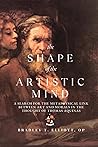
The Shape of the Artistic Mind: A Search for the Metaphysical Link Between Art and Morals in the Thought of Thomas Aquinas

The Shape of the Artistic Mind: 

 A Search for the Metaphysical Link Between Art and Morals in the Thought of Thomas Aquinas 


by Bradley T. Elliott OP


Is the ethical life an art form? Are the arts a form of virtue? This book explores how Thomas Aquinas responds to these questions by situating classical depictions of art and virtue within a rich account of God as creator. Helpful resources are provided for readers who want to further appreciate the role of the arts in the moral life.

View all my reviews

Wednesday, May 13, 2026

Suddenly a Wall Appeared

The Wall

The Wall 


I often look forward to a time when there won't be anything left to grow attached to. I'm tired of everything being taken away from me. Yet there's no escape, for as long as there's something for me to love in the forest, I shall love it; and if some day there is nothing, I shall stop living.”
Marlen Haushofer, The Wall


Marlen Haushofer’s 1963 Austrian novel The Wall is a hauntingly claustrophobic feminist sci-fi masterpiece that subverts traditional survival narratives. It tells the story of an unnamed 40-year-old woman who is on holiday at a hunting lodge in the Austrian mountains and wakes to find herself completely cut off from civilization by a mysterious, transparent, impassable wall. On the other side of the barrier, all life seems instantly petrified and dead. Her life is isolated forever, turned into a brutal series of alpine survival routines with a small menagerie of animals: a loyal dog (Lynx), a pregnant cow (Bella), and a cat. And yet the story is profoundly meditative. I enjoyed the eerie environment and moments of poetic reverie that the author created.

View all my reviews

Tuesday, May 12, 2026

My Lonely

Sula

Sula 

by Toni Morrison


“Lonely, ain't it? Yes, but my lonely is mine. Now your lonely is somebody else's. Made by somebody else and handed to you. Ain't that something? A secondhand lonely.”
― Toni Morrison, Sula


Toni Morrison's Sula is a "modern masterpiece" and a "complicated masterpiece" about the lifelong friendship of two Black women, Nel Wright and Sula Peace. The story takes place in the fictional community of “The Bottom” in Medallion, Ohio. Originally published in 1973, it is renowned for its lush, lyrical prose and thoughtful examination of womanhood, identity, and the limits of friendship. 

The bond between Nel and Sula is so strong that 'they had a hard time telling one’s thoughts from the other’s. “ Their relationship becomes a platform for interrogating the Black feminine experience, and the search for meaning.  Nel signifies conformity and adherence to societal norms whereas Sula is a “outlaw woman” who challenges the status quo with her anarchistic ways. 

The two girls grow up with a dark secret that creates a bond “stronger than anything.” This bond is finally tested by a betrayal that comes to the very brink of forgiveness. Set between 1919 and 1965, the novel uses World Wars I and II, the Great Depression, and the civil rights era as a backdrop for the struggles of life in "The Bottom."

View all my reviews

Friday, May 08, 2026

The Well of the Past

Joseph and His Brothers (Omnibus Vol Includes : Joseph and His Brothers, Young Joseph, Joseph in Egypt, and Joseph the Provider)

Joseph and His Brothers 

by Thomas Mann


"Very deep is the well of the past. Should we not call it bottomless?"
With this beginning, Thomas Mann creates a monumental novel based on the story of Joseph in Genesis. By the time you have read more than two hundred pages and Joseph is yet to be born, you begin to realize just how monumental this novel will be. The good news is that it is worth the time and effort.

Mann sets the story in the 14th century BC and makes Akhenaten the pharaoh who anoints Joseph as his vice-regent. A dominant topic of the novel is Mann's exploration of the status of mythology and his presentation of mythical truths and the emergence of monotheism. Events of the story of Genesis are frequently associated and identified with other mythic topics.

From the opening page of the novel, the notion of the underworld and the mythical descent to the underworld is a central theme. Jacob's sojourn in Mesopotamia (hiding from the wrath of Esau) is paralleled with Joseph's life in Egypt (exiled by the jealousy of his brothers) and, on a smaller scale, his captivity in the well. Abraham is repeatedly presented as the man who "discovered God." Jacob, as Abraham's heir, is charged with further elaborating this discovery. Joseph is surprised to find Akhenaten on the same path (although Akhenaten is not the "right person" for the path), and Joseph's success with the pharaoh is largely due to the latter's sympathy for "Abrahamic" theology. Mann's approach reminds one of Sigmund Freud's Moses and Monotheism, which had appeared in 1939, just before Mann began work on the tetralogy's fourth part. As Joseph is saved from the well and sold to Egypt, he adopts a new name, Osarseph, replacing the "Yo-" element with a reference to Osiris to indicate that he is now in the underworld. This change of name is made to account for changing circumstances and encourages Amenhotep to change his own name to Akhenaten.

The breadth of the story can be seen in a survey of the four major sections of the novel. The first, The Tales of Jacob, recounts the story of the birthright struggle with Esau and Dinah's trials. When it finally introduces us to the relationship between Jacob and his favored son, Joseph, first-born of his favored wife Rachel, you see one whose flaws of overconfidence and presumption are obvious from the beginning. The familiar stories here include how Jacob’s mother, Rebeccca, managed to obtain Isaac’s blessing for Jacob rather than first-born Esau (the “clod”) and the parallel deception by Jacob’s host Laban in which Jacob was given Leah’s hand in marriage rather than Rachel’s. The second part, Young Joseph, tells the familiar story of Joseph’s catastrophic descent in which his brothers, utterly fed up with his arrogance, throw him into the pit from which he is rescued three days later by an itinerant group of merchants. Having sold him to the merchants, his brothers then deceive their father by showing him the many-colored coat, stained with the blood of a lamb, and leaving it to him to draw the conclusion that his son was killed by a lion.

The two remaining sections take Joseph to Egypt and the court of the Pharaoh through to his reunion with his father and brothers. Mann's recounting of the story of Potiphar and his wife is exceptional among the many stories that are related about Joseph's life in Egypt. You also see Joseph growing in wisdom, although he is not always aware of his own abilities. "Toward him alone and urgently went Joseph's thoughts and the speech of his tongue, unaware that it was guided not by chance or choice but by inheritance and tradition." (p 459)

Mann is a fascinating, extraordinarily well-read writer with a powerful understanding of the human condition. His character studies (and Joseph is nothing if not a very extended character study) are deep and multi-faceted. He does a remarkable job of bringing to life a pre-monotheistic way of thinking. His thoughtfulness and imagination combine to create an immense classic that wins you over time and again. The depth of this remarkable classic knows no bounds.

View all my reviews

Friday, May 01, 2026

Contemporary Prophecy

The Hungry Tide

The Hungry Tide 


Words are like the winds that blow ripples on the water's surface . . ."  -  The Hungry Tide, p. 277


Amitav Ghosh's The Hungry Tide is a masterful work of historical fiction that weaves together environmental conservation, political displacement, and human connection in the treacherous Sundarbans archipelago. Originally published in 2004, the novel features Ghosh's lyrical prose and is supported by extensive anthropological research. The story follows an unlikely trio navigating the "tide country"—a maze of islands on the India-Bangladesh border: Piyali (Piya) Roy, an Indian-American marine biologist who studies the rare Irrawaddy dolphin; Kanai Dutt, a sophisticated translator from Delhi, who is visiting his aunt to retrieve a journal left by his late uncle, Nirmal; and Fokir, an illiterate local fisherman who becomes Piya's guide. Despite the language barrier, Piya and Fokir have a strong, unspoken bond. The book balances this nuanced personal drama with larger sociopolitical issues, such as the Marichjhapi massacre of 1978–79 and the ongoing conflict between wildlife conservation (the Bengal tiger) and the survival of marginalized human populations.

The Sundarbans landscape transforms into a "character in itself." As I read the novel, I almost felt as if I were "inhabiting" its lush yet dangerous world. I enjoyed the novel's pace and storytelling style, which brought the mythic history of the lands and waters to life. The scientific detail and historical exposition captivated me just as much as the contemporary human story. The characters, while complex, were relatable, and the author was able to address themes such as neocolonialism and global power dynamics without sounding preachy. The author succeeded in capturing my emotions through the work's thematic richness. The novel is a beautiful narrative of history, love, and man's relationship with nature. It left me in awe of Amitav Ghosh's ability to beautifully highlight issues of language, love, and nature.

View all my reviews