Showing posts with label Andre Malraux. Show all posts

Wednesday, August 19, 2026

Revolution

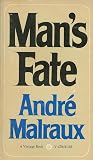
Man's Fate

Man's Fate

 by 


“It was Ferral's experience that governments are indulgent task-masters, that they treat their favorite children, the big financial groups, with commendable leniency. But while governments are accustomed to seeing the treasury robbed, they do not like to see it robbed of all hope.”
― André Malraux, Man's Fate


Man's Fate (La Condition humaine) by André Malraux is a towering masterpiece of 20th-century existentialist philosophy and political literature. It was published in 1933 and won the coveted Prix Goncourt. The novel explores deep, timeless issues of human loneliness, dignity, and purpose against the turbulent backdrop of the 1927 Communist uprising in Shanghai.

Over the course of several days, the novel follows a varied group of revolutionaries, conspirators, and opportunists as the Shanghai uprising takes place, only to be brutally betrayed and put down by Chiang Kai-shek's Nationalist forces.

Instead of focusing only on political strategy, Malraux examines the psychological motivations of those enmeshed in historical turmoil. High-stakes killings, street battles, ideological differences with Moscow, and the catastrophic fallout from defeat are all woven throughout the story.


View all my reviews

Saturday, September 28, 2019

Hope Devolves

Man's Hope 


Man's Hope

“The great mystery is not that we should have been thrown down here at random between the profusion of matter and that of the stars; it is that from our very prison we should draw, from our own selves, images powerful enough to deny our own nothingness.”  ― Andre Malraux


Man’s Hope is an epic novel about the Spanish Civil War of 1936-1939. During this bloody conflict, the Fascist elements of the Spanish military and the Catholic church, under the leadership of the Falangist dictator Francisco Franco, were supported vigorously by Benito Mussolini’s Italy and Adolf Hitler’s Germany and overthrew the leftist Republican government of Spain which was supported by the Soviet Union and by individual citizens of the Western European nations.

André Malraux was among many anti-Fascist Europeans who volunteered to fight for the Republicans, and he played a significant role as an organizer of the International Squadron of aircraft for the Republic. Man’s Hope is based on Malraux's experiences which he chronicled during the battles on the Republican side and and published while the war was still raging; it depicts the events of 1936-1937 as an adventure of the human spirit within a framework of historical, political, and philosophical ideas.

The novel is divided into three parts of which the first, “Careless Rapture”, begins with the optimistic and carefree mood of the Republican militia and their international volunteer comrades during the first summer of the Civil War. The second section of part 1, entitled “Prelude to Apocalypse,” concerns the mismanagement of the emotions of the Republican movement. This is followed by “The Manzanares” (the second part), with sections are entitled “Action and Reaction” and “Comrades’ Blood.” “The Manzanares” begins with the rout of the Republicans from Toledo in September, continues with the siege and bombing of the Republicans in Madrid (now a city in flames), and ends in December with the Republican counterattack. The final part of the novel was originally entitled “The Peasants,” but Malraux changed the title to “Hope” in his definitive 1947 revision—probably to underscore its importance for the work as a whole.

A significant theme of the novel concerns the nature of a revolution or popular uprising. From Malraux's perspective, a revolution comes into being under the impetus of a lyric burst of feeling, the best of which is found in freedom and fraternity. At this stage, Anarchism seems to fit well with the revolution. For a revolution to be sustained, however, these feelings have to be disciplined and organized; hence the need for a political machinery such as that of the Communist Party (which will, ironically, destroy the lyric impulses of revolution).

On a political level, then, Man’s Hope dramatizes the self-defining process of a revolution. As it does so, Malraux also explores the meaning of being human. When humanist intellectuals such as Scali are confronted with the brutalities of war and carefree individuals such as Manuel evolve into effective military leaders, they have to come to terms with the meaning of humanity—their own as well as others’. By means of symbolic epiphanies Malraux provides an assurance of hope in the endurance of fundamental humanity. Overall this book is a great sort of mess mirroring the morass of war.