Showing posts with label Gay Fiction. Show all posts

Friday, July 31, 2026

Deadly Trenches

In Memoriam

In Memoriam 


“Ellwood smiled, and a sudden, dry bleakness spread over Gaunt’s heart as he thought of Hercules, and Hector, and all the heroes in myth who found happiness briefly, only for it not to be the end of the story.” ― Alice Winn, In Memoriam


In Memoriam, Alice Winn's debut novel, is a remarkable work of historical fiction that skillfully strikes a balance between the visceral, unrelenting horrors of World War I and a tender, forbidden gay romance. It follows the lives of two affluent English boarding school students, Henry Gaunt and Sidney Ellwood, as they move from the idyllic safety of their youth into the deadly trenches of the Western Front. 

The fictional Preshute College is where the story begins in 1914. Sidney Ellwood, a charming boy who loves poetry, and Henry Gaunt, a reserved half-German, are best friends who are secretly in love. Gaunt enlists early to shield his family from anti-German sentiment and to get away from the excruciating weight of his suppressed emotions. Ellwood and many of their gullible classmates follow him to the front line after being horrified by his departure. The glorious war they envisioned turns into mud, trauma, shell shock, and catastrophic loss, and what follows is a brutal awakening.

Winn draws a contrast between the grim reality of mechanized slaughter and the idealized, poetic nationalism that young men are taught. The emotional core of the book is Gaunt and Ellwood's relationship. The tragedy of a love that is strong enough to endure the trenches but socially and legally taboo back home is masterfully captured by Winn. The book examines how these affluent, teenage boys with limited experience were given immediate military command over men's lives due to the strict British class system. School newspaper clippings that document the catastrophic erasure of an entire generation of boys in real time are scattered throughout the book.

I found the book engaging and especially appreciated the realistic historical details supporting the fictional narrative of love and loss.


View all my reviews

Friday, April 03, 2026

Little Man

Hombrecito

Hombrecito 

by Santiago José Sánchez


“He kisses her again, with more conviction this time, the way she kisses his cuts and bruises, as if love were something tangible, a balm to spread over every injury.”
― Santiago Jose Sanchez, Hombrecito


Hombrecito is a lyrical, queer coming-of-age story that delves into immigrant identity, familial trauma, and desire. It has a palpable emotional intensity combined with exquisite prose. The novel follows a young narrator, also named Santiago, from his childhood in Ibagué, Colombia, to his life as an immigrant in Miami and, eventually, New York City.
The title ("little man") alludes to the narrator's childhood role as he navigates a complicated relationship with his mother, who frequently "forgets she is a mother" and disappears for long periods of time.
Sanchez's writing is passionate and electrifying. The novel's focus on minute, visceral details—such as the smell of fried plantains or the texture of a mother's dress—is one of its greatest strengths. The narrative structure is nonlinear, and it can occasionally feel like a series of photographs rather than a continuous stream of events. Overall, it was a fascinating read.


View all my reviews

Tuesday, December 23, 2025

Riveting Debut

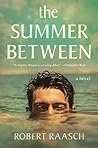
The Summer Between

The Summer Between 


"I worked a palmful of mousse through my hair, and clicked each pearly shirt snap closed save the top two. I stepped before the full-length mirror and didn't hate the person I saw." - Robert Raasch, The Summer Between. 


The protagonist of this tale about coming to terms with one's sexual orientation is a teenager who just finished high school and is planning to attend college. The story illustrates the feelings, perplexity, anguish, and happiness of a young man discovering his sexuality and identity in that group. Despite some of the narrative's rough edges, I still found the book to be enjoyable enough to finish. Although the teen's sensibilities were occasionally unclear and the circumstances he encountered appeared somewhat manufactured, the narrative ultimately came together in a satisfying manner.

View all my reviews

Tuesday, August 19, 2025

Looking and Facing Love

What Belongs to You
What Belongs to You 


“Love isn’t just a matter of looking at someone, I think now, but also of looking with them, of facing what they face.”  ― Garth Greenwell, What Belongs to You


This short, three-part book tells the story of an unnamed American teacher who lives in Sofia, Bulgaria. The narrator's intricate and transactional relationship with Mitko, a young male hustler, is the main topic of the first and third sections. Their interactions are motivated by a complex power dynamic, loneliness, and desire.

The narrator considers his traumatic upbringing in the American South, his tense relationship with his father, and the causes of his internalized shame and trauma in the middle section, which is a lengthy, continuous paragraph that serves as a potent confessional interlude. The narrator's current fears and obsessions are crucially contextualized in this section. The book has a focused, intense feel because of its brief length and divided structure.

Greenwell's masterful prose is both lyrical and intellectual. His sentences are often long and intricate, but they are not merely ornamental. They are dense with meaning, emotion, and philosophical reflection, creating a sense of a mind in motion. The book demonstrates bravery and honesty, particularly in its depiction of sex and the less-than-ideal aspects of human connection. Greenwell doesn't shy away from depicting the messy, conflicted, and sometimes painful realities of desire.

The consciousness on exhibit pierces your heart; it is a novel of eroticism and desire. Seldom have I come across such a powerful, lean story.

View all my reviews

Wednesday, March 19, 2025

Things Couldn't Be Righter

Will Grayson, Will Grayson
Will Grayson, Will Grayson 


“Nothing's wrong. Everything's right. Things couldn't be righter. Things could be less tired. They could be less busy. They could be less caffeinated. But they couldn't be righter.”― John Green, Will Grayson, Will Grayson


I am reminded of how much things have changed by this book. This novel would not have been possible years ago, when homosexuality was not even discussed, much less celebrated, in high school. If you believe news reports about bullying and worse, it still seems a little bit like a fantasy. However, this is fiction, and it is written well. It tells the tale of two teenage boys named Will Grayson who lead very different lives and reside in different Chicago suburbs until their paths unexpectedly cross and result in a life-changing experience. The book switches between their points of view, with Levithan writing one chapter and Green writing the other, each of which reflects their unique voices and challenges.

John Green’s first Will Grayson is a humorous, self-deprecating man who lives by the maxim "don’t care too much," in part to keep his life simple and in part to avoid trouble. His best friend, Tiny Cooper—a larger-than-life, flamboyantly gay football player—drags him into a whirlwind of drama, including a musical Tiny’s producing about his own life. The second Will Grayson, penned by Levithan, is a darker, more introspective character battling depression, isolation, and a complicated relationship with his mother. He’s also grappling with his sexuality and a budding online romance with a boy named Isaac, which takes a sharp turn when they plan to meet in person.

The plot kicks off when the two Wills meet by chance in a porn store (a quirky, awkward setup that’s pure John Green). From there, their lives intertwine through Tiny, who becomes a bridge between their worlds. The story explores themes of identity, friendship, love, and self-acceptance, all wrapped in a mix of humor, heartache, and teenage messiness. Tiny’s musical, which culminates in a grand performance, serves as a literal and metaphorical stage for the characters to confront their feelings and grow.

The narrative demonstrates authentic dialogue and emotional depth. Green’s Will brings the sarcastic, nerdy charm fans of The Fault in Our Stars will recognize, while Levithan’s Will offers a raw, poetic look at mental health and queer identity. The collaboration shines in how seamlessly the two narratives blend, even with their tonal differences. Tiny Cooper is a standout—hilarious, over-the-top, and genuinely moving as he pushes both Wills to step out of their comfort zones.

That said, the book is not flawless. The premise of two kids with the same name meeting seems a bit contrived, and the musical subplot feels like it overshadows the quieter character moments. The ending, while uplifting, ties things up a little too neatly for a story about such messy lives. Still, it’s a fan favorite, often lauded for its heart and its unapologetic celebration of individuality.

Monday, March 10, 2025

Escape into Secrets

Secretly Inside
Secretly Inside 


"a city boy, a student, his clothing smart, in these surroundings almost elegant. . . He looked frightened: what am I doing here?" - Hans Warren


"Secretly Inside" by Hans Warren is a novel that delves into the complexities of human relationships during the fraught period of Nazi-occupied Holland. The book is set in the Dutch countryside during World War II, providing a backdrop of tension and uncertainty. It explores the experience of a Jewish man, Ed, forced into hiding and the precariousness of his situation. The novel examines the nuances of human behavior, revealing that appearances can be deceptive. The family that shelters Ed is not as uniformly benevolent as they initially seem.

It addresses themes of repressed emotions and hidden desires, especially in the setting of a dangerous and constrictive environment. The book also touches on the psychological impact of war and the ways in which it can distort and intensify personal relationships. It also contains themes of homosexual relationships and the complications that those relationships had during that time period.

With their shifting allegiances and covert goals, Ed's interactions with the family members are at the heart of the story. The book explores the emotional turmoil of the characters, including grief, desire, and fear. In conclusion, "Secretly Inside" offers a nuanced portrayal of life under Nazi occupation, focusing on the intimate experiences of individuals rather than grand historical narratives. It is a story that brings to light the hidden emotions that people hold and how those emotions can effect their actions.

I found it to be a compelling novel that blends historical fiction with psychological depth, offering a thought-provoking exploration of human nature in a time of crisis.


Saturday, February 08, 2025

Meditation on Mortality

Small Rain
Small Rain 


“Read it again, read it more slowly, that was the whole of my pedagogy when I taught my students, who were pressured everywhere else to be more efficient, to take in information more quickly, to make each moment count, to instrumentalize time, which is a terrible way to live, dehumanizing, it disfigures existence.”   ― Garth Greenwell, Small Rain


Set in the COVID-19 era, this novel explores the physicality of suffering as its protagonist, an unnamed poet, is admitted to the intensive care unit after suffering a serious medical crisis. The book focuses on an examination of the American healthcare system, the nature of pain, and the search for meaning and connection amidst suffering. It is both a meditation on mortality and a love story, highlighting the unexpected intimacies that can develop in such extreme circumstances.

Because of its lyrical quality, philosophical asides, and ability to convey the narrator's consciousness, I thought Greenwell's prose was unique. The narrative style is introspective, focusing on the internal experience of the protagonist, which contrasts with the external environment of the hospital. His prose style had a unique aspect in that he referred to characters with merely the first letter of their name.

"Small Rain" pushed the limits of narrative structure by emphasizing the internal rather than the external, and I found it to have a complex depiction of illness and an intriguing character study. I enjoyed it's departure from and extension of Greenwell's earlier works, focusing on different aspects of human experience but with the same meticulous and poetic prose.


Saturday, November 23, 2024

Identities with Gaps

Blackouts

Blackouts 

by Justin Torres


 “I’d lost patience for novels. I did not want to die in the middle of a novel. I wanted only endings, last lines, goodbyes, and reunions. I wondered how might things end for me; how would it read, the final sentence of my life? The verdict?”   ― Justin Torres, Blackouts


What is the source of our identity? Every historical narrative has the potential for a counter-narrative, as demonstrated by Blackouts, which also implies that each of us has identity ruptures and gaps—the book's title blackouts—that are kept together by narrative continuity. 

I was reminded of Nabokov's lyricism and intricacy by the narrative. The story is slowly, gradually revealed through vignettes that this reader found fascinating. As the essence is revealed the book became more and more incredibly engaging to read. Adding to this was the creative use of blacked-out source materials in conjunction with the story. The result is a book that deserves the accolades that it has received.

Monday, August 05, 2024

Reckless Impulses

In Tongues
In Tongues 


"wondering if my reckless impulses would ever settle down. Thought, too, about what might still change for me, what would stay the same." - Thomas Grattan


This is a moving portrait
of a young gay man making his way in New York City, accompanied by an interesting network of friends and acquaintances. The story drew me in right away in a way that similar gay fiction has rarely done for me. This was in part because the narrator reminded me of Philip Carey in Somerset Maugham's Of Human Bondage, one of my favorite novels.

It is a perceptive examination of class, family, and gay men's inheritance across generations. Gordon, the main character, is a twenty-four-year-old man who was raised in Minneapolis by discordant working-class parents. He leaves for New York City in 2001, just before the 9/11 attacks, after being dumped by his boyfriend, using $200 he stole from him. He eventually secures a job walking dogs for the wealthy Philip and Nicola, the owners of an art gallery. They quickly requested that he work as their personal assistant. The author uses this couple to illustrate the way of life of the extremely wealthy. While Philip is aloof and patrician, Nicola, the younger member of the couple, appears to be resentful of Gordon's presence. Before he makes a mistake that will end the close bond between the three of them, Gordon still has a lot to learn about navigating the complexities of their sophisticated lives. 

For the majority of the book, Gordon is reckless and impish. However, he slowly matures, while his memories of his early misadventures continue to bother him. Gordon's voice is dark, humorous, and ultimately reprimanding, making him a remarkable narrator. Though Gordon learns to control himself rather than wreaking more havoc, the book builds on the self-absorbed, occasionally cruel protagonists similar to those of Edmund White's earlier works.


Tuesday, January 09, 2024

Insights and Discoveries

The Heart in Exile
The Heart in Exile 


"It was all clear now, or at least as clear as it could be. I had discovered and could explain many things, but there was so much, of course, that I could never hope to explain."  - Rodney Garland, The Heart in Exile


Although this book is a mystery set in the gay community of post-World War II London, it is much more than that. It explores the nature of love and the very personal truths experienced by homosexuals, as well as the gay life, which was necessarily an underworld in London at the time. It is this second aspect of the book that allows it to rise above the average sentimental story. This book is intensely about the lives of a psychiatrist and his former lover, who was found dead from what appeared to be an overdose of sleeping pills. The doctor's investigation into what happened led to revelations about himself that profoundly affected his life.

This book, which examined the variety of homosexual life in London and offered a touching account of how one might transform his life in unexpected ways when faced with the ups and downs of daily existence, captivated me. It was both fascinating and profoundly touching.


Sunday, May 07, 2023

New Love or True Love?

Find Me (Call Me By Your Name, #2)
Find Me 


“Everything in my life was merely prologue until now, merely delay, merely pastime, merely waste of time until I came to know you.”   ― André Aciman, Find Me


The melancholy Call Me by Your Name by André Aciman has spoken more powerfully to modern readers about the essence of love than any book in recent memory. It was praised for being "a love letter, an invocation...an exceptionally beautiful book" (Stacey D'Erasmo, The New York Times Book Review) when it was first released in 2007. A popular, Academy Award-winning movie based on the best-selling book has about three quarters of a million copies in circulation. In this continuation of the story Aciman depicts Elio's father, Samuel, traveling from Florence to Rome to see his son who has become a talented classical pianist. Sami's plans are upset and his life is changed forever when he encounters a stunning young woman by chance on the train.

Elio soon relocates to Paris, where he also has become involved in a significant relationship, while Oliver, who is now a professor at a college in New England with a family, finds himself suddenly considering a return trip across the Atlantic.

Aciman is a master of sensibility, the personal details, and the subtle emotional undertones that make up passion. The question of whether true love actually ever dies is raised by Find Me, which takes us back to the magical realm of one of our greatest modern romances. However, I found the journey to be somewhat muddled and  not up to the high quality and intensity of the previous novel where Elio and Oliver first encountered each other.


Tuesday, March 21, 2023

A Bond for Life

Serious Things
Serious Things 


"Though he did not consent to friendship, the tall and beautiful English boy had acknowledged my existence."   - Gregory Norminton, Serious Things


I was impressed with how this narrative of two young boys is presented in a unique way narrated by one of the two preemintent characters in the story. The book emphasizes the psychological effects of our actions and the importance of how our lives are influenced by how we respond to those actions.

The story tells of two lads at a traditional boarding school who develop a close bond that will influence the rest of their lives. Anthony Blunden has Bruno Jackson, the quiet and lonely son of British expatriates, completely smitten. The boys are inspired to investigate the "more serious matters" of life outside of college after being taken under the wing of an idealistic English teacher. But, in the intense environment of the school, a slight from their mentor looks to be of utter significance and will have irrevocable effects. 

Years later, with those memories all but forgotten, Bruno lives a blameless life. Anthony's unexpected reappearance pushes him to look back on his dark past and determine how far he is willing to go to appease his conscience.

Overall it is both riveting and a subtle novel about an undetected crime and its corrosive legacy for the schoolboy culprits, by a young writer that I would recommend to all.


Sunday, March 12, 2023

Memory and Dreams

Landscape: Memory
Landscape: Memory 


“If all memories decay, what of them will really ever be left? What is it that's growing from out of the rotting material of old memories? Is every moment of the past simply gone forever? Why can't they be held intact somehow?”   ― Matthew Stadler, Landscape: Memory


An excellent debut work that, through the lens of a homoerotic teen's diary or sketchbook, brilliantly portrays the atmosphere of San Francisco in the year 1915. With Maxwell, the narrator, his totally modern parents, and the allure of San Francisco during its second flowering—the glimmering years between the disaster of 1906 and the sobering effects of World War I—Stadler succeeds in a magnificent way. When Max visits the Pacific Exposition with his best friend Duncan, the son of a Persian sculptor, the prose is flavored with historical detail and childlike joy. Yet tragedy strikes early when Max's father crosses the Bay to Bolinas to continue his bird-watching hobby.

Memory and dreams seem to fill this novel with a unique atmosphere. It  seems like there is always something that is just beyond the horizon, a fleeting suggestion of the unknown. The combination of dramatic adult changes in circumstances contrasts with the growing young love between the two boys. The beautiful prose style and the effective narrative reminded me of William Maxwell's The Folded Leaf or John Knowles' A Separate Peace. This was an engrossing novel that deserves to be saluted for both the complexity of its themes and the author's lyricism. 


Friday, September 02, 2022

An Unfortunate Affair

The Dog in the Chapel (The Dog in the Chapel, #1)
The Dog in the Chapel 


“Tom & Christopher and Their Kind.”
― Anthony McDonald, The Dog in the Chapel


A story of two young men, 21 and 18, who fell in love in the summer of 1962 but who had the unfortunate circumstance of being employed as instructors in a Catholic preparatory school at the time, is at the center of this tragic-comic tale. Tom and Christopher are their names. Father Louis, the senior headmaster, is standing in the corner opposite them. He believes that the 1960s will be remembered as the decade in which the Catholic Church achieved its heavenly victory. When Miss O'Deere, the art mistress, decides to paint Tom and Christopher as David and Jonathan and put the finished product in a public exhibition, Tom and Christopher's lives become more complicated. Not to mention the bothersome attentions that 13-year-old Angelo Dexter gave them.

Wednesday, May 04, 2022

Hiding Your Differences

Openly Straight (Openly Straight, #1)
Openly Straight 


“It’s hard to be different,” Scarborough said. “And perhaps the best answer is not to tolerate differences, not even to accept them. But to celebrate them. Maybe then those who are different would feel more loved, and less, well, tolerated.”   ― Bill Konigsberg, Openly Straight


This is a different take on the narrative of a gay teenager who goes away from home to a Private Boys Boarding School. Rafe, a high school junior from Boulder, Colorado, has been out and proud since he was in the eighth grade as the novel relates his journey. He's fortunate in that he comes from a loving family and lives in an accepting town, so he's never had to deal with slurs or bullying because of his sexuality. However, he's recently begun to believe that many around him just view him as just a gay person, rather than as a unique individual with many other facets to his character. As a result, when he transfers from a public high school in Boulder to a private boarding school in Massachusetts — an all-boys school, no less – he decides to keep his sexuality hidden from his new peers.

Rafe's plan, predictably, does not turn out as he had hoped. While he realizes that separating himself from his gay identity opens up a new social world for him, he also discovers that repressing such a vital part of himself comes at a cost. In the end, he'll have to navigate the turbulent waters of honesty, truth, desire, and self-awareness – a journey made more difficult by his growing attraction to Ben, one of his classmates.

The characters are lively and current, offering realistic depictions of adolescent relationships, a few truly romantic moments, serious consideration of adolescent issues, and a healthy dose of humor. A unique aspect of the story that I found fascinating was the interaction between Rafe and his writing teacher presented through writing exercises interpolated throughout the narrative. These provided additional details about Rafe's background and his personality; however the highlight of the novel was the reversal by the main character of his role as an out gay and the repercussions for both himself and others that result from his actions. That this was handled in a believable way was what I found to be the best aspect of what might have been just an average story.

Openly Straight, with its convoluted narrative and a complicated finish, is a gripping and profoundly truthful work that you won't want to put down. This is the kind of well-written book that spoils me as a reader. I have less patience with books that do not meet the standard set by this one with its engaging story about coming of age as a gay boy.


Sunday, September 12, 2021

A "Different" Boy

Shuggie Bain
Shuggie Bain 


“He had long perfected the art of staring through people, leaving conversations to follow his daydreams through the back of their heads and out any open window.”   ― Douglas Stuart, Shuggie Bain


In a book whose story has moments of wry humor interspersed between many more moments of almost unrelenting sadness, Shuggie Bain, the titular character, is tossed back and forth between disappointments too numerous to count. We meet him as he is growing up in the projects in 1980s Glasgow with his mother and family. Both his mother, Agnes, and the environment of lower class Glasgow are characters that rival and sometimes surpass Shuggie in interest for the reader. The combination in this first novel from the pen of Douglas Stuart make for an engrossing read in spite of a heavy dose of heartbreak.

After a brief introductory section and two chapters where we meet Agnes, her girl friends, and her second husband, Shug, we finally meet a five-year-old Shuggie who is dancing while being cheered by his mother in her Glasgow tenement. Shuggie is the last born among Agnes’ children. The other two children were sired by a different father. Agnes abandoned her first husband for a taxi driver who is rarely at home. Shuggie’s father, Big Shug, is a womanizer and has pushed Agnes into a depression due to his philandering behavior. Agnes has turned to alcohol, thus, becoming a shadow of her former self. In spite of flaws, Shuggie loves his mother and sometimes misses school to look after her.

Agnes’ behavior forces her first two children to plot their escape. Therefore, Shuggie is left with his mother. Shuggie hides from the outside world for being mocked about his sexuality. This leaves him alone and he spends much time with his mother. To make his mother happy, Shuggie sings and dances for her. When Agnes’ conditions worsen, men take advantage and molest her sexually. Readers get insight into a bitter and humiliating woman, whose downfall is catalyzed by love and marriage. Simply, it is a case of a dysfunctional love affair.

Shuggie is displayed as a character who longs to make his mother happy no matter what happens. Although he has been failed by his parents, Shuggie is never judgmental. Gradually he begins to realize he is "different" than the other boys.
"He felt something was wrong. Something inside him felt put together incorrectly. It was like they could all see it, but he was the only one who could not say what it was. It was just different, and so it was just wrong."

In spite of this devastating realization, or perhaps because of it, Shuggie is a strong character dealing with rejection by friends and abandonment by his father, just as his mother is also dealing with rejection. The rejection experienced by a mother and her son leads to a huge love that binds them together. The decade of the eighties is not kind to either Shuggie or Agnes. While Shuggie gradually enters manhood in his teen years he begins both to accept his gay persona and to learn how to dance for himself.

Stuart's book won the 2020 Booker Prize whose judges praised this "amazingly intimate, compassionate, gripping portrait of addiction, courage and love."


Wednesday, November 27, 2019

Scenes from a Life

Time and Place 


Time and Place


“The Summer Garden, perhaps the most beautiful garden in Petersburg, had the particular advantage of being almost next to the Embassy. Originally laid out by Leblond, in the manner of Versailles, its most remarkable feature was a series of fountains, with statuary depicting scenes from Aesop's Fables.”  ― Alan Sheridan, Time and Place


This is a novel qua biography and an artistic charmer in the gayest sense of the word. The protagonist, young Mark Sheridan, is precocious both intellectually and sexually with an ability to charm most of the men he meets in this book that seemed longer than it in fact was.


The story is narrated in the first person as though told by young Mark himself; with a diary-like form relating his experiences both in the acting world and earlier, as the son of a diplomat based in China and Russia in the late nineteenth century. Much of the book is set in Peking, St Petersburg, Paris, and London with travelogue-style descriptions of the cities, as well as lengthy but slightly less orthodox descriptions of Mark’s many encounters with men. These encounters were usually brief and when he did develop a relationship they seemed somewhat flat and not as well-developed as the settings in which they occurred. His essays on the usefulness of public conveniences as pick-up joints at a time when homosexuality was still expressly forbidden across most of Europe are quite frank!


The sense of place, then, was beautifully suggested. I felt I knew the avenues of Paris, the gardens, canals, and underground toilets of St Petersburg, and the compounds and back streets of Peking.  It was if I was there with Mark as he explored, rutted, and trod the boards.


One difficulty I had with the book was with Sheridan’s handling of the time-scales involved. It opens in the early twentieth century with Mark as a fully fledged actor but soon flashes back to China and Russia of the 1890s when he was still a child, and from then on it progresses or regresses from the 1920s to the 1900s to the 1890s in a seemingly endless series of flashbacks. Each section was complete in itself and each one nicely presented the time in which it was set, but I soon felt that the continuity of narrative was confused at best.


Overall, however, I found the book rather enjoyable; written well enough to encourage the journey through the flashbacks. The beautiful locations also helped, but I would hesitate to recommend this book to an impatient reader.


Sunday, December 24, 2017

The Lover or the Beloved?

Call Me by Your Name 


Call Me by Your Name
“Most of us can't help but live as though we've got two lives to live, one is the mockup, the other the finished version, and then there are all those versions in between. But there's only one, and before you know it, your heart is worn out, and, as for your body, there comes a point when no one looks at it, much less wants to come near it. Right now there's sorrow. I don't envy the pain. But I envy you the pain. (p. 225)”   ― André Aciman, Call Me by Your Name


What is the difference between the lover and beloved, the watcher and the one watched? In his story of Eros and education the author, Andre Aciman, considers these questions and with his narrative demonstrates the answers. With emphasis on the erotic, he has created an almost Proustian meditation on time and desire, a love letter, an invocation in words that one must call simply "beautiful". His novel, Call Me by Your Name, is a wonderful tale whose dream-like qualities continually evoke the narrator's obscure object of desire which is, by definition, inexpiable, and indeterminate. The story is one of a young man, Elio, and a slightly older man, Oliver, for whom Elio obsesses with a passion that is filled with Mediterranean fire, yet mediated by a classical patina not unlike that suggested in the less accurate translations of Plato's dialogues. For further details of the story I recommend you read the book, not because it is banal but rather because it is too beautiful to risk spoiling.

This book constantly reminded me that it was fiction - the product of an imagination able to create an unreal dream world - yet I did not mind because it was simply, joyously readable. I was both entranced and intrigued by the narrator, whose name is withheld for much of the novel, but this is because, as the title implies, he is entranced and intrigued himself by his family's summer guest, Oliver, who seems to be nothing less than a Greek god. The subtle allusions to poetry and philosophy, the music of the senses, add to the magnificence of this short novel. Perhaps it will not effect everyone the same as it did me, but for those who appreciate the classical source of beauty this is a novel that ranks with Mann and Gide in its glistening presence. 

The book has recently been translated to film by Luca Guadagnino. Starring Timothee Chalamet, Armie Hammer, and Michael Stuhlbarg.  It is a transcendent recreation of the novel that truly captures the heart of Andre Aciman's narrative voice.

Monday, December 04, 2017

No Happy Memories

The End of Eddy 


The End of Eddy


"I remember less the milk still warm from the cow's udders, brought by my mother from the farm across the way, than I do the evenings when we didn't have enough to eat, and when my Mother would say Tonight we're having milk, one of poverty's neologisms." (p 141)


The End of Eddy is a first novel by Edouard Louis, a young French author. The book presents a semi-autobiographical story about a young boy growing up in a small town in northern France. The tone is set in the first sentence of the novel. "From my childhood I have no happy memories."

This is a dark book filled with violence and the worst side of humanity, but in spite of that the eponymous hero of the story, a ten-year-old Eddy Bellegueule, manages to survive and eventually escape the home and small town that provide so few happy memories. Louis organizes the book into brief chapters with such titles as “A Man’s Role” and “A Good Education.” The violence the novel examines — though also structural and symbolic — is above all bodily. Eddy's father is a violent man as demonstrated by bar fights, killing new born kittens, and domestic violence. Yet Eddy could not escape this violence at school for "The schoolyard obeyed the same rules as the rest of the world: the big guys kept away from the little ones." This was true except for a couple of the "big guys" who regularly picked on Eddy, not the least because of his effeminate traits in addition to his small size.  At home there was poverty as well as violence, although one chapter begins with the observation that Eddy's family is not the poorest in the village -- small consolation.

Eddy's effeminate mannerisms were evident as soon as he learns to speak, his voice takes on feminine inflections. His girlish bearing is involuntary: “I had not chosen my way of walking, the pronounced, much too pronounced, way my hips swayed from side to side, or the shrill cries that escaped my body.” As a teenager, he yearns to be straight. He orders himself to have orgasms to photographs of naked women, rubbing himself until he is raw and blistered. Each morning in the bathroom he chants: “Today I’m gonna be a tough guy.”

The novel is structured in three parts. The first makes up two thirds of the book and presents the village, school, and family in relentless and dispassionate detail. The second part continues Eddy's travails till the point where he makes an unsuccessful attempt to run away from home; an attempt that is made all the more poignant because he enlists his younger brother to tell his parents ensuring that he will be found. The novel concludes with a short epilogue in which Eddy is able to attend a boarding school for the arts. This is a moment that leaves the reader wondering if his life will turn out for the better. In one of the concluding scenes he destroys a jacket that his parents had given him, symbolically breaking the connections with his old life.

The End of Eddy is brutal yet brilliant in portraying the life and inner feelings of a young gay boy who experiences psychic and physical violence on a daily basis. It is a cautionary tale that critically portrays the class system in France as well as the rampant rage, racism, and homophobia. Yet, through it all the author is able to evoke a sensitive portrait of boyhood and sexual awakening. This is one of the best first novels I have read.


Friday, April 12, 2013

Loss of Innocence

The ScapegoatThe Scapegoat 
by Jocelyn Brooke

"For Duncan, Jim Tylor became a personification of romance and adventure.  The secret "island" of his phantasies seemed nowadays almost to have lost its identity: the saga had become discredited by the impact of reality, had merged itself into the exciting quality of the poaching-expeditions in the soldier's company." (p 136)


This is very much a story of two lost persons, a boy and a man. We meet parent less young Duncan Cameron on a train heading toward his Uncle Gerald's farm called "Priorsholt". It soon becomes apparent that Gerald March is just as isolated as his nephew and as such has some interest in having a companion in spite of his reluctance and disinterest in taking on the responsibilities that he inherited with his Sister's estate.
Having just lost his mother, Duncan feels both excitement and fear as the narrative begins. He encounters a young soldier on the train whose presence tends to reinforce these feelings as Duncan meditates on his new life. "Glancing once again at the figure in the corner seat, it seemed to him that the soldier was a living symbol of that new existence, so exciting yet so frightening, towards which, every moment, the train was bringing him closer." (pp 7-8)
The actions of both Duncan and his Uncle raise more questions as the narrative evolves and the suspense slowly builds to a tragic denouement. Certainly both Uncle and nephew are sublimating emotions that they would prefer not to face openly much less share with each other. Duncan, as an adolescent on the cusp of manhood, is understandably confused about the changes he is feeling; changes that are both magnified by his seeming innocence and compounded by the strangeness of his new home. His uncle Gerald has practiced the sublimation of his feelings for the better part of a lifetime with the result that his actions take on a more sinister edge. Adding to the suspense is the return of the soldier, who he had met on the train, into Duncan's life in the second part of the novel.The effect of the actions and internal feelings of  Duncan and his Uncle heightens the interest of the reader making this fascinating story a thoughtful and enjoyable read.   Jocelyn Brooke, in this his first novel originally published in 1948, successfully creates a psychological suspense story.

The Scapegoat by Jocelyn Brooke. Turtle Point Press, 1998 (1948).