Saturday, July 25, 2026

Intro to Revolution

The British Are Coming: The War for America, Lexington to Princeton, 1775-1777

The British Are Coming: The War for America, Lexington to Princeton, 1775-1777 


The Pulitzer Prize–winning historian Rick Atkinson's book is a masterwork of narrative military history. The American Revolution's mythology is stripped away, revealing a grim, chaotic, and profoundly human struggle. The book, which is the magnificent first volume of his Revolution Trilogy, covers the first 21 months of the war and shows how a small-scale colonial uprising turned into a worldwide struggle for independence. The author exhibits meticulously balanced viewpoints, in-depth archival research, and cinematic storytelling.

The story begins with a lengthy prologue set in June 1773, describing King George III inspecting the magnificent Royal Navy at Portsmouth, the pinnacle of British imperial confidence. After that, it moves quickly through the Boston political powder keg, the opening shots at Lexington and Concord, the horrific carnage at Bunker Hill, the catastrophic American invasion of Canada, and the exhausting battle for New York. In the winter of 1776–1777, the book reaches its dramatic climax, depicting the "Ten Crucial Days" when George Washington's desperate surprise actions at Trenton and Princeton alone saved the flagging American cause.

I was captivated by the details in this readable history. It moves quickly while maintaining an incredible level of detail.

View all my reviews

Sunday, July 19, 2026

A Singular Tale

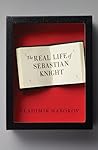
The Real Life of Sebastian Knight

The Real Life of Sebastian Knight 
by Vladimir Nabokov


“There is only one real number: one. And love, apparently, is the best exponent of this singularity.”
― Vladimir Nabokov, The Real Life of Sebastian Knight


Vladimir Nabokov's first book written entirely in English is this novel, a masterful, multi-layered literary detective tale. The book, which was finished in Paris in 1938 and released in 1941, is a masterwork of metafiction that presents a convoluted, puzzle-like story.

The narrator of the tale, simply referred to as "V.," chooses to write his definitive biography after the premature death of his estranged half-brother, Sebastian Knight, a renowned English novelist. V. sets out to rectify the record after Sebastian's former secretary, Mr. Goodman, published a trashy, hurried biography. V. travels throughout Europe with just a few letters and pieces of Sebastian's personal documents. In order to piece together his brother's true identity, he speaks with friends, acquaintances, and former flames. But the investigation becomes a maze of falsehoods, dead ends, and misleading recollections.

Early on in V., Nabokov cautions readers that there are three aspects to truth: that shaped by the teller, reshaped by the listener, and concealed from both by the dead man. You can't fully believe what V. discovers. It functions as a preliminary postmodern experiment, demonstrating how hard it is to fully capture the essence of another person's soul. Sebastian Knight's own fictional novels contain complex, perplexing plot structures that are exactly reflected in V.'s search.

View all my reviews

Wednesday, July 15, 2026

Existential Isolation

Queer

Queer 

“Writers, like elephants, have long, vicious memories. There are things I wish I could forget.”
― William S. Burroughs


Queer is a harrowing, darkly comic, and raw exploration of unrequited desire and existential isolation. The manuscript was deemed too explicitly homosexual for the era and languished unpublished until 1985. Acting as a vital bridge in the author's bibliography, it captures the exact moment where Burroughs begins to transition away from straightforward, gritty realism into the hallucinated, avant-garde style that would define his masterpiece, Naked Lunch. The narrative is a circular seduction set against the backdrop of a corrupt and spectral 1950s Mexico City. The novel functions as a heavily autobiographical self-portrait.

The reader follows William Lee, Burroughs's recurring literary alter ego—who is stranded in a sordid expat community while suffering from acute heroin withdrawal.Lee becomes frantically obsessed with Eugene Allerton, a detached, younger American military veteran.Lee drags Allerton from bar to bar in a painfully circular attempt at seduction.To keep Allerton anchored to him, Lee concocts an expedition in search of yage, a mythical, telepathic, mind-altering vine.

Fiction can take you to places that are completely outside of your own personal experience. This novel from the pen of William S. Burroughs does just that with its litany of addicts in the thrall of eros. It is exciting and visceral in its realism. Through the back streets and nights filled with haunting images of men with sexual drives that determine their fates. Powerful and comic yet sad -- a brilliant narrative from a literary genius.

View all my reviews

Tuesday, July 14, 2026

Comic Suffering

Crome Yellow

Crome Yellow 


“When one individual comes into intimate contact with another, she—or he, of course, as the case may be—must almost inevitably receive or inflict suffering.” ― Aldous Huxley, Crome Yellow


Crome Yellow, Aldous Huxley's first novel, is a clever, plotless satire of high society in Britain after World War I. This "comedy of ideas" chronicles a summer house party at Crome, an estate populated by pretentious intellectuals, artists, and eccentrics. It provides an intriguing, pessimistic glimpse of the "Bright Young Things" negotiating the early 1920s disillusionment. Denis Stone, a naive and angsty young poet who comes to Crome House for a summer vacation, is the protagonist of the book. Denis is incredibly in love with Anne Wimbush, the hosts' niece, but he keeps stumbling because of his extreme self-consciousness and numerous romantic competitors. The book weaves together lengthy terrace walks, informal trysts, and in-depth philosophical debates among the guests rather than presenting a conventional narrative arc.
Among these visitors is the host, Henry Wimbush, who writes an enigmatic history of his own estate while ignoring his living guests. Mr. Scogan is a hyperrational, cynical philosopher who makes unsettling, pre-dystopian predictions. He is based on Bertrand Russell. In addition, Mr. Barbecue-Smith is a well-known hack writer who says he uses his "subconscious" to produce thousands of profitable, meaningless words every hour. These characters, especially Barbecue-Smith, were delightfully funny to me. This book is brief, to the point, and does not go overboard.

View all my reviews

Sunday, July 12, 2026

Deepest Essence

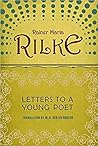
Letters to a Young Poet

Letters to a Young Poet 


“Perhaps all the dragons in our lives are princesses who are only waiting to see us act, just once, with beauty and courage. Perhaps everything that frightens us is, in its deepest essence, something helpless that wants our love.” ― Rainer Maria Rilke, Letters to a Young Poet


Rainer Maria Rilke's Letters to a Young Poet is a masterwork of introspective writing. The book, which was written between 1903 and 1908, is made up of ten letters that Franz Xaver Kappus, a 19-year-old military cadet, received asking for guidance on his poetry and life decisions. Rather than providing technical writing criticism, Rilke offers a profound manual on leading a genuine, creative life.

Loneliness is reclaimed by Rilke as a holy, useful place. He contends that a great deal of sometimes agonizing inner solitude is necessary for profound artistic creation and self-discovery. The letters promote accepting adversity rather than running away from it. Rilke famously suggests that instead of hurrying to find quick answers, we should love the questions themselves, like locked rooms. Love is presented as the ultimate test of maturity rather than as a straightforward emotional haven. According to Rilke, love is two solitudes that greet, border, and defend one another.

View all my reviews

Friday, July 10, 2026

Outsider with AIDS

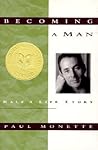
Becoming a Man: Half a Life Story
Becoming a Man: Half a Life Story 


“The problem with secret crushes: in the absence of requital the love turns bitter.”
― Paul Monette, Becoming a Man: Half a Life Story


Paul Monette, who grew up in the 1950s, had a life that was somewhat similar to mine because I was also born in the 1950s. Additionally, I share with him the theme of exploration and introspection, which, if it doesn't inspire every boy to write his own autobiography, does inspire them to pursue imaginative lives and a passion for literature and the arts. Paul Monette's story is about the outsider, the gay man in the boy whose life leads to the age of AIDS and the loss that comes with it. It goes beyond his coming-of-age in the 1950s. Monette adds a truth to his story that only a genuinely intimate memoir can contain, from a small town to an Ivy League school to the life of a writer. The spirit and narrative of this book should be treasured because they are universal and compassionate. Seldom has a book so richly earned the recognition and honors it has received.

View all my reviews

Casebook of Love

The Pure and the Impure

The Pure and the Impure 

by Colette


“You will do foolish things, but do them with enthusiasm.”
― Colette


First published in 1932, The Pure and the Impure (Le Pur et l'impur) is a captivating, non-linear masterpiece that the renowned French author Colette famously regarded as her best and most autobiographical work. This succinct but dense 184-page work functions as a profound "casebook of love," charting the sensual and psychological landscape of Paris's Belle Époque sexual underground, transcending the boundaries of fiction, memoir, and cultural critique.

View all my reviews

Wednesday, July 08, 2026

Thinking About the Planet

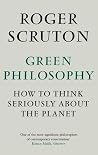
Green Philosophy: How to Think Seriously about the Planet

Green Philosophy: How to Think Seriously about the Planet 

by Roger Scruton


“Top-down solutions have a tendency to confiscate problems from those whose problems they are.”
― Roger Scruton, Green Philosophy: How to Think Seriously About the Planet


Instead of framing environmentalism as a leftist monopoly, the book reframes it as a fundamental conservative obligation. Scruton contends that international treaties and top-down bureaucratic interventions are ineffective because they ignore local love and individual responsibility, which are the primary forces behind human conservation. His central idea is oikophilia. A few distinct pillars form the philosophical basis of Scruton's book: Oikophilia, which means "the love of home." According to Scruton, people preserve the environment because they cherish their immediate, physical surroundings rather than out of an abstract sense of global utilitarianism. He advocates for bottom-up stewardship, saying that small-scale institutions, friendships, and local civil associations are the most effective ways to manage conservation. Large NGOs, the UN, and international climate treaties are all criticized by Scruton in his critique of globalism as unaccountable bureaucracies that have far-reaching unintended consequences. Instead, he supports holding polluters directly accountable through the use of free-market networks, unambiguous property rights, and tort laws. This is a readable and sensible perspective on how conservatives can contribute to environmental preservation.

View all my reviews

Search for Nature

The Imperative of Responsibility: In Search of an Ethics for the Technological Age

The Imperative of Responsibility: In Search of an Ethics for the Technological Age 


“Blind nature will nearly always select the most probable, but man can let the most improbable become actual.”  ― Hans Jonas


A risk-averse framework for the scientific era is introduced by Jonas. The worst-case scenario must take precedence over ideal projections when assessing existential risks such as genetic engineering or climate change. He contends that although we can afford to lose a bet on advancement, we cannot afford to lose a bet on human survival. Jonas bases his ethics on metaphysics, in contrast to many modern philosophers who separate ethics from objective reality. He claims that Being is intrinsically more valuable than Non-Being. Humanity has an unavoidable obligation to safeguard nature's intrinsic purpose for existing. The last sections criticize utopianism by focusing on both capitalist and Marxist ideas of unending technological advancement. Jonas argues for a politics of self-control and clearly illustrates how utopian visions of technological abundance directly result in ecological collapse.

View all my reviews