Showing posts with label Rereading Books. Show all posts

Sunday, December 21, 2025

Shadows of Clouds

Wolf Solent

Wolf Solent 

by John Cowper Powys


"The world is not made of bread and honey…nor of the sweet flesh of girls. This world is made of clouds and of the shadows of clouds. It is made of mental landscapes, porous as air, where men and women are as trees walking, and as reeds shaken by the wind.”
― John Cowper Powys, Wolf Solent


In 1929, Powys, then 57 years old and still earning a living from his traveling lecture show, published Wolf Solent. It was his first work as a mature novelist, an intensely poetic character study of the kind that would become his specialty, and it was brutally analytical. The conflict between brothers, the hypnotic eroticism of girls, the depraved elders, and the remnants of innocence are all typical components of his unique psychodrama. Wolf Solent is not a sentimental pastoral. Powys, who extolled the virtues of nature, never hesitated to expose its horrors. Violent implications abound in his work. He considered it a mistake to ignore what he referred to as "the necessity of opposition," in a somewhat Zen way: Good and Evil; Male and Female; Life and Death; Appearance and Reality. He claims that all of these

"All solid entities have to dissolve, if they are to outlast their momentary appearance, into atmosphere, while they must be joined together, forced into one another, and proven dependent upon each other."

Similar to Hardy's Return of the Native, the novel appears to be a fairly simple tale of a native son's return. After having a mental breakdown in London, Wolf, the title character and incredibly sensitive person, returns to his hometown on the South Coast of England. However, he completely loses his innocence at home rather than regaining it. He is traveling to a supposedly peaceful writing assignment for the local squire in order to get away from the city's intensity, comprehend his past, and in some way defend his deeply wounded mother. Nothing goes according to plan. He gets caught up in a number of romantic and professional affairs and learns terrible things about some former neighbors and friends. In his mind, a struggle rages between his mother's anxiety and his father's joy of life. He starts to feel sympathy for his father's mistress and develops feelings for his half-sister. He came for a job that was completely different from what he had anticipated. Actually, there's nothing in this town that relieves the intensity.

Ultimately, he returns to the anonymity of London, disillusioned. The novel can be summed up as "You can't go home again," but Powys finds this to be far too brief. It is what permeates every aspect of this book, from the living hero to every grass blade, housefly, and surrounding environment. He plays out every interpretation of his life on numerous reflective walks through the English countryside in an attempt to make sense of it. His respect and care for the natural world are admirable, though they can be challenging at times. Powys stayed where others might go because he detested most aspects of modern life, including capitalism and technology. This is central to the narrative and every one of Powys's books.

At one point, the critic George Steiner asserted that Powys was the only English author of the twentieth century who was comparable to Tolstoy and Dostoevsky. The renowned English novelist Margaret Drabble feels that "we need to pay attention to this man." She describes the fantasy setting of his books as "densely populated, thickly forested, mountainous, erudite, and strangely self-sufficient." Although this country receives fewer visitors than Tolkien's, it is just as fascinating and has more air.

View all my reviews

Wednesday, August 27, 2025

Nature by a Poet

The Immense Journey
The Immense Journey 


“While wandering a deserted beach at dawn, stagnant in my work, I saw a man in the distance bending and throwing as he walked the endless stretch toward me. As he came near, I could see that he was throwing starfish, abandoned on the sand by the tide, back into the sea. When he was close enough I asked him why he was working so hard at this strange task. He said that the sun would dry the starfish and they would die. I said to him that I thought he was foolish. There were thousands of starfish on miles and miles of beach. One man alone could never make a difference. He smiled as he picked up the next starfish. Hurling it far into the sea he said, "It makes a difference for this one." I abandoned my writing and spent the morning throwing starfish.” ― Loren Eiseley


Simply the most beautiful science writing I have ever read. An “imaginative naturalist,” according to the cover of his book, The Immense Journey. An anthropologist, a scholar, a poet, a genius. Eiseley wears all of these hats. He observes the story of life unfolding throughout history, recounting some of it to us in his own story. “Forward and backward I have gone, and for me it has been an immense journey” (p 13). By the time we read these words, we have come to realize that Eiseley is not just talking about his own life’s journey. Eiseley’s narrator is a metaphor for the journey of all humankind through the vast dimension of time and space—a journey filled with perplexity, delight, and impermanence. Eiseley might refute that if he were alive today. He claims he does not pretend to speak for anyone but himself.


“I have given the record of what one man thought as he pursued research and pressed his hands against the confining walls of scientific method in his time. But men see differently. I can at best report only from my own wilderness” (p 13).


This book is science and philosophy presented in lucid, beautiful prose - a reader's delight.


Tuesday, December 17, 2024

Knight Errant

Don Quixote

Don Quixote 

by Miguel de Cervantes Saavedra


 “Finally, from so little sleeping and so much reading, his brain dried up, and he went completely out of his mind.”― Miguel de Cervantes Saavedra, Don Quixote


The idea of the novel starts here. This is the source of the modern novel for many. While it remains the epitome of storytelling, its fame has also led to the coinage of such terms as "quixotic" and others. Influential beyond almost any other single work of fiction, the characters, through their charm and uniqueness, remain indelible in the memory of readers. 


Don Quixote is one of those books whose influence is so far-reaching as to be almost ubiquitous, like The Odyssey or the Bible. And like the Bible or Homer’s epic, it is more often talked about than read. But my conclusion upon reading it is to recommend to all: read it and enjoy the stories.


As Don Quixote says . . . "the life of knights-errant is subject to a thousand perils and reverses, and it's just as likely for knights-errant to become kings and emperors, as has been shown by experience through many diverse knights whose histories I know thoroughly. And I could tell you, you know, if this pain would abate, about some who, all alone, through the strength of their arm, have risen to the high positions that I've told you about. . . I can well suffer among such good company, for they have undergone greater affronts than we've just now undergone." (p 119)


Tuesday, May 28, 2024

The (almost) Complete Truth

Emma
Emma 


“Seldom, very seldom, does complete truth belong to any human disclosure; seldom can it happen that something is not a little disguised or a little mistaken.”   ― Jane Austen, Emma


I most recently read Emma as the April book for my local Great Books reading group. I had previously read it as the introductory novel in a class at the Newberry Library. The class was entitled "Jane Austen's Heirs" and included novels by such "heirs" of hers as Virginia Woolf, Rebecca West, Elizabeth Bowen, Barbara Pym, and Anita Brookner. Rereading this delightful novel is something I will undoubtedly do again.

Before she began the novel, Austen wrote, "I am going to take a heroine whom no one but myself will much like." In the very first sentence she introduces the title character as "Emma Woodhouse, handsome, clever, and rich." Emma, however, is also rather spoiled; she greatly overestimates her own matchmaking abilities; and she is blind to the dangers of meddling in other people's lives and is often mistaken about the meanings of others' actions.

While Emma differs strikingly from Austen's other heroines in some respects, she resembles Elizabeth Bennet and Anne Elliot, among others, in another way: she is an intelligent young woman with too little to do and no ability to change her location or everyday routine. Though her family is loving and her economic status secure, the quotidian details of Emma's everyday life seem a bit dul; she has few companions her own age when the novel begins. Her determined though inept matchmaking may represent a muted protest against the narrow scope of a wealthy woman's life, especially that of a woman who is single and childless.
And of course there is the classical balance of the novel's structure that, combined with the beauty of Austen's writing style, makes this novel a favorite of readers and writers, particularly those mentioned above, ever since it was published.


Wednesday, June 10, 2020

The Eternal Man

Ninety-Three 


Ninety-Three


“History has its truth, and so has legend. Legendary truth is of another nature than historical truth. Legendary truth is invention whose result is reality. Furthermore, history and legend have the same goal; to depict eternal man beneath momentary man.”  ― Victor Hugo, Ninety-Three


Ninety-Three by Victor Hugo is a glorious romantic imagining of an episode from the year 1793, during the French Revolution and the year of the Great Terror. The setting is Brittany where counter-revolutionary forces have risen up to oppose the Revolutionary leaders. The leader of this group, the aged Marquise de Lantenac, is a romantic hero in the grandest sense. A Breton noble, he disguises himself as a peasant after landing on the western coast. His mission, which he pursues with ruthless single-mindedness, is to act as a leader to the rebels, harness them to the royalist cause, and contrive an opportunity for an English military invasion.

His fate seems to be determined by the Revolutionary forces which are led by his grand-nephew, Gauvain. Pitted against Lantenac, Gauvain, formerly the Vicomte de Gauvain, has renounced his noble heritage and embraced the republican cause. Gauvain commands the republican troops allied with Marat and tasked with hunting down and killing Lantenac.

The third protagonist is Cimourdain, once a priest and Gauvain’s tutor, now a fervent revolutionary. It was from Cimourdain that Gauvain first learned the political ideals he has adopted. Cimourdain has a secret, the one weak spot in his ideological armour, for he loves Gauvain, has loved him since childhood, like the son he himself never had. Cimourdain is sent by the revolutionary leader, Marat, as a special agent to the Vendée to ensure that Gauvain does not waver in his loyalty, for Marat has heard disturbing rumors that Gauvain may be capable of mercy, and revolutionary leaders view this as a cardinal sin.

The tension of the story is provided not only by the action, which is fiercely exciting, but by ideas. At one point Gauvain says to Cimourdain:
"Louis XVI was a sheep thrown among lions. He tried to flee, to save himself . . . But not everyone can be a lion who wants to. His feeble attempt was regarded as a crime."
He asks Cimourdain, "lions? What are they?"
"This made Cimourdain think. He raised his head and said, 'Those lions are consciences. Those lions are ideas. Those lions are principles.'" (pp 197-98)

While Gauvain is a man of action, a revolutionary for the republic, he is also a thinker and it is his thoughts about the humanity of men that lead him to his ultimate actions. 
The grandeur of this novel is superb, while Hugo builds suspense in every section. Some scenes are so vivid that you are unlikely to forget them. One scene that is sometimes excerpted from the novel is the great cannon episode; depicting a loose cannon on a ship of anti-revolutionary French Royalists sailing towards Brittany, to aid the anti-revolutionary Chouannerie rebellion. 
The whole of the novel is like this, filled with one astonishing experience after another, keeping this reader spellbound.


Ninety-Three by Victor Hugo. Bantam Books, 1962 (1874)

Friday, November 15, 2019

The Peripatetic Reader

Books on the Bus
an update 


I always have a book with me including when I ride the bus. When I am out and about I prefer to leave the heavyweight tomes at home so my current reading that includes: The Symposium, a dialogue by Plato;  The Brothers Karamazov;  and the Essais of Montaigne, all of which are left on a table next to my comfortable reading chair.

On a recent morning I was reading the short novel The Country of Pointed Firs by Sarah Orne Jewett as I rode the bus headed downtown.  Similarly, some years ago,  when I rode downtown and back to meet some former coworkers for lunch I took along Gene Smith's slight but fascinating biography of Woodrow Wilson's last years, When The Cheering Stopped: The Last Years of Woodrow Wilson.  Now what do these two disparate books have in common? They are both lightweight and easy to carry and it also takes a little less concentration to read them than that required for Dostoevsky or Plato.

While I enjoy reading as I travel I equally enjoy noticing what my fellow bus riders are reading. There are always a few readers on board any bus with more than a handful of passengers. Call me a biblio-voyeur if you will, but I cannot deny my interest. Usually the books are not worth the glance, for the buses are filled with people reading Twilight or its clones, the latest romance novel or some Ludlumesque thriller-chiller (all of which I personally find unreadable - but that's just one reader's perspective).

Not to long ago just after I had finished reading the novel Less by Andrew Sean Greer I was riding the bus headed downtown and the fellow who sat down next to me pulled out the same book - needless to say a brief genial conversation ensued.  This reminded me of previous occasions when I encountered people with various reading material including  Knowles' A Separate Peace, and Complications: A Surgeon's Notes on an Imperfect Science by Atul Gawande. Now those are both books worthy of consideration, in fact I've read A Separate Peace more than once. They provide evidence that there is a bit of gold among the dross of the many books being read on the bus. 

It reminds me of yet another time several years ago that I struck up a conversation with someone who was reading No Ordinary Time: Franklin and Eleanor Roosevelt: The Home Front in World War II by Doris Kearns Goodwin. I had recently read it myself and could not help sharing the joy of the experience by discussing the book with a fellow reader - no stranger, for we were connected by our shared reading. While that does not happen often since I usually have my nose buried in a book, there is nothing like taking books with you and reading them on buses -  enjoying them while traveling to and fro.

Wednesday, July 24, 2019

The Virtues of a Good Life

Nicomachean Ethics 


Nicomachean Ethics


“These virtues are formed in man by his doing the actions ... The good of man is a working of the soul in the way of excellence in a complete life.”   
― Aristotle, The Nicomachean Ethics


This is Aristotle's classic guide to ethics including the golden mean, the nature of friendship and other topics. While it is more a set of lecture notes than a polished philosophical treatise it still demonstrates the power of the mind of the man behind it.

In the first part he focuses on defining the nature of the highest good for human beings. That is the good at which all things aim (1094a3). This highest good is "happiness" by which is meant both "living well" and "doing well" (1095a18); that, more specifically, happiness is "an activity of the soul [which] consists in action performed in conjunction with the rational element" (1098a13), "in conformity with excellence or virtue" (1098a15), "in a complete life" 91098a16).

As he does for other subjects Aristotle approaches ethics in an organized and scientific manner with an initial emphasis on definitions such as: what is the good, virtue, justice and moral excellence? He does this with an expectation of only that level of precision that is appropriate for the subject at hand. Over the course of the middle section of the treatise the reader is introduced to the concept of the 'golden mean' by which virtues are discussed with regard to extremes (eg. courage vs. rashness) which allow for a middle ground or mean between the extremes. In book seven he discusses moral strength and weakness, and he follows this in book eight with an analysis of the nature and importance of friendship and the need for it. He makes the case that:
"The perfect form of friendship is that between good men who are alike in excellence or virtue. For these friends wish alike for one an other's good because they are good men, and the are good per se, (that is, their goodness is something intrinsic, not incidental). Those who wish for their friends' good for their friends' sake are friends in the truest sense since their attitude is determined by what their friends are and not by incidental considerations."(1156b, 6-12)

The ethics culminates in a argument for the supreme importance of contemplation. He says,
"But a wise man is able to study even by himself, and the wiser he is the more is he able to do it. . . study (contemplation) seems to be the only activity which is loved for its own sake."(1177a, 33- 1177b, 1)
The ethical principles, the method of demonstration and the sheer power of the ideas presented here make this a valuable guide even as we approach the twenty-first century.

Wednesday, February 28, 2018

Top Ten Tuesday (on Wednesday)


Top Ten Tuesday: Books I Could Re-read Forever

What would you do if you could only own a few books, in this case, ten? What if you had to downsize? Which books could you live with and read over and over? It is NOT easy to choose just a few, but if I had to choose right now, this is what I could read over and over again. These are what I call my lifetime books because I have read them (some from an early age) again and again, and I look forward to the next reread.


Alice's Adventures in Wonderland by Lewis Carroll


Jane Eyre by Charlotte Bronte


My Antonia by Willa Cather


Of Human Bondage by Somerset Maugham


The Fountainhead by Ayn Rand


The Brothers Karamazov by Fyodor Dostoevsky


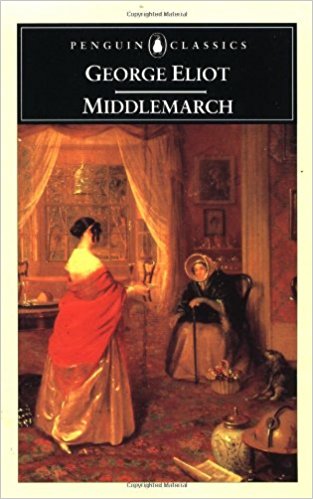
Middlemarch by George Eliot


The Return of the Native by Thomas Hardy


David Copperfield by Charles Dickens


In Search of Lost Time by Marcel Proust 

Sunday, June 12, 2016

Essays for Humanity

My Belief: Essays on Life and ArtMy Belief: Essays on Life and Art 
by Hermann Hesse


“Without words, without writing and without books there would be no history, there could be no concept of humanity.”   ― Hermann Hesse


There are those writers who spin tales and tell imaginary stories and there are those who document their lives. These essays fall into the latter category within the oeuvre of Hermann Hesse. Each is a delight whether of personal detail, literary criticism, philosophy, or meditation on the meaning of life. Hesse had to write and most often he had to write about himself. There is little that he wrote that is not confessional in aspect and therapeutic in function. These essays provide milestones and assessments of his life and reading. They are a joy to read and consider alongside his fiction and other writings.

Here is an especially moving excerpt from his essay "The Magic of the Book":

For every thinking person each verse of each poet will show a new and different face to the reader every few years, will awaken a different resonance in him.  When as a youth I read for the first time, only partially understanding it, Goethe's Elective Affinities, that was a completely different book from the Elective Affinities that I have now read perhaps for the fifth time!  The great and mysterious thing about this reading experience is this:  the more discriminatingly, the more sensitively, and the more associatively we learn to read, the more clearly we see every thought and every poem in its uniqueness, its individuality, in its precise limitations and see that all beauty, all charm depend on this individuality and uniqueness--at the same time we come to realize ever more clearly how all these hundred thousand voices of nations strive toward the same goals, call upon the same gods by different names, dream the same wishes, suffer the same sorrows.  Out of the thousandfold fabric of countless languages and books of several thousand years, in ecstatic instants there stares at the reader a marvelously noble and transcendent chimera:  the countenance of humanity, charmed into unity from a thousand contradictory features." (pp 161-62)

View all my reviews

Tuesday, November 17, 2015

Nourishment for Readers

Reading in BedReading in Bed 
by Steven Gilbar


"A truly great book should be read in youth, again in maturity, and once more in old age, as a fine building should be seen by morning light, at noon and by moonlight.  We all read too much, too fast.  I am taking the summer off to work slowly through several books that are due for a second reading."  - Robertson Davies


What do Emerson, Proust, Nabokov, and Calvino all have in common beyond the fact they were all great authors? They all wrote fascinating essays on the art of reading books. Steven Gilbar, a lawyer who is foremost a reader, selected and edited a delightful compilation of essays on books and reading for this tantalizing book, Reading in Bed. The essays range from those by classic authors like Montaigne, Hazlitt and Ruskin to modern notables like Marcel Proust, Henry Miller, Italo Calvino and Graham Greene. The entries from notable essayists include a couple of my favorites: Joseph Epstein and Sven Birkerts. The essay by Robertson Davies whose final paragraph is quoted above reminds me of the pleasure I have gained from rereading books that I love, most of which would be considered great. Some of those readings have been spaced out over my life while others have been bunched together in the several decades of my maturity. They include disparate writers and genres but all are books that I look forward to reading again. I have enjoyed reading and rereading massive classics like War and Peace, Middlemarch, and The Brothers Karamazov, along with smaller classics like Cather's My Antonia, Maugham's The Razor's Edge, and Lagerkvist's The Dwarf.

The one thing all these essays share is a transcendence, but they also have the ability to trigger new insights into the text and its message for our lives. They amplify and magnify the experience of reading while acting as a catalyst for further reading. The inclusion of a bibliography provides suggestions for further reading in the essays of these authors on subjects that are likely to be just as stimulating as those on reading. The compilation maintains a high level of excellence throughout without losing its entertainment value, at least for passionate and serious readers. I keep it by my bedside.

View all my reviews

Saturday, December 13, 2014

The Overlords

Childhood's EndChildhood's End 

by Arthur C. Clarke

“No utopia can ever give satisfaction to everyone, all the time. As their material conditions improve, men raise their sights and become discontented with power and possessions that once would have seemed beyond their wildest dreams. And even when the external world has granted all it can, there still remain the searchings of the mind and the longings of the heart.”  ― Arthur C. Clarke, Childhood's End

There are reasons why certain books are considered great. Arthur C. Clarke's novel, Childhood's End, exhibits several of them. It is a lucid account of the meeting of "aliens" from outer space with the residents of earth. In describing this encounter and the aftermath, Clarke created a scene, the image of huge spaceships hovering over major cities of Earth, that not only impresses the reader but that had remained as an image for subsequent science fiction. But this book should be considered great as a work of literature, from the structure to style to characterization there is an economy that allows for a tale spanning decades to be told in a couple hundred pages. Clarke focuses on the essentials of the story and lets the reader imagine the inessential details. He also provides contrasts in character and ideas while providing just the right amount of suspense to keep the reader turning the page.

Fundamentally this is a "novel of ideas" and that is what this reader took away from the book. It explores the wonder at the nature of the universe and the potential for man when encountering other residents of it.  The author makes this comment about man's relations to the stars.  Do you agree?

“In this single galaxy of ours there are eighty-seven thousand million suns. [...] In challenging it, you would be like ants attempting to label and classify all the grains of sand in all the deserts of the world. [...] It is a bitter thought, but you must face it. The planets you may one day possess. But the stars are not for man.”   ― Arthur C. Clarke, Childhood's End

View all my reviews