Showing posts with label Letters. Show all posts

Sunday, July 12, 2026

Deepest Essence

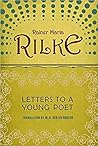
Letters to a Young Poet

Letters to a Young Poet 


“Perhaps all the dragons in our lives are princesses who are only waiting to see us act, just once, with beauty and courage. Perhaps everything that frightens us is, in its deepest essence, something helpless that wants our love.” ― Rainer Maria Rilke, Letters to a Young Poet


Rainer Maria Rilke's Letters to a Young Poet is a masterwork of introspective writing. The book, which was written between 1903 and 1908, is made up of ten letters that Franz Xaver Kappus, a 19-year-old military cadet, received asking for guidance on his poetry and life decisions. Rather than providing technical writing criticism, Rilke offers a profound manual on leading a genuine, creative life.

Loneliness is reclaimed by Rilke as a holy, useful place. He contends that a great deal of sometimes agonizing inner solitude is necessary for profound artistic creation and self-discovery. The letters promote accepting adversity rather than running away from it. Rilke famously suggests that instead of hurrying to find quick answers, we should love the questions themselves, like locked rooms. Love is presented as the ultimate test of maturity rather than as a straightforward emotional haven. According to Rilke, love is two solitudes that greet, border, and defend one another.

View all my reviews

Friday, May 30, 2014

Book Burning

Letter from Kurt Vonnegut 
regarding the burning of Slaughterhouse-Five


"Since first being published in 1967— and despite being considered one of the great modern novels—Kurt Vonnegut’s time-hopping, semiauto-biographical, antiwar classic, Slaughterhouse-Five, has been and continues to be banned from classrooms and libraries the world over. This is due to what is often described by those who censor it as its “obscene” content. A different view was held by Bruce Severy, a twenty-six-year-old English teacher at Drake High School, North Dakota, in 1973, who decided to use the novel as a teaching aid in his classroom, much to the delight of his students. The head of the school board, Charles McCarthy, had other ideas, however: He demanded that all thirty-two copies be burned in the school’s furnace. Many of the students protested the decision; some even refused to hand their books back. Their admirable stance was ignored. On November 16, 1973, an angry and disappointed Vonnegut wrote to McCarthy to make his feelings known. His powerful letter failed to generate a reply.

Here’s the letter."* 

November 16, 1973

Dear Mr. McCarthy:

I am writing to you in your capacity as chairman of the Drake School Board. I am among those American writers whose books have been destroyed in the now famous furnace of your school.

Certain members of your community have suggested that my work is evil. This is extraordinarily insulting to me. The news from Drake indicates to me that books and writers are very unreal to you people. I am writing this letter to let you know how real I am.

I want you to know, too, that my publisher and I have done absolutely nothing to exploit the disgusting news from Drake. We are not clapping each other on the back, crowing about all the books we will sell because of the news. We have declined to go on television, have written no fiery letters to editorial pages, have granted no lengthy interviews. We are angered and sickened and saddened. And no copies of this letter have been sent to anybody else. You now hold the only copy in your hands. It is a strictly private letter from me to the people of Drake, who have done so much to damage my reputation in the eyes of their children and then in the eyes of the world. Do you have the courage and ordinary decency to show this letter to the people, or will it, too, be consigned to the fires of your furnace?

I gather from what I read in the papers and hear on television that you imagine me, and some other writers, too, as being sort of ratlike people who enjoy making money from poisoning the minds of young people. I am in fact a large, strong person, fifty-one years old, who did a lot of farm work as a boy, who is good with tools. I have raised six children, three my own and three adopted. They have all turned out well. Two of them are farmers. I am a combat infantry veteran from World War II, and hold a Purple Heart. I have earned whatever I own by hard work. I have never been arrested or sued for anything. I am so much trusted with young people and by young people that I have served on the faculties of the University of Iowa, Harvard, and the City College of New York. Every year I receive at least a dozen invitations to be commencement speaker at colleges and high schools. My books are probably more widely used in schools than those of any other living American fiction writer.

If you were to bother to read my books, to behave as educated persons would, you would learn that they are not sexy, and do not argue in favor of wildness of any kind. They beg that people be kinder and more responsible than they often are. It is true that some of the characters speak coarsely. That is because people speak coarsely in real life. Especially soldiers and hardworking men speak coarsely, and even our most sheltered children know that. And we all know, too, that those words really don’t damage children much. They didn’t damage us when we were young. It was evil deeds and lying that hurt us.

After I have said all this, I am sure you are still ready to respond, in effect, “Yes, yes— but it still remains our right and our responsibility to decide what books our children are going to be made to read in our community.” This is surely so. But it is also true that if you exercise that right and fulfill that responsibility in an ignorant, harsh, un-American manner, then people are entitled to call you bad citizens and fools. Even your own children are entitled to call you that.

I read in the newspaper that your community is mystified by the outcry from all over the country about what you have done. Well, you have discovered that Drake is a part of American civilization, and your fellow Americans can’t stand it that you have behaved in such an uncivilized way. Perhaps you will learn from this that books are sacred to free men for very good reasons, and that wars have been fought against nations which hate books and burn them. If you are an American, you must allow all ideas to circulate freely in your community, not merely your own.

If you and your board are now determined to show that you in fact have wisdom and maturity when you exercise your powers over the education of your young, then you should acknowledge that it was a rotten lesson you taught young people in a free society when you denounced and then burned books— books you hadn’t even read. You should also resolve to expose your children to all sorts of opinions and information, in order that they will be better equipped to make decisions and to survive.

Again: you have insulted me, and I am a good citizen, and I am very real.

Kurt Vonnegut


*from:  Letters of Note: An Eclectic Collection of Correspondence Deserving of a Wider Audience  by Shaun Usher.  Canongate Unbound, 2013.

Here is a link to the Minot Daily News article about this incident:  "Books at Drake Burned by School Board"

Saturday, February 26, 2011

The Letters of Lytton Strachey
The Letters of Lytton Strachey 


"Human beings are too important to be treated as mere symptoms of the past. They have a value which is independent of any temporal process──which is eternal, and must be felt for its own sake."  --  Lytton Strachey,  Eminent Victorians


Lytton Strachey is best remembered as a biographer from his famous Eminent Victorians to his lives of Victoria and Elizabeth I. His letters, however, depict better the breadth of the man's life whether it be philosophical interchanges with G. E. Moore and Bertrand Russell, friendly confidences shared with fellow members of the Bloomsbury set, or love letters launched to various partners including Carrington and Duncan Grant. The book is a delight to open at random and read mementos from his life at most any point because he was always corresponding with such thoughtful and interesting people. The editor, Paul Levy, includes helpful notations about the details of events and people when necessary for context making the collection even more enjoyable. It is Strachey's passion for literature and life that impresses me the most as when he wrote to G. E. Moore in October, 1903 upon reading Principia Ethica, which had been published the previous week, saying: "Your grand conclusion made me gasp -- it was so violently definite."(p 17) For those readers interested in literary activity in England and the Bloomsbury circle this is a useful volume.


The Letters of Lytton Strachey by Lytton Strachey. Paul Levy, ed. Farrar, Straus & Giroux, New York. 2005


View all my reviews