Showing posts with label Medicine. Show all posts

Tuesday, June 08, 2021

Let Food be thy Medicine

On Ancient Medicine (also known as Tradition in Medicine), the Hippocratic Oath, and the Law (also known as the Canon)

On Ancient Medicine 


“Let food be thy medicine and medicine be thy food.”   ― Hippocrates


Hippocrates is best known
for his famous Oath for physicians, however he also wrote many books of which this is the first - a sort of introductory text. Rather than presenting theory or philosophy he provides practical advice about what medicine works and what doesn't work. It is primarily about knowledge, both of the body and the diseases of the body.

Hippocrates focuses on common diseases, their causes and origins, and specifically mentions the common people as those in whom he is interested. Surprisingly, he highlights the importance of diet, the need to cook meat, and, especially, the use of soups in the diet to moderate the extremes of certain foods.

He compares physicians to pilots who are trying to set a course for health. In doing this there is a discussion of changes in temperature, heat and cold, and the effects on the body of changes in temperature. He also  points out that heat is often a symptom of something else. Most importantly he emphasizes the connection between man and nature:
"Wherefore it appears to me necessary to every physician to skilled in nature, and strive to know, if he would wish to perform his duties, what man is in relation to the articles of food and drink, and to his other occupations, and what are the effects of each of them to every one."(sec. 20)

This relatively short book contains practical recommendations for those practicing medicine in Ancient Greece. In spite of the ancient setting of this text it sounds quite modern in its varied concerns regarding man, nature, diet, and the use of a holistic empirical method when dealing with the art of medicine.


Wednesday, March 22, 2017

Grave Condition, but not Hopeless

The Author: Alexander Solzhenitsyn

He  was born in December 1918;  known as a Russian novelist, historian, and short story writer. Solzhenitsyn fought in World War II as a commander in Russia’s Red Army and was decorated twice. He was arrested in 1945 for making derogatory comments about Stalin in a letter to a friend. He was subsequently sentenced to eight years imprisonment to be followed by permanent internal exile.

He was an outspoken critic of the Soviet Union and communism and helped to raise global awareness of its Gulag forced labor camp system. He was allowed to publish only one work in the Soviet Union, One Day in the Life of Ivan Denisovich (1962), in the periodical Novy Mir. After this he had to publish in the West.   He is a stomach cancer survivor and his experiences serve as the basis for Cancer Ward (1968).  He also published The First Circle (1968), August 1914 (1971), and The Gulag Archipelago (1973). He was awarded the Nobel Prize in Literature in 1970 “for the ethical force with which he has pursued the indispensable traditions of Russian literature”. Solzhenitsyn was afraid to go to Stockholm to receive his award for fear that he would not be allowed to reenter. He was eventually expelled from the Soviet Union in 1974, but returned to Russia in 1994 after the state's dissolution.  He died in 2008. 


The Novel:   Cancer Ward 

“What is an optimist? The man who says, "It's worse everywhere else. We're better off than the rest of the world. We've been lucky." He is happy with things as they are and he doesn't torment himself.

What is a pessimist? The man who says, "Things are fine everywhere but here. Everyone else is better off than we are. We're the only ones who've had a bad break." He torments himself continually.”   ― Aleksandr Solzhenitsyn, Cancer Ward


Cancer WardThe story takes place in the men's cancer ward of a hospital in a city in Soviet Central Asia. The patients in Ward 13 all suffer from cancer, but differ in age, personality, nationality, and social class (as if such a thing could be possible in the Soviet "classless" society!). We are first introduced to Pavel Rusanov, a Communist Party functionary, who enters the hospital because of a rapidly-growing neck tumor.
"The hard lump of his tumor--unexpected, meaningless and quite without use--had dragged him in like a fish on a hook and flung him onto this iron bed--a narrow, mean bed, with creaking springs and an apology for a mattress."(p 10)

Solzhenitzyn himself was released from a labor camp in early 1953, just before Stalin's death, and was exiled to a village in Kazakhstan. While incarcerated, he had been operated on for a tumor, but was not told the diagnosis. He subsequently developed a recurrence, received radiotherapy in Tashkent, and recovered.

The narrative places its focus on the central character of Oleg Kostoglotov, a young man who has recently been discharged from a penal camp and is now "eternally" exiled to this particular province. Only two weeks earlier, he was admitted to the ward in grave condition from an unspecified tumor, but he has responded rapidly to radiation therapy. Among the doctors are Zoya, a medical student; Vera Gangart, a young radiologist; and Lyudmila Dontsova, the chief of radiation therapy.

Rusanov and Kostoglotov respond to therapy and are eventually discharged; other patients remain in the ward, get worse, or are sent home to die. In the end Kostoglotov boards a train to the site of his "eternal" exile: "The long awaited happy life had come, it had come! But Oleg somehow did not recognize it."

In The Cancer Ward Solzhenitzyn transforms his own experiences into a multifaceted tale about Soviet society during the period of hope and liberalization after Stalin's death. While Cancer, of course, is an obvious metaphor for the totalitarian state there is also a penetrating look at mid-century Soviet medicine and medical ethics. 
“But substantial X-ray treatment is impossible without transfusion!” “Then don’t give it! Why do you assume you have the right to decide for someone else? Don’t you agree it’s a terrifying right, one that rarely leads to good? You should be careful. No one’s entitled to it, not even doctors.” “But doctors are entitled to that right—doctors above all,” exclaimed Dontsova with deep conviction. By now she was really angry. “Without that right there’d be no such thing as medicine!” 
Of course, the paternalism evident here (e.g. lack of truth-telling and informed consent) was also characteristic of medicine in other countries in the 1950's and remains an important concern in professional ethics.

The novel also explores the personal qualities and motivation of physicians, and the issue of intimate relationships between doctors and patients. The most incisive aspects of the book are its insight into human nature and the realism of its characters.

Saturday, May 31, 2014

Birth of Modern Surgery

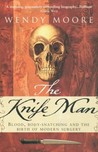
The Knife Man: Blood, Body-Snatching and the Birth of Modern SurgeryThe Knife Man: 
Blood, Body-Snatching and 
the Birth of Modern Surgery 

by Wendy Moore

"The improvement of medical practice which will become more efficacious with the progress of reason and of the social order, will mean the end of infectious and hereditary diseases and illnesses brought on by climate, food. or working conditions. It is reasonable to hope that all other diseases may likewise disappear as their distant causes are discovered."   - Marquis de Condorcet

The Eighteenth Century ushered in what would become known as the "Enlightenment".   A new philosophy of progress was proclaimed by intellectuals throughout Europe. They proclaimed that Reason would create a better future; science and technology, as Francis Bacon had taught, would enhance man's control over nature, and cultural progress, prosperity and the conquest of disease would follow. While Condorcet's vision is still not complete, Wendy Moore's biography of Dr. John Hunter, The Knife Man, captures one man's contribution to it.

Moore depicts Hunter's life and arrests the reader's attention through the use of intriguing episodes in that life. Told in a chronological style, Hunter's life was filled with exciting episodes as he was what one might call a "larger than life" character. Always unafraid to upset friend and foe alike, he never rested in his search for the truth about human and other animals' physiology. He became a premiere surgeon despite his distaste for "book learning" through his own observations and what we call the scientific method of experimentation and verification. He impressed me as an enlightenment version of Aristotle in his method of theorizing based on observation of the real world. He was among the first to do autopsies on dead people, he developed methods for revival of life through electric shock (Benjamin Franklin was among his friends), and he used artificial insemination to help a woman conceive. He would work for free with poor people while buying their dead bodies from the graveyard later. He was obsessed with immortality and whether it was possible to obtain it.

A fellow Scot whose heritage I share, John Hunter created modern medicine and surgery as we know it, as well as being the inspiration for the next generation of artists (Joshua Reynolds), composers (Haydn), writers (Tobias Smollett, Samuel Johnson, Lord Byron among others) and of course doctors (Lister and Jenner in particular);  indeed Hunter would be credited with being the inspiration for Dr Doolittle and his house would inspire Robert Louis Stevenson's Dr Jekyll and Mr Hyde (another of those ubiquitous Scots). More importantly, from my perspective and interest in philosophy and economics, was his friendship with David Hume and Adam Smith, the latter for whom he provided medical attention in an ultimately unsuccessful attempt to turn around his declining health in the 1780s. Hunter would later found the Royal College of Surgeons as well as the Royal Veterinary College. His museum of body parts and skeletons exists to this very day. He also was named Surgeon-Extraordinary to King George III and Surgeon-General of the British Army.

Just as in our day, in earlier times the independent-minded forward thinker was not rewarded for his views by the establishment.  And just as the men who discovered the earth was not the center of the universe were chastised by the church, so Hunter was criticized by the medical establishment of his day. With his colleagues still practising medicine and surgery from the Dark Ages, Hunter would be cutting up dead bodies and examining the anatomy of bodies to discover how they worked. He would do the same with animals from dogs to elephants to zebras. He would then give lectures to an army of adoring medical students while his scheming brother would steal the body parts for his own private collection. I was impressed with the large numbers of young physicians who attended Hunter's lectures and demonstrations, for they would create the medicine of the future.  Wendy Moore successfully relates the life of this giant of the enlightenment who changed the course of medicine for the better.

Update of a review from 2010

Wednesday, September 11, 2013

The Immortal Demon

The Cancer Chronicles: Unlocking Medicine's Deepest MysteryThe Cancer Chronicles: 
Unlocking Medicine's Deepest Mystery
by George Johnson

"We must never feel disarmed: nature is immense and conplex, but it is not impermeable to intelligence; we must circle around it, pierce and probe it, looking for the opening or making it." - Primo Levi, The Periodic Table

George Johnson opens his book, on the page preceding chapter one, with an epigraph from Reynolds Price's memoir about his own struggle with cancer that left him in a paraplegic state. I mention this because I was moved by my reading of Price's book almost two decades ago and, while it was an eloquent expression of the experience of cancer it did not, as I remember, inform me significantly about the nature of the disease itself. With The Cancer Chronicles George Johnson, a writer whose book Fire in the Mind impressed me several years ago, shares both the history and nature of the disease called Cancer and a memoir of his wife's own battle with that disease.
The history of cancer begins very far back in prehistoric times for it seems that scientists have found that the disease was already present in the age of Dinosaurs. This revelation along with others made the book both informative and interesting to read. His chronicle of the history of the science of cancer explores the realms of epidemiology. clinical trials, laboratory experiments while sharing information from evolutionary biology and other sciences. Even the economics of the Cancer research juggernaut is described -- an industry that has grown to an immense size in the search for an elusive "cure" for cancer.
Cancer the disease is at the core of the book and permeates the narrative, but the chronicles reveal what is in reality multiple different diseases. Each cancer affects different parts of the body and different groups of humans in unique ways. This is an important part of the story and represents some of the basis for many of the obstacles scientists continue to face in analyzing how to stop or prevent the disease.
Johnson capably personalizes the story with interludes where he shares his wife's struggle with Cancer. In doing this he reveals a view of the disease from the point of view of the everyday person who must deal with the practicalities of diagnoses and treatments and hospital stays. For those of us who have family or close friends who have had the experience of this disease the narrative is a moving personal story. I also appreciated the literary allusions whether explicit, like the reference to Solzhenitsyn's masterpiece Cancer Ward, or implicit.  The author is eloquent both in his telling analysis of the disease and in his personal memoir; he demonstrates an ability to convey scientific concepts lucidly enough for the layman to understand. These characteristics and the fascination that the author shares for scientific discovery make this a great book full of insights into the deep mysteries of some of the most complex areas of modern medicine.

The Cancer Chronicles by George Johnson. Alfred A. Knopf, 2013.

Saturday, April 09, 2011

Personal Connections

Polio: An American Story
Polio: An American Story 


"The feud between Salk and Sabin would outlive them both. There is still an ongoing debate over which man produced the better vaccine and which vaccine should be used today. What is certain, however, is that the polio crusade that consumed them remains one of the most significant and culturally revealing triumphs in American medical history."(p 7)


In the middle of the Nineteen-fifties when I was in grade school one of the more momentous events in my life was experiencing the first round of vaccinations for polio. This meant trips to the doctor to receive "shots" of Polio vaccine (subsequently the vaccines would move to the grade school and continue for several years). It is this event and the crusade that led to it that is detailed in David Oshinsky's book, Polio: An American Story. He takes a comprehensive approach to the story including the history of polio epidemics, Roosevelt's story and the "March of Dimes", and the battle between Jonas Salk and Albert Sabin over the best approach to take regarding the vaccine. The actual trials of the Salk vaccine held in 1954 were a huge event in an era of history-making events ("Brown v. Board of Education, the Army-McCarthy hearings and the fall of Dien Bien Phu", p 188). The narrative is suspenseful, and made all the more compelling by my having lived through part of the story. Even as my generation was spared the ravages of the disease I was reminded of it by friends, family and teachers who had survived and bore the scars of it throughout the rest of their lives. Oshinsky's history won the Pulitzer Prize in 2006 and is worth reading for anyone who is interested in the impact of disease and medicine on the history of America.