Monday, February 23, 2026

Two Lives

Twist

Twist 


“Not a single atom in our bodies today was there when we were children. Every bit of us has been replaced many times over. We flake away and become new. Whatever we are now, we are not the stuff from which we were originally made. All the people we once were. All the people we had once hoped to be.”
― Colum McCann, Twist


An authentic story of two lives—that of a diver and a writer—whose paths cross in a world where one gets "all of the truth but none of the honesty"—an adventure story worthy of Joseph Conrad, but more. I was slowly but surely enthralled by journalist Fennel's elegy of a real, creative, and beautiful person named John A. Conway. As a reader who values good writing, this book captured my attention in a manner I don't often experience. In the realm of imagination that leads one down unexpected but ultimately familiar paths, on the sea, and at the edge of existence, humanity is amazed. I think this might be the best book I've read this year.

Anthony Fennell, a struggling Irish journalist, is the protagonist of the story. He was given the task of writing a profile on the crews that fix the enormous underwater fiber-optic cables that transport digital data around the globe. Fennell develops an obsession with the mission's leader, the mysterious diver and engineer John Conway, while on board the repair ship Georges Lecointe off the coast of West Africa.

The irony that people can still be incredibly lonely in a "hyper-connected" world is examined in the book. Apocalypse Now by Francis Ford Coppola and Joseph Conrad's Heart of Darkness share many similarities. However, the storyline includes aspects of environmental activism and the susceptibility of global infrastructure to sabotage.

View all my reviews

Saturday, February 21, 2026

Dense Parable

The Sibyl

The Sibyl 

by Pär Lagerkvist


“Nothing is more foreign than the world of one's childhood when one has truly left it.”
― Pär Lagerkvist, The Sibyl


Pär Lagerkvist’s The Sibyl is a dense, poetic parable that explores the "inhuman" and "capricious" nature of the divine. The novel, written by the 1951 Nobel Prize winner, is noted for its spare but lyrical style and its unsettling comparison between Christian and pagan concepts of God.


The story follows Ahasuerus (the Wandering Jew), who is cursed by Jesus to eternal life without rest, and an aging Sibyl (a former Pythia of Delphi) who lives in disgrace in the mountains. Unlike traditional portrayals of a compassionate deity, Lagerkvist’s God is described by the characters as "alien," "repellent," and "wild as lightning." The Sibyl views her service to Apollo as a form of "ecstasy" that was ultimately a "betrayal" of her humanity.

A central and mysterious figure is the Sibyl's son, a mute, mentally disabled man with a perpetual "enigmatic smile". Reviews often interpret him as a "meaningless" but "divine" mirror of God—a paradoxical being who is both "matter" and "consciousness." I found the "lucid simplicity" of the narrative and its "heightened, surging lyricism" appealing and fitting for the parable-like story.

While some find the book "scathing" or "depressing" because it rejects the idea of a comforting faith, suggesting instead that "fate will be forever bound up with god" regardless of one's actions, I did not experience the narrative in that way. It is often grouped with Lagerkvist’s other "god-struck" novels like Barabbas and my favorite Dwarf, for its focus on isolation, guilt, and the "futility of life without loyalty to God".

View all my reviews

Wednesday, February 11, 2026

Evil

The Exorcist

The Exorcist 


“Perhaps evil is the crucible of goodness... and perhaps even Satan - Satan, in spite of himself - somehow serves to work out the will of God.”
― William Peter Blatty, The Exorcist


This book, in my opinion, is a "slow descent into hell," with a steady tempo that creates fear through scientific and clinical research before the supernatural aspects take over. One of the main strengths is the characters. Chris MacNeil is a compelling, desperate mother, and Father Karras shows a relatable struggle between faith and science. The philosophical queries raised in the book concerning the existence of God and the nature of evil are terrifying. Many readers may find the novel's graphic depictions upsetting and offensive, and it is intentionally raw and profane. Detective Kinderman offers a much-needed respite from the stress. Overall, I liked the novel's theological and philosophical elements as well as the tension that underpins the plot's development.

View all my reviews

Tuesday, February 10, 2026

Climate Change


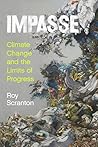
Impasse: Climate Change and the Limits of Progress

Impasse: Climate Change and the Limits of Progress 


This is a searing investigation of the state of the world vis a vis climate change. It details information and opinions that suggest we have reached an important moment that will determine what happens to the world in the not too distant future. The author's central argument is that our "dogmatic faith in progress" is the primary obstacle to addressing climate catastrophe. He contends that the "impasse" we face is not just political, but existential and cognitive—our brains and narratives are fundamentally unequipped to grasp the scale of the crisis.

View all my reviews 

Friday, February 06, 2026

Human Art

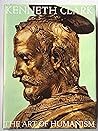
Art of Humanism (ICON EDITIONS) 

Art of Humanism 


“Ruskin said: ‘Great nations write their autobiographies in three manuscripts, the book of their deeds, the book of their words and the book of their art. - Kenneth Clark


Kenneth Clark's 1983 book The Art of Humanism is a succinct examination of the Italian Renaissance of the fifteenth century from a humanistic perspective. Clark, who is most known for his seminal series Civilization, explores how the visual arts were transformed by a renewed sense of human greatness and potential. The book focuses on five major masters of the era: Andrea Mantegna: Classical antiquity and the heroic figure; Paolo Uccello: The compulsive, scientific study of perspective; Donatello: Human emotion and drama in sculpture; and Leon Battista Alberti: Architecture and the mathematical foundation of beauty.
Sandro Botticelli: Humanism's poetic and spiritual side.

"Belief in the greatness of man and the supremacy of human values" is how Clark characterizes humanism. He contends that these artists were philosophers who gave these new ideals shape in addition to being expert craftsmen. Clark's "patrician self-confidence" and "great man" approach to art history, which emphasizes individual brilliance over larger social movements, are frequently highlighted in reviews of his larger body of work. In keeping with that model, this book offers a close-knit, knowledgeable tour of particular masterpieces.

View all my reviews